Drone Battery Deployment for Delivery Drones
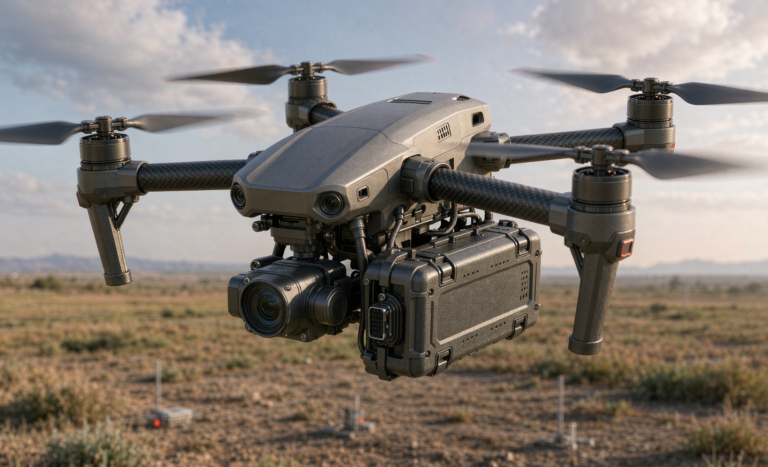
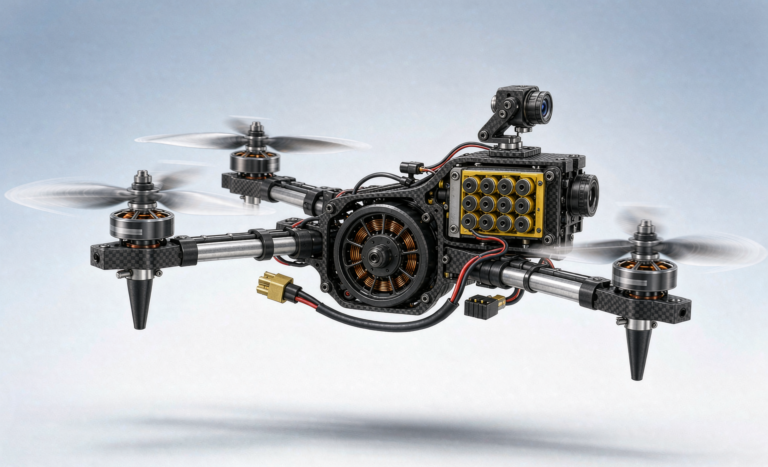
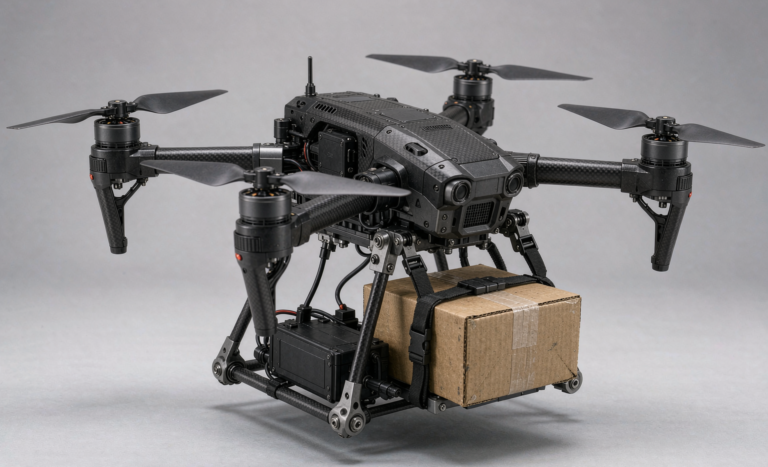
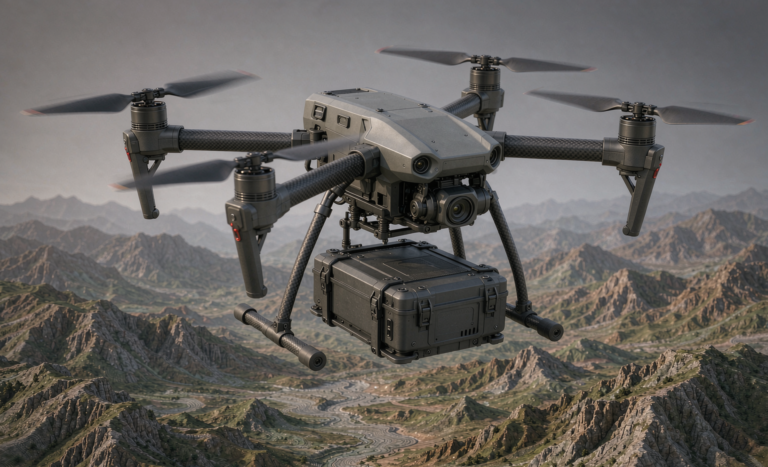
Over the past four years I have led the battery engineering team at Horizon Power, and few applications have tested our cells as brutally as last-mile delivery drones. When a logistics client asked us to roll out a fleet of 600 delivery drones across three cities, the bottleneck was never the airframe—it was the drone battery. In this article I will walk through how we approach drone battery deployment for delivery drones, from pack architecture and thermal limits to the certification stack we must clear before a single parcel leaves the ground. I will also show the real per-flight energy economics, because the battery is cheap—until a failed pack grounds your fleet. If you are planning a custom battery solution for an aerial delivery program, the field data below should save you several months of painful iteration and a few expensive incidents.
Why Delivery Drones Demand a Different Battery Architecture
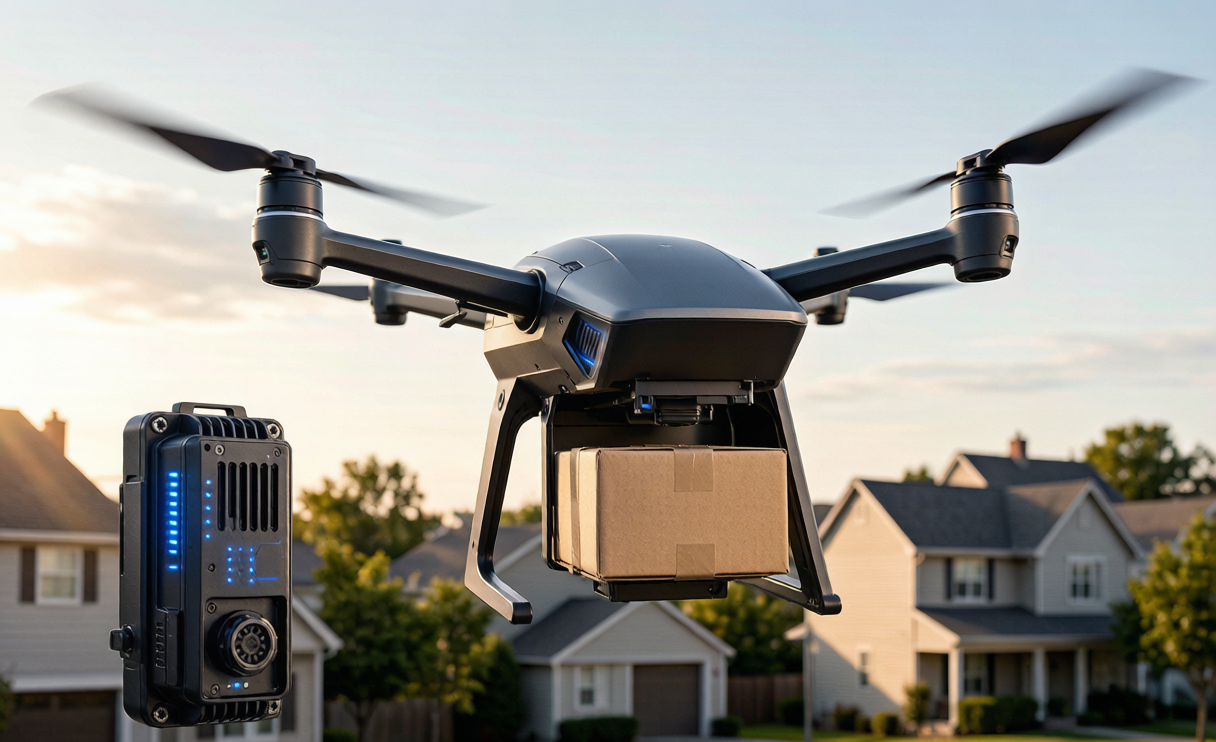
A consumer camera drone can tolerate a bloated pack and a short flight time. A delivery drone cannot. The moment a 2.5 kg parcel hangs under the airframe, the energy budget changes completely. In our programs the drone lithium battery must deliver pack-level energy density of 180–220 Wh/kg, sustain a continuous 3–5C discharge, and absorb 8–10C peak current during vertical climb. That is a far harsher duty cycle than any hobby pack was designed for.
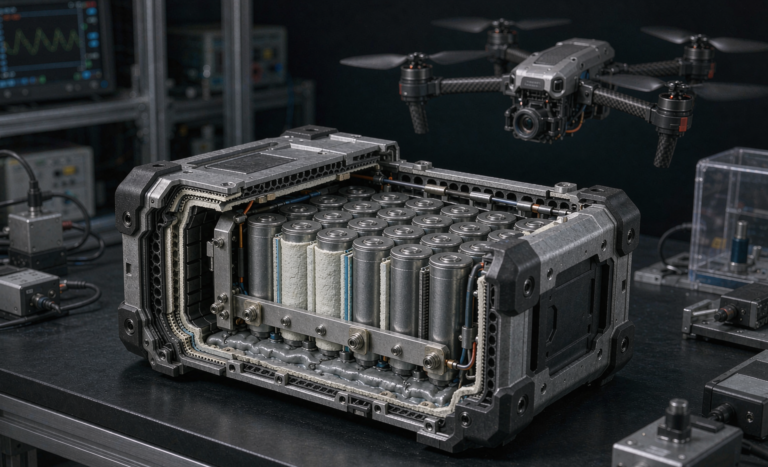
We standardized on an NMC 811 cylindrical format for the flagship delivery program because the gravimetric density justified the extra BMS complexity. For lower-risk, shorter-range routes we deploy LFP packs where cycle life matters more than absolute range. The point is that drone battery deployment for delivery drones is never a one-chemistry decision—it is a routing decision. Your energy density target should be derived from the worst-case route, not the marketing brochure.
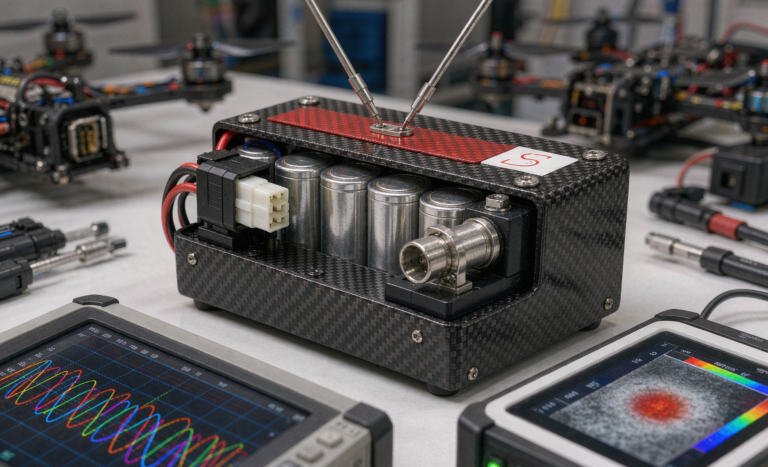
Mechanically, the pack also has to survive a vibration spectrum that would destroy a laptop cell. We qualify every build on a random-vibration rig across 5–500 Hz and a 50 G shock profile, then teardown-inspect the weld joints. In our first pilot, three of twenty prototype packs developed micro-fractures at the busbar after 120 flights; we moved to laser-welded nickel strips with a flexible silicone potting layer, and the failure mode disappeared. A drone lithium battery is as much a structural component as an energy source.
- Pack-level energy density: 180–220 Wh/kg for long-range NMC builds
- Continuous discharge: 3–5C; peak climb current: 8–10C
- Target cycle life: 400–600 full flights before 80% capacity
- Internal resistance rise kept under 35% across the warranty window
Sizing the Drone Lithium Battery for Real Routes, Not Brochure Figures
The single biggest mistake I see in new delivery programs is sizing the lithium battery from a flat, windless, no-payload simulation. Real routes have headwinds, rooftop approach profiles, and a payload that is never perfectly centered. For one regional pharmacy run we profiled an 8 km round trip with a 2.5 kg payload, and the actual energy draw came in 23% above the simulation.
Our reference pack for that route is a 14S6P NMC configuration: 22.2 V nominal, 9.6 Ah, 213 Wh, and a mass of 1.18 kg. That yields roughly 26.6 Wh/km of delivered energy after losses, which gives us an 18-minute flight with a 25% state-of-charge reserve. When a client asks for a custom battery solution, this reserve margin is the first number I defend—never let a delivery route plan consume the last 10% of a pack.
Thermal Management and the Cold-Chain Problem
Delivery drones fly year-round, and lithium cells hate the cold. Below 0 °C the anode plating risk during charging climbs sharply, and below −10 °C usable capacity can drop by 30%. We solved this on a northern European deployment by integrating pad heaters and a pre-conditioning step: the drone lithium battery is warmed to 15 °C while still in the charging dock, so the first climb of the day never starts from a cold cell.
On the hot side, we cap pack surface temperature at 60 °C and trigger a soft power limit at 50 °C. Every pack in our drone battery deployment for delivery drones program carries a redundant NTC sensor string so a single sensor fault cannot mask an overheat. The cells themselves are rated to IEC 62133-2 for secondary lithium systems, which is the baseline our clients’ safety teams expect before sign-off.
Certification Stack: UN38.3, IEC 62133, and Air Transport Rules
You cannot fly a commercial delivery drone program on cells that have not cleared the certification stack, and the stack is thicker than most founders expect. First, every cell and pack must pass UN38.3—the T.1 through T.8 battery transport tests covering altitude simulation, thermal, vibration, shock, external short circuit, impact, overcharge, and forced discharge. We keep the full UN38.3 dossier on file for every chemistry we ship.
Second, the pack design references IEC 62133-2 for safety of lithium systems, covering short-circuit protection, temperature limits, and cell segregation. Third, because delivery drones frequently move between sites by air or road, we comply with the air-carriage rules set by FAA and EASA: spare lithium batteries in transit are capped at 30% state of charge and carried in non-conductive, protective packaging. None of this is optional—it is the price of entry for a lawful drone battery deployment for delivery drones.
Field Deployment: Swapping, Charging, and Fleet Availability
A beautiful pack on a lab bench means nothing if the fleet sits idle waiting to charge. For the 600-drone rollout we chose hot-swap over in-airframe charging: a discharged drone lithium battery is pulled and a charged one clicked in within 90 seconds, keeping aircraft utilization high. Each docking station trickle-balances cells and rejects any pack whose internal resistance has drifted beyond threshold.
Charging itself runs at 1C to 90% in roughly 45 minutes, then a top-up to 95% at 0.5C. Our availability target is 95% of the fleet flight-ready at any given hour, and the battery pool is sized at 1.6 packs per aircraft to absorb the swap cycle. A well-run custom battery solution is as much about the charging logistics as the cells.
Building a Custom Battery Solution That Survives the Warranty Period
The difference between a pack that fails at flight 200 and one that reaches flight 600 is almost always telemetry. Every pack we deploy reports per-cell voltage, temperature, cycle count, and cumulative throughput to a fleet dashboard. When a cell group shows an early resistance trend, we pull that pack before it becomes a flight-risk incident.
For clients scaling drone battery deployment for delivery drones, I always recommend a predictive replacement policy: retire packs at 80% capacity rather than waiting for a hard failure. The cost of one dropped parcel—or one grounded investigation—dwarfs the marginal value of squeezing out another 40 flights. A serious lithium battery program is run on data, not on hope.
Cost per Delivery: When the Battery Pays for Itself
Operations teams eventually ask the only question that survives contact with a finance department: what does the energy actually cost per delivery? On our 600-drone program the fully loaded cost of a drone lithium battery, amortized across its 500-flight service life, works out to roughly $0.18 per flight in cells alone, with charging electricity adding about $0.02 per flight. Against a $6–$9 per-drop driver cost in dense urban cores, the lithium battery is a rounding error—provided you protect cycle life through the telemetry and predictive replacement policy described above.
The trap is warranty-extension churn. Teams that push packs past 80% capacity to “save money” usually see a spike in mid-route voltage sag, which forces slower climbs and longer flights, quietly eroding the very per-delivery economics they were trying to protect. A mature drone battery deployment for delivery drones treats the battery as a consumable with a known, planned replacement date—not as a component to be squeezed dry. Budget the replacement, and the unit economics stay honest.
Frequently Asked Questions
How many cycles can a delivery drone battery achieve?
In our field data, a quality NMC drone lithium battery reaches 400–600 full flights before dropping to 80% of original capacity, while LFP packs can exceed 1,000 cycles at the cost of lower energy density. The real number depends on climb frequency, ambient temperature, and how aggressively you charge.
Can I fly delivery drones with lithium batteries under FAA and EASA rules?
Yes, but only with certified cells and a compliant transport and operating plan. The packs must clear UN38.3 and reference IEC 62133-2, and spare batteries moved between sites are capped at 30% charge under FAA/EASA carriage rules. Commercial operations also require the broader airworthiness and operational approvals for the aircraft itself.
What is the best chemistry for delivery drone batteries?
NMC 811 wins on range and weight for long routes, while LFP wins on cycle life and safety margin for short, high-frequency urban loops. The right answer for drone battery deployment for delivery drones is route-specific, which is why we design each custom battery solution around the actual flight profile rather than a single default chemistry.
How do you keep delivery drone batteries safe in cold weather?
We pre-condition the drone lithium battery to about 15 °C in the charging dock before flight, limit charging below 0 °C, and enforce a 50 °C soft power limit on the hot side. Redundant temperature sensing plus an IEC 62133-aligned pack design keeps the cold-chain risk manageable across a full winter deployment.