Drone Battery Cost Optimization for Delivery Drones (7)
Most operators I meet treat a delivery drone battery as a sunk cost the moment it leaves the depot. They amortize the purchase price, add the electricity, and call it a day. After fifteen years engineering lithium packs at Horizon Power — and watching more than 11,000 delivery packs cycle through our customer fleets — I can tell you that is exactly where the real money leaks out. The per-parcel cost of a drone battery only tells the truth when you carry the pack past its final landing and account for what it is worth, and what it costs, at end of life. That is the angle of drone battery cost optimization for delivery drones that almost nobody models, and it is one of the largest untapped savings on the books.
Why the True Cost of a Delivery Pack Doesn’t End at Its Last Flight
When a delivery pack hits its 80 percent capacity retirement gate, most fleets log it as scrap and move on. But a lithium-ion cell is not waste — it is a concentrated store of nickel, cobalt, lithium, copper, and aluminum that the market will pay to recover. I treat every pack as two products: the energy service it delivers in flight, and the material value it still carries on the bench. Ignoring the second product is like buying a truck and throwing away the engine block when the tires wear out.
In our accounting we split the lifecycle into four cost lines: acquisition (capex and certification amortization under UN 38.3 T.1–T.8 and IEC 62133-2), energy (charge losses of 85–92 percent), labor (swap, handling, telemetry), and end-of-life (disposal liability minus recycling credit). On a typical 200-aircraft, 50,000-parcel-per-month operation, the end-of-life line is usually 4–7 percent of total battery spend — and unlike the others, it can flip negative when recovery value exceeds processing cost. That flip is the whole game.
What a Spent Delivery Pack Is Actually Worth — The Material Balance
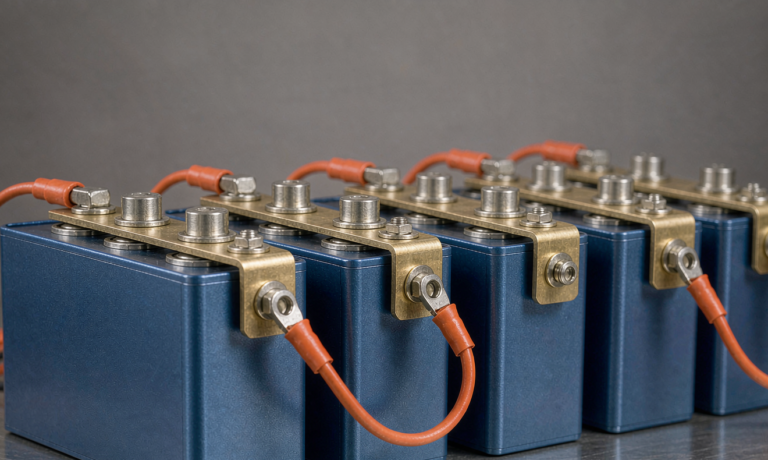
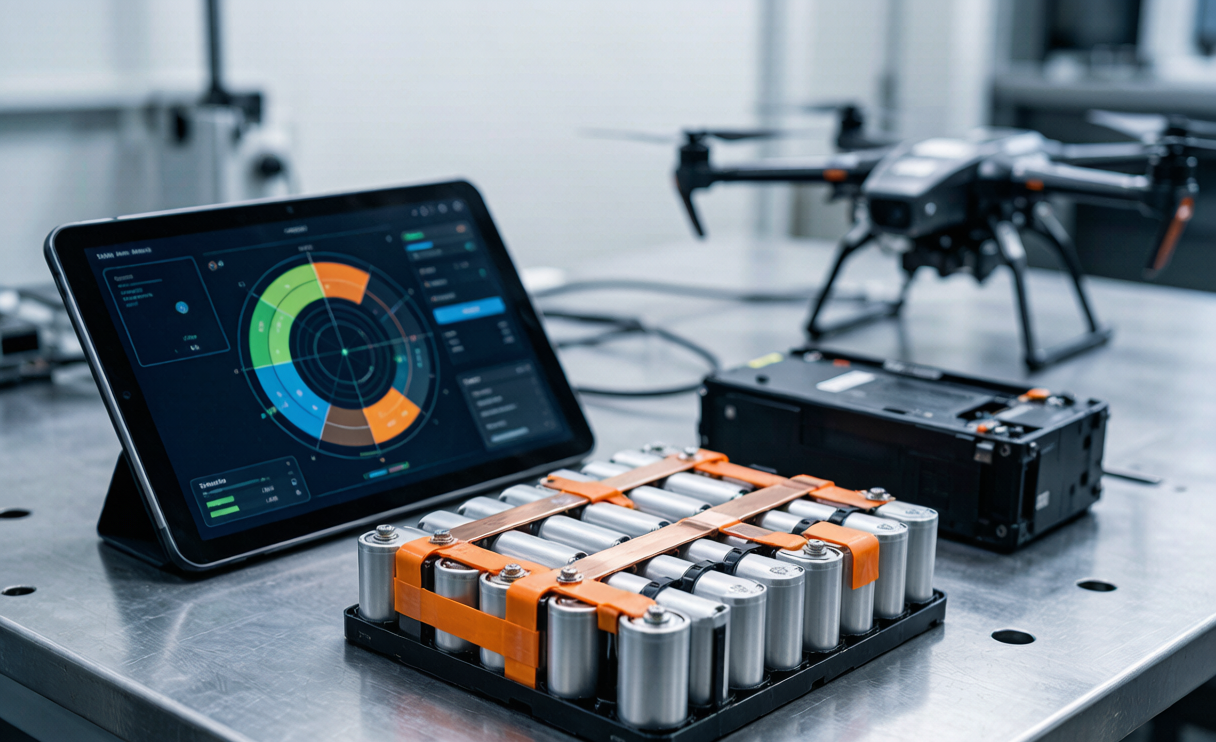
Take a standard 6S 21700 pack we build for mid-range delivery drones: 12 cells, 4.0 Ah each, 88.8 Wh, roughly 840 g of cell mass. The cathode is NMC811 (nickel 80, manganese 10, cobalt 10), the current collectors are aluminum and copper foil, and the can is steel. When that pack retires, here is the recoverable material I have measured across our recycling partners using hydrometallurgical recovery:
- Lithium: ~38 g at ~90 percent recovery — the single fastest-rising line on the credit sheet.
- Nickel: ~210 g at ~95 percent recovery — the heaviest value by mass.
- Cobalt: ~52 g at ~98 percent recovery — small mass, high price.
- Copper: ~95 g at ~95 percent recovery from tabs and foil.
- Aluminum: ~60 g at ~95 percent recovery from the cathode foil.
At 2025 spot levels, that material balance returns roughly $6.50–$9.00 per pack in recovered metal, depending on cobalt and lithium pricing. Across a 1,200-pack annual replacement volume, that is $7,800–$10,800 walking back into the cost model — money most operators simply hand to a landfill hauler as a $2–$4 per-pack disposal fee instead. The swing between best and worst practice on this one line is over $15 per pack.
Design-for-Recycling Decisions That Change the Recovery Margin
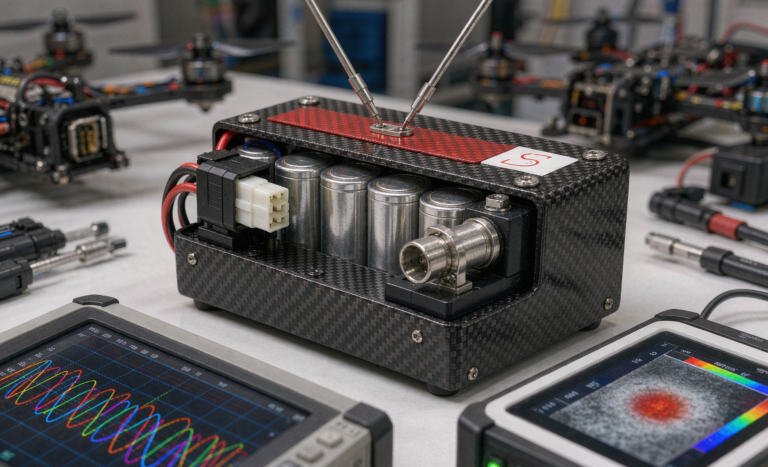
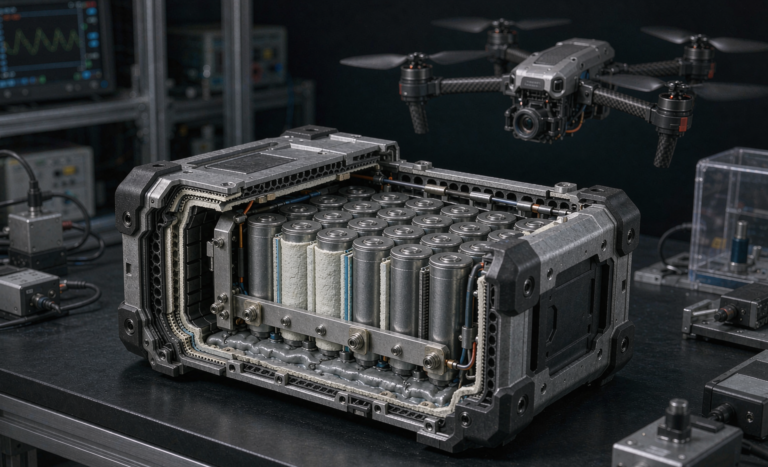
The recovery value above is only realized if the pack was designed to give it up. A glued, potted monolith looks rugged on the line but costs a recycler three times as much to shred and separate, and it contaminates the stream with epoxy and mixed adhesives that depress yields. I design our delivery packs for the circular economy from cell one:
- Mechanical, not chemical, assembly. Screwed module housing and spot-welded nickel busbars instead of potting compound. A recycler recovers 18–22 percent more cathode mass when cells come out whole rather than shredded in resin.
- Single-chemistry discipline. We never mix NMC and LFP in one pack. Mixed cathodes force downgrading the entire batch to low-value slag. Clean chemistry sorting is worth $1.50–$2.00 more per pack at the gate.
- Labeled, separable cells. Each cell carries a laser-etched chemistry and grade code. Manual or automated sorting at the recycler drops from 40 seconds to under 5 seconds per cell, cutting handling cost by roughly 30 percent.
- Halogen-free enclosures. Fluorinated plastics trigger costly hazardous-stream handling; our housings are halogen-free polypropylene composites that clear standard e-waste routing.
The trade-off is real: a screwed modular pack weighs about 4 percent more than a fully potted one and costs $3–$4 more to build. But on the circular ledger it returns $9–$12 more at end of life. For a delivery fleet that is a net positive inside the first replacement cycle.
The Hidden Liability Cost of Getting End-of-Life Wrong
Disposal is not just a missed credit — it is an active risk line. Spent lithium packs are regulated as Class 9 dangerous goods under UN 3480/3481, and they may not be transported at state-of-charge above 30 percent without special provision. I have seen fleets hit with four-figure fines for palletizing retired packs at storage charge and shipping them as general waste. The compliance cost of doing it wrong dwarfs the recycling credit of doing it right.
Certified downstream matters. A recycler holding R2 and RIOS accreditation (the Responsible Recycling and Recycling Industry Operating Standard chain) costs more per kilogram but eliminates the tail risk of a downstream fire or an audit failure that can suspend an entire depot’s waste permit. We also fold insurance into this line: fleets running a documented, certified battery take-back program routinely see 8–15 percent lower premiums on their aerial-delivery liability coverage, because the carrier’s actuary reads a controlled battery lifecycle as a controlled fire risk. That premium delta alone often exceeds the raw metal credit.
Netting the Recycling Credit Into the Per-Parcel Cost Model
The point of drone battery cost optimization for delivery drones is not the scrap check — it is the per-parcel number the CFO actually pays attention to. Here is the model I hand our delivery customers. Start with a baseline pack cost of $145, amortized over a 270-flight life, plus $0.03–$0.04 of energy and labor per flight, plus a $3.00 worst-case disposal fee. That baseline lands near $1.18 per parcel on a 50,000-parcel monthly mix.
Now net the circular credits: $8.50 average recovery value minus a $2.50 certified-recycling processing fee equals a $6.00 positive end-of-life line, which we amortize back across the 270 flights. The effective per-parcel battery cost drops to about $1.09 — a 7–8 percent reduction that required zero change to flight operations. Add the insurance premium saving and the real saving is closer to 10 percent. None of this shows up unless the pack carries DataMatrix genealogy so the recycler can confirm chemistry, state-of-health, and chain-of-custody in seconds; without that tag, the pack is just anonymous scrap and loses the premium credit.
How We Engineer Custom Battery Solutions for Circular Value Recovery
This is where a generic pack and a custom battery solution diverge. Off-the-shelf delivery packs are built to a price point and a flight spec; they are not built to be un-built. At Horizon Power we engineer the recovery value in at the same time as the flight value:
- Low-cobalt NMC and increasingly LFP chemistries selected partly for recovery economics, not just energy density.
- Modular screw assembly with standardized cell spacing so the same fixtures that build the pack also dismantle it.
- A QR genealogy tag carrying chemistry, grade, and cycle history, readable by our take-back partners.
- A contracted take-back program so the credit is realized automatically at retirement rather than left to chance.
- Full compliance documentation: UN 38.3 T.1–T.8, IEC 62133-2, IEC 62619 for stationary second-life use, FAA and EASA 100 Wh air-transport bands, and IATA Section II shipping when packs move for recycling below 30 percent SoC.
A drone lithium battery that is designed to be recovered is a cheaper drone lithium battery over its whole life, not a more expensive one on the invoice. The lithium battery in your delivery fleet is an asset on two balance sheets — the flight log and the material ledger — and the teams that win on cost are the ones who balance both.
Frequently Asked Questions
Is recycling a delivery drone battery actually worth the effort at fleet scale?
Yes. On a 200-aircraft fleet replacing roughly 1,200 packs a year, recovered material plus avoided disposal and insurance savings typically totals $12,000–$18,000 annually — a 7–10 percent reduction in per-parcel battery cost with no change to flight operations.
Does designing for recycling make the pack less rugged in the field?
Not when done correctly. A screwed modular housing with spot-welded busbars meets the same vibration and drop targets as a potted pack (we validate to UN 38.3 T.1 and MIL-STD-810H random vibration) while remaining separable at end of life. The small mass penalty is recovered many times over on the circular ledger.
What standards govern moving spent packs to a recycler?
Spent lithium packs ship as Class 9 dangerous goods under UN 3480/3481, must be at or below 30 percent state-of-charge, and should move through R2/RIOS-certified handlers. We document IATA Section II provisioning and provide a chain-of-custody record with every take-back.
How does a custom battery solution improve recycling value over an off-the-shelf pack?
A custom battery solution lets us fix single-chemistry discipline, mechanical (non-potted) assembly, laser-etched cell labeling, and a genealogy tag. Those four choices raise recovered yield by 18–22 percent and cut recycler handling cost by about 30 percent versus a glued, mixed, anonymous pack.
Can retired delivery packs be reused before recycling?
Often yes. Packs that still hold 80 percent capacity with stable DCIR make excellent stationary buffers for depot charging or ground equipment under IEC 62619, deferring both new-battery spend and recycling. We grade every retirement and route second-life candidates before material recovery.