Sodium-Ion Battery Cost Optimization for Microgrids: An
Why $/kWh Alone Misleads in Microgrid Sizing
When a microgrid developer asks me to price a sodium-ion battery against lithium iron phosphate, the first number they reach for is cell cost in dollars per kilowatt-hour. I understand the reflex — it is the headline figure on every supplier datasheet. But after fifteen years engineering storage packs, including the ones we deploy at remote microgrids, I can tell you that $/kWh is the single most misleading metric you can optimize against if your duty profile is anything other than a flat, temperature-controlled, grid-tied discharge.
A microgrid is a closed electrical island. It sees depth-of-discharge swings that a data-center UPS never experiences, ambient temperatures that swing 40 °C across a season, and a revenue case built on layering peak shaving, backup, and sometimes frequency support. The cell is maybe 55–70% of the installed cost. The rest is cabinetry, thermal management, power-conversion hardware, civil works, and the compliance overhead you cannot skip. Na-ion changes the cost story precisely because it moves cost between those buckets in ways LFP does not. The right metric is levelized cost of storage (LCOS), expressed in $/kWh delivered over the system’s life — and that is what this sodium-ion battery cost optimization microgrids playbook is built around.
Modeling LCOS for a Sodium-Ion Microgrid
LCOS is the net present cost of the storage system divided by the total usable energy it delivers across its lifetime. In formula terms: LCOS = (Capex + Σ Opex − Residual Value) ÷ (Σ Discharged kWh). For a microgrid, the numerator and denominator both move when you switch chemistries, and they move in opposite directions more often than buyers expect.
Na-ion cells today land around $60–90/kWh at the cell level, versus roughly $90–130/kWh for LFP. That is a genuine 25–40% cell saving. But Na-ion packs carry a lower energy density — typically 90–160 Wh/kg at the cell and 70–120 Wh/kg at the pack, versus 160–280 Wh/kg for NMC and 120–170 Wh/kg for LFP. Lower density means more enclosure volume, more steel, more floor space, and often a bigger building. If you model LCOS naively with a flat $/kWh, you will understate the balance-of-system penalty and you will wrongly conclude Na-ion always wins.
The offset is calendar life and temperature behavior. A well-built sodium-ion battery delivers 3,000–6,000 cycles at 80% depth-of-discharge with very slow calendar fade, and it holds 80–90% capacity at −20 °C without external heating. Those two properties stretch the denominator (total delivered kWh) and shrink the opex line (no heater energy, fewer thermal failures). In a cold-climate microgrid, that single trait can swing LCOS by 15–25% in Na-ion’s favor before you touch anything else.
Balance-of-System and Footprint — Where Na-Ion Wins or Loses
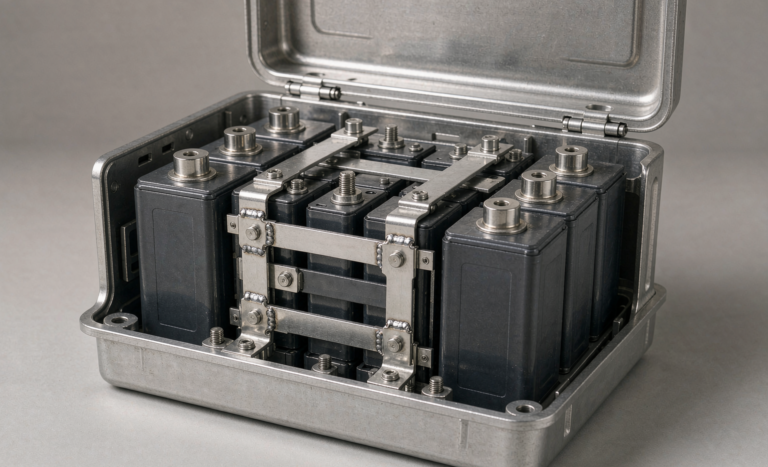
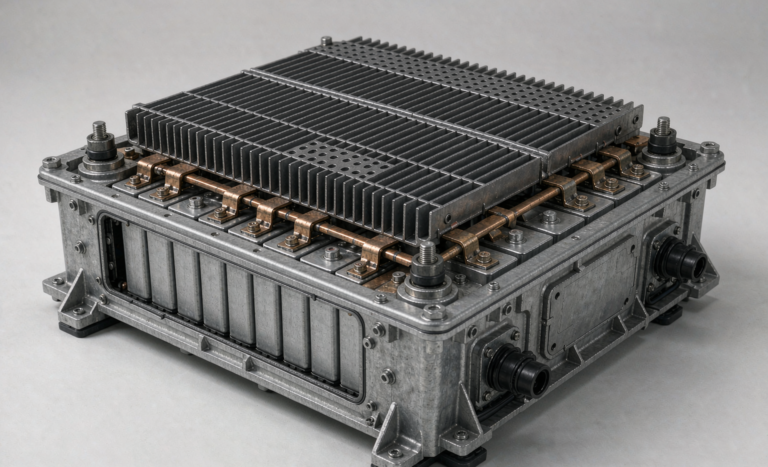
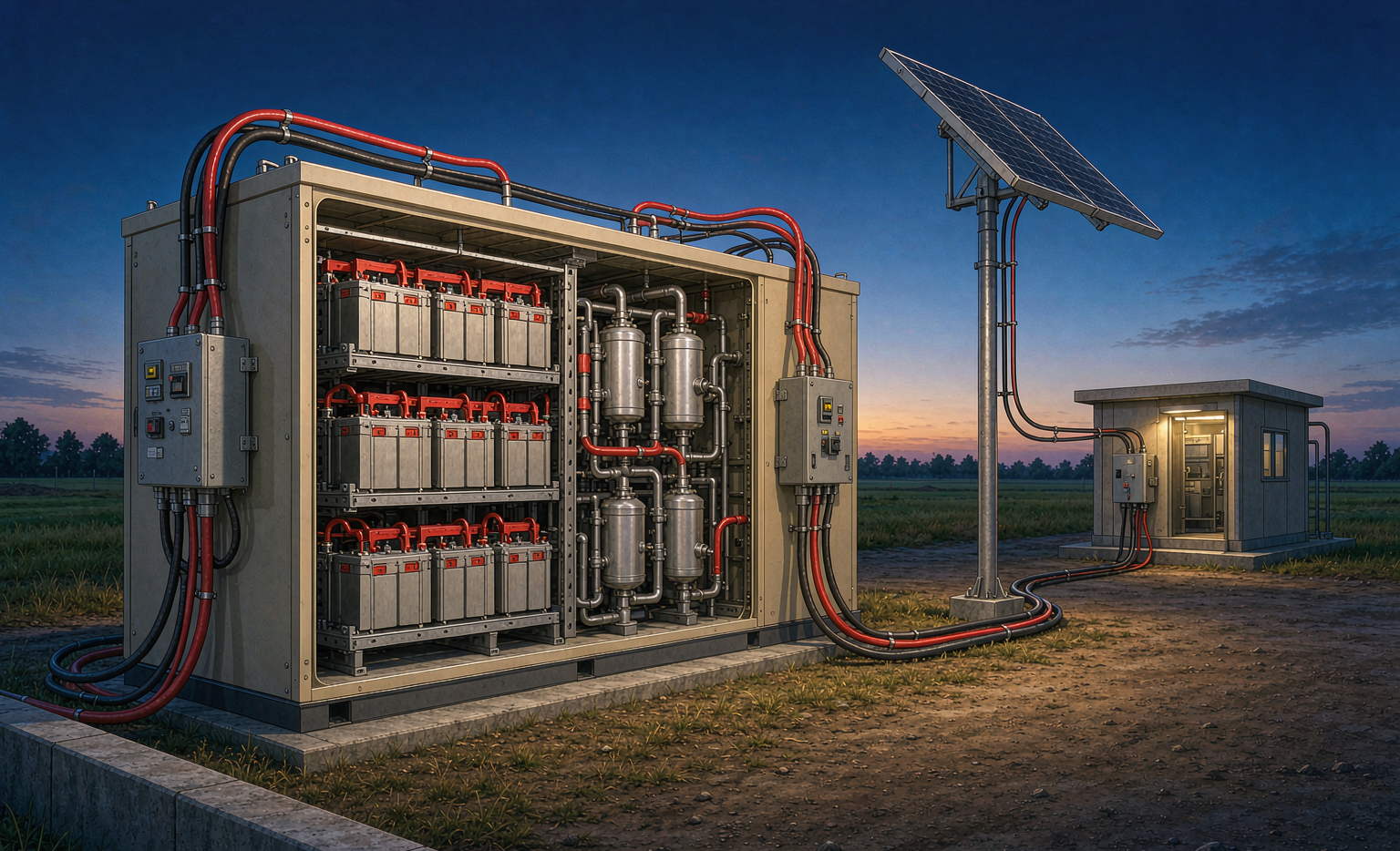
The first optimization I run on any microgrid custom battery solution is a footprint and mass budget. Because Na-ion is less energy-dense, the cabinet count and the building envelope grow. On a greenfield site where you are already pouring a concrete pad and erecting a shelter, that incremental volume is cheap — you simply spec a slightly larger prefab enclosure. The optimization there is to standardize on a 20-foot-equivalent skid so you reuse the civil design across sites.
The penalty bites on brownfield or rooftop microgrids where floor area is fixed. If you cannot fit the extra volume, Na-ion’s cell saving evaporates against the cost of structural reinforcement. My rule of thumb: model the pack at 110 Wh/kg pack-level density, add 15% for service aisles and ventilation, and compare the resulting enclosure cost line-by-line against the LFP equivalent. Only when the enclosure delta stays under ~12% of total capex does the cell saving fully convert to LCOS saving.
One lever that surprises clients: Na-ion’s wider safe operating window (roughly −30 °C to +60 °C) lets you drop active liquid cooling in many climates. Removing chillers, pumps, and glycol loops trims both capex and the parasitic load that would otherwise eat into your delivered-kWh denominator. A passively cooled Na-ion microgrid in a moderate climate can run at 85–90% round-trip efficiency versus 92–95% for LFP — you accept the few points of efficiency loss to delete an entire thermal subsystem.
Skipping Cold-Weather Heating Capex
This is the optimization I am proudest of, because it is invisible on a spec sheet and enormous on a budget. In cold regions, LFP microgrids need heated enclosures or pad heaters to keep cells above their charge cutoff, and that heating energy is opex that never shows up in a $/kWh quote. Na-ion charges down to −10 °C at near-full capacity and still delivers 85% of rated capacity at −20 °C.
For a microgrid serving a mountain telecom site or an off-grid clinic, you can specify an unheated, insulated cabinet and redirect the heater budget into more cells — improving autonomy instead of fighting the cold. I have seen this single change remove $8,000–$15,000 of thermal hardware and 1–2 kW of continuous parasitic load per site. Across a fleet of fifty microgrids, that is a six-figure LCOS improvement with zero chemistry compromise.
Procurement Levers: Materials and Supply-Chain Exposure
Part of the sodium ion battery cost story is geopolitical, and as an engineer who has watched lithium and cobalt prices swing 3× in a single year, I weight it heavily. Na-ion uses abundant sodium, aluminum current collectors (instead of copper on the anode), and cathode chemistries — layered oxides or polyanionic compounds — that avoid nickel, cobalt, and lithium entirely. That removes your exposure to the most volatile line items in the battery bill of materials.
The procurement levers I use to push LCOS down further:
- Fix the hard-carbon anode supply. Hard carbon is the cost wildcard. Multi-source from at least two suppliers and negotiate on a carbon-yield basis, not just unit price.
- Standardize the cathode family. Pick one cathode chemistry per product line so formation and grading recipes stay stable; recipe churn is a hidden cost multiplier.
- Buy cells on a rolling quarterly index rather than spot, and let the absence of lithium/cobalt exposure work in your favor during commodity spikes.
- Negotiate second-life and recycling credit up front — Na-ion’s simpler chemistry gives it a cleaner residual value than a lithium battery pack.
None of these show up in a $/kWh comparison, but together they can move installed LCOS by 8–12%.
Revenue Stacking to Drive LCOS Down
The denominator of LCOS is total delivered energy and total service revenue. A microgrid battery that only sits in backup mode delivers almost nothing, so its LCOS is effectively infinite. The cheapest sodium-ion microgrid is the one whose pack is working every day. I design for three stacked services:
- Peak shaving against the host’s demand curve — the baseline 1–2 cycles/day.
- Backup autonomy — the capacity you hold in reserve, sized to the site’s outage history rather than a vendor default.
- Ancillary service or arbitrage where the grid connection allows — even a few hours of daily energy shift multiplies delivered kWh.
Because Na-ion tolerates partial-state-of-charge operation and shallow cycling better than many lithium chemistries, it is well suited to this mixed, never-fully-rested duty. Stacking two or three services typically lifts annual throughput 30–60%, which is the most powerful LCOS lever available — more than any cell-price negotiation.
A Worked 500 kWh Microgrid LCOS Example
To make the numbers concrete, here is a config I recently quoted for a remote agricultural microgrid: 500 kWh usable, 250 kW power, insulated unheated enclosure, passively cooled, layered-oxide Na-ion cells rated 4,000 cycles at 90% DoD.
- Capex: cells $70/kWh × 500 = $35,000; pack and enclosure $95/kWh = $47,500; PCS and integration $60/kWh = $30,000. Total ~$112,500.
- Opex: negligible thermal energy, $1,200/yr monitoring and maintenance.
- Throughput: 1.5 equivalent cycles/day × 500 kWh × 330 days × 10-year life ≈ 2.47 GWh delivered.
- LCOS: ($112,500 + $12,000 opex) ÷ 2,470,000 kWh ≈ $0.050/kWh.
The same envelope with LFP would have carried roughly $20,000 more in cell cost but saved on enclosure volume; after adding the heater capex and parasitic load for the climate, the LFP LCOS landed near $0.058/kWh. In this specific duty profile, the sodium-ion battery won by about 14% — not because it was cheaper per cell, but because the duty profile rewarded its strengths and punished LFP’s thermal weakness.
Standards You Still Have to Pay For
Cost optimization never means skipping compliance. Every microgrid pack I ship still meets the transport and stationary-storage floor: UN38.3 (T.1–T.8) for transit, IEC 62619 for industrial cells, UL 1973 for stationary batteries, and IEEE 1547 plus IEC 62477 for grid interconnection and power-conversion safety. Depending on the jurisdiction, NFPA 855 spacing rules and local fire authority review add fixed cost that is chemistry-agnostic. Budget these as a non-negotiable line; they are roughly 6–10% of capex and they protect you from the far larger cost of a failed inspection or an uninsured incident. I would rather deliver a slightly more expensive compliant pack than a cheap one that cannot be commissioned.
Frequently Asked Questions
Is sodium-ion always cheaper than LFP for microgrids?
No, and I would be suspicious of any vendor who claims it is. Na-ion wins on LCOS when the duty profile rewards its strengths — cold operation, partial-state cycling, long calendar life — and when enclosure volume is not constrained. On a space-limited rooftop in a mild climate with cheap electricity, LFP can still win. Model LCOS, not $/kWh.
Does Na-ion’s lower energy density make the project infeasible?
Usually not. The density gap means a larger enclosure, which is cheap on greenfield sites and problematic only on fixed-footprint brownfields. I spec the skid early so civil works absorb the volume at minimal cost. Where volume is truly fixed, that is the one case where I steer the client to a lithium battery instead.
How do I size the backup reserve without wasting capacity?
Size it to measured outage history, not a vendor default. I typically hold 20–30% of usable capacity in reserve for backup and cycle the remaining 70–80% daily for peak shaving. This keeps the reserve available while maximizing the throughput that drives LCOS down.
Can I use the same PCS for sodium-ion as for lithium?
In most cases yes — the voltage window of a 48V or 400V Na-ion pack is close enough to LFP that a standard PCS works, though you should confirm the BMS communication and the slightly different end-of-charge voltage. I always validate the PCS against the actual pack voltage curve during commissioning rather than assuming compatibility.
What about end-of-life cost?
Na-ion’s simpler, cobalt-free chemistry gives it a cleaner recycling path and a more predictable residual value, which you should negotiate into the original contract. That residual credit flows straight into the LCOS numerator and slightly improves your final number.