Home Energy Storage Cost Optimization for Apartments
When tenants and building owners ask me how to make a small apartment energy-independent without blowing the budget, my answer is always the same: treat home energy storage cost optimization for apartments as an engineering problem, not a shopping-list problem. Over my years as a lithium battery engineer at Horizon Power, I have specced and commissioned dozens of residential battery systems squeezed into utility closets, balcony corners, and under-stair cavities in multi-unit buildings. The apartments were all different, but the math was always the same—every kilowatt-hour you store from a cheap off-peak or solar source is a kilowatt-hour you do not buy at the evening peak rate.
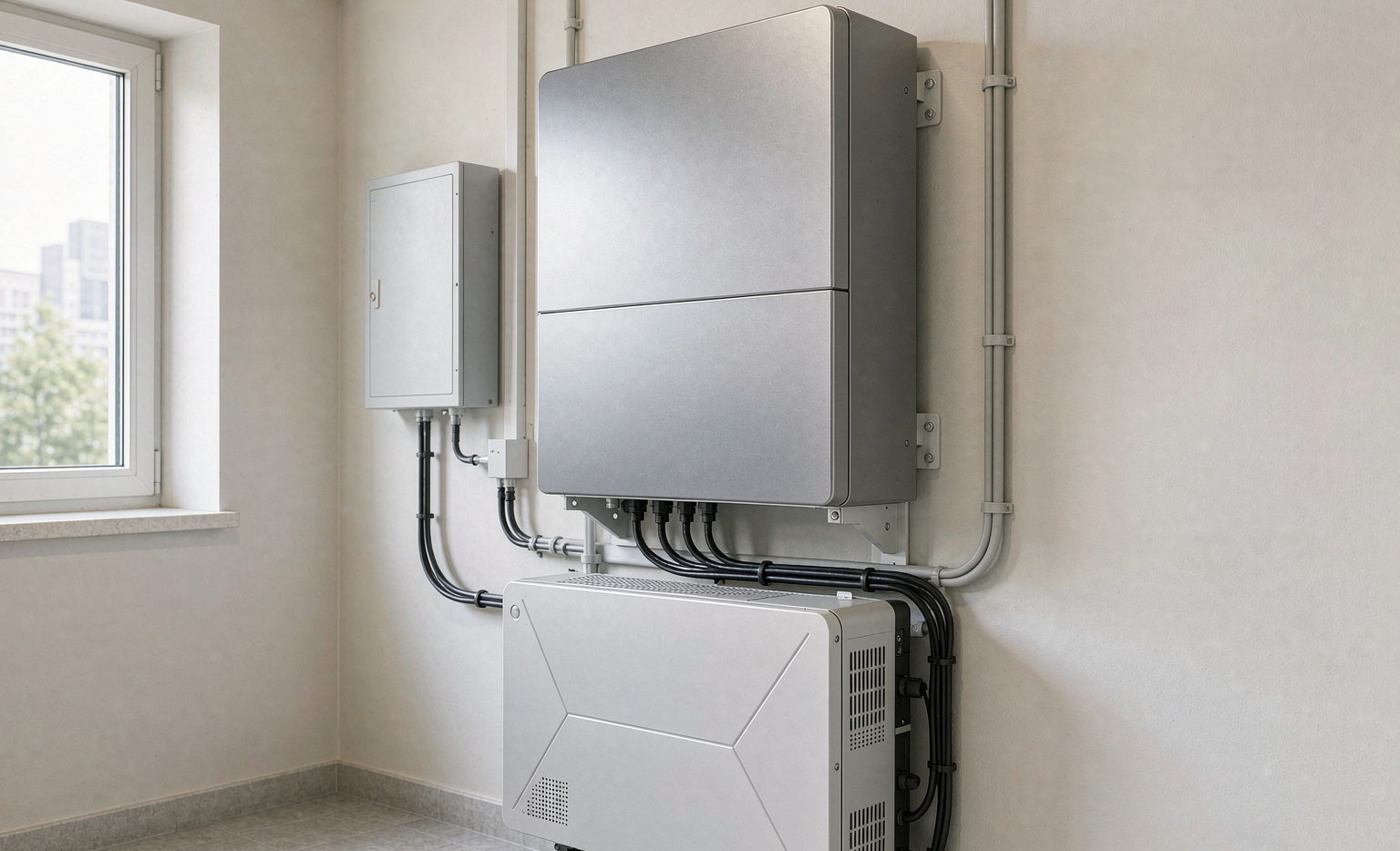
In this guide I will walk through the real levers that move the cost curve—battery chemistry, usable depth of discharge, inverter efficiency, tariff stacking, and modular scaling. The goal is not to sell you the biggest battery; it is to help you size the home energy storage system that pays itself back fastest in an apartment context, where space, landlord approval, and shared metering all add friction.
Why Apartments Are a Different Optimization Problem
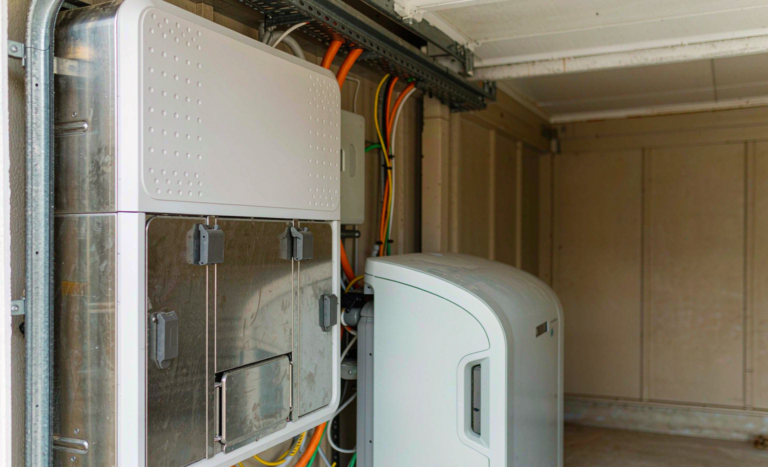
A detached house with a south-facing roof and a single meter is the easy case. An apartment is constrained on three fronts. First, you rarely own the roof, so rooftop solar is usually shared or unavailable, which pushes you toward grid-charging during off-peak hours. Second, your installation footprint is tiny—typically a 0.3–0.6 m² wall cavity. Third, apartment electrical panels are often already near their rated load, so any home battery storage addition must respect the existing breaker and the building’s shared supply transformer.
In my field surveys, the single biggest cost mistake I see is oversizing. A 10 kWh battery in a studio apartment that consumes 4 kWh/day simply will not cycle deeply enough to justify its cost. The optimization target is matched throughput, not maximum capacity. A well-matched residential battery that cycles 80–90% of its usable capacity every day will amortize far faster than an oversized one idling at 30% depth of discharge.
Chemistry Choice: LFP Is the Cost-Optimal Default
For apartment home energy storage, lithium iron phosphate (LFP, or LiFePO₄) is almost always the right chemistry. Compared with nickel-manganese-cobalt (NMC), LFP trades a little energy density for dramatically longer cycle life and superior thermal safety—two properties that matter enormously in a residential setting where the battery sits a meter from where people sleep.
- Cycle life: Quality LFP cells deliver 4,000–6,000 full-equivalent cycles at 80% depth of discharge before falling to 80% capacity. At one cycle per day that is roughly 11–16 years of service.
- Safety margin: LFP has a thermal runaway onset near 270 °C versus roughly 150 °C for NMC, which simplifies the fire-rating conversation with building management.
- Cost per cycle: Because the pack lasts longer, the levelized cost per usable kilowatt-hour drops well below NMC over the system lifetime.
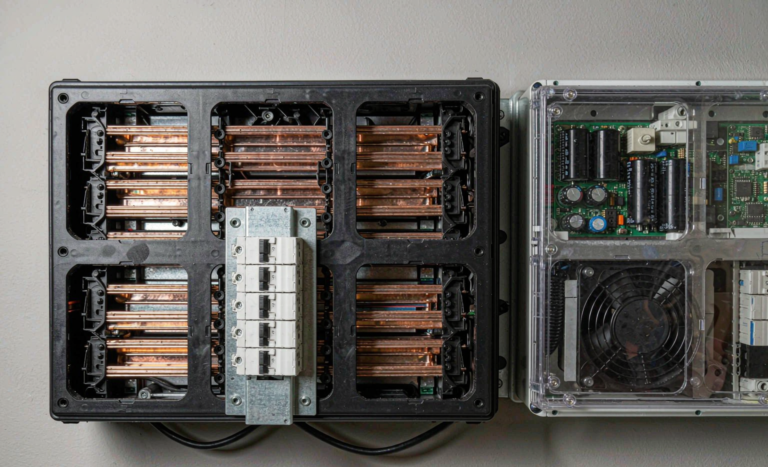
I always pair our LFP modules with a battery energy storage system architecture that includes a self-contained battery management system (BMS) monitoring cell voltage, temperature, and state of charge. The BMS is not a luxury—it is the component that protects both the chemistry investment and the apartment’s occupants.
Sizing the System: Match the Daily Load Curve
Cost optimization starts with a 30-day load profile. Pull your apartment’s electricity bills and identify the evening peak window—in most grids that is 17:00–21:00, when rates can be 2–3× the off-peak price. The battery should be sized to cover that peak window from stored low-cost energy.
As a rule of thumb I use for small apartments:
- Studio or 1-bed (3–6 kWh/day): a 5 kWh usable home battery storage unit.
- 2–3 bed (8–14 kWh/day): a 10 kWh modular unit, expandable to 15 kWh.
- High-AC-load or EV-charging apartments: stack two 5 kWh modules to 20 kWh and throttle charger start times.
The key engineering detail is usable capacity, not nameplate. If a pack is rated at 10 kWh but you only safely discharge to 90% depth of discharge, your usable window is 9 kWh. Our LFP systems are specced for a conservative 90% usable DoD, which protects calendar life while still delivering strong daily throughput.
Layer Cheap Energy Sources: Off-Peak Grid + Shared Solar
Even without your own panels, you can optimize cost by charging the residential battery during the cheapest tariff window. In many markets a time-of-use plan offers a super-off-peak rate between 23:00 and 06:00. A simple charge scheduler on the hybrid inverter fills the battery then, and the home draws from storage during the evening peak.
Where the building has shared solar battery storage on the roof, the economics improve further. I have commissioned setups where the apartment draws a share of community solar export directly into the in-apartment battery during midday, then discharges it at night. The combined arbitrage—buy/store at the lowest price, consume at the highest—is what drives payback below four years in favorable tariffs.
Inverter Efficiency Is Where Margin Hides
People obsess over battery price per kWh and ignore the inverter, but the inverter is where real money leaks. A hybrid inverter at 90% round-trip efficiency loses 10% of every stored kilowatt-hour; one at 96–97% loses barely half that. Over 4,000 cycles, that efficiency gap equals thousands of lost kilowatt-hours—often more than the price difference between a premium and a budget inverter.
When I spec a battery energy storage system for an apartment, I require a hybrid inverter with:
- ≥96% European efficiency rating.
- Seamless UPS切换 (<20 ms transfer) so refrigerators and routers never blink during grid outages.
- Programmable charge/discharge windows tied to the apartment’s actual tariff.
Modularity Lowers Upfront Risk
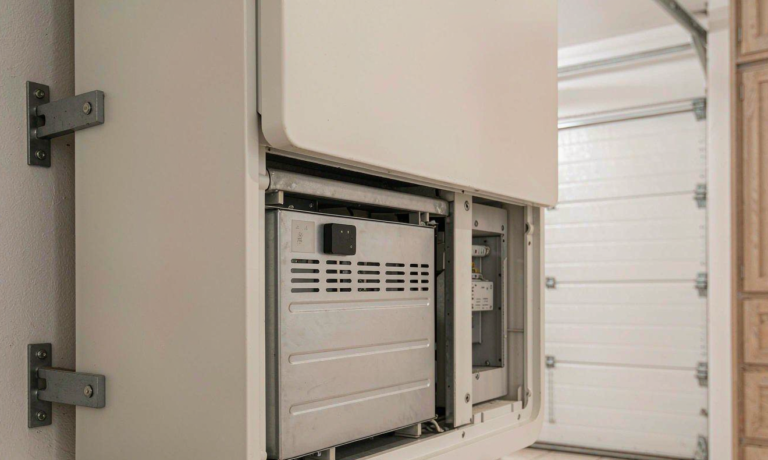
The cheapest path is rarely “buy everything now.” I recommend a modular home energy storage approach: start with a single 5 kWh block, measure real savings for three months, then add a second block only if the data justifies it. This avoids the oversizing trap and spreads capital across payback periods. Our stackable LFP cabinets are designed exactly for this—same BMS protocol, plug-and-play parallel bus, no rewiring of the apartment’s panel.
Compliance and Safety in Shared Buildings
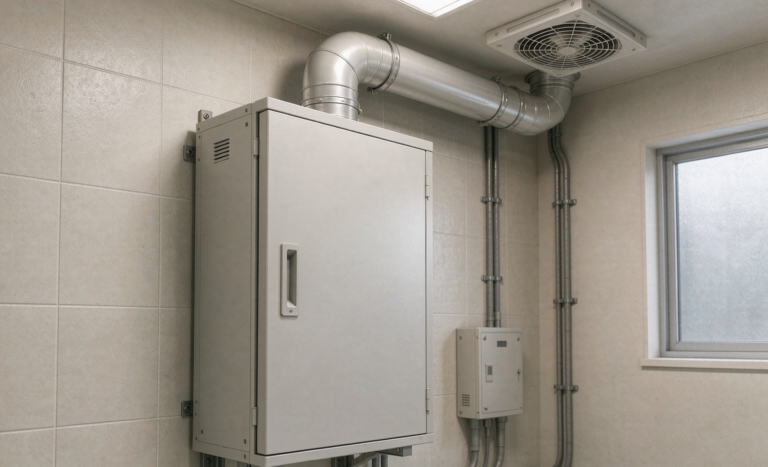
Apartment installations must clear more than just budget. In our deployments the battery enclosure complies with UN38.3 for transport and IEC 62133 for portable cell safety, and the system is designed to meet IEC 62619 for industrial stationary battery safety. For any unit near occupied spaces, we use enclosed, vented cabinets with arc-fault protection. These standards are not paperwork—they are what lets a landlord sign off and an insurer stay on cover.
One practical tip: keep the battery on a dedicated RCBO-protected circuit with clear labeling, and document the cell specification sheet for the building’s fire plan. I have never had a condo board reject a system that arrived with a clean compliance dossier.
Real-World Payback Example
Consider a 2-bed apartment using 11 kWh/day, with an evening peak tariff of $0.34/kWh and an off-peak rate of $0.12/kWh. A 10 kWh usable LFP system charged nightly and discharged through the evening peak shifts roughly 7 kWh/day from peak to off-peak—about $1.54/day, or $560/year. At a typical installed cost near $2,200 for a 10 kWh LFP block plus hybrid inverter, simple payback lands around 3.9 years, after which the home battery storage delivers essentially free evening energy for the remaining decade of pack life.
Add a shared-solar feed or a higher peak tariff and that payback compresses further. The optimization is in the details: right chemistry, right size, efficient inverter, smart scheduling.
FAQ
Can I install home energy storage in a rented apartment?
Yes, in most cases. A wall-mounted LFP cabinet on a dedicated circuit is a portable asset you can take with you, and it does not modify the building’s structure. Always get written landlord approval and confirm the panel has spare breaker capacity. The compliance dossier (UN38.3, IEC 62133/62619) makes approval far easier.
How much capacity do I actually need for an apartment?
Match your daily evening peak consumption, not your total daily use. Most 1–2 bed apartments are well served by 5–10 kWh of usable home energy storage, cycled daily. Oversizing beyond your load curve slows payback without adding real savings.
Is LFP safe enough to sit inside a living space?
LFP is the safest mainstream lithium chemistry, with a high thermal-runaway threshold and stable chemistry. Installed in a vented, arc-fault-protected enclosure with a proper BMS, it is suitable for indoor apartment utility rooms. This is why we standardize on LFP for all residential battery deployments.
Will a home battery really pay back in under five years?
In tariff environments with a 2–3× evening peak premium, yes—often 3–4 years, as the example above shows. The two variables that matter most are your peak/off-peak price spread and how deeply you cycle the battery daily. A system that cycles 85–90% of usable capacity every day amortizes fastest.
Do I need rooftop solar for cost optimization?
No. The core optimization—storing cheap off-peak grid energy and using it during the expensive evening peak—works without any panels. Shared building solar simply improves the numbers. Either way, a correctly sized battery energy storage system delivers the arbitrage.