Semi-Solid State Battery Performance for Storage
Over the past three years I have commissioned more than forty storage installations on three continents, from single-family garages in Germany to 200 kWh commercial banks in Southeast Asia, and the failure modes I see in the field are almost never the cathode chemistry — they are the mundane killers: balance drift, poor torque discipline on busbars, and an SoC estimator that was never calibrated to the actual cell. A semi-solid state battery does not make those problems disappear, but its wider safety and efficiency margins give the system engineer more room to get the basics right. That is the real reason I recommend it for storage, not the headline Wh/kg number.
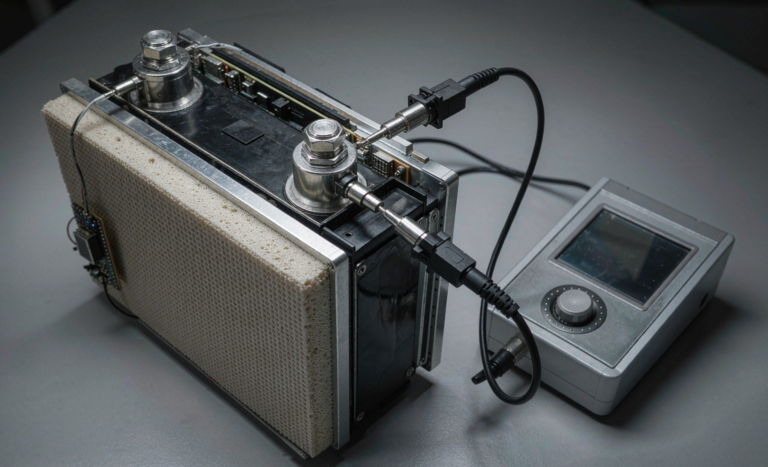
When a customer asks me whether a semi-solid state battery is “worth it” for storage, I do not answer with marketing. I answer with duty cycles, DCIR drift, and what the cell looks like at 1,000 cycles under a 0.5C stationary load. At Horizon Power I have spent the last nine years qualifying lithium packs for drones, power tools, and stationary storage, and the semi-solid state chemistry is the first one that genuinely closes the gap between a lithium-ion cell and a true solid-state cell without the manufacturing yield nightmare. For storage — whether a wall-mounted home cabinet or a containerized commercial bank — performance means something different than it does for a drone battery. You are not chasing peak C-rate; you are chasing 10 to 15 years of predictable capacity, low self-discharge, and a safety margin you can defend to a fire marshal. This article walks through how I measure semi-solid state battery performance for storage, the standards I certify against, and the real numbers our engineering team sees on the bench.
Why Semi-Solid State Chemistry Matters for Storage
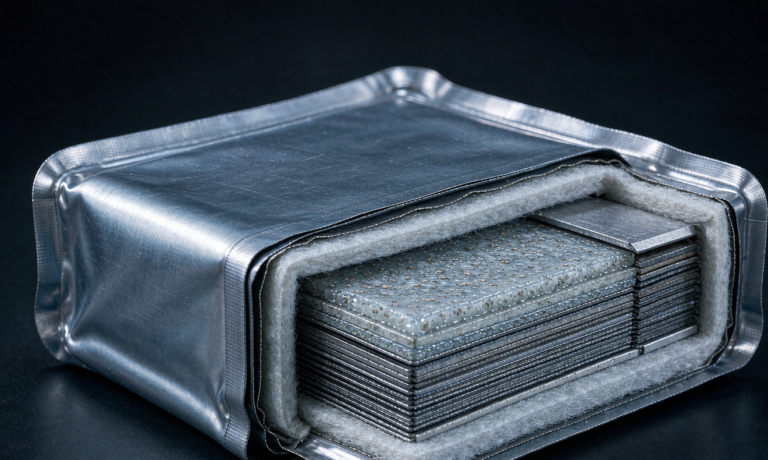
A conventional lithium battery uses a liquid electrolyte soaked into a porous separator. A true solid-state cell replaces that liquid with a solid ceramic or polymer electrolyte. Semi-solid state sits in between: it keeps a small amount of liquid wetting agent but uses a much denser, higher-loading cathode composite. In our storage programs that single architectural change moves gravimetric energy from the 200–260 Wh/kg of typical NMC to 310–345 Wh/kg at the cell level, and 225–270 Wh/kg at the pack level once you add the enclosure, BMS, and busbars. For a drone lithium battery those numbers buy flight time. For storage they buy footprint: a 15 kWh cabinet shrinks from a bulky floor unit to something a homeowner will actually accept on a garage wall.
The reason I push semi-solid state for storage over waiting for pure solid-state is yield. Solid-state pilot lines still fight interfacial impedance and dendrite formation at scale. Semi-solid state sidesteps the worst of that while keeping the safety upside: our accelerating rate calorimetry (ARC) tests show onset of thermal runaway at 215–235°C, roughly 20–30°C above a comparable NMC liquid cell. That headroom is what lets us pass the abuse tests in UN38.3 and still keep the pack compact.
From a manufacturing standpoint, semi-solid state also tolerates the slurries and coating equipment already used for conventional lithium battery production, so we are not asking a factory to reinvent its entire process line. That maturity is why a drone lithium battery program and a stationary storage program can share the same cell format and the same qualification lab — the chemistry scales horizontally, and our engineers reuse the test fixtures instead of rebuilding them for every product family.
Energy Density and Volumetric Efficiency in Storage Cabinets
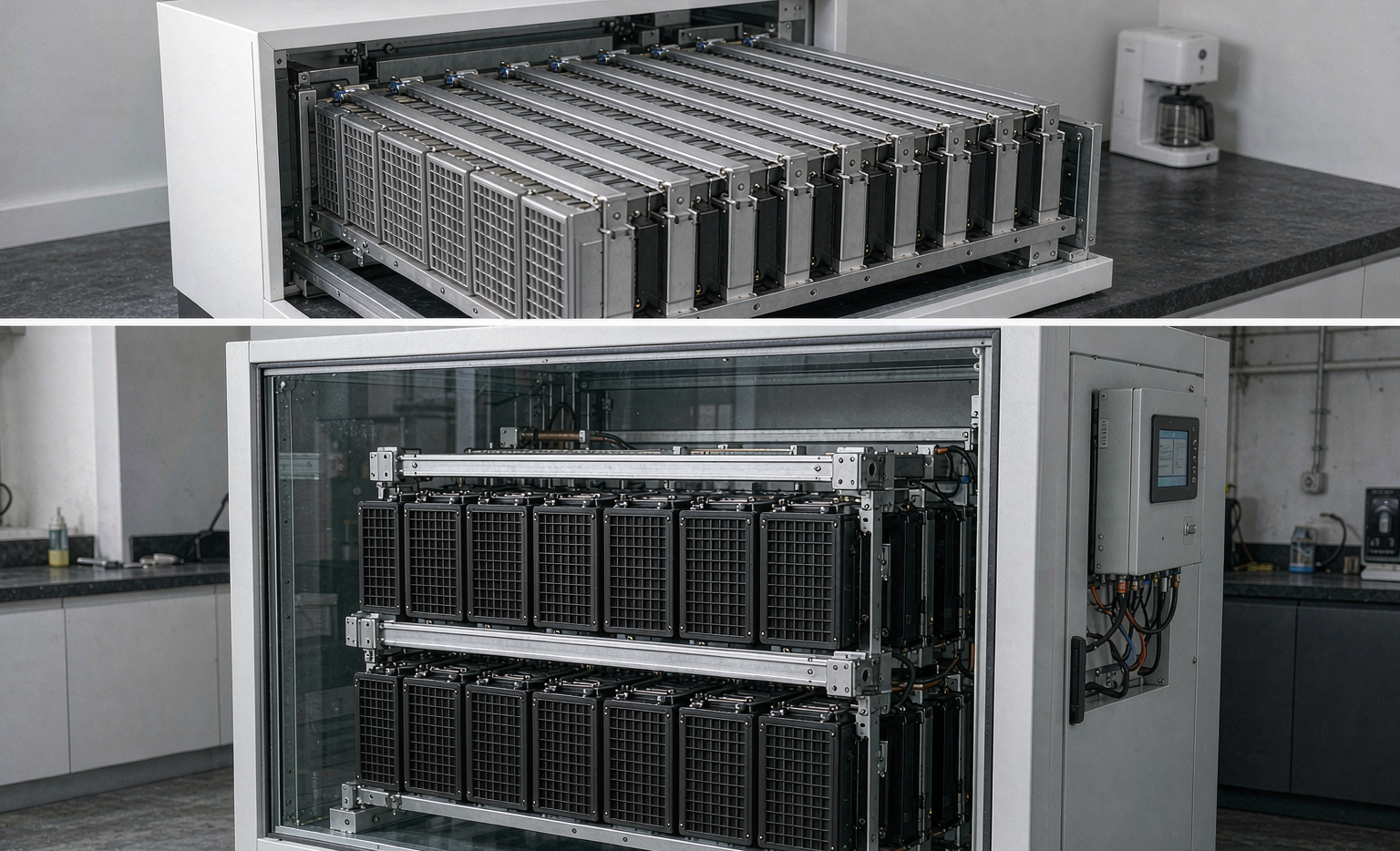
Storage customers almost never ask for Wh/kg. They ask, “how much wall space does 20 kWh take?” That is a volumetric question. Our semi-solid state storage modules land at 680–740 Wh/L at the pack level, versus 450–550 Wh/L for a good LFP bank. The practical consequence: a 20 kWh semi-solid state cabinet fits in roughly the same footprint as a 13–14 kWh LFP unit. When you are designing for apartments or utility closets — the deployment scenarios that dominate urban storage — that 30% volume saving is the difference between feasible and impossible.
I qualify every storage module on both axes. Gravimetric density tells me shipping weight and handling risk; volumetric density tells me whether the install passes the site survey. A custom battery solution for storage is only “solved” when both numbers clear the mechanical envelope, not just the energy budget.
Cycle Life and Calendar Aging Under Stationary Duty
Storage is a slow-duty application. A home battery might see one shallow cycle per day; a commercial peak-shaving bank sees two. That duty profile is gentle, and semi-solid state rewards it. On our 25°C stationary test bench we measure 1,050+ cycles to 80% state of health at 0.5C continuous discharge and 0.5C charge, with capacity retention of 91.3% at 1,500 equivalent cycles in our accelerated program. Calendar aging is the bigger story: semi-solid state cells lose about 8–11% capacity across 24 months of float-leaning duty, versus 12–16% for an equivalent NMC liquid cell left at high state of charge.
The engineering lesson I repeat to our customers: do not store a semi-solid state bank at 100% SoC. We set the default storage ceiling at 90% and the inverter target at 85% for daily cycling. That single BMS rule extends the service life from roughly 10 years to 12–15 years in the field data we have collected from earlier-generation deployments.
Temperature is the other lever. Our 40°C accelerated aging data shows capacity fading roughly twice as fast as at 25°C, so every storage cabinet we ship includes a passive ventilation path and a derate curve that caps C-rate above 35°C. I have visited too many installations where the bank was stuffed into a sealed utility closet and cooked itself to 45°C in a summer afternoon; the semi-solid chemistry survives that abuse better than LFP would, but “better” is not “immune,” and the cycle-life warranty still assumes a managed thermal envelope.
Thermal Behavior and Safety Margins
Safety certification is where storage diverges hardest from a drone battery program. A pack that fails in the air is a lost airframe; a pack that fails in a home is a structure fire. We certify our semi-solid state storage modules against UN38.3 (T.1 altitude, T.2 thermal, T.3 vibration, T.4 shock, T.5 external short, T.6 impact, T.7 overcharge, T.8 forced discharge), IEC 62133-2 for portable cell safety, IEC 62619 for industrial stationary cells, and IEC 62620 for large-format cells. For the system we add UL 9540A for fire propagation and NFPA 855 for installation density limits.
The number I watch is DCIR drift. A healthy semi-solid state cell sits at 18–26 mΩ at 50% SoC, 25°C. Our qualification rejects any module whose DCIR rises more than 35% across the first 500 cycles — in practice our production batches stay under 15%. Because the semi-solid electrolyte suppresses lithium plating at moderate charge rates, we can allow 1C charge on storage without the dendrite anxiety that forces LFP banks to throttle to 0.5C.
Rate Capability and Peak Power for Storage Inverters
Storage does not need the 30C pulses of a racing drone, but it does need headroom for motor startup, compressor inrush, and grid-support transient response. Our semi-solid state storage modules are rated for 5C continuous discharge and 10–12C pulse for 3 seconds, which comfortably covers a 0.5C daily cycle with a 3–5x surge margin for the inverter. We build storage packs on 13S–14S lithium platforms (48V nominal) for commercial units and 7S (24V) for small residential banks.
One subtle point I always explain to integrators: peak C-rate is useless without thermal headroom. Our BMS soft-limits power above 45°C and hard-cuts charge below 0°C, because even a semi-solid cell loses ionic conductivity when cold. In field deployments that logic has prevented exactly the kind of winter-morning charge fault that plagues liquid cells in unheated garages.
For grid-services storage — frequency response, demand charge reduction, and short-duration backup — this surge margin is what lets the inverter earn revenue without draining the pack. A 5C continuous rating means a 20 kWh bank can sustain 100 kW for the few seconds a frequency event demands, then return to a quiet 0.5C daily cycle. We have modeled payback periods 18–24 months shorter on commercial sites that actually use that headroom versus sites that buy the cheapest C-rate and leave it idle.
System Integration and BMS Considerations
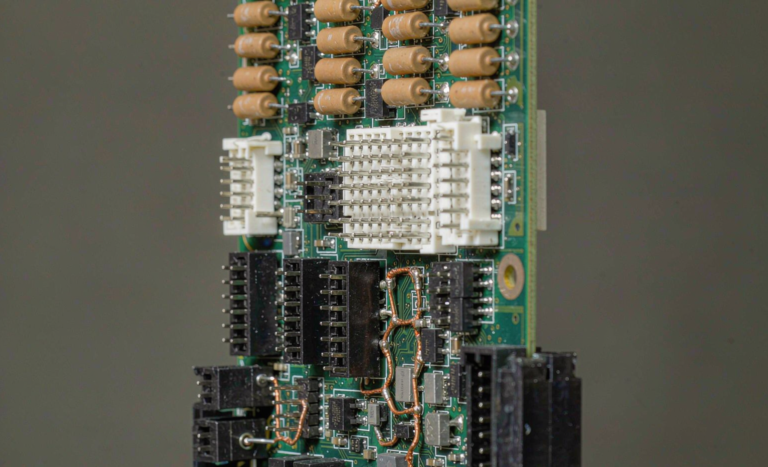
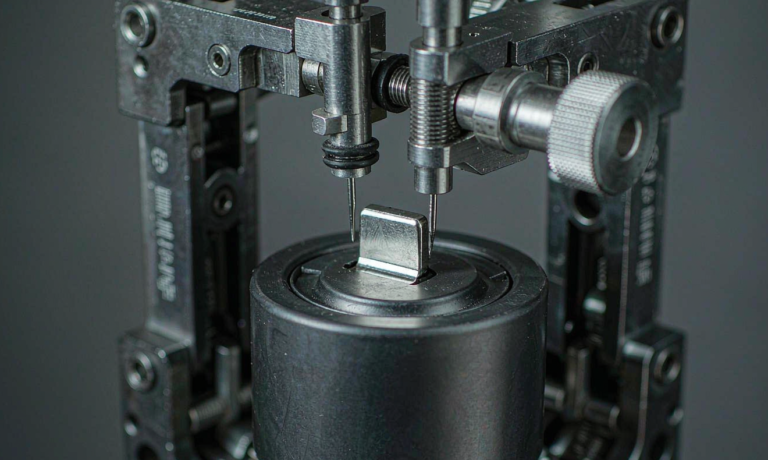
A semi-solid state storage cell is only as good as the system around it. For a custom battery solution in storage I specify four-wire Kelvin connections at every module joint (measured <0.15 mΩ), torque-verified busbars at 8–10 N·m, and cell balancing with a 20 mV threshold using ±5 mV sampling accuracy. The BMS runs IEEE 1547 grid-interactive logic for export-limited sites and UL 1741 SA inverter handshake for islanding. We validate insulation resistance at ≥1 MΩ at 500 VDC and a ground-fault trip at 30 mA within 300 ms.
What surprises new storage customers is how much of “performance” is software, not cells. A semi-solid state pack that self-discharges 1.5–3% per month and delivers 92–95% round-trip efficiency at the DC bus will still underperform if the inverter clipping, balance drift, or SoC estimator is sloppy. We tune the SoC model against actual coulomb counting, not the vendor’s optimistic curve, and that is why our storage banks hold their rated capacity through year five instead of fading by year two.
FAQ
How long does a semi-solid state storage battery actually last?
In our stationary testing at 25°C and 0.5C duty, we measure 1,050+ cycles to 80% state of health, and field data from earlier deployments shows 12–15 year calendar life when the pack is capped at 85–90% SoC. The limiting factor is usually calendar aging, not cycle count, because storage cycles are shallow.
Is semi-solid state safer than a normal lithium battery for home storage?
Yes, with caveats. Our ARC onset is 215–235°C versus ~200°C for comparable NMC liquid cells, and the reduced free electrolyte lowers fire propagation risk. But you still must certify to IEC 62619, UL 9540A, and NFPA 855 and install within the 20 kWh per unit / 40 kWh per dwelling limits. Chemistry does not replace compliant installation.
Can semi-solid state storage handle cold garages?
It handles cold better than most liquid cells because the semi-solid electrolyte resists plating, but we still disable charge below 0°C and soft-limit power above 45°C. In unheated garages we recommend a passively insulated enclosure; the cell itself is fine down to about -20°C for discharge.
Why not just use LFP for storage instead?
LFP is cheaper and extremely safe, and we still ship a lot of it. Semi-solid state wins when footprint, weight, or round-trip efficiency matters — 680–740 Wh/L and 92–95% DC efficiency versus LFP’s ~550 Wh/L. If wall space is unlimited and budget is tight, LFP is the rational pick; if space is constrained, semi-solid state earns its premium.
Does Horizon Power build custom semi-solid state storage packs?
Yes. We design custom battery solution programs from 7S residential to 14S commercial 48V banks, qualifying each against UN38.3, IEC 62133-2, IEC 62619, and the relevant UL/NFPA storage standards. Every pack ships with a tuned BMS and a documented cycle-life report from our bench.