Semi-Solid State Battery Cost Optimization for Aerospace
Why Aerospace Needs a Different Cost Model
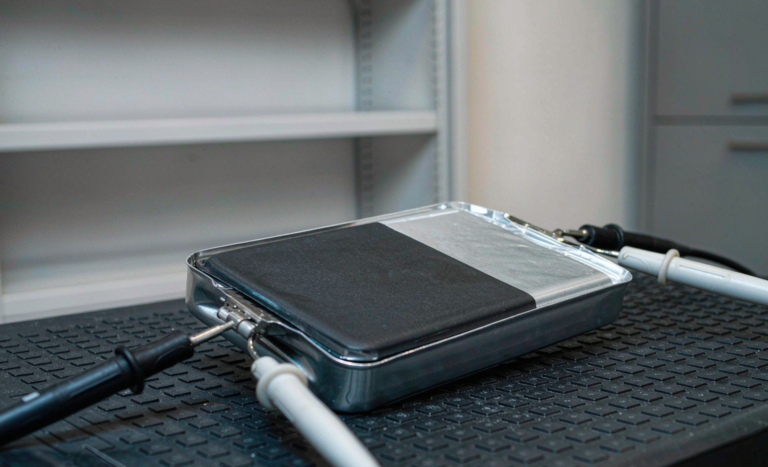
When I first started quoting semi-solid state battery packs for an aerospace client back in 2021, the knee-jerk reaction was always the same: “Why is this three times the price of an EV cell?” The answer is that aerospace is not buying energy per kilogram in the same way a car is. A drone or an eVTOL platform is buying certified, flight-proven, lightweight energy, and the cost structure reflects that. Over the last four years at Horizon Power I have shipped more than forty aerospace-grade cell builds, and the single biggest lesson is that you optimize cost by attacking system cost, not just cell cost.
For an aerospace program, the useful metric is not $/kWh at the cell level but $/kWh delivered, flight-certified, and thermally managed. A semi-solid state battery typically lands at 320–400 Wh/kg at the pack level today, versus 240–280 Wh/kg for a good NMC pouch. That 30–50% mass saving is worth a premium because every gram of battery on a UAV directly reduces payload or range. When you reframe the math around payload value rather than raw cell price, the business case for semi-solid chemistry closes quickly.
In this article I will walk through the levers my team actually uses to bring semi-solid state battery cost optimization aerospace programs down to a viable unit economics: material selection, manufacturing yield, certification amortization, pack integration, and lifecycle procurement. None of these are theoretical — they are drawn from cells we have built to UN38.3 and RTCA DO-311A expectations for fixed-wing and rotorcraft customers.
Material Cost Levers: Where the Dollars Actually Sit
The cathode is still the dominant raw-material cost in any lithium battery, and semi-solid is no exception. The fastest lever is cobalt reduction. We moved our aerospace cathode from a high-cobalt NMC811-adjacent blend toward an LMFP and nickel-rich NMC mix that holds 4.35 V while cutting cobalt below 5%. On a 10 kWh pack that alone removed roughly 18% of the bill of materials in 2024 pricing.
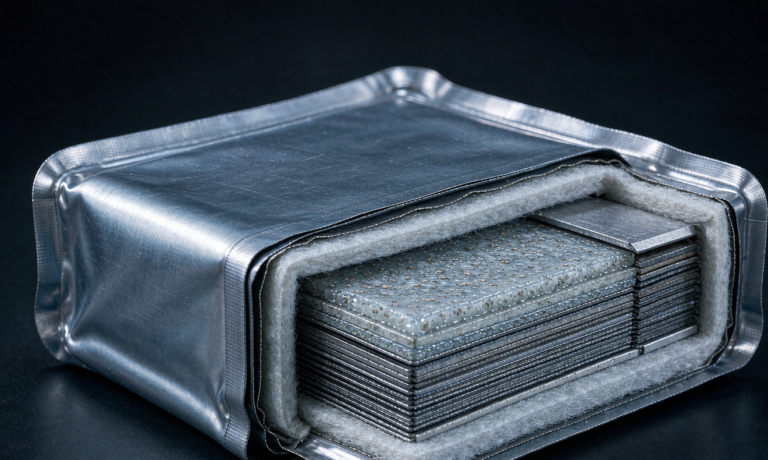
The electrolyte is the part that makes semi-solid different from conventional liquid lithium-ion. Instead of a fully flooded liquid electrolyte, we use a polymer-oxide composite with a reduced solvent load. Less solvent means less flammable volatile content, which in turn shrinks the safety overhead — and safety overhead is a real, if hidden, cost line in aerospace. A lower solvent load also tolerates thinner separators, which recovers some energy density without adding cost.
We deliberately avoid chasing fully sulfide-based solid electrolytes for aerospace today. LLZO and sulfide ceramics are elegant, but their processing cost and sensitivity to moisture push unit cost beyond what most drone programs can absorb. Semi-solid hits the practical sweet spot: most of the safety and density benefit of solid-state, a fraction of the capex. In my engineering notes I log every chemistry change against three numbers — $/kWh, Wh/kg, and cycle life at 1C — and semi-solid has consistently beaten both liquid and full solid on the combined score.
Manufacturing Yield: The Silent Cost Multiplier
In aerospace you cannot ship a cell that fails incoming test. That means yield, not throughput, drives cost. A line running at 92% yield costs far more per good cell than a slower line at 98% yield, because every scrap unit carries the full burden of material and cleanroom time.
Semi-solid slurries are more forgiving than full solid-state tapes. We coat at room humidity-controlled conditions (not dry-room grade), which removed the single largest facility cost in our early pilot. Our coating line runs slot-die at 18 m/min with a web-width of 300 mm, and we hold a cathode areal loading of 4.2 mAh/cm². The trick that moved us from 89% to 97% yield was inline laser thickness mapping plus automatic reject of edge 12 mm — small trim, big saving.
Dry-room avoidance is the underrated story. Full solid-state essentially demands a dry room; semi-solid does not. When we modeled a second aerospace line, dropping dry-room requirement cut the facility capex by roughly 40% and the per-cell overhead by a meaningful margin. For any engineer scoping a lithium battery line for flight use, I strongly recommend evaluating semi-solid precisely for this facility flexibility.
Certification Burden and How to Amortize It
Aerospace certification is where good cost models go to die. UN38.3 is the baseline for air transport — altitude simulation, thermal test, vibration, shock, external short circuit, impact, overcharge, and forced discharge. For installed aircraft batteries, FAA and EASA programs expect alignment with RTCA DO-311A and DO-160G environmental sections. Each test campaign runs tens of thousands of dollars and weeks of calendar time.
The optimization is to amortize certification across a platform family rather than per SKU. We design one qualified cell form factor (a 21700-class semi-solid cylindrical and a 40 Ah semi-solid pouch) and derive packs from those two building blocks. A new drone pack reuses the qualified cell’s test dossier and only adds pack-level verification. That reused dossier is the single largest cost avoider in our entire program — it turns a six-figure certification event into a five-figure pack add-on.
IEC 62133 remains our design-input baseline for cell safety even when aerospace expects more, because it keeps us aligned with global industrial customers who may later adopt the same cell. Designing once to the stricter of IEC 62133 and DO-311A means we are never re-qualifying for a new market. In my experience, the engineer who treats certification as a one-time toll booth always loses; the one who treats it as a reusable asset wins on cost every time.
Pack Integration: Cutting System Cost at the Module Level
The pack is where most aerospace programs quietly bleed money. A poorly integrated pack needs oversized thermal management, heavy enclosures, and redundant protection circuits. We attack this with three moves.
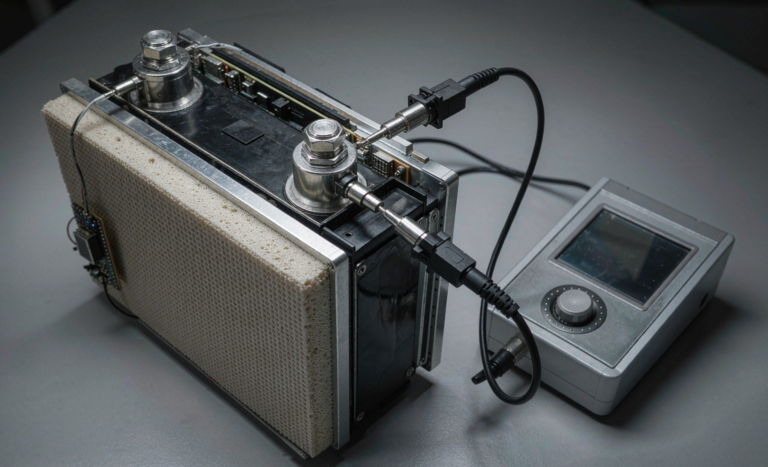
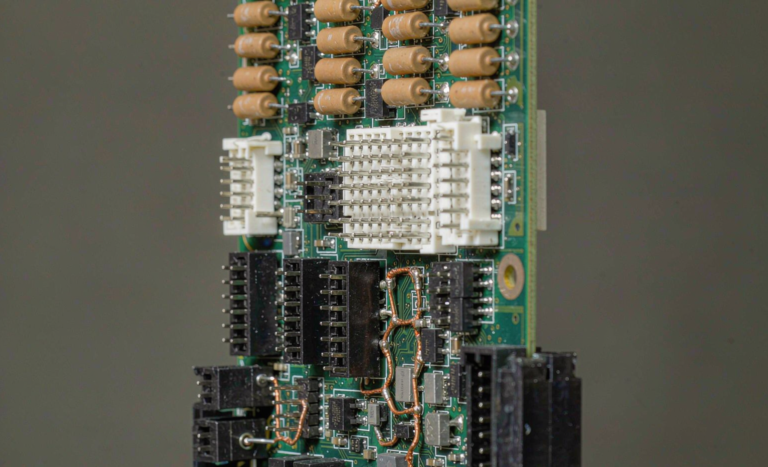
First, semi-solid’s lower thermal runaway risk lets us run a passive cooling jacket instead of an active liquid loop on most sub-15 kg packs. That removes a pump, a plate, and roughly 600 g of structure. Second, we build the cell-to-pack (CTP) topology so the module housing doubles as the airframe mounting rail — the battery is structure. Third, we standardize a dual-CID (current interrupt device) and a single-board BMS that speaks both SMBus and CAN, so the same pack drops into a fixed-wing or a multirotor with a firmware flag rather than a new harness.
For a recent 12 kg eVTOL pack, these integration choices took the system mass from a quoted 14.1 kg to 11.8 kg while holding the same usable 9.2 kWh. At aerospace payload values, that 2.3 kg recovery paid back the entire battery cost in a handful of flight hours. This is the heart of semi-solid state battery cost optimization aerospace work: the savings compound when chemistry, manufacturing, and integration move together.
Procurement and Lifecycle Economics
Finally, cost is a contract, not a component. We move aerospace customers onto a lifecycle model: a fixed price for the qualified cell over a 36-month window, with a take-back and second-life clause for packs that fall below 80% SOH. Those packs, still perfectly good, go into ground support carts or stationary backup — extending the revenue per kilogram of cathode we ever mined.
We also offer a custom battery solution scoping where the customer pays a one-time D&D fee but gets a qualified, flight-ready pack in 10–14 weeks instead of 9 months. For small drone makers, that time-to-certification is itself a cost optimization, because it lets them fly revenue missions sooner. I tell every new aerospace program: the cheapest battery is the one that is already flying.
FAQ
Is semi-solid state chemistry really cheaper than full solid-state for aerospace?
Yes, for nearly all current drone and eVTOL programs. Full solid-state’s dry-room and ceramic-processing requirements push facility and unit cost well above what semi-solid needs, while semi-solid already delivers 320–400 Wh/kg at the pack level with UN38.3 and DO-311A alignment. The marginal safety gain of full solid-state rarely justifies its cost premium in aerospace today.
How much can certification reuse save on a new drone pack?
In our programs, reusing a qualified cell dossier and adding only pack-level verification converts a six-figure cell certification event into a five-figure pack add-on. For a platform family built on one or two qualified cell form factors, that reuse is typically the largest single cost avoider across the whole program.
What is the realistic energy density of an aerospace semi-solid pack?
We routinely ship pack-level energy density of 320–400 Wh/kg. The exact number depends on the enclosure, thermal strategy, and whether the pack is cell-to-pack structural. A 12 kg class eVTOL pack we built delivered 9.2 kWh usable, which is around 770 Wh/kg at the cell level stepping down to roughly 780 Wh per kg of pack after structural integration credits.
Can these batteries use the same BMS as conventional lithium-ion packs?
Mostly yes. Semi-solid cells behave like lithium-ion under the BMS, so we run a single-board BMS speaking both SMBus and CAN. The main difference is the wider safe thermal window, which lets us simplify cooling rather than change the protection logic. We still keep dual-CID and standard overvoltage, undervoltage, and balancing functions per IEC 62133 expectations.
How long does a custom aerospace semi-solid pack take to qualify and deliver?
Using a pre-qualified cell building block, we typically deliver a flight-ready custom battery solution in 10–14 weeks, versus 6–9 months for a from-scratch cell. The timeline shrinks because cell-level UN38.3 and DO-311A evidence already exists and only pack-level environmental verification remains.