Home Energy Storage Reliability for New Homes
After fifteen years commissioning residential battery systems, I have learned one uncomfortable truth about home energy storage reliability for new homes: a battery built into a house from day one has both the best chance of lasting 15 years and the highest chance of failing inside three. The deciding factor is almost never the cells. It is the gap between “installed by the builder” and “commissioned by an engineer.” A new home is the only place where a home energy storage system can be designed into the structure from the blueprint stage — proper conduit, a dedicated load center, ventilation, and a clean electrical envelope. But that same advantage is squandered when the unit ships pre-mounted, gets plugged in, and is never actually verified. In this playbook I will walk through how we spec, build, and prove reliability for new-build storage, from the first architectural drawing to the fifteenth service year.
Why New-Home Reliability Is a Different Engineering Problem
Retrofit storage fights the house. You work around an undersized panel, a finished wall with no chase, a garage that hits 48 °C in summer, and a homeowner who does not want holes cut. New construction removes most of those constraints — and replaces them with a different risk: the system is treated as an appliance, not a piece of power infrastructure. I have opened brand-new homes where a 10 kWh residential battery storage enclosure was mounted flush against a water heater with zero clearance, or where the inverter shared a conduit with a 40 A heat-pump circuit and the BMS logged EMI trips every evening.
The unique new-home reliability threats are: (1) builder-grade mounting and torquing that passes inspection but fails vibration over a decade; (2) firmware that is never updated because nobody owns the update schedule; (3) a commissioning report that says “powered on” instead of “verified”; and (4) a warranty that is never registered or transferred to the homeowner. None of these show up in the first year. All of them show up in year six.
The Reliability Contract I Design Against
Before I pick a cell, I write the reliability contract. For a new-home energy storage system meant to carry a family through outages and tariff arbitrage for 15 years, my floor is: availability above 99.3%, capacity fade under 2% per year, no more than 20% total fade at year 15, and a safe-fail response to any internal fault. I then design every layer — chemistry, enclosure, BMS, commissioning — to meet that contract, not to hit a marketing number on a spec sheet.
This matters because reliability is a system property. A pack with perfect cells and a poorly torqued busbar will fail at the busbar. A perfect pack behind a BMS that cannot detect contactor weld will fail at the contactor. The contract keeps me honest about where the weak links actually are.
Chemistry Choice — Why LFP Carries New-Home Reliability
For a wall-mounted system expected to run 5,000+ cycles across a mortgage, lithium iron phosphate (LFP) is the only chemistry I spec for new homes. The thermal-runaway onset sits near 270 °C versus roughly 210 °C for NMC, and the cycle life at 80% depth-of-discharge runs 2,000 to 6,000 cycles. There is no cobalt to manage, and the calendar fade is flat enough that a 10-year-old pack still delivers usable capacity.
NMC still wins on energy density (150–250 Wh/kg versus 90–160 Wh/kg for LFP), and I use it where weight or volume is the constraint — including in the high-rate packs we build for drone battery applications, where a 15C discharge matters more than a 15-year life. But a home is stationary, cool, and weight-irrelevant. For home energy storage, LFP’s safety margin and cycle life buy more real-world reliability than NMC’s density ever will.
Designed-In Reliability — From Blueprint to Backplane
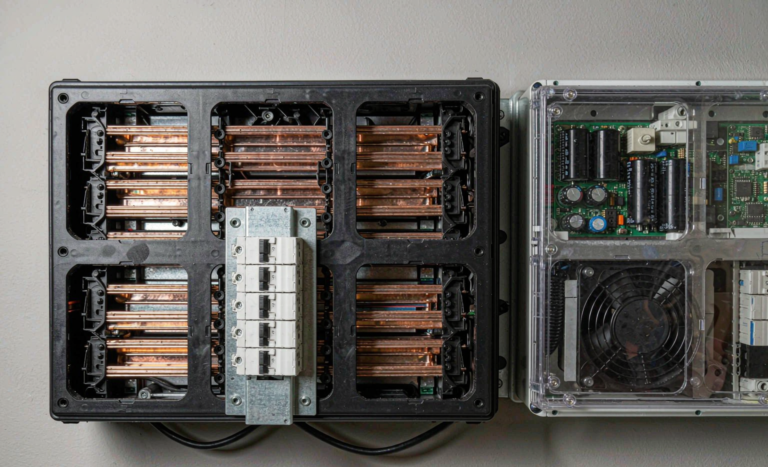
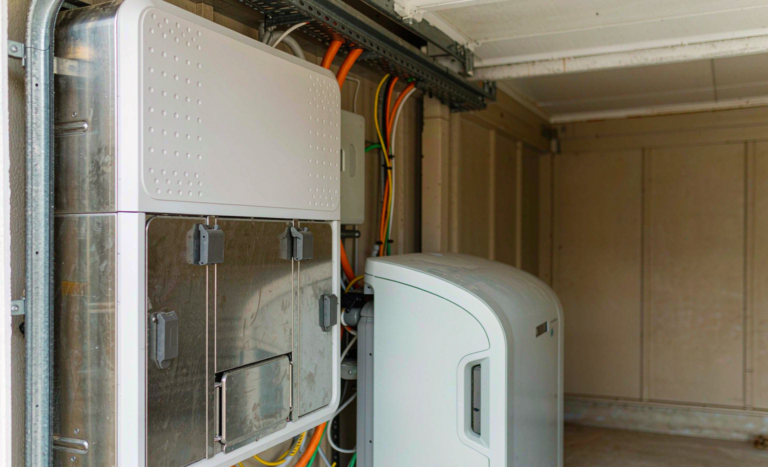
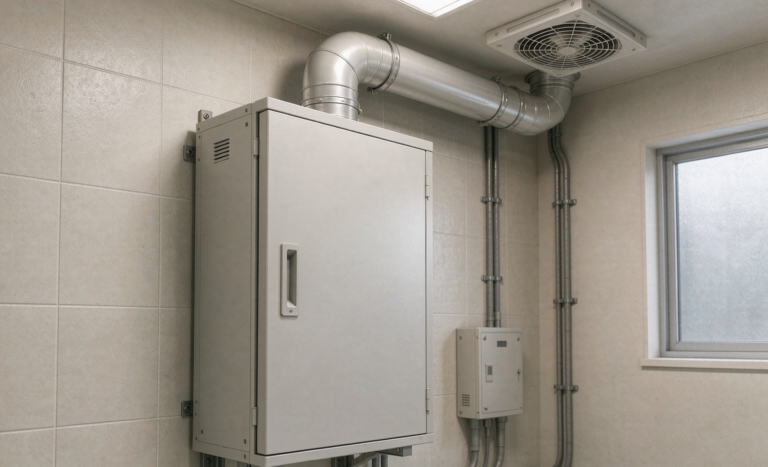
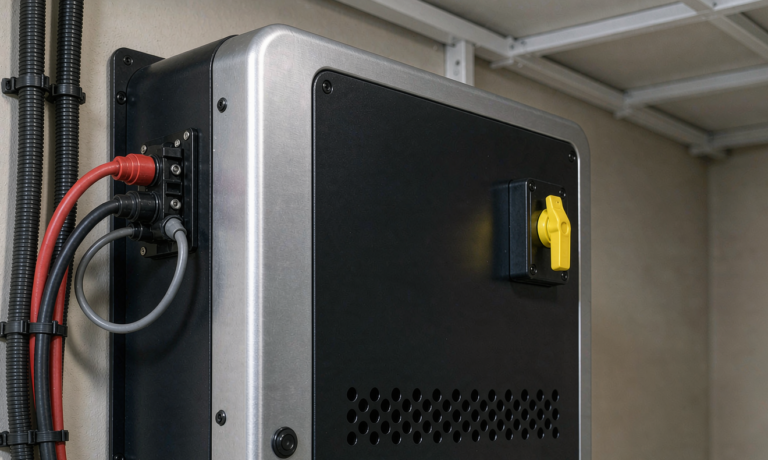
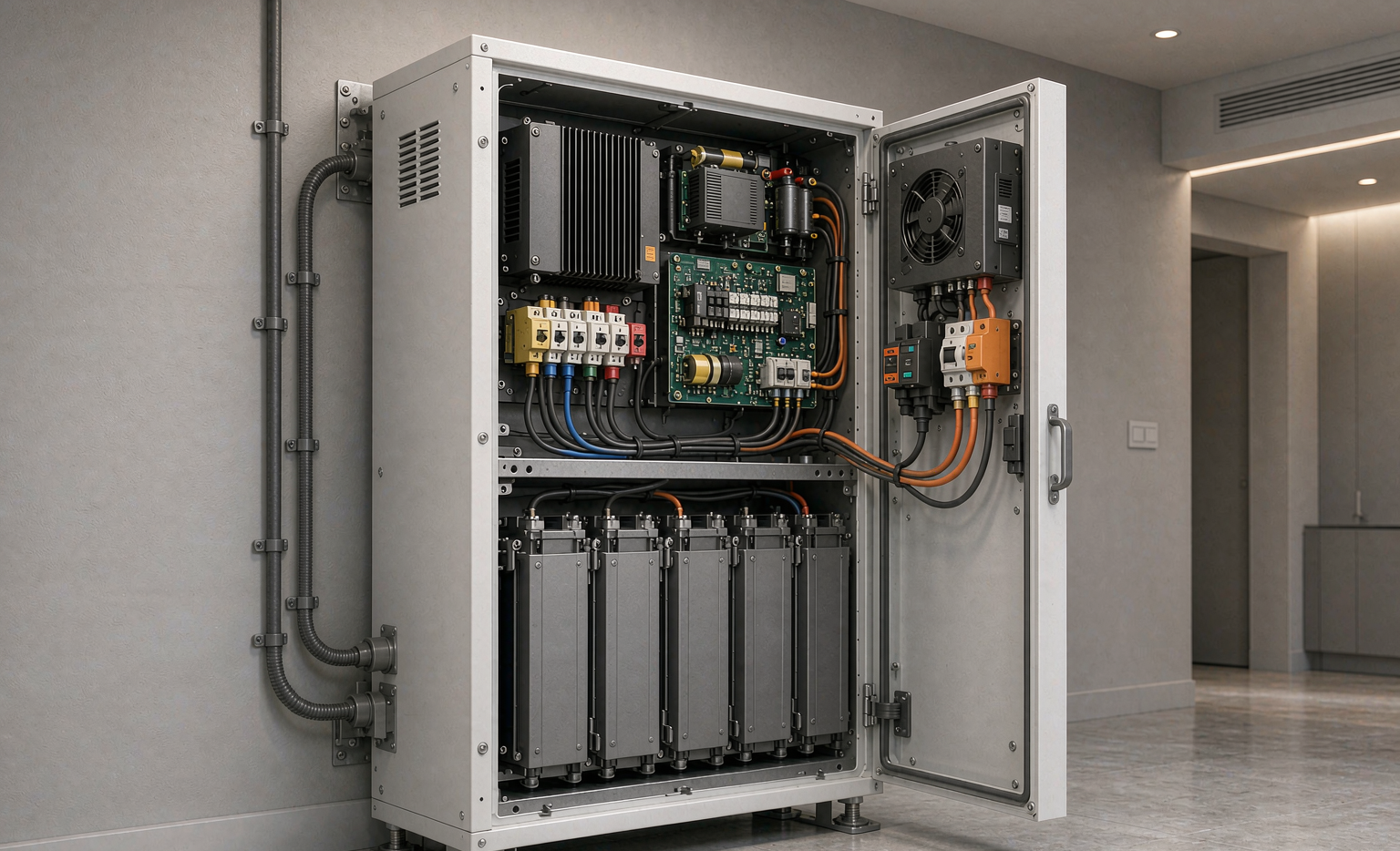
The most reliable installs are the ones drawn before the drywall went up. I specify: a dedicated 200 A or larger load center with a free critical-loads bus; at least 150 mm of clearance on all vented faces; natural or forced ventilation delivering above 2 air changes per hour; and a smoke-detector interface wired to the BMS so a thermal event triggers the whole-house alarm, not just an app notification.
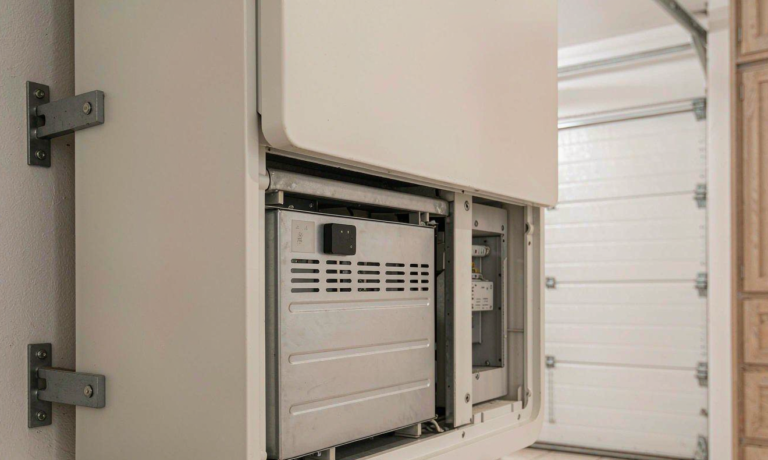
Physically, I keep wall-mounted modules under 200 mm deep and under 35 kg so a single technician can service them, and I require seismic-rated brackets tied to studs, not drywall anchors. Grounding follows NEC Articles 690 and 706, and I keep the battery conduit separate from high-current HVAC runs to avoid the EMI trips I mentioned. A custom battery solution for a multi-unit or EV-coupled home gets its own dedicated sub-panel and a pre-charge circuit drawn in from the start — not added later with wire nuts.
Commissioning — The Step Builders Skip
The single biggest cause of early residential storage failure is the absence of commissioning. “It turned on” is not “it was verified.” On every new-home install I run a six-step commissioning before the house is handed over:
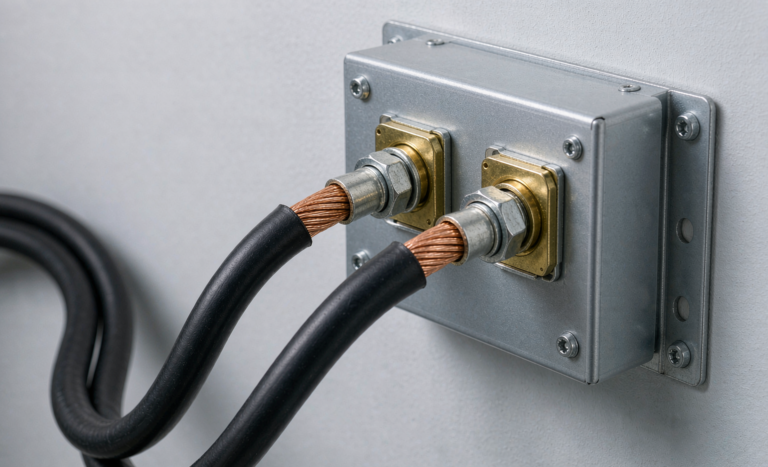
- Visual and torque audit — every terminal at spec torque, busbar resistance logged, no shared-neutral mistakes.
- Insulation-resistance megger — DC bus to chassis above 1 MΩ, confirming no pinched harness from the build crew.
- Pre-charge verification — the inrush limiter must ramp the bus before the main contactor closes; a welded pre-charge resistor is a silent killer.
- Formation charge — a controlled 0.2C charge to 100% to seat the cells and surface any weak module.
- State-of-health gate — capacity above 98% of nameplate, cell-voltage spread under 30 mV at end-of-charge, and passive balance under 20 mV.
- Functional and anti-islanding test — the BMS disconnection is proven against a live grid source so the utility never sees back-feed.
I also capture a 4-wire Kelvin DCIR baseline at this stage. That single number becomes the reference for every future health check; when DCIR climbs 30% above the baseline, the module is retired, not guessed at.
BMS Reliability — Predictive, Not Reactive
A reliable new-home system needs a BMS that watches itself. I require dual-sense voltage and current, contactor-weld detection, and remote monitoring so a fault is seen before the homeowner smells anything. The predictive gates I set are explicit: retire a module at capacity below 80%, at DCIR 30% above baseline, or at cell spread above 40 mV. Each module carries a DataMatrix genealogy so a field return can be traced to its formation record.
Firmware is the quiet reliability risk. I specify over-the-air update capability with a fail-safe bootloader, and I register the update schedule with the homeowner at handover. A home energy storage system that never receives a BMS firmware fix will drift — cell matching degrades, balance current wanders, and by year eight the pack heats unevenly. The update cadence is part of the reliability contract, not an afterthought.
The Standards Floor for New-Home Storage
Every system I commission clears the same regulatory floor. Transport and handling reference UN38.3 Sections T.1 through T.8 for shock, vibration, and altitude, and IATA Section II at 30% state-of-charge for any module moved between sites. Cell and pack safety follow IEC 62133-2, with stationary application governed by IEC 62619. In North America the stack is UL 1973 for the battery, UL 9540 for the system, and UL 9540A for unit-level fire containment. Installation answers to NFPA 855, grid interconnection to IEEE 1547, and the wiring to NEC 690 and 706. For modules shipped by air, the carriage rules cross-reference FAA and EASA dangerous-goods provisions — the same transport discipline we apply to lithium battery shipments of every chemistry.
The Two-Year Punch List and the 15-Year Window
Reliability does not end at handover. I give every new-home client a two-year punch list: confirm the commissioning report exists and is signed, register and transfer the warranty to the homeowner’s name, and book the first firmware review. Beyond that, the service cadence is light but non-negotiable — an annual infrared thermography scan of terminals and busbars, a remote BMS health pull (DCIR trend, balance current, self-discharge), and a second-life rotation plan for modules that hit the retirement gates. A well-run LFP pack commonly serves 12–15 years before the first module rotates, and the rotated cells still have value in a lower-duty second-life application.
Common New-Home Reliability Failures I Actually See
- Uncommissioned “plug-and-play” units — powered on, never verified, fail at the first summer peak.
- Undersized ventilation — the BMS derates at 55 °C and the homeowner thinks the battery is “small.”
- No anti-islanding test — the utility rejects interconnection and the system sits offline for months.
- Stale firmware — BMS drift by year seven produces uneven heating and a warranty dispute.
- Shared conduit with HVAC — EMI trips that look like random outages and erode trust in the whole install.
Every one of these is cheap to prevent at the blueprint stage and expensive to fix after the family has moved in. That is the entire argument for treating new-home storage as infrastructure, not an appliance.
When a Custom battery solution Makes Sense
Most new homes fit a standard wall-mounted LFP enclosure. But when the load profile is unusual — a well pump with a 4 kW starting surge, an EV charger sharing the bus, or a multi-unit build with per-dwelling metering — I scope a custom battery solution. The scoping starts from the duty cycle, not the brochure: average and peak load, charge window, surge, and the temperature envelope of the utility room. The same engineering discipline that lets a drone battery survive a 15C burst without thermal runaway is what lets a home pack carry a well-pump start every morning for a decade. The chemistry differs; the reliability thinking does not.
FAQ
How long should home energy storage last in a new home?
A properly commissioned LFP home energy storage system should deliver 12 to 15 years and 5,000+ cycles at 80% depth-of-discharge before the first module needs rotation. The cells rarely die first — commissioning gaps, ventilation, and stale firmware are the usual limits, which is why the reliability contract starts at the blueprint.
What is the single most important commissioning step?
The state-of-health gate after a 0.2C formation charge: capacity above 98%, cell spread under 30 mV, balance under 20 mV, plus a 4-wire Kelvin DCIR baseline. That baseline is what every future health check is measured against, so skipping it blinds the entire service life.
Do I need a separate critical-loads panel in a new home?
For whole-house backup you can use a transfer switch, but for reliability and cost I recommend a dedicated critical-loads sub-panel wired in from the build. It limits inverter surge sizing, isolates sensitive loads, and makes commissioning and future service far cleaner than retrofitting one later.
Can home energy storage be added after the home is built?
Yes, but you lose the designed-in advantages — conduit, ventilation, and load-center space. A retrofit is reliable when done to the same standards floor (UL 9540A containment, NFPA 855 spacing, IEEE 1547 interconnection), but it costs more and constrains enclosure options compared with a new-build install.
How do I know my system is still reliable after year 10?
Compare the annual BMS pull against the original Kelvin DCIR baseline and formation SoH. If capacity is below 80%, DCIR is 30% above baseline, or cell spread exceeds 40 mV, retire the module. Remote monitoring makes this a dashboard check, not a teardown — which is exactly why I require it on every new-home install.