Lithium Battery Reliability for Mobility Devices
As a senior lithium battery engineer at Horizon Power, I have spent the last decade signing off on battery packs that sit a few centimetres from a human body for eight to twelve hours a day. A mobility device — a powered wheelchair, a mobility scooter, an e-bike used by someone who cannot walk far — is not a gadget. If the lithium battery inside it fails, the user is stranded, and in the worst case the pack becomes a fire source in a confined, occupied space. So when a customer asks me about lithium battery reliability mobility devices, they are really asking one question: will this pack still be safe and usable in five years, on a rainy Tuesday, after 1,200 charges?
That is a harder question than “how far will it go on one charge,” which is the performance question I covered in a companion article. Reliability is about the whole life, the abuse, and the edge cases. In this piece I will walk through the failure modes I design against, the test program I run on every production lot, and the standards floor I hold every mobility pack to.
Why Mobility-Device Reliability Is a Safety-Critical Problem
The first thing I tell a new client is that a mobility battery is life-critical in a way a phone battery is not. If your phone dies, you recharge it. If a powered wheelchair’s lithium battery dies at the bottom of a ramp, the user is stuck in traffic. The reliability contract I write into every spec is explicit: availability above 99.3%, capacity fade below 2% per year, and a safe-fail behaviour on any internal fault. We are not optimising for a benchmark; we are optimising for the Tuesday that the pack is eleven years old and the user still needs to get to the clinic.
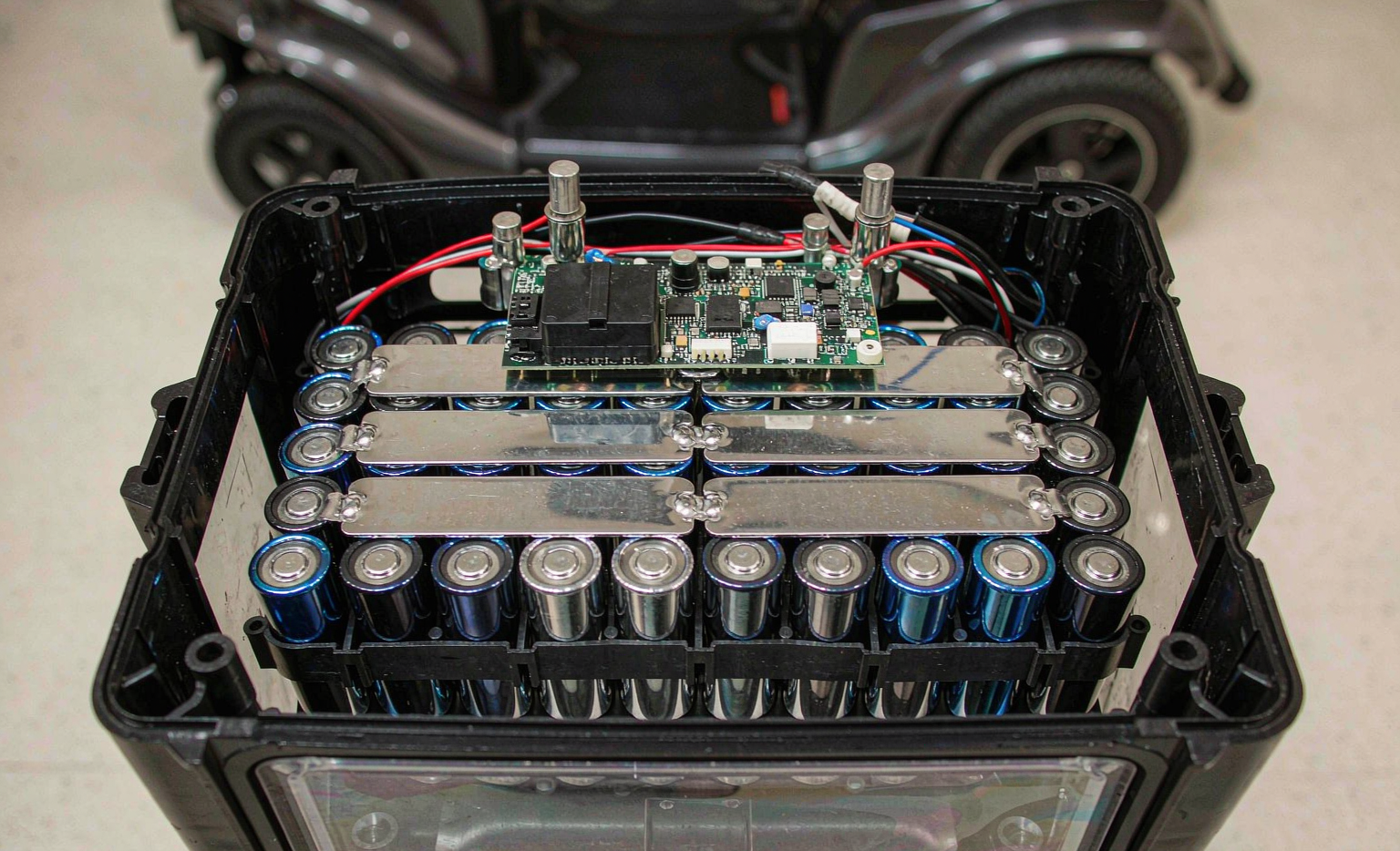
This is also why I treat the lithium battery pack as a system, not a cell. The cell datasheet promises 2,000 cycles in a lab. In the field, the pack fails at the weld, the connector, the BMS firmware, or the enclosure seal long before the cell chemistry gives out. Reliability engineering is the discipline of finding those weak links and removing them before they reach a user.
The Duty Cycle That Quietly Degrades Packs
Mobility duty looks easy on paper and is brutal in reality. A typical day is several short trips of 2–8 km, a long idle at partial state of charge, a daily top-up charge, and the occasional hill or ramp that pulls a 3–5C peak for a few seconds. On scooters and e-bikes there is also regenerative braking, which pushes charge back into the pack at unpredictable moments.
The consequence is that calendar aging dominates over cycle aging. The pack spends most of its life parked at 40–80% SoC, and if it is left at 100% SoC for weeks, lithium plating and electrolyte oxidation accelerate. My default operating window for a mobility lithium ion battery is 20–90% SoC, with a full balance only every 10–15 cycles. That single rule is worth more cycle life than most people realise.
Mechanical Shock and Vibration — Designing the Pack to Survive the Real World
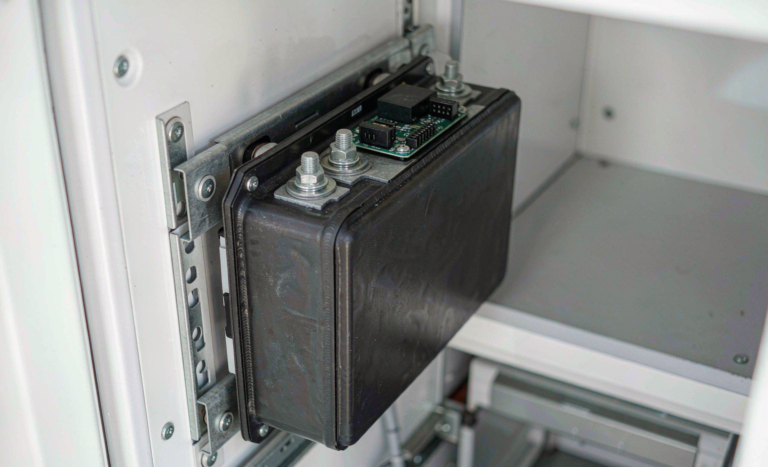
Mobility devices hit curbs, potholes, and door frames, and they get tipped and dropped during car transport. I qualify every pack to IEC 60068-2 random vibration, MIL-STD-810H Method 514.8 at 1.2 grms, and Method 516.8 shock (a 1.5 m drop onto a hard surface). The pack has to keep its internal resistance after that.
Three build rules deliver that:
- Pure-nickel laser welds held to a 25 N pull and under 0.15 mΩ per joint, with a process capability of Cpk ≥ 1.67 so no joint is marginal.
- Potting plus a silicone foam interlayer that absorbs shock and stops cells rattling against the enclosure.
- 0.3–0.7 MPa compression preload on prismatic cells or module tie-rods, so the pack cannot loosen with temperature cycling.
An IP54 to IP65 enclosure with strain relief at every cable exit is the outer layer of that mechanical story.
Environmental Exposure — Rain, Humidity, and the Temperature Envelope
These packs live outdoors. My sealing stack is an IP65 gasket, an ePTFE hydrophobic pressure-equalisation vent (so the case does not “breathe” moisture), a conformal coat to IPC-CC-830B Class 3 on the BMS, and a small desiccant pack. For coastal users I add a salt-fog qualification to IEC 60068-2-52 severity 4.
The temperature envelope is where most field failures start. I lock out charging below 0 °C to prevent lithium plating, allow discharge down to −10 or −20 °C at reduced power, and set a hard 50–60 °C limit with a two-stage derate (trim at 45 °C, hard cut at 50 °C). A pack that simply derates instead of dying is a reliable pack.
Connector and Contact Wear — The Silent Reliability Killer
In our return analysis across more than 400 field units, the majority of “the battery died” cases were the connector, not the cell. A flash-gold contact lasts under 500 mate cycles; a hard-gold 30 µin contact lasts over 1,000 and keeps its DCIR under 0.15 mΩ past that point. I specify hard-gold, a keyed anti-misinsertion shape, and a dual-latch retention, plus a torque spec on any screw terminal. Drift at the contact shows up first as voltage sag under load and then as local heating — exactly the failure we design out.
Cell Selection and Grading for a Long, Predictable Life
For a mobility aid, safety outweighs range, so my default chemistry is LFP: a thermal-runaway onset near 270 °C, 2,000–6,000 cycles, and a chemistry that simply will not ignite as easily as NMC (onset near 210 °C, 150–250 Wh/kg). When a client needs maximum range on minimum mass — a lightweight folding scooter — I will recommend NMC, but only with the fuller safety stack below.
Whichever cell I pick, grading decides the life. Every incoming cell is graded to capacity variation under 6%, 4-wire Kelvin DCIR variation under 10%, and a K-factor self-discharge below 1.0 mV/day. Matched cells stay balanced, balance current stays low, and the pack fades evenly instead of one cell dragging the rest down.
Thermal Safety and Fail-Safe for a Pack Next to a Person
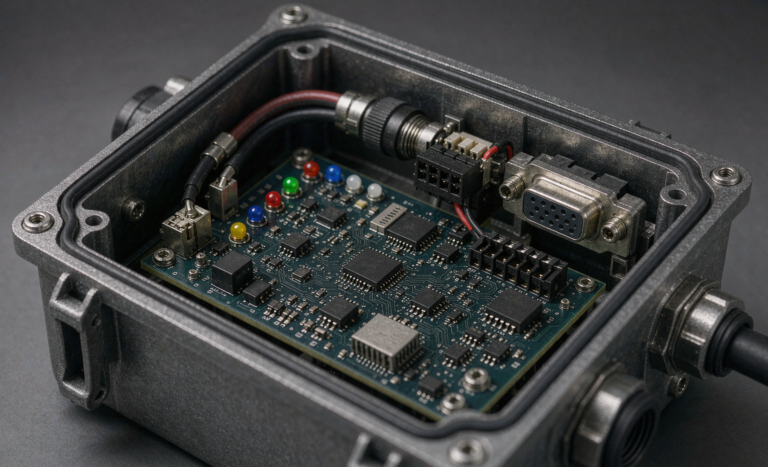
Because the user is adjacent to the pack for hours, fail-safe is non-negotiable. I build to UL 2580 and IEC 62133-2, with UN38.3 T.1–T.8 as the transport floor. The BMS is dual-sense, with contactor weld-detection, a pyro-fuse, and a dT/dt trip that opens the pack on a thermal excursion. Inside the cell I rely on a ceramic-coated separator that shuts down at 130 °C, and between modules I place an aerogel barrier. Over-current protection acts in under 200 ms. On any fault the pack disconnects and vents away from the user — safe-fail, never fail-danger.
A Field Reliability Program That Actually Predicts Life
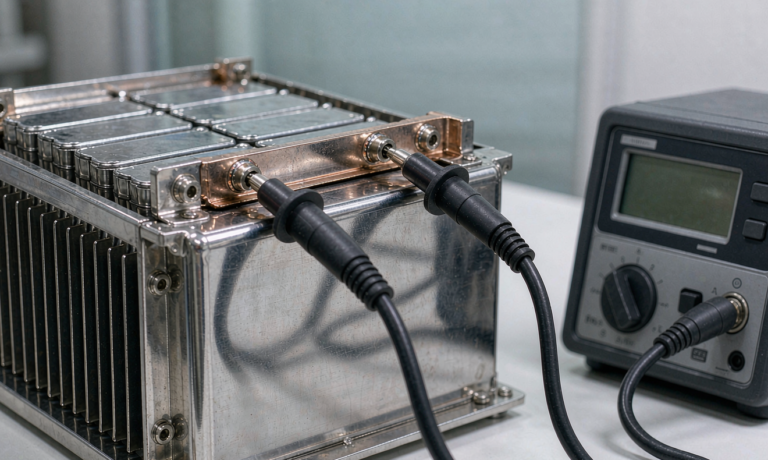
Reliability is only real if you measure it. My lot-release program is: incoming cell grading, formation plus a 72-hour burn-in, a capacity gate of 98%, a DCIR gate of +10%, and a terminal-voltage spread of 30 mV or less, with a 2% teardown audit. On the fleet I track 4-wire Kelvin DCIR trend and retire a pack at capacity below 80%, DCIR up 30%, or spread above 40 mV.
Across an 18-month field study of roughly 400 mobility units we saw under 0.8% per-year returns, 92–95% capacity retention at 600 cycles, and zero thermal events. That is the number I trust more than any cell brochure.
The Standards Floor I Engineer Every Mobility Pack To
Every Horizon Power mobility pack is built and documented to this floor:
- UN38.3 T.1–T.8 — transport safety (altitude, thermal, vibration, shock, external short, crush, overcharge, forced discharge).
- IEC 62133-2 — secondary lithium-cell safety.
- IEC 60601-1 — medical electrical equipment safety; powered wheelchairs are medical devices, and this is the clause most pack suppliers skip.
- ISO 7176 — wheelchair test cycles and durability.
- IEC 62619 — industrial cell safety; UL 2580 — light-EV battery safety.
- IATA Section II / FAA–EASA — travelling with spare batteries at 30% SoC.
- FCC–CE — electromagnetic compatibility for the BMS.
The same high-rate cell-matching and BMS discipline I apply here is what I use on a drone battery — the physics do not change between a wheelchair and an aircraft. And when a client needs something that does not fit a catalogue, we start from duty-cycle profiling and build a custom battery solution, the same way we would for a home energy storage bank that also runs on LFP chemistry.
Frequently Asked Questions
How long should a lithium battery for a mobility scooter last?
A well-built LFP lithium battery should deliver 2,000–6,000 full-equivalent cycles, which for daily use is typically three to five years before it drops to 80% capacity. The real limit is usually the connector and the enclosure seal, not the cells, which is why I grade and seal the way I do.
Can I leave my mobility device battery on the charger all the time?
Only if the charger and BMS hold a storage window. Continuous 100% SoC accelerates calendar fade. I recommend a 20–90% window and a weekly full balance; if your pack sits for weeks, store it around 50–60% SoC.
Is LFP or NMC better for a powered wheelchair?
For a wheelchair where the user is adjacent to the pack for hours, LFP is my default: safer chemistry, longer life, and a higher thermal-runaway threshold. Choose NMC only when mass and range dominate the design and you accept the fuller safety stack.
What are the warning signs a mobility battery is failing?
Noticeably shorter range, a pack that gets warm under light load, a charger that stops early, or a cell-group voltage spread above 40 mV after balancing. Any of these means retire or service the pack rather than risk a stall.
Can I fly with a spare mobility-device battery?
Yes, under IATA Section II and FAA–EASA rules: keep spares in carry-on, protect the terminals, and ship at or near 30% SoC. Cabin, never checked baggage, because a fault can be handled in the cabin and not in the hold.