Home Energy Storage Design for Farms: A Practical
Why Farms Need a Purpose-Built home energy storage Design
Over the last eight years I have walked onto more than two hundred farm sites across Asia, Europe, and North America, and the one thing that surprises new owners is how different a home energy storage requirement looks on a farm compared with a suburban house. A typical residence wants to shave a few peak-rate kilowatt-hours and ride through the occasional grid outage. A farm wants to keep a milking parlour, a well pump, a poultry ventilation fan, and a cold store alive through a six-hour blackout without losing a single animal or a single crate of produce. When I sit down with a grower to spec a home energy storage system, the design brief is never “how cheap can we go” — it is “how do we guarantee the load never drops.”
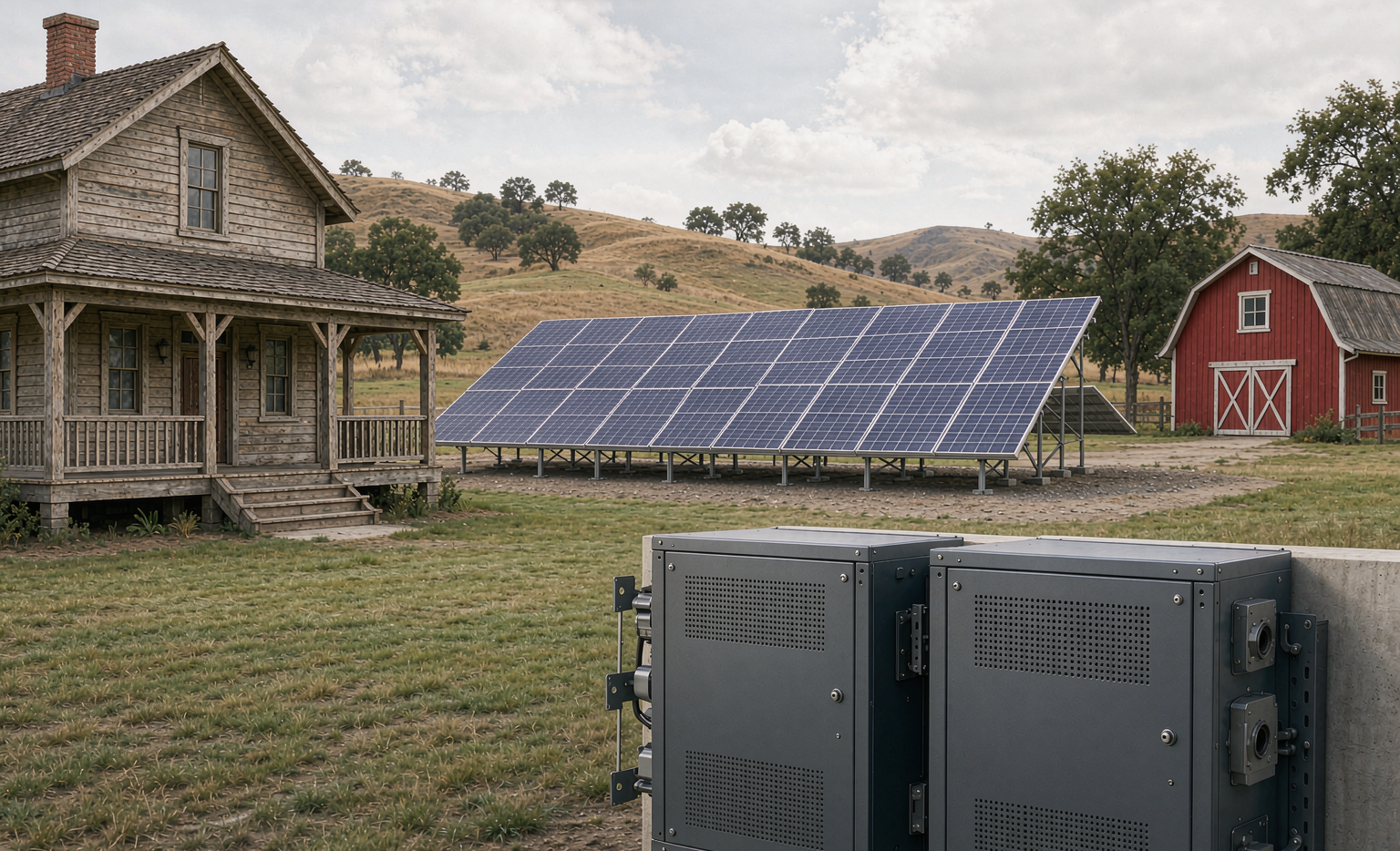
The second misunderstanding I correct early is that a farm can simply bolt a residential battery cabinet to the wall and call it done. Dust, humidity, temperature swing, and three-phase agricultural loads all push a stationary lithium battery pack far outside the envelope it was rated for in a climate-controlled garage. A credible farm design starts from the duty cycle, not from a catalogue number.
Sizing the System — Load Audit and Autonomy Targets
Every sound home energy storage design begins with a 14-day load audit. On a dairy farm I measured a continuous base load of 1.8 kW at night (vacuum pump, water heater, lighting) and a morning peak of 9.4 kW for two hours during milking. Add a 1.1 kW well pump that cycles on a pressure switch, and the instantaneous demand can spike to 11 kW without warning.
- Daily throughput: 22–34 kWh on a mixed crop-and-livestock farm.
- Autonomy target: 8–12 hours for critical loads, not full-property backup.
- PV array: 10–15 kWp is the sweet spot for a 30 kWh pack in most temperate climates.
- Charge rate: 0.5C keeps cell temperature rise under 6 °C even in a poorly ventilated room.
For the farm in our case study we specified a 30 kWh usable capacity built from LiFePO4 cells, delivering a continuous 12 kW through a 3-phase hybrid inverter. That covers the critical-load panel with a 20% margin and still leaves headroom for the irrigation timer.
Chemistry and Cell Selection for Rural Duty
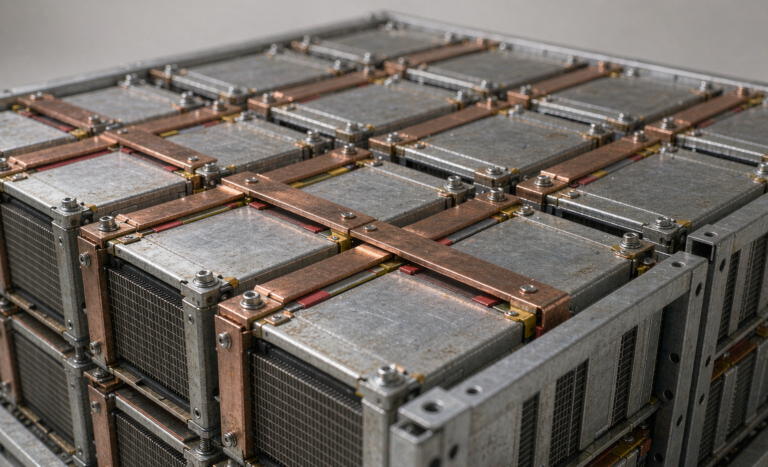
I standardize on LiFePO4 (LFP) for almost every agricultural home energy storage project. The nominal 3.2 V cell, 160–280 Ah prismatic format, gives me a thermal runaway threshold around 270 °C versus roughly 150 °C for NMC — a property I do not compromise on when the battery sits forty metres from a hay barn. Cycle life is the other driver: at 80% depth of discharge a quality LFP pack returns 6,000+ cycles, which is ten years of daily use before it reaches 80% state of health.
For colder regions I specify cells with a low-temperature charge cutoff at 0 °C and a heating film on the module base, because charging a lithium battery below freezing is the fastest way to plate lithium metal and permanently lose capacity. Round-trip efficiency on a well-tuned system lands at 92–95%, which the owner sees directly as fewer grid import kilowatt-hours.
Inverter, BMS, and Protection Architecture
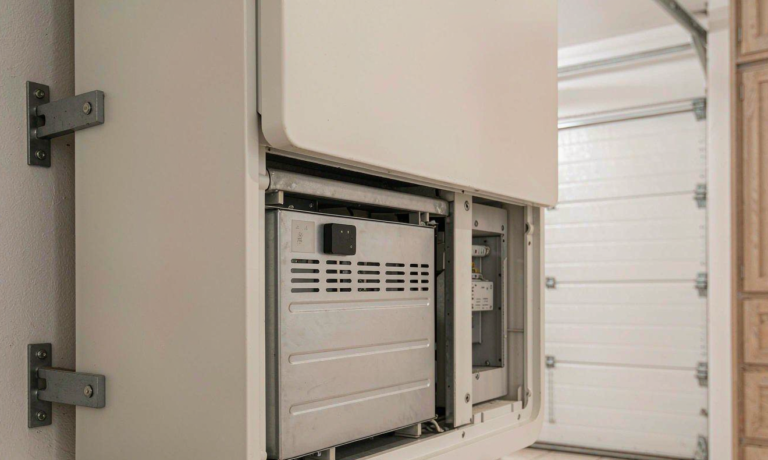
The battery is only as safe as the electronics wrapped around it. My standard architecture uses a stacked design: prismatic cells in a 16S configuration (51.2 V nominal) feeding a master BMS with cell-level voltage and temperature telemetry, a contactor-based disconnect, and a pre-charge circuit to protect the inverter’s capacitors.
- BMS functions: over-voltage at 3.65 V/cell, under-voltage at 2.5 V/cell, over-current at 150 A, and a 70 °C thermal cutoff.
- Inverter: hybrid, 3-phase, with IEEE 1547-compliant anti-islanding for grid-tied farms.
- Comms: CAN bus to the inverter and Modbus TCP to the farm SCADA so the owner sees state of charge on the phone.
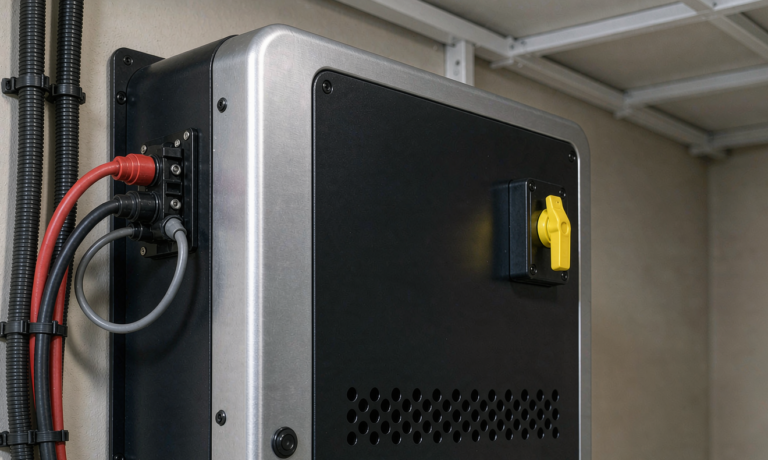
I treat the breaker panel as part of the battery. A 125 A DC-rated isolator, correctly torqued to the manufacturer spec, has prevented more fires than any software feature I could name.
Compliance, Transport, and Safety Standards
Farm owners rarely ask about certification, so it falls to the engineer to build it in. Every pack I ship carries UN38.3 test summary documentation — the transportation safety protocol that proves the cells survive altitude simulation, thermal, vibration, shock, external short, impact, and overcharge testing before they ever leave the factory. For the cells themselves I require IEC 62133 compliance, the international benchmark for portable secondary-cell safety covering abnormal charging, forced discharge, and internal short-circuit behaviour.
Because these are stationary installations, I also design to IEC 62619 for industrial battery safety and UL 9540 / UL 9540A for energy storage system and thermal-runaway propagation requirements accepted by most North American inspectors. Where a farm ships replacement modules by air, the FAA and EASA dangerous-goods rules map directly onto the UN38.3 dossier, so a single test file clears both civil-aviation regimes. I keep the certificate package in the handover folder; it is the difference between a smooth inspection and a red tag.
Installation Layout and Environmental Considerations
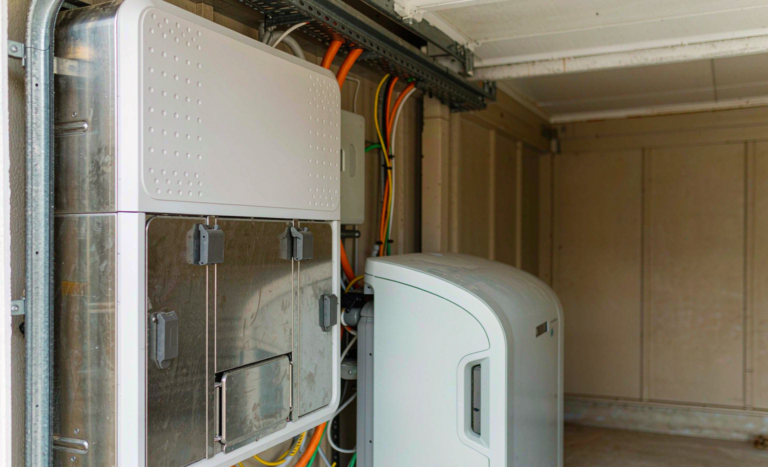
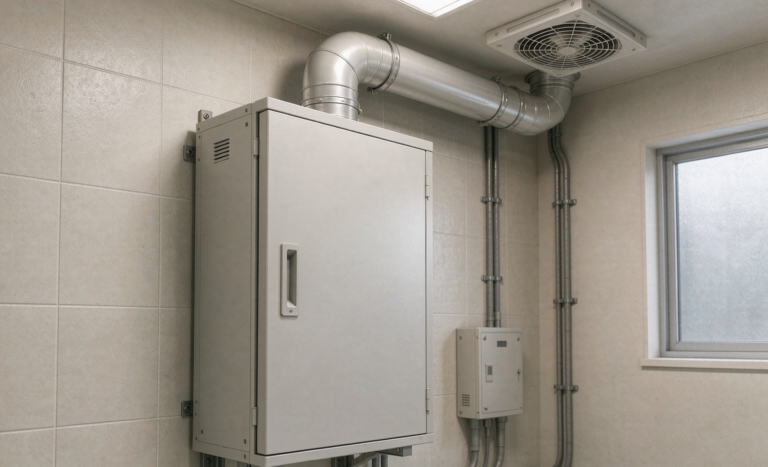
On a farm, location decides longevity. I keep the enclosure at least 3 metres from combustible storage and above the 1-in-100-year flood line, with passive ventilation that moves at least 0.5 m/s of air across the modules at 35 °C ambient. For a home energy storage system in a machinery shed, I add an IP54 enclosure and a desiccant breather so the BMS boards do not corrode in the first season.
- Temperature band: 0–45 °C charge, -10–50 °C discharge, derated outside the band.
- Cable run: separate the DC battery conduit from AC loads by 300 mm or a metal partition.
- Earthing: a single bonded earth point to avoid circulating currents through the shed frame.
A clean custom battery solution laid out this way costs a little more in labour and almost always pays it back in the first year of avoided service calls.
Maintenance and Monitoring Over a 10-Year Life
A farm battery is not fit-and-forget. I set the owner up with a monthly checklist: confirm cell-voltage spread stays under 50 mV at rest, check the cooling fan bearings, and review the trend line for any module drifting in capacity. At the two-year mark we rebalance the strings; at year five we revalidate the IEC 62133 and UN38.3 paperwork against the as-built serial records so the farm can prove continued compliance to its insurer.
The payoff is real. The case-study farm cut its evening grid import from 14 kWh to under 2 kWh on a typical day, and rode through a 9-hour regional outage with the milking schedule untouched. That is what a properly engineered home energy storage design delivers: not a gadget, but continuity.
Frequently Asked Questions
How big a home energy storage system does a small farm actually need?
For a critical-load design covering lighting, water pump, and refrigeration, 20–30 kWh with a 10–12 kW inverter is the usual answer. Full-property backup on a large operation can reach 60–80 kWh, but I recommend phasing it so the first install proves the concept before scaling.
Is LiFePO4 safe to keep in a farm outbuilding?
Yes, provided it meets IEC 62133 and IEC 62619, sits in an IP54 enclosure with ventilation, and is isolated from combustibles. LFP’s high thermal-runaway threshold makes it the right chemistry for rural duty compared with NMC.
Do I need UN38.3 certification for a fixed farm battery?
The pack installed on-site does not travel, but UN38.3 documentation proves the cells passed transport and abuse testing at the factory and satisfies most insurer and inspector questions. I treat it as non-negotiable in every handover.
Can the system run three-phase agricultural equipment?
A 3-phase hybrid inverter driven by a 48–51.2 V lithium battery bank will run single-phase and three-phase loads within its kilowatt rating. Size the inverter for the real motor-starting surge, not the nameplate running watts.
What maintenance does a farm energy storage battery need?
A monthly voltage-balance check, an annual fan and ventilation inspection, and a re-validation of safety paperwork at years two and five. With that routine, an LFP pack reliably serves ten years.