Semi-Solid State Battery Safety for Storage
I am Karl Huang, a senior lithium battery engineer at Horizon Power. Over the last decade I have torn down, abused, certified and commissioned a lot of stationary battery hardware — from 5 kWh residential walls to 3.4 MWh containerised systems. When customers ask me whether a semi-solid state battery is “safe”, I always give the same answer before the data: safety in stationary storage is not a property of the cell. It is a property of the cell, the pack, the enclosure, the electronics, the installation and the maintenance regime, working together. The chemistry only moves the starting line.
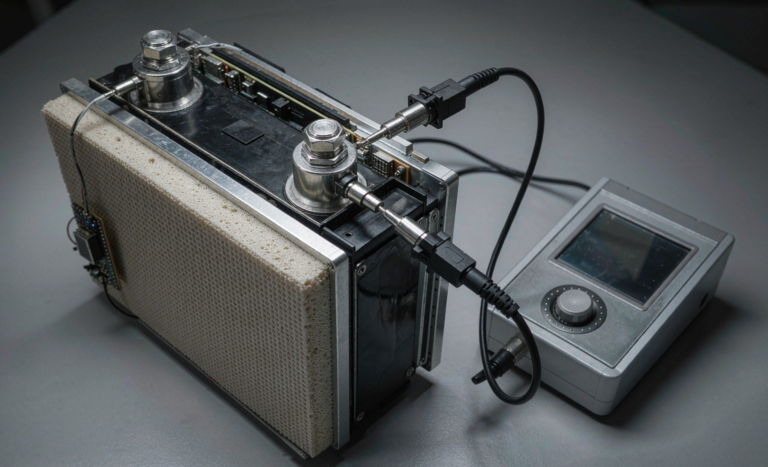
That said, chemistry does move the starting line, and that is exactly why I now recommend a semi-solid state battery for storage projects where the bank sits inside or next to a building. Below is what actually changes when you take most of the free liquid electrolyte out of a cell and replace it with a gel or polymer-infiltrated semi-solid layer — and, just as importantly, what does not change. Everything here comes from our own abuse testing, from type-test reports we have witnessed, and from installations I have signed off on.
Why Stationary Storage Is a Different Safety Problem Than Mobility
On a drone or a power tool, a cell failure usually has between 50 Wh and 1 kWh behind it, and a human is normally standing within arm’s reach. In stationary storage we routinely build strings of 200 kWh to 3 MWh, run them at 0.25C to 0.5C for eight to fourteen hours a day, and leave them unattended for months. Three things follow from that scale.
First, energy density per kilogram matters far less than energy density per square metre of floor. That is why almost every stationary bank I specify is LFP-based, with a semi-solid electrolyte layered on top for safety margin rather than for specific energy. Second, the duty cycle is long and shallow: a solar self-consumption bank will do one full equivalent cycle per day, so it spends most of its life between 30% and 80% state of charge in a warm enclosure. Third, the consequences of a single cell venting are multiplied by the number of neighbours it can ignite — which is why propagation resistance, not just cell-level stability, is the number I care about.
A custom battery solution for storage therefore starts with a different set of assumptions than a mobility pack. We design for grace under abuse rather than for the last 10% of range.
What “Semi-Solid” Actually Changes Inside the Cell
A conventional lithium-ion cell uses a polyolefin separator soaked in a carbonate liquid electrolyte. That liquid is roughly 15% to 20% of the cell mass, and it is the fuel. When the cell is driven past its thermal stability limit, the liquid decomposes, the separator shrinks or melts, and the internal short that follows dumps the stored energy in seconds.
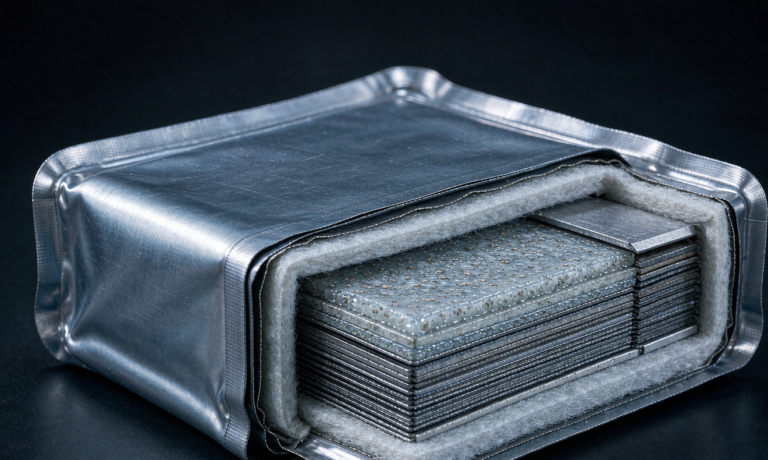
In a semi-solid design we replace most of that free liquid with a semi-solid or gel-polymer electrolyte that is infiltrated into and bonded with the separator and electrode stack. Two measurable things happen.
- Free electrolyte mass drops from roughly 15–20 wt% to 5–10 wt%. Less free solvent means less vapour generation when things go wrong. In our vented abuse tests on 100 Ah prismatic cells, total vented gas volume falls by roughly 35% to 45% compared with an equivalent liquid-electrolyte cell of the same format and cathode.
- The separator keeps its shape at higher temperature. Because the semi-solid layer is mechanically bonded to the electrodes, the shrinkage that normally opens a hard internal short at 130–150 °C is delayed. On DSC scans we typically see the exothermic onset pushed from around 90–110 °C to 130–150 °C.
The trade-off is ionic conductivity. A good liquid carbonate electrolyte runs at 8–12 mS/cm at 25 °C; a semi-solid system typically lands at 3–7 mS/cm. That is why semi-solid cells are usually built with slightly thinner electrodes and why they prefer the steady, moderate C-rates of a storage duty cycle over the 5C bursts of a racing drone. In a stationary bank charging at 0.3C, the conductivity penalty is essentially invisible.
What Our Abuse Testing Actually Shows
Numbers matter more than adjectives, so here is a representative comparison from our own accelerated rate calorimetry and cone calorimetry, run on 100 Ah prismatic LFP cells in both a conventional liquid-electrolyte build and an otherwise identical semi-solid build.
| Measurement | Liquid electrolyte LFP | Semi-solid LFP | Method |
|---|---|---|---|
| Self-heating onset (T1, 0.02 °C/min) | 88–104 °C | 126–148 °C | ARC |
| Thermal runaway onset (T2) | 176–198 °C | 205–232 °C | ARC |
| Peak cell skin temperature (T3) | 520–640 °C | 390–480 °C | ARC |
| Peak heat release rate | baseline | −30% to −40% | ISO 5660 |
| Total vented gas volume | baseline | −35% to −45% | Sealed vessel |
| Time from vent to neighbouring cell failure | 3–9 min | 18–40 min | Module propagation rig |
Read that last row carefully. It is the one that saves a building. A 30-degree shift in onset temperature is nice, but turning a four-minute propagation window into a twenty-five-minute one is what lets a gas detector, an exhaust fan and a fire service actually do their jobs. Every storage safety code in the world is written around buying time, not around preventing the initiating event.
Propagation, and the UL 9540A Ladder
When I qualify a semi-solid storage product I do not quote cell-level safety in isolation, because cell-level safety is not what gets you a permit. What gets you a permit is UL 9540A, the standard test method for evaluating thermal runaway propagation. It is a four-level ladder, and you have to climb it in order.
- Cell level: forced thermal runaway on a single cell to establish T1, T2, T3 and the composition of the vent gas — hydrogen, carbon monoxide, carbon dioxide, methane and ethylene are the species that matter.
- Module level: does the runaway of one cell propagate to its neighbours inside the module, and how much gas comes out?
- Unit level: does the runaway propagate from module to module inside the finished cabinet or rack?
- Installation level: with the unit in its intended room geometry, what is the worst-case gas concentration, wall temperature and heat flux to adjacent surfaces?
The outputs that drive the design are the maximum vent gas flow rate, the peak pressure and rate of pressure rise in the enclosure, the lower flammability limit of the vent gas mixture, and the maximum surface temperature of the enclosure. Those four numbers decide whether you need deflagration venting to NFPA 68, whether the room needs mechanical exhaust, and how far the unit has to sit from a combustible wall.
A semi-solid cell improves the inputs at every rung of that ladder. It does not let you skip a rung. I have seen integrators try to argue that a “safer chemistry” exempts them from the unit-level test, and I have never seen an authority having jurisdiction accept it.
The BMS Layer: Detection Before Reaction
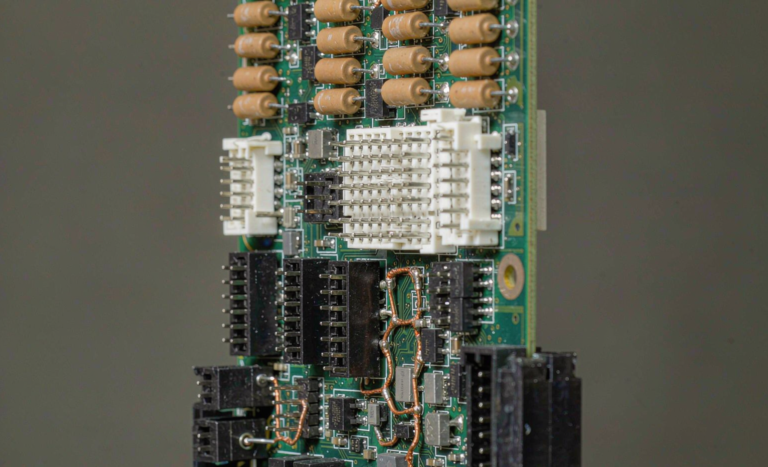
A BMS solution for stationary storage has one job that matters more than balancing: catch a failing cell before it becomes an event. In practice that means watching for the signature of an internal short, which is a cell that slowly diverges from its neighbours while the pack looks otherwise normal.
On our storage racks we monitor cell voltage to ±5 mV with a 100 ms sampling period, and we trend the deviation of each cell from the pack median over a rolling 24-hour window. A cell whose deviation grows monotonically for more than six hours gets flagged, and the rack derates to 50% power rather than waiting for a hard alarm. In the field this has caught roughly one incipient failure per 300 racks per year — not a huge number, but every one of them was a cell that would eventually have vented.
The rest of the protection stack is unglamorous and non-negotiable:
- Charging temperature limits. LFP must not be charged below 0 °C. Our semi-solid LFP modules block charge at 2 °C and block discharge below −20 °C, with charge current derated above 45 °C cell temperature.
- Voltage envelope. Cell-level charge cutoff at 3.65 V, discharge cutoff at 2.50 V, with a latched over-charge fault at 3.75 V that requires a service reset rather than an automatic recovery.
- Insulation monitoring. Continuous measurement of DC bus isolation to earth with an alarm at 100 Ω/V, per the approach in IEC 62485 and ISO 6469-3. A battery that develops a ground fault is a battery waiting for a second fault.
- Contactor weld detection and pre-charge verification. Auxiliary feedback contacts and a pre-charge resistor path on every string, so a welded contactor cannot close into an uncharged capacitor bank.
- Gas and smoke detection. Hydrogen sensors set to alarm at 25% of the lower flammability limit, plus cross-referenced smoke detection in the exhaust path.
None of that is optional because the chemistry is “safer”. It is the reason the chemistry gets to be the second line of defence instead of the last one.
Codes, Standards and the Paper Trail
A storage project lives or dies on documentation. Here is the set I build every semi-solid storage submittal around.
- IEC 62619 — safety of secondary lithium cells and batteries for industrial applications, including the cell-to-cell thermal runaway propagation clause. This is the base cell and battery type test.
- IEC 63056 — additional safety requirements for lithium batteries used in stationary applications, at voltages up to 1500 V DC.
- IEC 62933-5-2 — safety considerations for grid-integrated electrochemical energy storage systems, covering the system-level risk assessment.
- UL 1973 — batteries for use in stationary, vehicle auxiliary power and light electric rail applications.
- UL 9540 / UL 9540A — the energy storage system standard and its propagation test method, which is what the fire marshal will ask for first in North America.
- NFPA 855 — the installation standard for stationary energy storage systems: separation distances, indoor energy caps, fire-rated enclosures, gas detection, exhaust and suppression.
- UN 38.3 (T1–T8) plus the IATA DGR 30% state-of-charge limit for air freight, or the equivalent IMDG provisions for sea. Even the safest chemistry ships at 30% SoC.
- IEC 60529 for the enclosure rating — IP54 indoors, IP65 outdoors — and IEC 60068-2 for vibration and thermal cycling during transport.
I also ask for a witnessed type-test report rather than a self-declaration, and I ask for it per cell format, not per chemistry family. A 100 Ah prismatic semi-solid cell and a 280 Ah prismatic semi-solid cell are two different products with two different propagation behaviours, and the difference shows up in the test data.
Installation Practice: Siting, Venting, Spacing and Commissioning
The best-designed rack in the world becomes a liability if it is installed badly. My commissioning checklist for a semi-solid storage bank is short and boring:
- Siting. Never in a sleeping room, a means of egress, or under a stairway. Outdoor or in a dedicated, fire-rated room with a two-hour separation from occupied space wherever the local code allows a choice.
- Ambient and clearance. Keep the room between 0 °C and 35 °C. Above 40 °C we derate power by roughly 20% per 10 °C, because the semi-solid electrolyte’s higher impedance turns more of the round-trip energy into heat. Maintain the manufacturer’s service clearance in front of every rack — typically 900 mm to 1000 mm, which is also the working space the electrical code will require.
- Venting and suppression. Mechanical exhaust sized from the UL 9540A vent gas flow rate, deflagration venting to NFPA 68 where the pressure-rise data demands it, and water-based suppression. For lithium batteries, water is the agent that actually stops the reaction by removing heat; clean-agent systems knock down flame but do not cool a failing cell.
- Electrical checks. Insulation resistance test on the DC bus before energisation, torque verification on every busbar joint with a marked witness line, and confirmation that the pre-charge sequence completes within its expected time window.
- Functional checks. Trip every protection threshold by injection rather than by abuse, verify that the gas detector actually drops the contactors, and confirm that the emergency disconnect is reachable without entering the arc-flash boundary.
We also set the daily operating window to 10–90% SoC for solar self-consumption duty. It costs about 8% of usable capacity and it buys a large reduction in plating risk during cold-morning charging, which is the single most common root cause I find in aged field failures.
Aging, Second Life and End of Life
Safety degrades with age, and semi-solid cells are not exempt. After roughly 3000 to 6000 equivalent full cycles, or eight to twelve years in a temperate climate, we expect 70–80% of original capacity and measurably higher internal resistance. The two failure modes that matter for safety are lithium plating from cold charging, which raises the risk of an internal short, and separator dry-out, which raises impedance and therefore local heating.
My rule for storage operators: once a rack crosses 80% of its original DC resistance, or once cell-to-cell voltage deviation at rest exceeds 50 mV, pull it from daily cycling. That rack is a candidate for second-life duty at a lower C-rate with a larger safety margin, or for recycling — not for a demand-charge-shaving application where it will be pushed to 0.5C every evening.
We also re-run an abbreviated thermal assessment on any rack that has been in service more than five years. It takes an afternoon, and it is the cheapest insurance on the site.
Frequently Asked Questions
Is a semi-solid state battery actually safer than a conventional lithium battery for storage?
Yes, but the honest answer is narrower than the marketing. In our ARC testing on comparable 100 Ah LFP prismatic cells, the semi-solid build pushes thermal runaway onset up by roughly 30 °C, cuts peak heat release rate by 30–40%, and reduces vented gas volume by 35–45%. It does not make thermal runaway impossible. The reason I still specify it is the propagation delay: going from a three-to-nine-minute cell-to-cell propagation window to an eighteen-to-forty-minute one changes what the detection and suppression systems can achieve.
Can a semi-solid cell still go into thermal runaway?
Absolutely. Any cell storing several hundred watt-hours per kilogram has enough internal energy to self-destruct if you drive it hard enough. A nail penetration, a charger fault that pushes past 4.5 V on an NMC cell, or a sustained external fire will all get there eventually. Semi-solid chemistry raises the threshold and slows the reaction; it does not remove the hazard, which is why the BMS and the enclosure remain mandatory.
Do I still need sprinklers, gas detection and exhaust with semi-solid cells?
Yes. NFPA 855 does not grant a chemistry exemption. What a good UL 9540A report can do is reduce the calculated vent gas flow rate and heat flux, which may reduce the size of the exhaust system or the required separation distance. It will not eliminate them. If a vendor tells you their chemistry removes the need for gas detection, ask for the unit-level UL 9540A report — there usually isn’t one.
How does semi-solid chemistry change UL 9540A results in practice?
The improvements show up in three places: lower peak surface temperature at the cell level, lower total gas generation per cell at the module level, and — most valuably — a longer delay or a complete stop of propagation at the module and unit levels. A no-propagation result at the module level is the single most valuable line in the report, because it is what lets you install a larger bank without adding fire-rated partitions.
At what state of charge should I keep a stationary battery for safety?
For daily cycling we set 10–90% SoC, which avoids the plating risk at the top of charge and the deep-discharge copper dissolution risk at the bottom. For long-term storage or shipment the answer is 30% SoC, which is the IATA DGR limit for air freight under UN3480 and a good general rule for seasonal shutdown. Above roughly 60% SoC, the energy available in a runaway event rises steeply, so parking a bank at 100% for a winter is a bad trade.
How often should a stationary storage battery be inspected?
Visually and through the monitoring platform, monthly. Physically, annually: torque check on busbars, insulation resistance measurement, dust and vermin inspection, verification that the cooling path is unobstructed, and a functional trip test of at least one protection threshold. After any event that trips a contactor, do a full diagnostic download before you reset it — the fault log will tell you whether you had a real cell problem or a nuisance trip.
Can semi-solid cells be shipped by air?
Yes, on the same terms as any other lithium cell: UN 38.3 T1 through T8 certification, state of charge at or below 30% for cells and batteries shipped alone under UN3480, packaging to the relevant IATA DGR packing instruction, and correct marking and documentation. The semi-solid electrolyte reduces fire risk but does not change the classification. For container-scale storage we ship by sea under IMDG, which is also more economical above a few hundred kilowatt-hours.
Does safety get worse as the semi-solid battery ages, and when should I retire it?
It does. Rising internal resistance means more heat for the same current, and any plating accumulated from cold charging stays in the cell permanently. Our retirement triggers for stationary service are 80% of original capacity, 80% of original DC internal resistance, or resting cell-to-cell voltage deviation above 50 mV. At that point the pack is a second-life candidate for low-rate duty or a recycling candidate — not a peak-shaving asset.