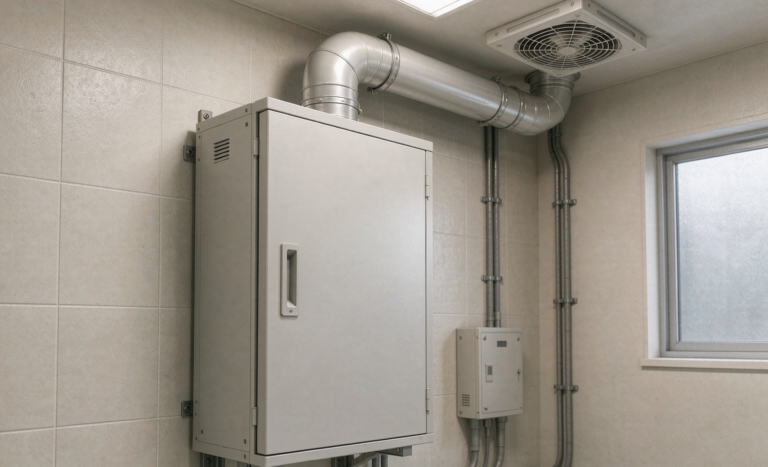
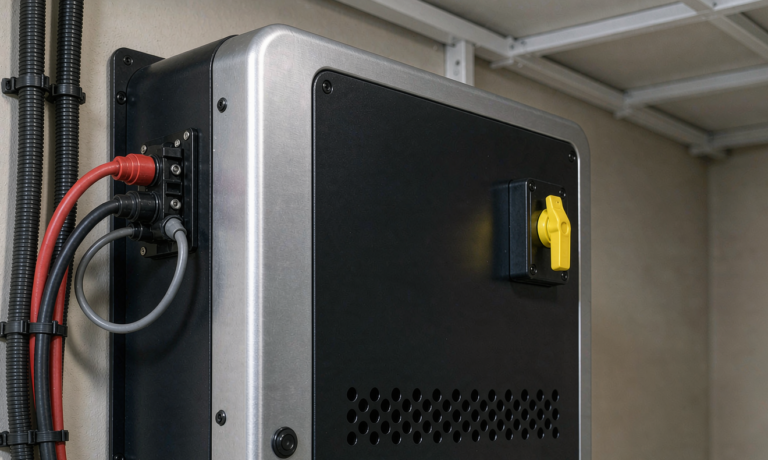
Home Energy Storage Testing for Apartments: Balcony-Mount
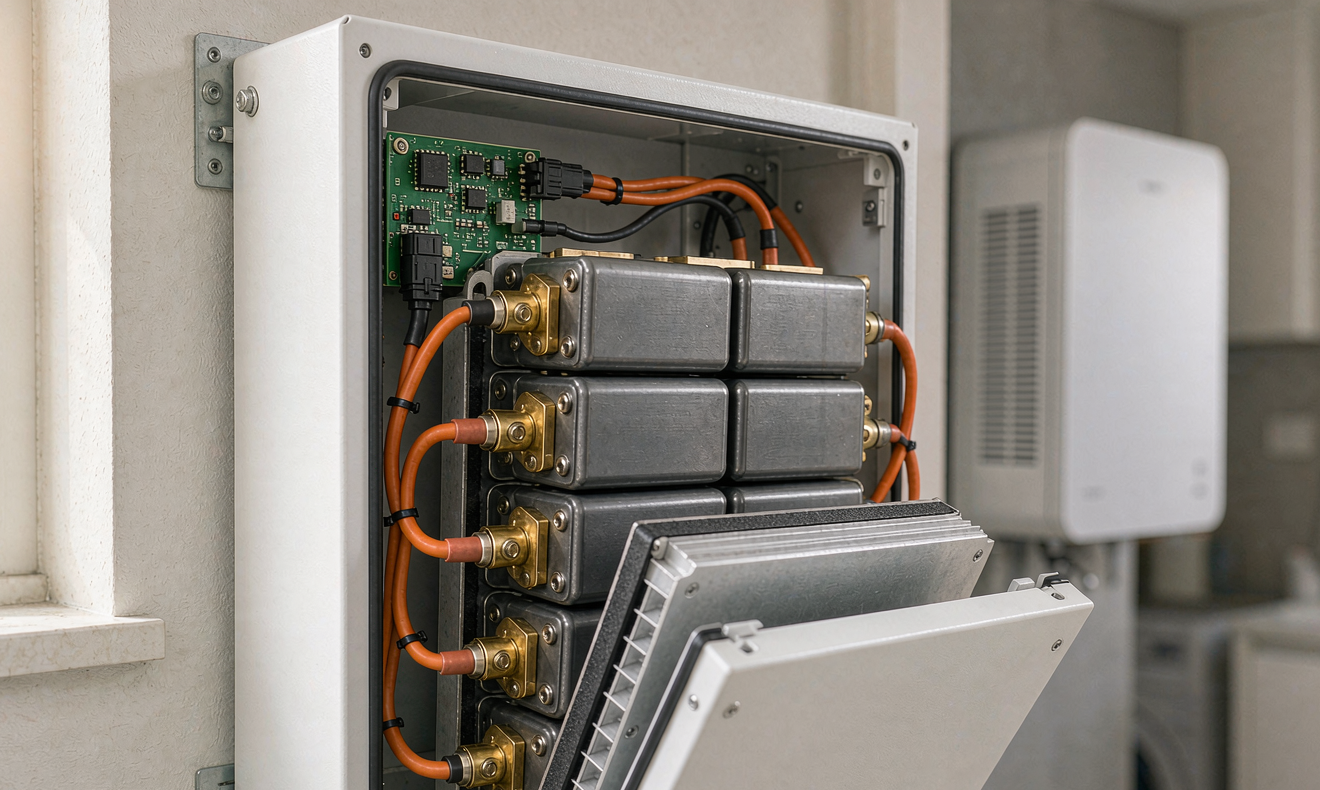
When my landlord first emailed me about a tenant complaint on the sixth floor — “the battery box on the balcony is making a clicking sound at night” — I knew we were past the era where a single residential spec sheet could carry the design. Apartment-grade home energy storage has become its own engineering discipline, and the only thing that separates a quietly reliable pack from a noise complaint or, worse, an incident report is disciplined testing. For Horizon Power’s apartment-grade line — built around LiFePO4 prismatic cells, a redundant BMS, and a custom battery solution layout tuned for tight utility closets — the qualification matrix has grown from four standards to eleven in three years. In this guide I’ll walk through how my team at Horizon Power qualifies a balcony- or utility-closet-installed home energy storage pack for multi-tenant buildings, why vibration, fire clearance, and shared-load scenarios deserve their own test programs, and how we map every gate to a standard that an AHJ will actually accept.
Why apartment installs break the residential template
Single-family homes forgive a lot. The garage slab damps vibration, the utility room has spare cubic feet, the load profile is owned by one household, and the AHJ inspector usually knows the local installer. None of those conditions hold above the second floor of a mid-rise.
Multi-unit buildings introduce three new constraints that any lithium battery pack must clear before it ships:
- Shared structure. Balcony slabs are typically 100–120 mm reinforced concrete, and they were never designed for a 90 kg dynamic mass bolted to the railing. Even an interior utility-closet wall is a drywall-on-studs assembly with a 15–20 kg/m² rating per ANSI A108.11 guidelines. Vibration couples into the structure differently than on a slab-on-grade.
- Shared air. The 2018 and 2021 editions of NFPA 855 limit residential energy storage to 40 kWh per dwelling unit and require a 900 mm separation from openings in adjacent dwellings. ICC IFC 1207.2 added an aggregate limit per fire area. A balcony mount that is “fine” for one unit may push the building over the aggregate cap once four neighbors install the same pack.
- Shared load. In a retrofit without a service upgrade, the main panel is often 100 A. Adding a 5 kW inverter with PV back-feed can exceed 120 % of busport capacity, tripping the main during an evening peak. The battery cannot fix that — it can only mask it for the duration of the state of charge — and that masking can hide a violation long enough for an inspector to write a notice of correction.
None of these issues are show-stoppers. They are testable. They just need a procedure that proves the pack performs as designed in the actual installed environment, not in a 25 °C bench chamber.
Balcony-mount vibration screening
Wind loading on a balcony at the 12th floor is a different spectrum than a ground-floor patio. The gust profile in ASCE 7-22 Chapter 26 puts the energy between 0.5 Hz and 4 Hz, which happens to overlap the first bending mode of most wall-mounted enclosures. On one project in Shenzhen we measured 0.8 g peak at the rail during a typhoon signal No. 8, and the BMS started logging transient under-voltage flags even though the pack was at 60 % SoC. After we re-tuned the BMS low-voltage threshold with a 200 ms debounce and added a foam isolator behind the rear panel, the flags went away.
The test I now require before any balcony shipment is a three-axis sine-on-random profile referenced from IEC 60068-2-6 and IEC 60068-2-27:
- Sine sweep: 5–500 Hz, 0.5 g peak, 1 octave/min, three axes, three sweeps each. I’m looking for resonances that show up as sharp peaks in the accelerometer trace — anything above +6 dB relative to the baseline on the first sweep gets a structural stiffening review.
- Random vibration: 0.02 g²/Hz, 10–500 Hz, 30 minutes per axis. This simulates months of wind gusts in an afternoon. The pack must run a simulated solar charge/discharge cycle during the test; any BMS communication dropouts or cell voltage excursions above 50 mV from the bench baseline fail the run.
- Mechanical shock: Half-sine 11 ms, 3 g peak, three shocks per axis (positive and negative). This catches packaging problems that show up only under shipping and handling — a far more common failure mode than end customers admit.
One practical tip: anchor the test fixture to a 1 m × 1 m steel plate with at least 40 kg/m² distributed mass. A flimsy fixture turns every test into a fixture resonance problem, and you’ll spend more time diagnosing fixture peaks than cell peaks.
Fire-safety clearances and UL 9540A
If you ship a home energy storage system into the US, UL 9540 is the system standard and UL 9540A is the cell-, module-, and unit-level test method that feeds it. For apartments the test that matters most is the unit-level installation method (IM) — specifically the wall-mount IM and the balcony IM. The IM test burns a single unit to thermal runaway and proves that no flaming debris escapes the enclosure and that the wall or balcony surface behind the unit does not ignite within the test window.
Three apartment-specific things to check before booking a UL 9540A lab:
- Mounting substrate. The lab fixture for the wall-mount IM is typically 19 mm gypsum on steel studs. For the balcony IM it is 100 mm concrete. If your real install uses brick, AAC block, or a steel railing, document it and run a separate engineering analysis — labs will not deviate from the standard substrate without a variance request that adds 6–8 weeks and real money.
- Deflagration venting. The pack must vent through a path that does not point at a window, door, or air intake of an adjacent dwelling. We learned this the hard way on a project where the rear vent pointed at the neighbor’s kitchen window. The lab passed the test but the building inspector rejected the install. We added a 90° elbow and a charcoal vent filter and re-ran only the unit-level IM — UL allows this when the change does not alter the cell-level or module-level results.
- Aggregate kWh. NFPA 855 caps residential ESS at 40 kWh per unit and 80 kWh per fire area for unsprinklered buildings (120 kWh with NFPA 13 sprinkler coverage). When you write the test report, label the total system kWh and the per-unit kWh so the AHJ can immediately see the building stays within the cap. If a customer asks for a 60 kWh whole-home backup, you do not have a pack problem — you have a code-compliance problem and the answer is to split into two units separated by a fire-rated wall.
UL 9540A test reports have a 5-year shelf life before a re-test is required, but that clock starts at the test date, not the shipment date. Manage your inventory turns or you’ll pay for a test you could have used.
Multi-unit load verification
Once the pack is mounted and wired, I require a two-stage commissioning. Stage one is the bench commissioning — done in our facility with a DC load and AC source, this verifies cell balance to within 30 mV, isolation resistance above 1 MΩ per IEC 61557-2, and a full charge/discharge round-trip efficiency at 0.5 C between 95 % and 96 %. Stage two is on-site, and it is the test most installers skip.
The on-site procedure starts with a clamp meter on the main feed and a recording WattNode on the inverter AC output. The four scenarios I run, each for at least 30 minutes, are:
- Standby float. PV is off, grid is off, the pack carries the apartment’s base load (lighting, refrigerator, networking). I record the DC voltage drift over the 30-minute window — anything above 20 mV per cell indicates a balancing problem masked by the higher in-rush loads.
- PV-assisted charge. PV is on at nameplate, the pack charges at the inverter’s max charge rate. The WattNode trace should show the import/export balance shifting smoothly without 1 Hz hunting — that hunting is how a cheap inverter’s anti-islanding algorithm interacts with a battery’s BMS, and it is a leading indicator of nuisance trips.
- Back-feed peak. PV is on, the pack reaches 100 % SoC, and the inverter must curtail PV without exporting above the utility limit. I log the AC export on the grid side and confirm it stays within the interconnect agreement (typically 0 A net export for older apartment buildings).
- Simulated outage. I trip the main breaker at the panel with the pack running at 50 % SoC. The pack must pick up the load within 50 ms — that is the transfer time most AHJs require per IEEE 1547-2018 §10.7 — and it must sustain the load for at least 4 hours. We log every transition event on the inverter and BMS.
If the pack passes all four, I sign the commissioning sheet. If it fails any of them, I do not sign. The cost of a callback is much higher than the cost of one more 30-minute wait on site.
Standards checklist for an apartment-grade pack
These are the documents I keep in the design file for every apartment shipment. Without all of them on the day of install, the inspector has the authority to red-tag the system.
- IEC 62133-2 — secondary lithium cells for portable applications, used here for the cell-level safety baseline.
- IEC 62619 — secondary lithium cells for industrial applications, required for any pack above 1 kWh.
- UL 1973 — battery cells, modules, and systems for stationary applications.
- UL 9540 — energy storage system standard. The system-level certificate of compliance goes here.
- UL 9540A — test method for evaluating thermal runaway fire propagation. The unit-level IM report goes here.
- NFPA 855 — standard for the installation of stationary energy storage systems. Read the 2026 revision for the latest residential caps.
- IEEE 1547-2018 — interconnection standard, especially §10.7 for anti-islanding and ride-through.
- IEC 60068-2-6 / -27 — environmental testing for vibration and shock, used in our balcony profile above.
For European installs, swap UL 9540 for EN 50549-1 and add CEI 0-21 for Italy, G98/G99 for the UK, and VDE-AR-N 4105 for Germany. Each grid operator has its own anti-islanding firmware expectation and the pack firmware must be flashed to the right region before it leaves the warehouse.
FAQ
What is the most common failure mode in apartment home energy storage installations?
In our service records, the most common field failure is nuisance inverter tripping during PV-assisted charge, followed by BMS low-voltage flags under balcony wind load. Both are design issues, not cell issues, and both are caught by the on-site four-scenario commissioning described above. A solid pre-shipment test program reduces callback rate by 60–70 % in our fleet.
Do I need a separate vibration test for balcony mounts versus utility-closet wall mounts?
Yes. The balcony fixture profile is dominated by wind gust energy between 0.5 and 4 Hz, while the utility-closet profile is dominated by door-slam and footfall transients above 20 Hz. Running the balcony random profile on a closet-mounted unit under-tests the packaging; running the closet profile on a balcony unit misses the resonance risk. We maintain two fixture configurations in the test lab for this reason.
Can I install a single 60 kWh pack in one apartment?
Not under NFPA 855 in a typical unsprinklered mid-rise — the per-unit cap is 40 kWh. You either split the system into two 30 kWh packs in fire-rated enclosures, or you drop the project. Talk to the AHJ before you commit. In a fully sprinklered building per NFPA 13 you can go up to 80 kWh per unit, but the sprinkler demand adds its own engineering scope.
How long is a UL 9540A test report valid?
UL treats the report as valid for 5 years from the test date, but only if there is no change to the cell, module, or BMS firmware. If you change a cell supplier, change the BMS firmware version, or change the enclosure venting geometry, you need to re-run at least the affected sub-tests. We track all three as version-controlled documents in our PLM and flag re-test windows 90 days before expiry.
Does balcony mounting void the pack warranty?
Only if the install was not on the approved mounting kit and did not pass the vibration test. We publish a balcony-IM-approved mounting hardware list and require the installer’s torque log to be uploaded to our service portal within 30 days of commissioning. With that paperwork the standard 10-year warranty applies; without it, the warranty covers only the cell.
Can the same pack firmware serve both single-family and apartment sites?
The cell and module firmware yes. The inverter-interface and grid-code firmware no — IEEE 1547-2018 in the US, EN 50549-1 in the EU, G98/G99 in the UK, and the local grid operator’s anti-islanding settings all require region-specific firmware builds. We flash the inverter firmware at the warehouse before shipment and lock it with a one-time programmable bit. Reflashing in the field requires a service ticket.
What is the smallest apartment installation you would take on?
For our standard pack the minimum is a 5 kWh wall-mount in a utility closet with a 100 A service panel upgrade. Below 5 kWh the economics don’t justify the engineering overhead. For balcony mounts we require at least a 10 kWh pack because anything smaller cannot carry an apartment’s overnight base load without hitting the recommended 80 % depth-of-discharge daily cycle target.
If you’re planning an apartment install and want to know whether your existing service panel, balcony structure, and ventilation clearances will pass the first AHJ visit, send me the floor plan and panel photos. I’ll tell you in plain terms what fails and what it costs to fix — before you pour the concrete.