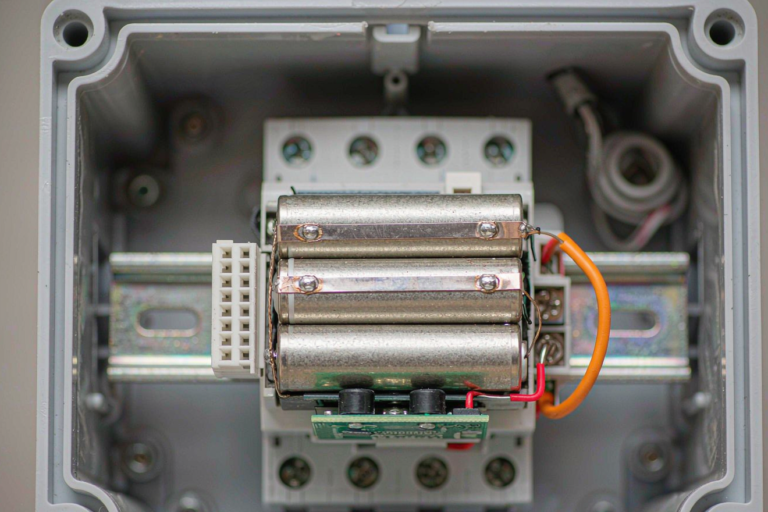
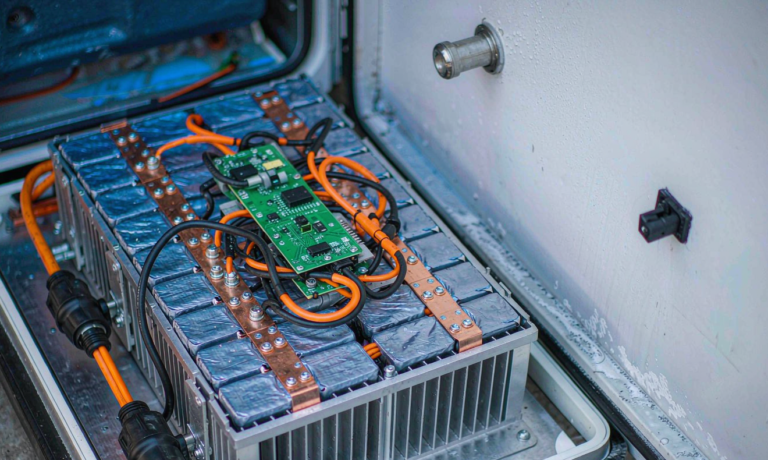
Battery Solution for Controlled Environment Agriculture
I am Karl Huang, and for the last twelve years my team and I have been designing lithium cells and packs for applications where a flat battery is not an inconvenience but a crop loss. The first time I walked into a 4-hectare Venlo glasshouse during a summer grid fault, the grower was not worried about his lights. He was worried about the ventilation fans. Within twelve minutes of the fans stopping, canopy temperature in the upper truss had climbed past 38 °C, and the crop was already being written off. That visit changed how I look at a battery solution for controlled environment agriculture: it is not an energy asset first, it is an insurance policy on living inventory.
Controlled environment agriculture — glasshouses, poly tunnels, plant factories and vertical farms — is now one of the fastest-growing electrical loads on rural distribution networks. Supplemental LED lighting, heat pumps, dehumidification, irrigation pumps and automated screens all run on electricity, and all of them are intolerant of interruption. This guide covers how to read the load, size the pack, choose the chemistry, harden the enclosure against a corrosive humid environment, and pass inspection.
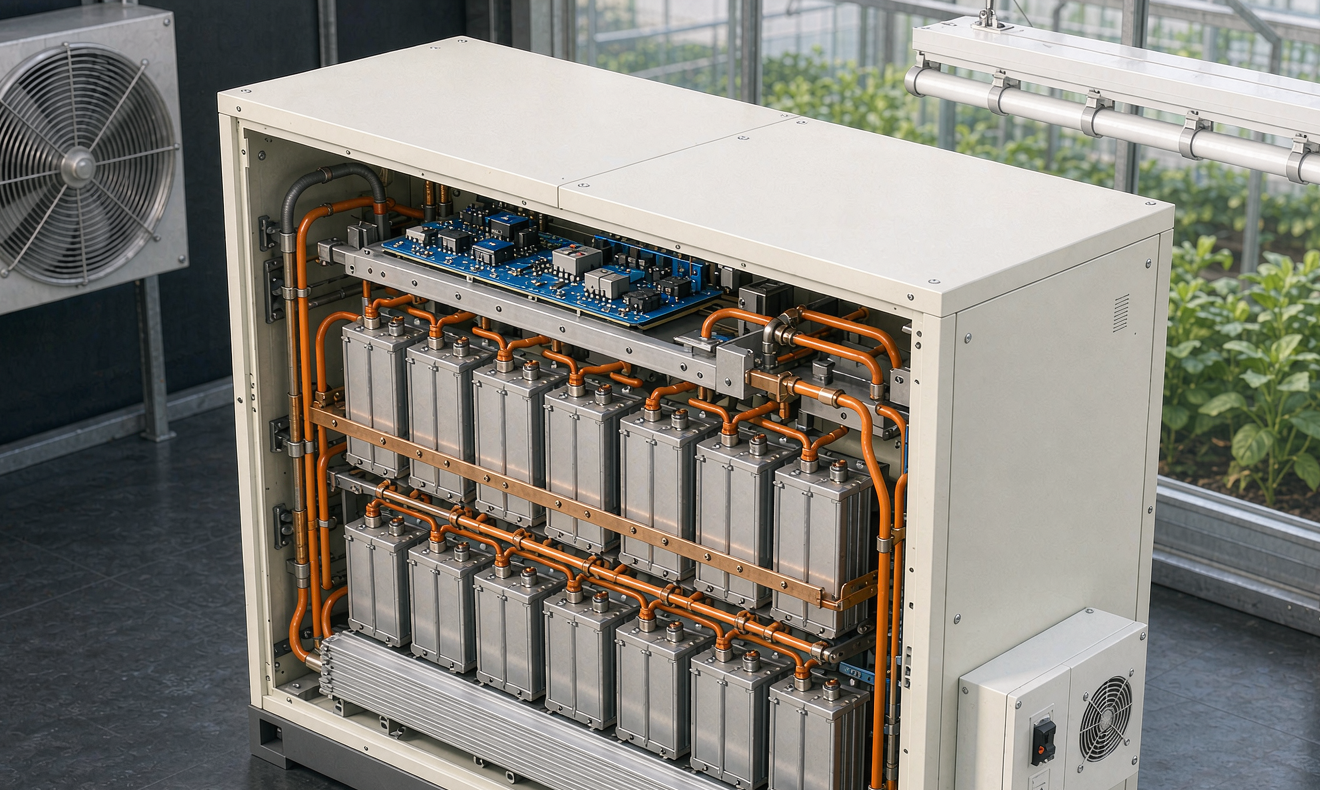
Why Controlled Environment Agriculture Loads Are Different
A data centre has a single load type: constant, predictable, power-factor-corrected IT equipment. A greenhouse has none of that discipline. The load is seasonal, diurnal, and dominated by a few very large motor and driver loads that behave badly on transfer. LED grow light drivers are switch-mode front ends with hold-up times typically in the 10–20 ms range. Variable frequency drives on ventilation fans and heat pump compressors trip on undervoltage in roughly 15–30 ms and then need a manual or timed restart. If your energy storage system transfers in 100 ms, your lights survive but your fans do not — and the fans are the load that protects the crop.
The second difference is the environment itself. A modern glasshouse runs at 70–95 % relative humidity, is washed down with high-pressure water, and uses aggressive agrochemicals. Sulphur vaporisers release SO2 that becomes sulphurous acid on any cool metal surface. Nitrogen fertilisers off-gas ammonia. Evaporative cooling pads drift mineral salts. In my failure-analysis files, corrosion of unplated copper busbars and of the BMS printed circuit board is the number one field failure mode for packs installed inside the growing space — ahead of cell degradation by a wide margin. Any custom battery solution for this sector has to be specified as a chemically hostile outdoor installation, even though it is technically indoors.
What the Battery Actually Sees: A Real Greenhouse Load Profile
Before quoting a pack, I ask for twelve months of interval data, or I install a logger for two weeks in the worst season. Here is what a high-tech 1-hectare glasshouse typically looks like in Northern Europe or the northern USA:
- Supplemental LED lighting: 180–260 kW installed, running 14–18 h per day in the winter half-year, near zero in mid-summer. Photon flux of 200–350 µmol m-2 s-1 at canopy is typical for tomato and cucumber; lettuce and herbs sit at 150–250 µmol m-2 s-1.
- Heat pump or CHP circulation: 80–150 kW electrical, with strong night-time baseload because the thermal screen and pipe-rail heating run continuously.
- Ventilation fans and pad pumps: 30–60 kW, near-zero in winter, essentially continuous in summer.
- Dehumidification: 40–90 kW when active, and it is active whenever the screens close at dusk — exactly when solar is gone.
- Irrigation and fertigation pumps, screens, sorting and packing lines: 20–50 kW of intermittent motor load with high inrush.
Put together, annual electricity intensity lands around 150–250 kWh per square metre for a heated glasshouse with supplemental lighting, and 350–600 kWh m-2 yr-1 for a fully enclosed plant factory running 18-hour photoperiods. For a 1 ha site that is roughly 1.5–2.5 GWh per year, or a daily consumption of 4–7 MWh in the dark months. That magnitude is why on-site storage is now a financial decision and not just a resilience one.
Sizing a Battery Solution: kW, kWh and Hours of Autonomy
I size in three independent steps and then take the largest result.
Step 1: Autonomy for the critical load
Define what must not stop. For most growers that is ventilation, control, dehumidification and a fraction of lighting. Suppose the critical load is 120 kW and the grower wants four hours of ride-through — enough to bridge 95 % of distribution faults and to start and synchronise a backup generator. Usable energy required is 120 kW × 4 h = 480 kWh. With a usable depth of discharge of 90 % and an AC round-trip efficiency of 90 %, the nameplate pack energy is 480 / (0.90 × 0.90) ≈ 593 kWh. I would quote 600 kWh.
Step 2: Power for peak shaving
The same pack must deliver the discharge power that keeps the site below its demand-charge threshold. If the unmanaged monthly peak is 370 kW and the target is 200 kW, the converter must continuously deliver 170 kW — 0.28C on a 600 kWh pack, comfortable for LFP rated at 0.5C continuous and 1C peak. Where peak shaving pushes beyond 0.5C I increase pack energy rather than stress the cells, because cycle life degrades roughly with the square of C-rate in the diffusion-limited region.
Step 3: Cycling throughput
For daily arbitrage or PV self-consumption shifting, throughput becomes the constraint. A 600 kWh pack doing one full equivalent cycle per day moves about 219 MWh per year, which over a 6,000-cycle life is roughly sixteen years — so calendar life of the LFP cells, at 10–15 years and 25 °C, is what actually limits the asset.
Chemistry Choice: LFP, NMC and Sodium-Ion in a Humid Greenhouse
For stationary greenhouse storage the chemistry debate is narrower than the marketing suggests. Here is the comparison I put in front of growers:
| Parameter | LFP (LiFePO4) | NMC 811 | Sodium-ion |
|---|---|---|---|
| Cell energy density | 150–180 Wh/kg | 240–280 Wh/kg | 100–160 Wh/kg |
| Pack energy density | 110–140 Wh/kg | 180–210 Wh/kg | 70–110 Wh/kg |
| Cycle life to 80 % SoH | 4,000–6,000 | 2,000–3,000 | 2,000–4,000 |
| Thermal runaway onset (ARC self-heating) | ~250 °C | 110–140 °C | ~200–230 °C |
| Low-temperature capacity retention at −20 °C | 70–80 % | 75–85 % | 85–92 % |
| Typical installed cost | Lowest | Highest | Approaching LFP |
Lithium iron phosphate wins almost every time. Cycle life is the primary economic driver, the thermal runaway onset temperature is roughly double that of nickel-rich chemistries, and the flat 3.2 V plateau simplifies state-of-charge estimation. Energy density is irrelevant when the pack sits in a plant room on a concrete slab.
NMC only earns its place when the storage has to move — a mobile fertigation rig, an autonomous scouting vehicle, a trailer-mounted generator replacement. Sodium-ion is genuinely interesting for unheated northern installations: −20 °C retention of 85–92 % means you can skip the battery room heater in a Canadian or Scandinavian glasshouse, and the chemistry tolerates discharge to 0 V during transport. Its lower energy density costs roughly 30–40 % more floor area for the same kWh, which is expensive real estate on a growing site.
Environmental Hardening: Humidity, Fertiliser Corrosion and Condensation
This is where most generic products fail. My minimum specification for a cabinet inside the growing environment is:
- Ingress protection: IP65 minimum, NEMA 4X preferred, with a stainless 316 or marine-grade aluminium enclosure. Powder-coated mild steel rusts through in about four seasons in a cucumber house.
- Breathable vent: an ePTFE membrane vent to equalise pressure. Without it, the daily 20 °C temperature swing pumps humid air in through the cable glands and you get internal condensation — I have opened enclosures with 15 ml of water standing on the base plate.
- Conformal coating: BMS and all PCB assemblies coated to IPC-CC-830 Class 2, plus potted connectors. Bare copper busbars must be tin- or nickel-plated; silver-plating is a mistake in a sulphurous atmosphere.
- Thermal management: hold cell temperature between 15 and 25 °C. Arrhenius behaviour is unforgiving: LFP that achieves 6,000 cycles at 25 °C delivers roughly 3,500 at 35 °C and fewer than 2,000 at 45 °C. A 2 kW active chiller on a 600 kWh pack costs far less than the accelerated degradation it prevents.
- Placement: never on the floor of a wash-down area, never directly under a cooling pad drift path, and at least 300 mm clear of any ammonia or sulphur dosing point.
Where the layout allows it, I push hard for a dedicated battery room outside the growing envelope. The added cable run is a rounding error against the service life you gain.
Grid Interaction: Demand Charges, Peak Shaving and Seamless Transfer
The business case usually rests on two revenue streams. The first is demand-charge management. On a typical commercial tariff with a demand charge of 15–25 USD per kW per month, shaving 170 kW off the monthly peak is worth roughly 30,000–50,000 USD per year on its own. The second is time-of-use arbitrage and PV self-consumption: charging overnight or at midday solar and discharging into the evening lighting peak. A spread of 0.08 USD per kWh across 300 cycles on a 600 kWh pack adds about 14,000 USD per year.
Both streams depend on transfer and control performance. My acceptance criteria are:
- Static transfer to island mode within 8–20 ms, so variable speed drives ride through without a trip.
- Uninterruptible transition for the climate computer and sensor network: these run on a dedicated small UPS inside the energy storage system, not on the main inverter.
- Generator bridging: the pack must carry the full critical load for the 10–30 seconds a diesel set needs to start, synchronise and accept load.
- Grid-support functions — volt-VAR and frequency-watt — configured to IEEE 1547-2018 with a UL 1741 SB listed inverter. Many utilities now require these before they will issue an interconnection agreement.
Idle losses matter more than people expect. A 500 kWh LFP pack self-discharges at 1–3 % per month and the inverter idle draw is 20–60 W per 100 kW of rating, so on a lightly cycled system standby losses can reach 5–8 % of annual throughput. Ask for the measured standby figure, not the datasheet efficiency.
Compliance, Safety and Installation Practice
A greenhouse battery installation sits at the intersection of electrical code, fire code and agricultural building rules. The standards I work to:
- UN 38.3 — transport qualification, including T1–T8 tests. Every cell and pack should ship with a valid test summary; this is also the document your insurer asks for first.
- IEC 62619 — safety for secondary lithium cells and batteries in industrial applications, including the internal short-circuit and thermal propagation tests. This is the core industrial standard behind the system-level UL listing.
- IEC 62133 — for any smaller portable or semi-portable packs on the site, such as mobile monitoring carts.
- UL 9540 and UL 9540A — system and cell-level thermal runaway propagation evaluation. NFPA 855 references 9540A directly and the authority having jurisdiction will ask for the report.
- NFPA 855 and NEC Article 706 — installation of stationary energy storage, separation distances, and the 600 kWh threshold that triggers additional fire protection in many jurisdictions.
- IEC 61000-6-2 and 61000-6-4 — immunity and emissions. Grow lights and VFDs are electrically noisy neighbours, and I have seen BMS communication drop out from conducted emissions on poorly filtered drives.
Commissioning Tests and Lifecycle Management
I do not sign off a greenhouse system until it has passed five checks on site, not just in the factory:
- Insulation resistance: 500 V megger test between the pack terminals and earth, reading above 100 MΩ. Anything below 10 MΩ in a humid environment is a stop-work item — find the moisture path before energising.
- Cell voltage spread: after a full charge and a two-hour rest, maximum cell-to-cell delta below 30 mV. A new pack that shows more than 50 mV has a balancing or connection problem.
- Capacity verification: a 0.2C discharge delivering at least 95 % of nameplate ampere-hours.
- Thermal imaging under load: scan every terminal and busbar joint at full rated power. Any joint more than 15 K above its neighbour gets re-torqued; I specify torque values and re-check at three months and twelve months because aluminium and copper creep.
- Transfer test: open the utility breaker under load and measure the actual ride-through at the fan drives, not at the inverter display.
Over the life of the system I track two numbers: capacity fade and impedance growth. End of life is conventionally 80 % of original capacity or 1.5× initial internal impedance. Modern BMS platforms estimate state of health by combining coulomb counting on full cycles with 1 kHz impedance measurements every 10–50 cycles, accurate to about 3 % when the pack regularly reaches full charge. Set up quarterly reporting, and plan second-life repurposing or recycling at the 80 % point — EU battery regulations now require a material passport and recycled-content declarations, and your supplier should provide both.
Frequently Asked Questions
How many hours of autonomy does a controlled environment agriculture battery need?
For crop protection, four hours of critical-load autonomy covers the overwhelming majority of distribution faults and gives enough time to start a generator. Growers in areas with long utility restoration times, or with high-value propagation crops, often specify eight hours. Lighting is usually excluded from the critical load definition because a single dark period is rarely fatal, whereas a ventilation failure can be.
Is lithium iron phosphate the right chemistry for a greenhouse battery solution?
In almost every case, yes. LFP gives 4,000–6,000 cycles to 80 % state of health, a thermal runaway onset near 250 °C, and the lowest installed cost per kWh. Sodium-ion is worth evaluating only where the battery room is unheated and winter temperatures fall below −15 °C, because of its superior low-temperature capacity retention.
Can the battery run LED grow lights and ventilation fans without a generator?
Yes, provided the inverter and transfer scheme are specified for it. The key number is transfer time: LED drivers ride through 10–20 ms, and variable frequency drives on fans trip in 15–30 ms. A static transfer switch operating in 8–20 ms keeps both alive. The pack also has to absorb the inrush current when compressors restart simultaneously, so I specify a 1C peak rating with a 10-second window.
How does high humidity and fertiliser corrosion affect battery life?
Corrosion, not cell ageing, is the dominant field failure mode for packs installed inside the growing space. Ammonia and sulphur compounds attack bare copper and uncoated PCB assemblies. Specify IP65 or NEMA 4X enclosures, conformal coating to IPC-CC-830, tin- or nickel-plated busbars, stainless 316 hardware and an ePTFE pressure-equalisation vent. Better still, locate the pack in a dedicated room outside the growing envelope.
What temperature should the battery room be kept at?
Between 15 and 25 °C. Cycle life roughly halves for every 10 °C rise above 25 °C: a cell rated for 6,000 cycles at 25 °C manages about 3,500 at 35 °C and fewer than 2,000 at 45 °C. Charging below 0 °C must be inhibited by the BMS to prevent lithium plating on the anode.
Which safety standards apply to a greenhouse energy storage installation?
UN 38.3 for transport, IEC 62619 for industrial lithium battery safety, UL 9540 with a UL 9540A propagation report for the system, and NFPA 855 with NEC Article 706 for installation. IEC 62133 applies to any smaller portable packs on site, and interconnection is governed by IEEE 1547-2018 with a UL 1741 SB listed inverter.
What is the payback period for a greenhouse battery system?
On a site with a meaningful demand charge, four to seven years is typical. Demand-charge reduction is usually the largest line item — shaving 170 kW on a 20 USD per kW per month tariff is worth roughly 40,000 USD a year — followed by time-of-use arbitrage and higher self-consumption of on-site solar. I model backup against crop loss separately, as avoided loss rather than revenue.
Can the system be expanded later if the greenhouse grows?
It can, but plan for it at the design stage. Parallel DC strings of different ages create balancing problems, because the newer string has lower impedance and takes a disproportionate share of the current. Leave physical space and DC busway capacity, and add capacity within the first two years so the cells age together. After that, a separate AC-coupled unit is the cleaner answer.
How often does a greenhouse battery need maintenance?
Plan on a quarterly visual and thermal inspection, an annual insulation resistance and torque check, and continuous remote monitoring of cell voltage spread, impedance trend and thermal behaviour. A well-designed LFP system needs no watering, no equalisation charging and no electrolyte handling, which is a substantial operating cost saving against the flooded or VRLA lead-acid banks it typically replaces.
Further Reading
References