Lithium Battery for Grain Dryers and Farm Augers
At Horizon Power, we design lithium battery packs for some of the harshest off-grid workloads on Earth. Few applications test a pack harder than a Midwest harvest season: a grain dryer pulling high fan current at dawn, a portable auger starting and stopping under full load, and everything running on a generator or a solar array that may not peak until noon. I am Karl Huang, Senior Lithium Battery Engineer, and I have spent the last decade translating farm duty cycles into battery specifications. In this guide, I will walk through why a lithium battery for grain dryer and farm auger systems is now the default choice for operations that need reliable harvest uptime without the maintenance burden of lead-acid.
Load Profiles of Grain Dryers and Augers
Before sizing any pack, we model the actual load. A grain dryer is not a constant draw. Batch dryers cycle between high-power heating, fan-only cooling, and idle standby. A small farm unit may draw 10 kW to 20 kW continuously during the drying phase, while larger continuous-flow dryers can pull 40 kW to 80 kW for weeks at a time. During moisture removal, the fan dominates energy use, followed by the burner or heat source. A typical batch can consume 15 kWh to 40 kWh depending on starting moisture and bushel capacity.
Farm augers are even more brutal on a battery. An electric auger motor can draw five to seven times its rated current for two to five seconds at startup. A 10 hp auger that runs at 7.5 kW may briefly demand 35 kW to 50 kW before settling. Portable augers repeat this cycle dozens of times per day as operators move from bin to truck. Stationary augers run longer but still present pulsed loads. If the battery cannot deliver high burst current without voltage sag, the motor overheats, the breaker trips, and harvest stops.
Seasonality matters too. The equipment may run only 400 to 800 hours per year, but most of those hours are compressed into six to eight weeks. That intensity changes the duty-cycle calculation. A battery that looks fine on paper for annual energy can fail in week three if its thermal management or cycle rating is not sized for back-to-back days of heavy use.
Why Lithium Beats Lead-Acid in the Field
For decades, farms used flooded lead-acid batteries because they were cheap and available. The problem is that lead-acid is poorly matched to the way grain dryers and augers actually operate. Lead-acid capacity drops sharply if you discharge below 50 percent state of charge, and deep cycling kills cycle life. A farm pack that is drained to 30 percent every evening may need replacement every two to three years.
Lithium iron phosphate, or LFP, routinely delivers 80 percent to 90 percent of its rated capacity on every cycle. Its cycle life is typically 3,000 to 5,000 cycles at 80 percent depth of discharge, which translates to more than a decade of seasonal farm use. The energy density is roughly three times that of lead-acid by mass and two times by volume, so a lithium battery bank takes up less space in a crowded equipment shed.
Another advantage is partial state of charge tolerance. Solar charging on a partly cloudy harvest day may never fully top off the pack. LFP does not sulfate if left at 60 percent or 70 percent charge for days. Lead-acid does, and that sulfation is permanent capacity loss. Lithium also accepts charge faster, which means a midday generator run or a few hours of sun can put meaningful energy back into the pack between dryer batches.
Pack Design for Dust, Vibration, and Temperature Swings
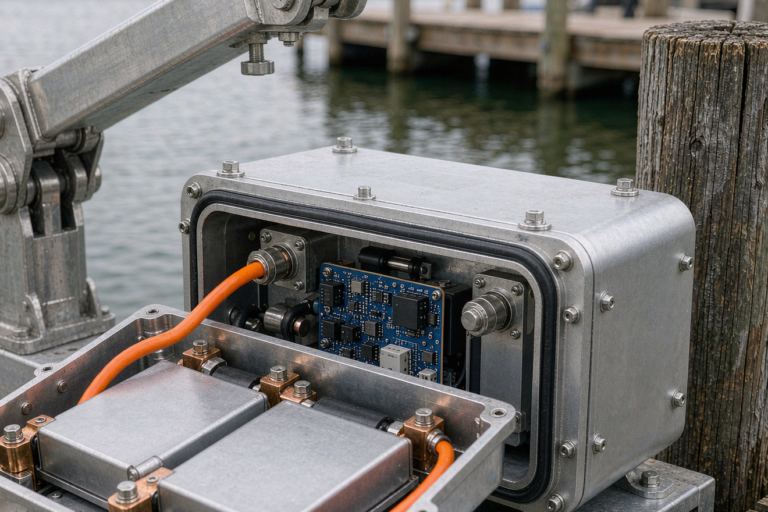
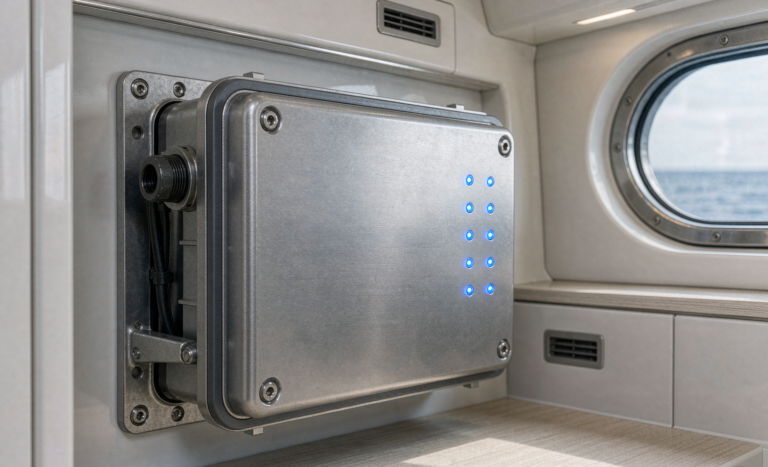
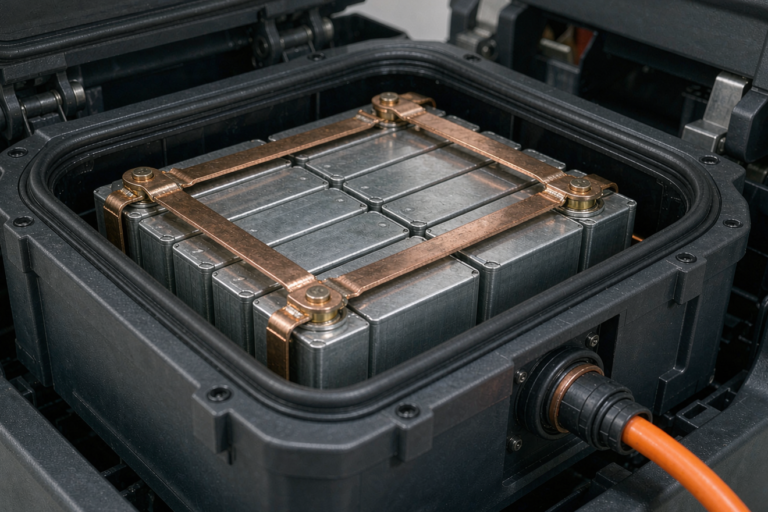
Agricultural environments are among the toughest for electronics. Dust from harvest, chaff, fertilizer residue, and moisture from morning dew all attack the enclosure. We specify IP65 or IP66 sealed enclosures for farm lithium battery systems. Every cable entry uses sealed cable glands, and the cabinet lid uses a continuous gasket. Even the cooling fins on the inverter side are protected from clogging.
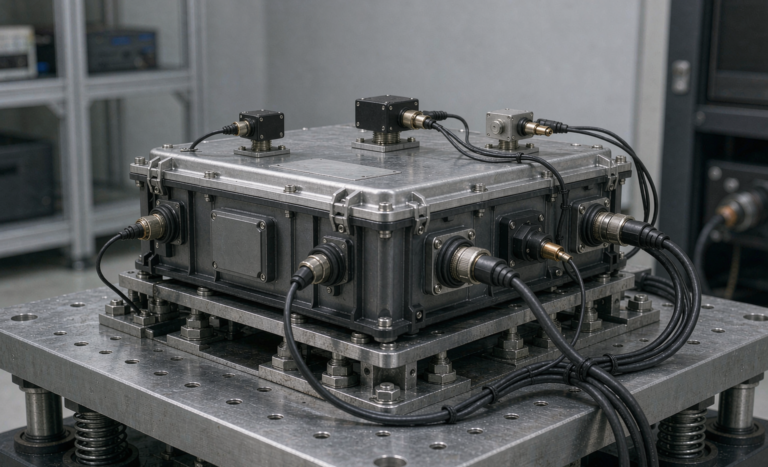
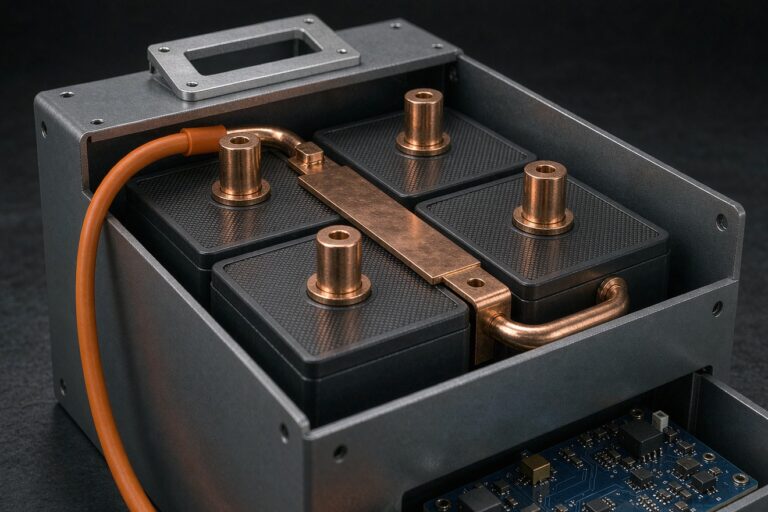
Vibration is the silent killer. A pack mounted on a grain dryer platform or a skid-mounted generator set sees constant low-frequency vibration. We design to IEC 60068-2-6 sinusoidal vibration and SAE J2380 rough-road profiles, and we validate with UN 38.3 transport vibration testing before any farm pack ships. Cells are clamped with fixtures that prevent movement, busbars are torqued with thread-locking compound, and module-to-module flex cables are kept short and strain-relieved.
Temperature swings are equally important. LFP cells charge poorly below 0 degrees Celsius unless the pack is heated. A farm lithium battery for cold-climate harvest should include a battery management system with low-temperature charge cutoff and an internal heater that runs off the charger input. On the hot end, we keep cells below 45 degrees Celsius during continuous discharge by derating when ambient temperatures exceed 40 degrees Celsius. The BMS monitors every cell for voltage, temperature, and current, and it performs passive or active balancing to keep the pack in spec.
Safety, Certifications, and Farm Compliance
Safety starts with cell-level testing. We use cells certified to IEC 62133, the international standard for portable and industrial secondary cells. The completed battery system is then built to UL 1973 or IEC 62619, depending on whether the application is stationary energy storage or industrial motive power. For transport, every pack must pass UN 38.3, which includes altitude simulation, thermal cycling, vibration, shock, external short circuit, impact, and forced discharge tests.
Farm sites add a layer of practical safety. Grain dust is combustible, so enclosures must be sealed to keep dust away from relay contacts and fuse holders. We use sealed contactors, arc-fault detection on the DC bus, and Class T or similar fast-acting fuses sized for the maximum prospective short-circuit current. A maintenance disconnect is mandatory so technicians can isolate the pack before working on the dryer or auger motor.
Stationary lithium systems may also fall under NFPA 855, which governs energy storage system installation. Even when a farm pack is small, we follow the spirit of the standard: keep the pack away from combustible walls, provide adequate ventilation or thermal clearance, and post emergency contact information. Our installation manuals include a one-page emergency response sheet that the local fire department can use if they ever respond to a farm incident.
Sizing and Total Cost of Ownership
Sizing a lithium battery for grain dryer and farm auger use is a three-step process. First, we list every load with its running watts and startup watts. A 50 hp auger, for example, runs at roughly 37 kW but may start at 150 kW to 220 kW for a few seconds. Second, we estimate daily energy in kilowatt-hours, including the number of dryer batches and auger cycles. Third, we set autonomy: how many cloudy days or generator-down days should the system survive before recharge?
C-rate selection is critical. A 100 kWh pack can deliver 100 kW at 1C, but an auger startup may need 2C or 3C for three seconds. We always size for the peak C-rate, not just the average load. If the pack is too small, the voltage sag triggers the motor’s undervoltage protection and the system shuts down just when the farmer needs it most.
Total cost of ownership usually favors lithium over a ten-year horizon even when the upfront price is higher. Lead-acid banks need replacement every two to four years in this duty cycle, plus watering, equalization charging, and lost productivity from unexpected failures. Lithium typically needs no scheduled maintenance beyond annual torque checks and BMS log reviews. When we run the numbers for a 100 kWh farm storage system, the lithium option often breaks even by year five and saves 30 to 40 percent over ten years.
Frequently Asked Questions
How long does a lithium battery last on a grain dryer?
A properly sized LFP pack typically lasts 3,000 to 5,000 cycles, which is more than ten years of seasonal grain dryer use. Calendar life is usually eight to fifteen years depending on ambient temperature and how often the pack sits at a high state of charge.
Can one battery bank run both the dryer and the auger?
Yes, provided the bank is sized for the combined peak load. The critical number is the auger motor startup current. If the battery and inverter can handle that surge, the same bank can support both loads with proper load prioritization in the BMS or energy management system.
What IP rating do farm lithium batteries need?
We recommend IP65 as a minimum for outdoor or dusty farm installations. IP66 is better if the pack will be pressure-washed or exposed to heavy rain. The connectors and cable glands must match the enclosure rating.
Are lithium batteries safe inside grain storage areas?
They are safe if installed in sealed, dust-tight enclosures and kept away from ignition sources. We never mount a battery directly inside a grain bin. It should be in a separate ventilated or conditioned space with clear access for maintenance and emergency response.
Do I need a special charger for agricultural lithium packs?
Yes. LFP packs need a charger with the correct voltage profile, CC-CV charging curve, and temperature-compensated cutoff. Many farm lithium systems also include solar charge controllers and generator AC chargers that coordinate through a single BMS.
How does cold weather affect lithium battery performance on the farm?
LFP discharge works fine in cold weather, but charging below 0 degrees Celsius can plate lithium metal and permanently damage cells. A cold-climate farm pack should include a low-temperature charge cutoff and an internal heater that warms the cells before charging begins.
Further Reading
References