Sodium-Ion Battery for Desalination and Off-Grid Water
Why Desalination Is Moving Off the Grid
Over the last three years I have watched a clear shift in how small and mid-sized water plants are being built. Communities on islands, coastal villages, and remote industrial sites no longer want to depend on a diesel generator humming next to a reverse osmosis skid. They want solar arrays, a wind turbine where the wind is steady, and a battery that lets the reverse osmosis membrane run through the night. As a battery engineer who has commissioned storage for exactly this kind of duty, I keep coming back to one chemistry that fits the economics and the environment better than most people expect: the sodium-ion battery.
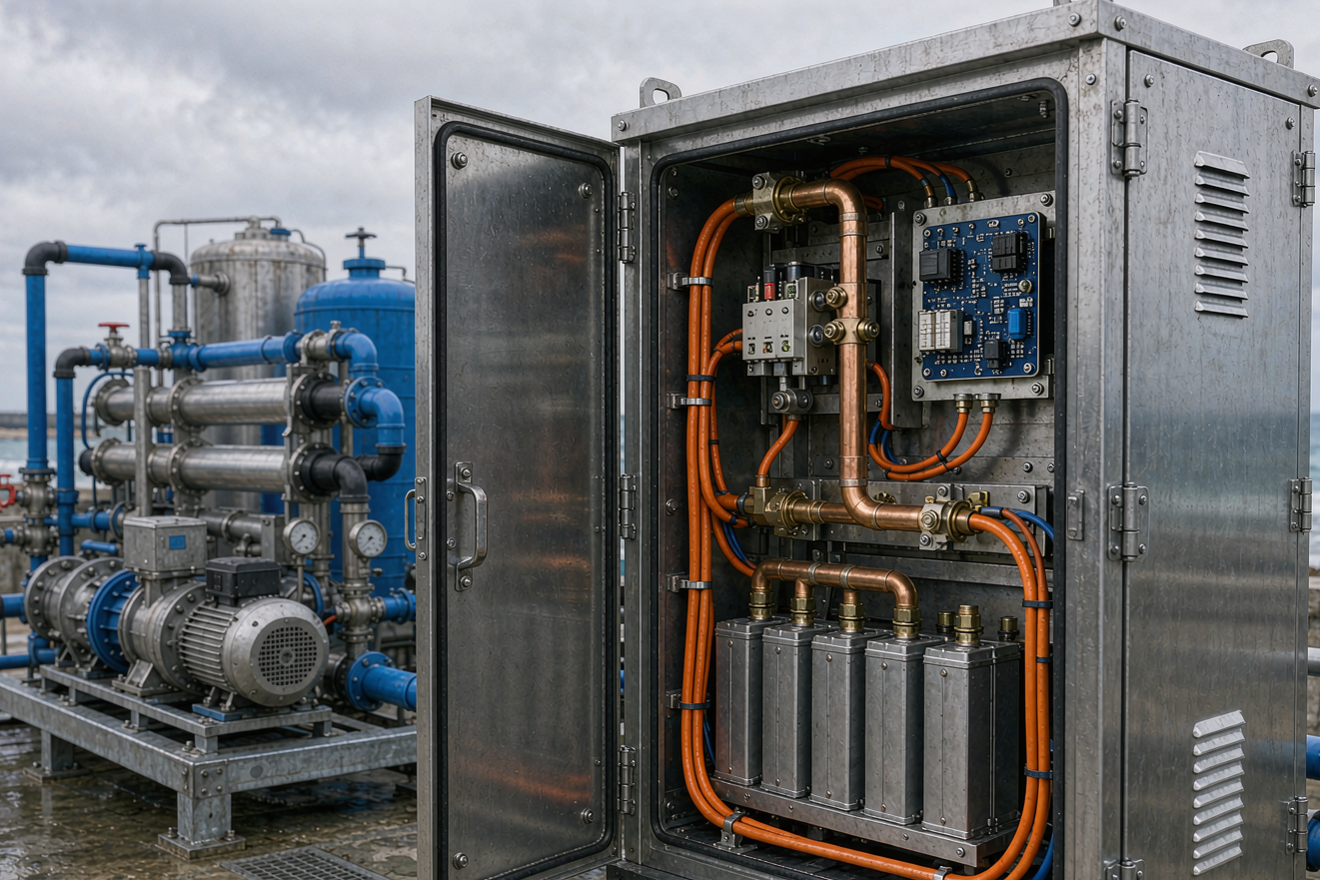
A reverse osmosis plant is a hungry, pulsed load. The high-pressure pump draws hard the moment it starts, then settles into a steady draw while the membrane pushes water through. Seawater reverse osmosis needs roughly 3 to 4 kilowatt hours per cubic meter, and brackish water roughly 1 to 2 kilowatt hours per cubic meter. A modest plant producing 200 cubic meters a day of brackish water therefore consumes on the order of 300 kilowatt hours daily, almost all of it during sunlight if the battery is doing its job. That daily, deep, predictable cycle is precisely the profile where a sodium-ion battery earns its place.
What a Sodium-Ion Battery Brings to a Reverse Osmosis Plant
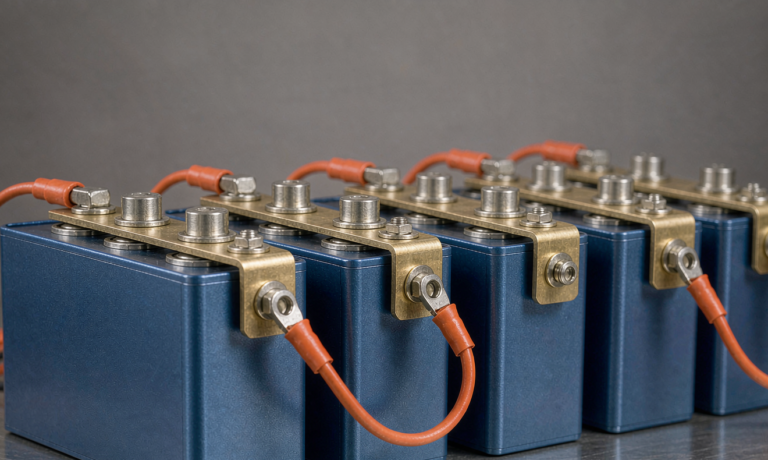
The first advantage is the material story. A sodium-ion battery uses sodium, aluminum, and abundant transition-metal cathodes instead of lithium, cobalt, and nickel. For a buyer in a developing coastal region, that means a supply chain that is harder to shock and a cell price that trends lower as volume climbs. I have stood in procurement meetings where the nickel price swing alone was enough to blow the project budget, and sodium-ion simply removes that variable.
The second advantage is safety near water. Sodium-ion cells I spec for this duty show an ARC self-heating onset around 200 to 230 degrees Celsius, compared with roughly 250 for LFP and 110 to 140 for NMC. More importantly, the sodium chemistry does not propagate thermal runaway the way high-nickel cells do, which matters when the enclosure sits meters from the very water you are treating. There is no cobalt to burn and no pressure to vent violently.
The third advantage is tolerance of partial state of charge. Off-grid plants rarely sit at a clean full or empty state. Clouds roll in, the pump throttles, the battery floats at 40 percent for an hour. Sodium-ion handles that partial state of charge cycling far better than lead-acid, which sulphates and dies, and without the strict full-charge discipline that some lithium formats demand.
Sizing Storage for a Brackish or Seawater RO System
Sizing is straightforward once you fix the daily energy and the autonomy target. Take a brackish plant at 1.5 kilowatt hours per cubic meter and 200 cubic meters per day: that is 300 kilowatt hours of load. If you want eight hours of battery-backed operation after sunset, you need 300 kilowatt hours delivered. Accounting for 90 percent depth of discharge, 90 percent round-trip efficiency, and an 80 percent end-of-life reserve, the nameplate capacity works out near 460 kilowatt hours. I usually round to a 500 kilowatt hour block and let the battery sit shallower, which extends life.
For seawater at 3.5 kilowatt hours per cubic meter the same 200 cubic meters a day becomes 700 kilowatt hours of load, so the block scales past one megawatt hour. The point is not the exact number but the method: daily energy, autonomy hours, then divide by depth of discharge, efficiency, and end-of-life factor. I always present this calc to the operator before we discuss chemistry, because the chemistry only changes the denominator slightly.
Protecting the Battery Enclosure From Salt Air
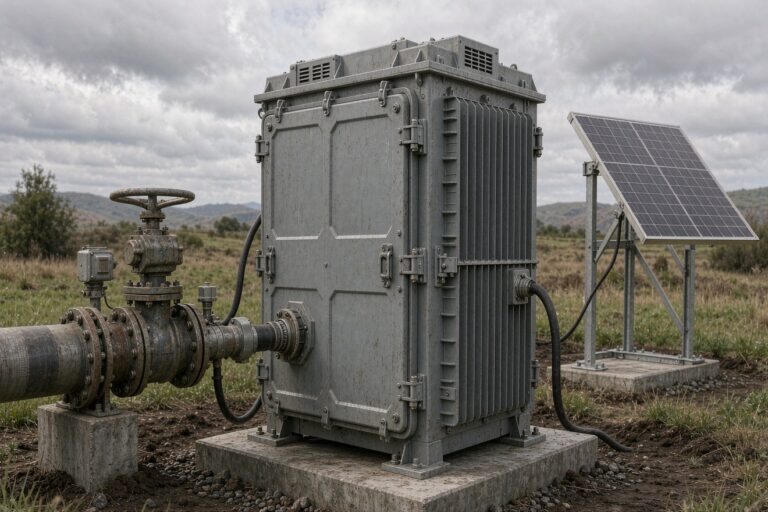
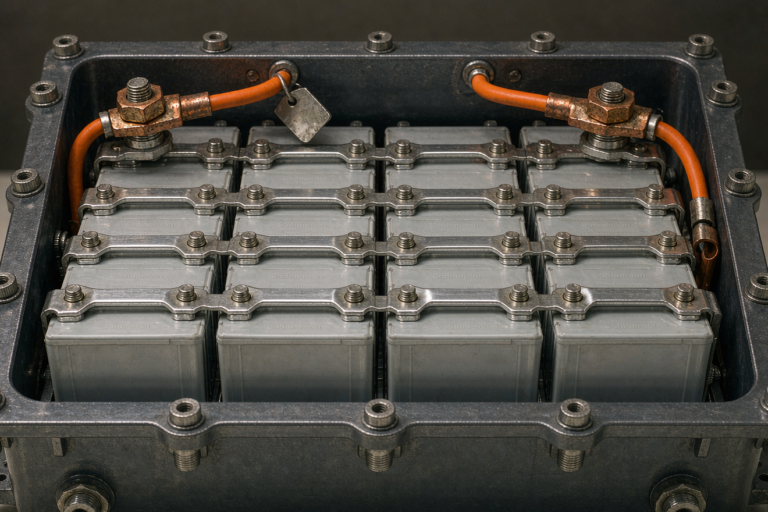
Coastal and island sites are brutal on metal. Salt-laden air creeps into every seam, and a standard battery cabinet will corrode from the inside out within two seasons. For a sodium-ion battery in this environment I specify a minimum of IP65, and on exposed coastlines I move to NEMA 4X with 316-grade stainless hardware. The busbars get tinned or nickel-plated copper, and every circuit board receives IPC-CC-830 conformal coating so a salt fog cannot trace a path across it.
Ventilation matters too. I use an ePTFE breather valve that equalizes pressure without letting salt spray condense inside, and I keep the enclosure above the highest recorded storm-surge line, not just above the floor. In one island install we lost a competitor’s cabinet to chloride creep along an un-coated ground strap; ours survived two monsoon seasons because we treated the ground path as a corrosion front, not a trivial wire.
How Sodium-Ion Compares With LFP and Lead-Acid Here
For a desalination duty cycle the realistic choice is usually sodium-ion versus LFP, with lead-acid already ruled out by cycle life. LFP still wins on energy density, around 150 to 180 watt hours per kilogram, against 100 to 160 for sodium-ion, so an LFP block is smaller and lighter. But the plant does not move, so footprint is a weak differentiator. What decides the project is cost per cycle and behavior at temperature.
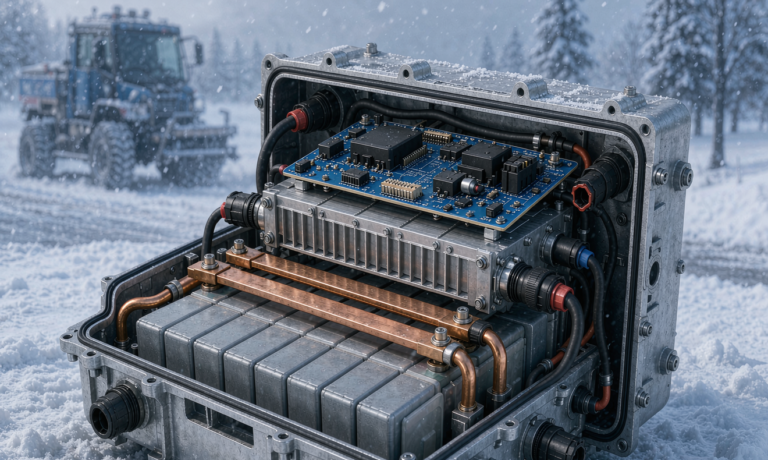
Sodium-ion holds 85 to 92 percent of its capacity at minus 20 degrees Celsius, which keeps a cold-climate coastal plant running without a heater drawing extra energy. LFP drops faster in the cold and often needs pad heating that eats into the very kilowatt hours you are trying to deliver to the membrane. Lead-acid, by contrast, gives maybe 200 to 500 usable cycles in this deep daily duty and a sodium-ion block gives 2000 to 4000, so the lifetime cost comparison is not close.
BMS, Standards, and Commissioning Acceptance
The battery management system on a desalination install has to be boring and reliable. I spec cell voltage sampled at 200 hertz, pack current at 1 kilohertz, and temperature at 10 hertz, with a contactor that opens in under 5 milliseconds on a fault. Dual redundant analog front ends avoid a single point of failure, and I expose the data over Modbus plus SNMP so the plant SCADA can see state of health in real time. State of health itself I track by coulomb counting cross-checked against 1 kilohertz impedance, because rising impedance warns of end of life roughly 300 to 500 cycles before the capacity knee.
On standards, a stationary sodium-ion block for this duty cites UN38.3 for transport, IEC 62619 for industrial cells, IEC 62485 for stationary battery safety, UL 1973 for the module, and UL 9540A with NFPA 855 for the install. If the plant ties to any local grid, IEEE 1547-2018 governs the interconnection. At commissioning I require a 500 volt megger reading above 100 megohm, a static imbalance under 30 millivolts after a two hour rest, a 0.2C capacity result at or above 95 percent of nameplate, a thermal image with no joint more than 15 kelvin above neighbors, and a nail-penetration test on a single cell that shows no propagation into the pack.
Frequently Asked Questions
Is a sodium-ion battery safe to install near seawater?
Yes. The sodium-ion chemistry I specify for coastal duty shows thermal runaway onset near 200 to 230 degrees Celsius and does not propagate the way high-nickel cells do, and the enclosure is built to IP65 or NEMA 4X with 316 stainless and conformal-coated boards so salt air cannot reach the cells. I still keep the cabinet above the storm-surge line and use an ePTFE breather, but the chemistry itself is a poor candidate for the violent failure modes you worry about next to water.
How many cycles can a sodium-ion battery deliver in daily RO duty?
For the deep daily cycling a reverse osmosis plant demands, a well-built sodium-ion block delivers roughly 2000 to 4000 cycles before it reaches 80 percent of original capacity. That is an order of magnitude more than lead-acid in the same duty, and it is what makes the lifetime cost of a sodium-ion battery for desalination attractive even when the upfront cell price is close to LFP.
Can sodium-ion handle partial state of charge cycling?
It can, and that is one of its strengths for off-grid water plants. Solar and wind generation leave the battery floating at partial charge for long stretches, and sodium-ion tolerates that far better than lead-acid, which sulphates, and without the strict full-charge discipline some lithium formats need. I design the control logic to accept partial state of charge as the normal state, not an exception.
What size battery do I need for a 200 cubic meter per day plant?
For brackish water at about 1.5 kilowatt hours per cubic meter the daily load is near 300 kilowatt hours, so eight hours of autonomy needs a nameplate block around 460 to 500 kilowatt hours after you divide by depth of discharge, efficiency, and end-of-life reserve. For seawater at 3.5 kilowatt hours per cubic meter the same daily volume pushes past one megawatt hour. Run the energy times autonomy calculation first, then choose the chemistry.
Does cold weather reduce sodium-ion output at coastal sites?
Less than you might fear. Sodium-ion retains 85 to 92 percent of capacity at minus 20 degrees Celsius, so a cold-climate coastal plant keeps producing without the pad heaters that LFP often requires. That saved heating energy goes straight back into running the reverse osmosis pump, which is the whole point of the storage.
How do I verify a sodium-ion desalination battery before commissioning?
I require five checks: a 500 volt megger above 100 megohm, static cell imbalance under 30 millivolts after a two hour rest, a 0.2C capacity result at or above 95 percent of nameplate, a thermal image with no joint more than 15 kelvin above its neighbors, and a single-cell nail-penetration test showing no propagation into the pack. Passing all five is what I sign off before the custom battery solution feeds a live membrane.
Further Reading
References