Home Energy Storage for Radiant Floor Heating
Radiant floor heating is one of the most comfortable ways to warm a home, but it is also one of the most demanding loads a residential power system will ever see. As a senior lithium battery engineer at Horizon Power, I have sized and field-tested home energy storage for radiant loops in cold-climate builds where the heating draw runs for hours at a stretch. The good news is that a well-designed home battery pairs naturally with electric floor heating: the load is steady, predictable, and easy to shift onto solar or off-peak windows. In this guide I walk through how radiant floor heating behaves as a load, how to size a battery for it, and the engineering details that keep the system safe.
How Radiant Floor Heating Behaves as a Load
Electric radiant floor heating is a resistive load, and that matters more than most buyers expect. Unlike a heat pump, which moves heat and draws a variable compressor current, a warm-floor loop draws a near-constant wattage whenever its thermostat calls for heat. A typical 150 square foot bathroom zone runs 750 to 1200 watts. A whole-home open-plan slab on grade can pull 4 to 9 kilowatts across multiple zones during a cold morning startup.
The load is also slow. Concrete and screed act as a thermal flywheel: it can take two to four hours to bring a slab to temperature, then the system merely tops up losses. That long, flat draw is exactly what a lithium battery handles best, because it avoids the sharp inrush spikes that stress inverters. From a dispatch standpoint, radiant heating is one of the cleanest loads you can place on home energy storage, because its energy is consumed where and when you decide, not the instant the grid commands it.
The catch is duration. A cold night in a poorly insulated slab home can mean eight to twelve hours of continuous heating. That is a throughput problem, not a peak problem.
Sizing the Battery for Daily Heating Throughput
Sizing starts with two numbers: the loop wattage and the hours it runs. Multiply them and you get daily heating energy. A 6 kilowatt whole-home radiant load running seven hours delivers 42 kilowatt-hours in a single day. That is larger than the 10 to 15 kilowatt-hour batteries common in many starter home storage kits, which is why I always model the worst week of the heating season rather than an average day.
Inverter continuous rating is the second constraint. Your home energy storage inverter must carry the full heating draw plus base loads like refrigeration and lighting at the same time. For a 6 kilowatt radiant system I specify an 8 to 10 kilowatt continuous inverter with at least 1.5x short-term overload headroom, because zone relays can close together and briefly stack the draw.
Depth of discharge is the third. Stationary lithium iron phosphate is happy at 90 percent daily depth of discharge, but I design to 80 percent usable to protect winter cycle life when the battery is also cold. A practical rule I give clients: take your worst-day heating energy, divide by 0.8, and add one day of backup if the home is off-grid or storm-prone. For most grid-tied comfort holds, a 20 to 30 kilowatt-hour bank covers a cold night plus normal household use.
Why Lithium Iron Phosphate Fits Floor Heating
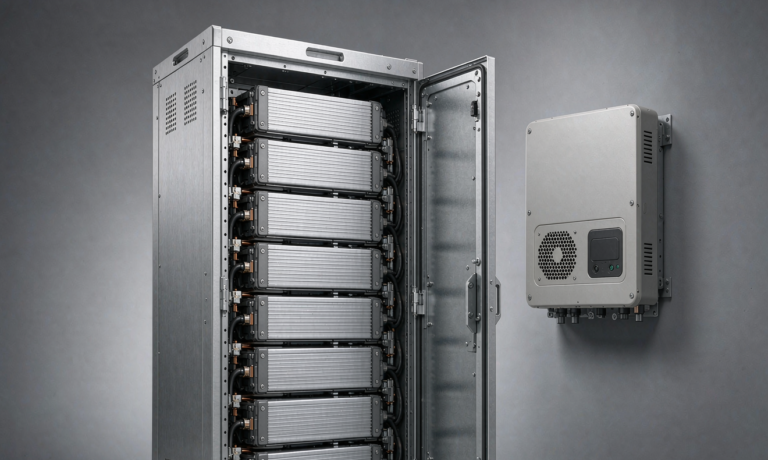
For stationary home energy storage I standardise on lithium iron phosphate cells, and radiant heating is a good example of why. The chemistry is intrinsically stable, tolerant of high charge and discharge rates, and it holds capacity far better than nickel-based cells across thousands of shallow winter cycles. A floor loop may ask for steady current for hours; lithium iron phosphate delivers it without the voltage sag that would trip a weaker pack.
Energy density is lower than ternary chemistries, but a home battery is stationary. What matters is calendar life. A well-managed lithium iron phosphate home battery reliably reaches 6000 to 10000 cycles at 80 percent depth of discharge, which translates to well over a decade of daily heating-assisted use before replacement.
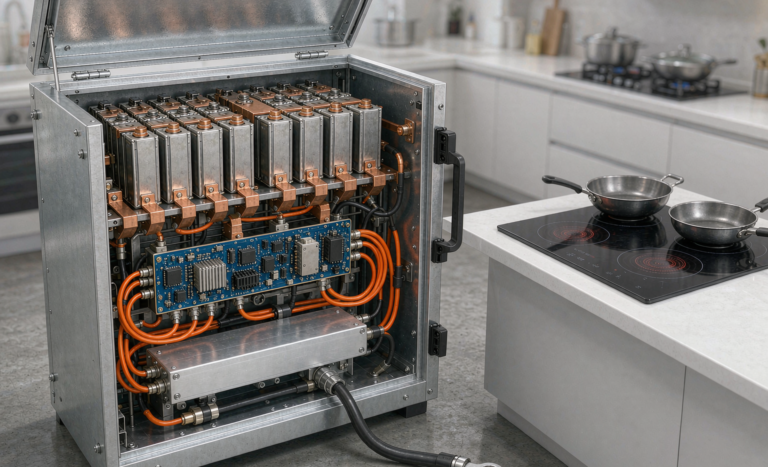
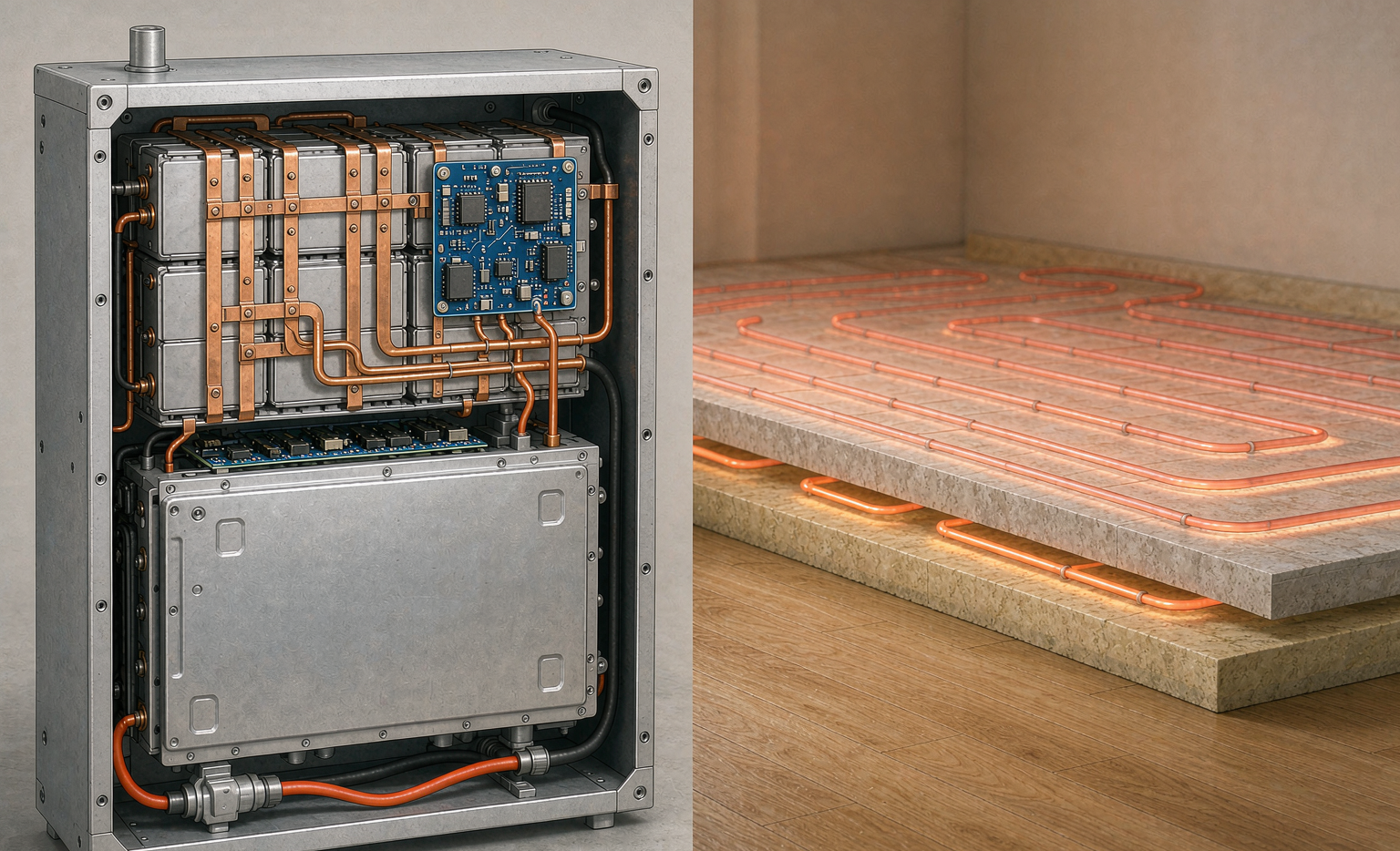
The battery management system does the real work. It balances cells during the long, slow heating draws, watches string temperature, and isolates a faulted module before it can propagate. For a load this continuous, I treat the BMS as the primary safety device, not an accessory, and I size its contactors for the heating current plus a margin.
Winter Self-Heating and Battery Placement
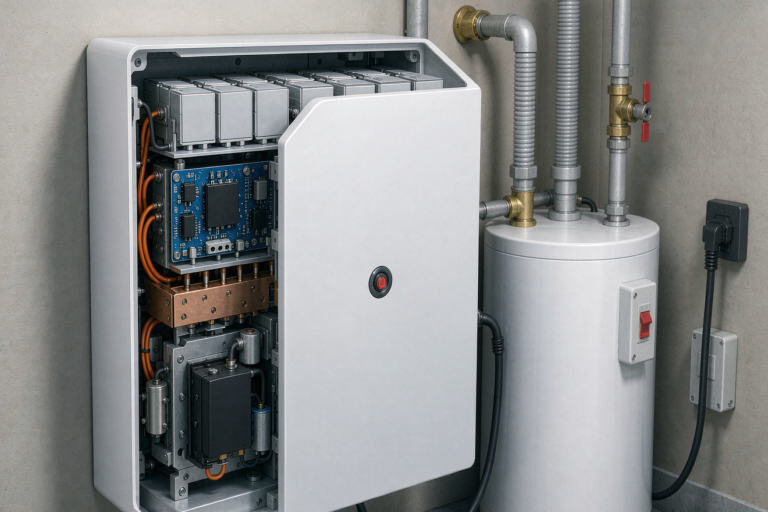
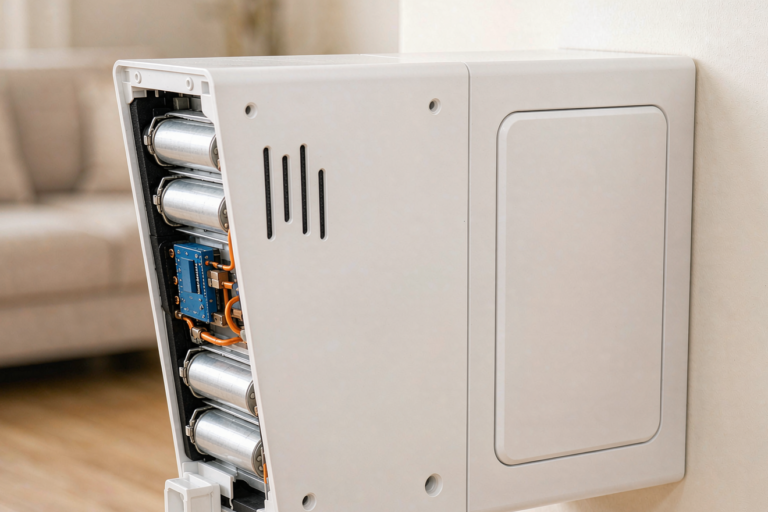
Radiant floor heating and cold weather create a useful synergy. Lithium cells lose available capacity below about 10 degrees Celsius, and a battery sitting in an unheated garage will underperform exactly when the floor loop demands the most. The simple fix is to place the home energy storage indoors, often in the same mechanical room that serves the heating manifold, where ambient temperature stays above freezing.
Some packs include self-heating films. I view that as a backup, not a primary strategy, because the heating energy comes out of the same bank you are trying to protect. Better to keep the enclosure in conditioned space and let the building’s own heat do the work. If the battery must live in a cold location, I specify a cabinet with a thermostat-controlled pad heater fed from grid or solar, not from the pack itself.
Dispatch: Solar, Time-of-Use, and Comfort Hold
The reason a home battery makes radiant heating cheaper is dispatch control. In a solar home, the floor preheats during midday surplus when the inverter would otherwise export low-value energy. The slab stores that heat and releases it through the evening, cutting evening grid pull. In a time-of-use tariff area, the battery charges on cheap overnight rates and the floor draws from it during peak pricing, a strategy I call comfort hold.
Comfort hold works because the slab is already a thermal store. You are not asking the battery to hold temperature in real time; you are asking it to move energy into the floor when rates are low and let the floor release it later. A simple rule-based controller that preheats to a target slab temperature before the peak window opens can cut heating electricity cost by 30 to 50 percent depending on the local tariff.
For off-grid cabins and rural homes, the same bank that runs the floor also carries lighting and pumps. I sequence those loads so the floor never starves the essentials.
Standards, Safety, and Installation Reality
Stationary home energy storage is regulated differently from portable packs, and the standards reflect that. I build to IEC 62619 for industrial and stationary lithium cells, not the IEC 62133 portable standard, because stationary systems need abuse-tolerant construction and clear fault isolation. In North America the enclosure and system checks are UL 9540 for the energy storage system and UL 1973 for the cells, with UL 1741 and IEEE 1547 governing how the inverter interconnects with the grid.
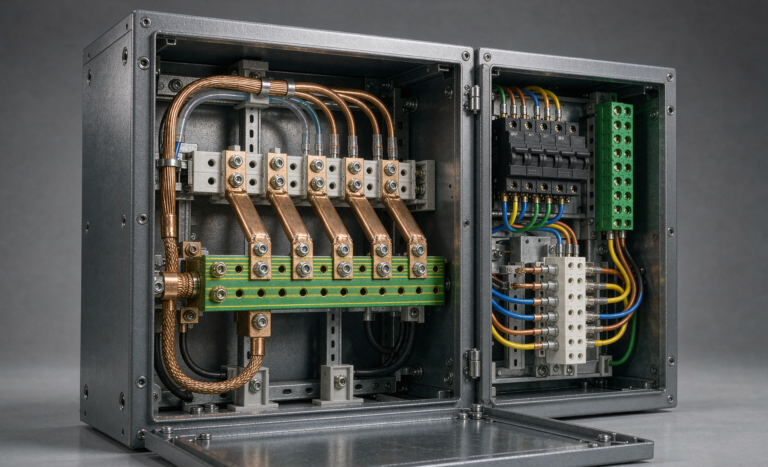
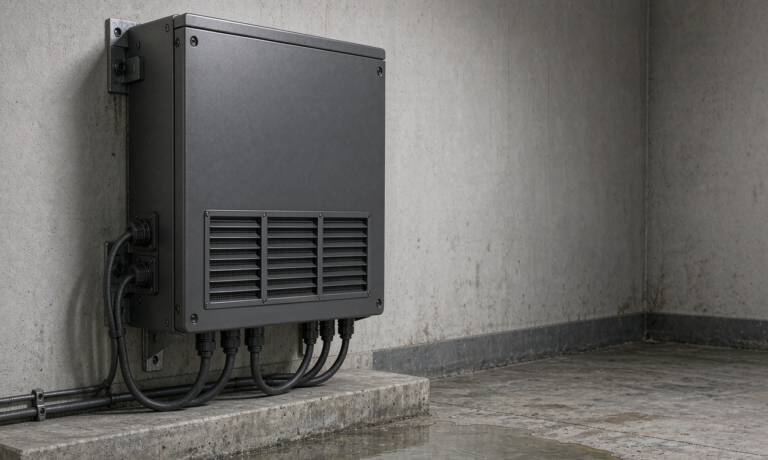
Transport and handling follow UN38.3, which every cell must pass before it reaches the site. On the installation side, I require a dedicated circuit, a listed DC disconnect, and clearances that let the fire service isolate the bank. Radiant heating adds a real fire-load consideration only if the manifold room is tight, so I keep the battery in its own vented enclosure away from combustible framing.
Finally, commissioning matters more than the spec sheet. I verify the inverter’s frequency-watt and volt-watt response against the local grid code, confirm the BMS trips on a forced fault, and log one full heating-day discharge so the client sees the actual throughput. A custom battery solution tuned to the home’s real load curve outlasts a generic kit.
Cost Framing and Payback
Buyers often ask whether the battery or the floor is the bigger expense. The radiant loop itself is usually comparable to a forced-air upgrade, while the battery is the variable. A 20 to 30 kilowatt-hour home energy storage bank sized for heating support is a meaningful capital cost, but the payback comes from three streams: solar self-consumption that would otherwise be clipped, time-of-use arbitrage on the heating load, and avoided generator fuel in off-grid homes.
I model payback on the heating-season energy first, because that is the largest and most predictable block. In a cold climate with a poor export rate, shifting even half the heating energy onto stored solar or off-peak power can justify the battery on its own, with summer air-conditioning and evening loads as bonus savings. The key is honest throughput modeling: size to the worst winter week, not the annual average.
Can a home battery alone run radiant floor heating through a cold night?
Yes, if it is sized for throughput rather than peak. A whole-home radiant loop can draw 4 to 9 kilowatts for eight to twelve hours, so you need roughly 30 to 50 kilowatt-hours of usable storage plus an inverter that carries the full heating load plus base appliances. A small 10 kilowatt-hour starter battery will not cover a cold night alone, but it can cover a single zone or preheat the slab during solar surplus.
How many kilowatt-hours do I need for radiant floor heating?
Multiply your loop wattage by the hours it runs on a worst winter day, then divide by 0.8 for usable depth of discharge. A 6 kilowatt loop running seven hours needs about 52 kilowatt-hours gross, or roughly a 40 to 50 kilowatt-hour bank once inverter losses and cold-weather derate are included. Zone-by-zone control lets you right-size the battery to the rooms you actually heat.
Does radiant floor heating hurt battery life?
Not if the bank is lithium iron phosphate and the depth of discharge is managed. The load is steady and resistive, which is gentler than sharp inverter or vehicle loads. Designing to 80 percent daily depth of discharge and keeping the enclosure in conditioned space typically delivers 6000 to 10000 cycles, which covers well over a decade of heating-assisted use before replacement.
Is lithium iron phosphate safe for indoor home energy storage?
Yes. Lithium iron phosphate is one of the most thermally stable lithium chemistries, and stationary systems built to IEC 62619, UL 9540, and UL 1973 include a BMS that isolates faulted cells and contactors that disconnect the string on fault. I still require a dedicated circuit, a listed DC disconnect, and a vented enclosure away from combustible framing, but indoor placement is standard practice.
Can I use the battery to preheat the floor on cheap overnight rates?
Absolutely, and it is one of the best uses of home energy storage. The slab is already a thermal store, so charging the battery on off-peak power and preheating the floor before the peak window opens cuts heating electricity cost by 30 to 50 percent in time-of-use areas. A simple rule-based controller targeting a slab temperature is enough to capture most of the saving.
What standards should a home energy storage system meet?
For stationary residential systems I look for IEC 62619 on the cells, UL 9540 on the system, UL 1973 on the battery, and IEEE 1547 with UL 1741 on the grid-interactive inverter. UN38.3 covers transport. Meeting these is not paperwork; each one maps to a real safety function, from fault isolation to controlled grid disconnect during an outage.
Further Reading
References