Battery Solution for Oil and Gas Drilling Rigs
Drilling rigs are some of the harshest electrical environments on earth: flammable gas zones, continuous vibration, temperature swings from -40 to +55 degrees Celsius, and loads that spike the instant the drawworks or top drive engages. In fifteen years of specifying power systems for onshore and offshore rigs, the biggest change I have watched is the move from all-diesel auxiliary power toward a purpose-built battery solution for oil and gas drilling rigs. A correctly specified lithium battery pack does more than replace a genset. It changes how the rig is classified, how much fuel it burns, and how much risk your crew carries in the red zone.
The Load Profile That Makes Rig Batteries a Different Animal
A rig is not a steady-state load. A land rig rated to 1,500 hp may draw 600 to 900 kW while tripping, then fall back to 80 to 150 kW during connection or standby. The drawworks and top drive dominate the peaks, while mud pump variable-frequency drives, hydraulic power units, the rotary table and the iron roughneck add fast, repeating surges. Add lighting, HVAC, the camp, wireline and cementing skids and you get a load that swings by a factor of six inside a single tour.
That shape is exactly what a diesel genset handles poorly. Engines are most efficient at 70 to 80 percent of rated load, and a rig spends most of its day far below that, where fuel consumption per kilowatt-hour climbs and wet stacking fouls the exhaust. A battery solution fixes this by absorbing the peaks and letting the engine run near its sweet spot. On hybridized rigs I have commissioned, that alone cuts diesel use by 25 to 40 percent, and far more on land rigs with long standby periods.
Why LFP Is the Default Chemistry in Hazardous Zones
Chemistry selection on a rig is a safety decision before it is a performance decision. Classified areas follow IEC or API guidance, and a battery room near the wellhead usually falls into Zone 2, sometimes Zone 1. That rules out casual use of high-nickel NMC cells with low thermal runaway onset temperatures.
Lithium iron phosphate (LFP) has become my default for these sites. Its thermal runaway onset sits near 250 degrees Celsius versus roughly 150 to 210 degrees Celsius for high-nickel chemistries, it releases far less energy if a cell does vent, and it tolerates the partial-state-of-charge operation that hybrid rig duty imposes without the lithium plating risk that haunts NMC under repeated partial cycling. LFP also holds up better at the cold end of the range, which matters on winter rigs in Alberta or the Permian in January.
Every custom battery solution I ship for oilfield duty is built on cells qualified to IEC 62133 and UN38.3, assembled into packs tested to IEC 62619 and UL 1973, with cell-level fusing and a battery management system that samples each cell group every 100 ms. Where the enclosure sits in a classified area, it is further protected by an Ex d flameproof housing or Ex p pressurization with a gas-detection interlock.
System Architecture: From Cell to Skid
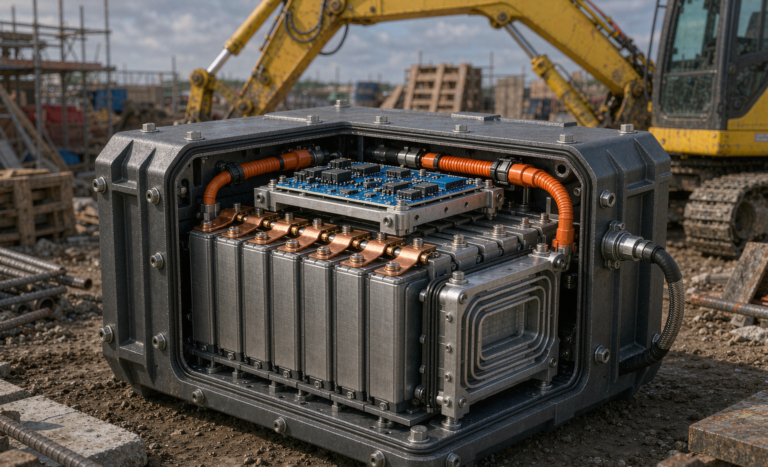
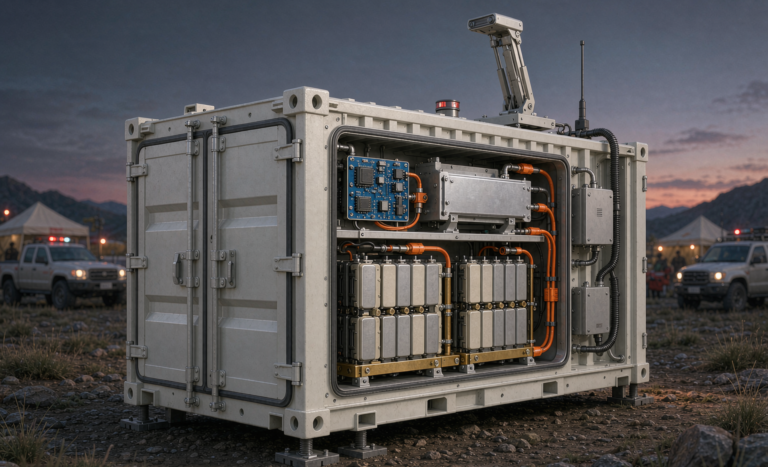
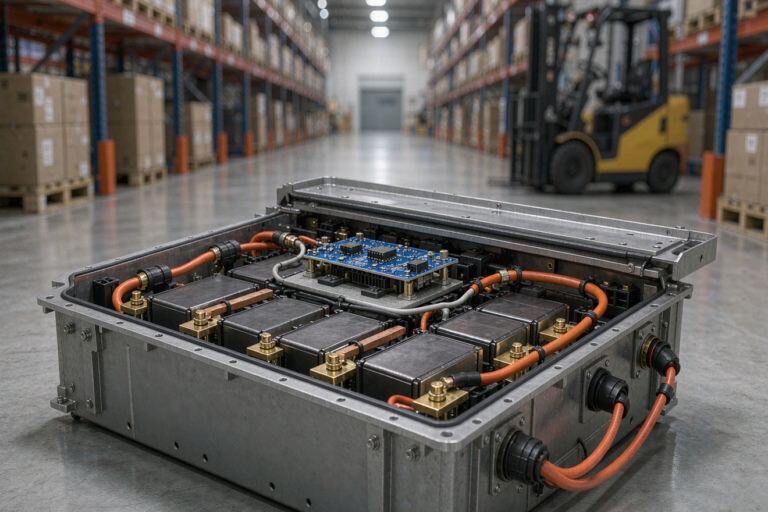
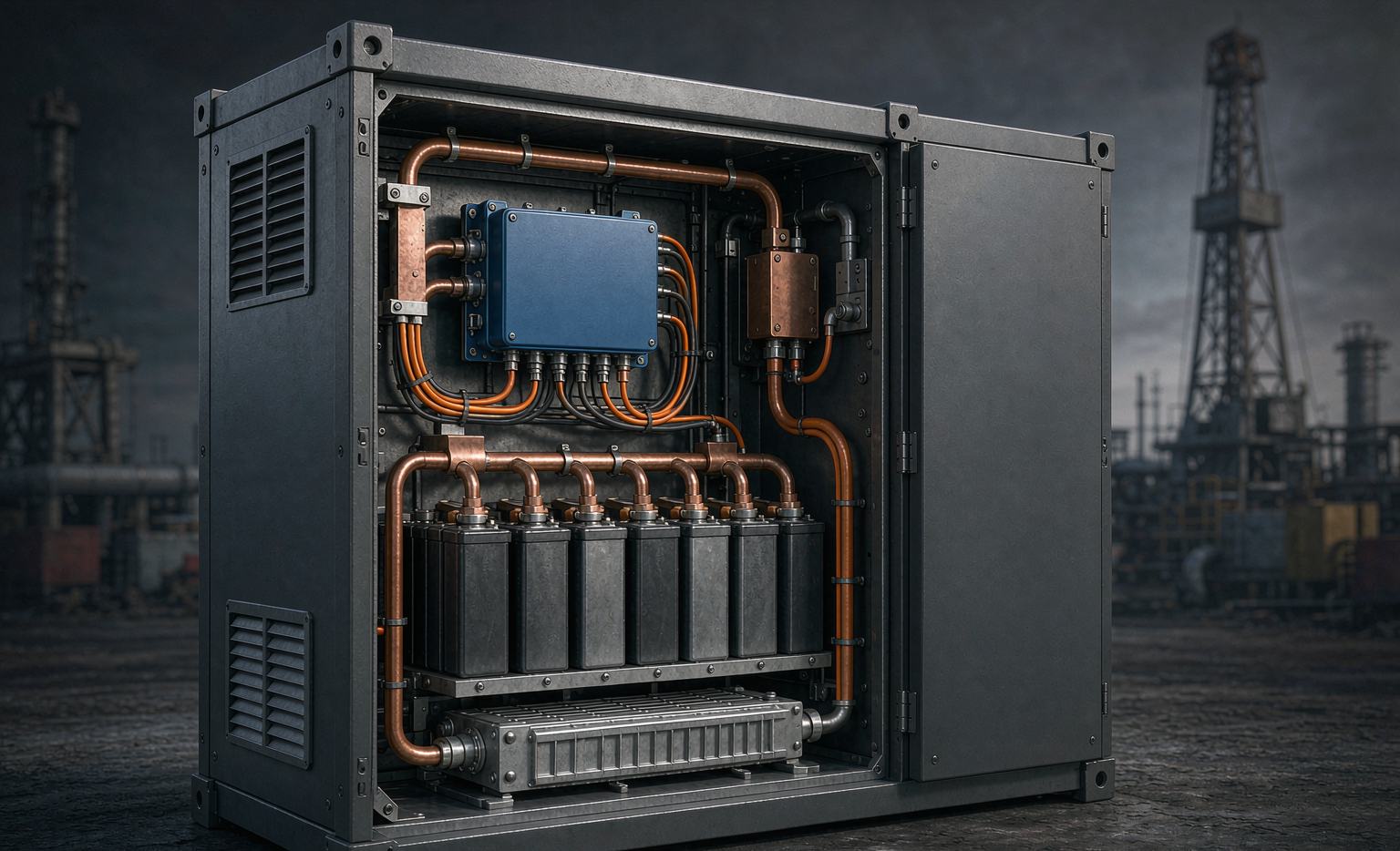
A rig battery skid is not a data-center UPS scaled up. The mechanical design carries as much weight as the electrical one. Modules are built from prismatic LFP cells bolted to an aluminum cold plate, and the pack is liquid cooled so coolant can be routed to an air-cooled chiller outside the classified area.
- Enclosure: welded steel, IP66, with Ex d or Ex p protection and certified cable glands.
- Modules: 48 V to 96 V nominal, 5 to 15 kWh each, hot-swappable in under two minutes with a tool-free latch.
- String voltage: 800 to 1,500 V DC on larger skids, feeding a bidirectional power conversion system rated 250 kW to 1 MW.
- Capacity: 500 kWh for a light land rig, 2 MWh or more for heavy offshore packages.
- Comms: Modbus TCP and CAN to the drilling control system, with dry contacts on the emergency shutdown loop.
Redundancy is non-negotiable. I specify N+1 strings and duplicate the BMS communications path, because a rig cannot stop tripping because one controller dropped off the bus. Shock and vibration mounting follows IEC 60068-2-6 random vibration profiles that mirror rig-floor conditions, not the gentler data-center test.
Sizing a Battery Solution for a Real Rig
Sizing starts with an energy audit, not a nameplate. I ask for a two-week log of the rig’s actual load curve at one-minute resolution, then derive three numbers: peak demand, average demand, and the longest duration the battery must carry the critical bus alone.
Take a 1,500 hp land rig with a 400 kW average auxiliary load and 850 kW peaks. If the battery shaves peaks while the genset carries the base, a 500 kWh pack with a 750 kW converter covers a full day of swings while cycling between 30 and 80 percent state of charge. If the customer instead wants 30 minutes of blackout ride-through for the BOP control and lighting bus, the critical load of roughly 120 kW sets a 60 kWh minimum, and I would still install 150 kWh to protect cycle life by limiting depth of discharge.
The mistake I see most often is sizing to the average and ignoring the surge. A custom battery solution that browns out when the drawworks engages is worse than no battery at all, because the crew loses trust in it and goes back to the diesel.
Hybrid Charging and the Fuel Math
A rig battery is a buffer, not a power source. It has to be refilled, and how you refill it drives the economics. The three patterns I deploy most are diesel hybrid, grid or shore power, and gen-set downsizing with battery ride-through.
In a diesel hybrid, the genset runs at a steady 75 to 85 percent load and the battery absorbs the delta. Because engine efficiency peaks there, fuel per kilowatt-hour falls even though total energy delivered is unchanged. On a Permian land rig running two gensets in parallel, moving to one genset plus a 500 kWh battery cut diesel from roughly 1,100 liters per day to about 750, with the second genset retained as cold standby.
Where the grid reaches the pad, the battery shifts load into off-peak windows and shaves the demand charge, which for a 700 kW peak can run thousands of dollars a month. Offshore, the same logic applies to the platform turbine or diesel generator, with the extra benefit that the battery carries hotel and safety loads during the spin-up and spin-down of the main source, avoiding the brownouts that trip variable-frequency drives.
Certification, Safety Interlocks and Maintenance
Compliance is what separates a prototype from a shippable rig asset. For European and many international projects, the enclosure carries ATEX 2014/34/EU and IECEx certification for its zone, and the complete assembly is documented against IEC 62619 for industrial lithium systems and UL 1973 for stationary applications. Offshore packages add class society review from DNV or ABS covering fire, structural and electrical requirements.
The safety interlock chain is the part crews actually live with. A gas detector at the enclosure intake trips the main contactor and the ventilation fan, the fire and gas system drops the battery into a safe state, and a manual emergency disconnect sits within reach of the driller. Thermal management is monitored at module level, and any cell group that drifts more than 50 mV from its neighbors raises an alarm before it becomes a fault.
Maintenance on an LFP rig battery is deliberately boring: a quarterly visual and torque check, an annual capacity test to confirm state of health, and a coolant inspection twice a year. Most failures I have investigated were not cell failures at all. They were loose busbar bolts and clogged radiators. Design the service access for gloved hands and the system will reach its full 10-year design life.
Why use a battery solution instead of diesel generators on a drilling rig?
Diesel gensets are most efficient at 70 to 80 percent load, but a rig’s load swings by a factor of six, so engines spend most of the day running inefficiently. A lithium battery pack absorbs the peaks, lets the engine run near its optimal point, and cuts diesel consumption by 25 to 40 percent while reducing noise, emissions and refueling traffic in the red zone.
What certifications does a rig battery solution need for hazardous areas?
The enclosure needs ATEX 2014/34/EU or IECEx certification for the classified zone, and the assembly is documented against IEC 62619 and UL 1973. Cells must hold IEC 62133 and UN38.3. Offshore packages also require class society review from DNV or ABS covering fire protection, structural mounting and electrical installation.
How do you size a lithium battery system for a drilling rig?
Start with a two-week load log at one-minute resolution and derive peak demand, average demand and required ride-through duration. Size to peak plus surge, not to average, then limit depth of discharge to 70 percent to protect cycle life. A 1,500 hp land rig typically needs 400 to 600 kWh with a 750 kW power conversion system.
Can lithium battery packs operate in ATEX or IECEx Zone 1 areas?
Yes, with the right protection concept. LFP packs are housed in Ex d flameproof or Ex p pressurized enclosures with a gas-detection interlock that isolates the battery and ventilation on alarm. LFP is preferred in these zones because its thermal runaway onset near 250 degrees Celsius is far higher than that of high-nickel chemistries.
How is a drilling rig battery system recharged between wells?
Three patterns dominate. A diesel genset runs at steady load and the battery absorbs the swings; grid or shore power charges the pack and shifts load into off-peak windows; or a downsized genset plus battery provides ride-through. On rig moves, the pack is isolated and transported under UN38.3-compliant state of charge rules.
What keeps the BOP and safety systems powered if the battery is depleted?
The BOP and safety bus always sits on a dedicated string that the control system reserves and cannot be drawn below a set state of charge. If the pack does reach its floor, the emergency disconnect isolates it and the standby genset or UPS picks up the critical bus, so safety systems never depend on a single energy source.
Further Reading
References