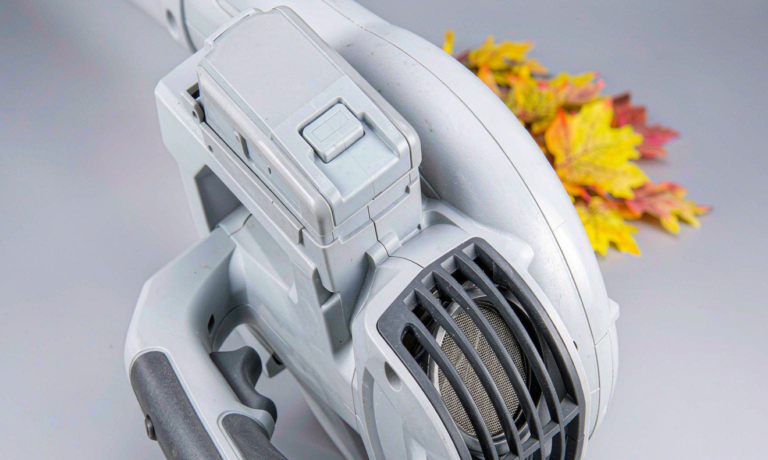
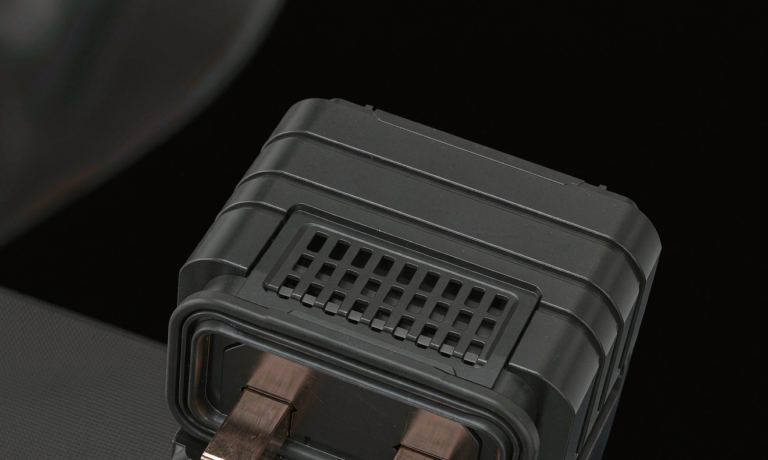
Lithium Battery for Cordless Rotary Hammers
When I started designing packs for cordless rotary hammers at Horizon Power, the first surprise for many of my customers was how non-uniform the load really is. A rotary hammer is not a simple drill. It combines a rotating chuck with an electro-pneumatic or mechanical impact mechanism, and those two functions draw very different current from the same lithium battery pack.
This guide walks through what I have learned engineering these packs: the real load profile, how to choose between NMC and LFP cells, how the battery management system handles percussive spikes, how to ruggedize against vibration, and the certification path that lets you ship worldwide. If you build or specify cordless impact tools, the details below will save you from the most common field failures.
Understanding the Rotary Hammer Load Profile
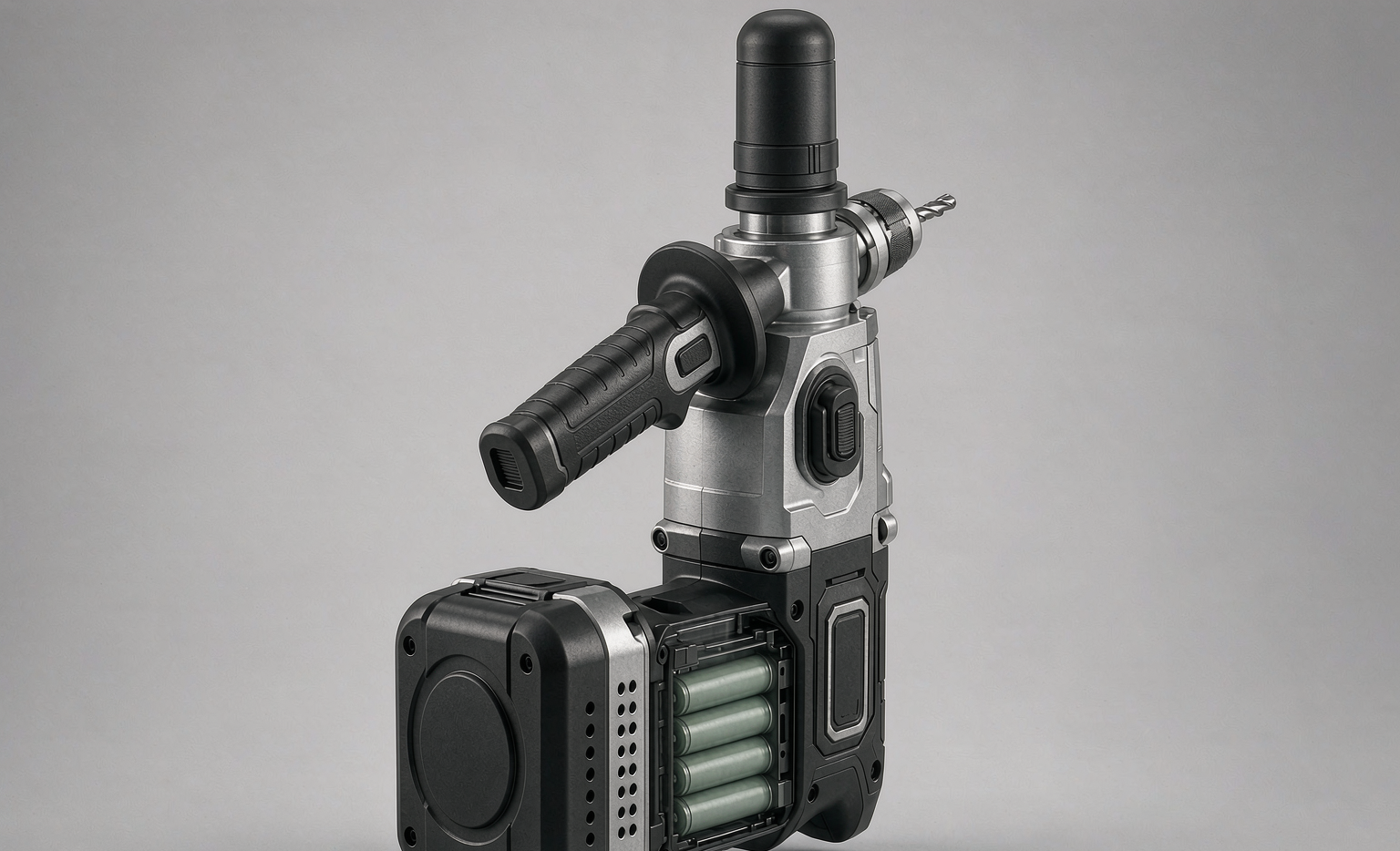
A rotary hammer combines rotation with an impact mechanism, and the two draw very different current. In pure rotation mode the tool pulls a steady 10 to 20 amps from an 18 volt lithium ion battery pack. Engage the hammer function and the percussive mechanism adds sharp, repetitive current spikes that can reach 40 to 60 amps for a few hundred milliseconds at a time.
I measure every new platform on a datalogger at 1 kHz. A typical 18V SDS-plus hammer averages 300 to 500 watts during continuous chiseling, with peak bursts of 800 to 1200 watts when the bit meets rebar or dense aggregate. That peak-to-average ratio is the real design challenge, not the average draw.
The practical consequence is that a pack sized only for average power will sag and trip under impact. The cells, the weld joints, and the connector must all hold voltage through the spike. This is why a rotary hammer lithium battery pack is a different animal from a pack for a simple drill driver.
Choosing Cell Chemistry: NMC vs LFP
For handheld impact tools the two chemistries I reach for are nickel manganese cobalt, known as NMC, and lithium iron phosphate, known as LFP. Each has a clear role.
NMC cells deliver 180 to 220 Wh/kg, which keeps a 4 amp-hour pack around 600 grams. For a tool a worker holds above their head all day, that weight matters. NMC also handles high discharge rates well, which suits the percussive spikes of a rotary hammer.
LFP trades energy density for cycle life and abuse tolerance. A good LFP lithium battery pack reaches 2000 to 4000 cycles and shrugs off over-discharge and mild thermal abuse far better than NMC. For rental fleets, demolition crews, and any application where the pack is rarely treated gently, I recommend LFP despite the extra weight.
If you want one chemistry for a professional rotary hammer line, I usually propose NMC for the light 18V class and LFP for 36V and 40V heavy-duty tools. Horizon Power builds both and will help you pick during a custom battery solution review.
Managing Percussive Current Spikes with the BMS
The battery management system is what keeps those 60 amp spikes from destroying the cells. I spec a protection threshold at roughly 1.5 times the rated continuous current, with a response time under 200 milliseconds. Any slower and a hard stall against concrete can pull the pack voltage below cutoff, tripping the tool mid-job.
Cell balancing is equally important. Percussive loads accelerate imbalance because each impact pulse stresses the weakest parallel group first. I use a top-balanced design with a passive or active balancer that keeps groups within 20 millivolts, and I log state of health so fleet managers can retire packs before they become unreliable.
Communication matters too. A quality pack speaks SMBus or HDQ to the tool, so the fuel gauge and the rotary hammer controller agree on remaining runtime. That handshake prevents the embarrassing moment when a pack reports full but drops out under the first impact.
Ruggedizing the Pack Against Vibration and Shock
A rotary hammer is one of the most abusive environments a lithium battery will ever sit in. Continuous percussion transmits high-frequency vibration into the pack, and a dropped tool delivers a hard shock along the cell axis.
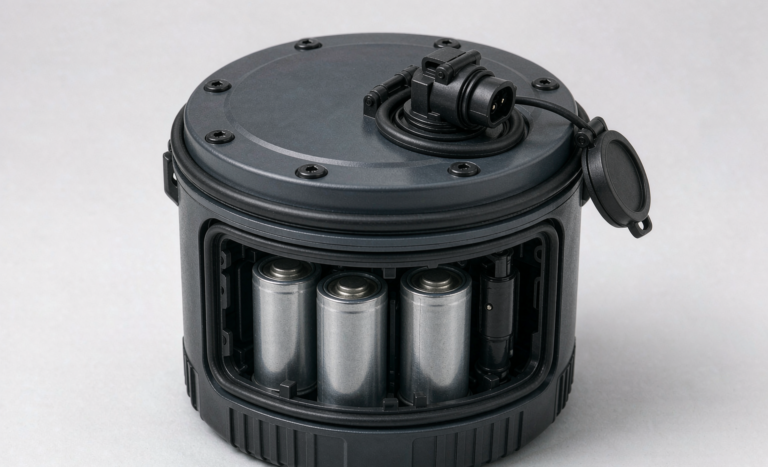
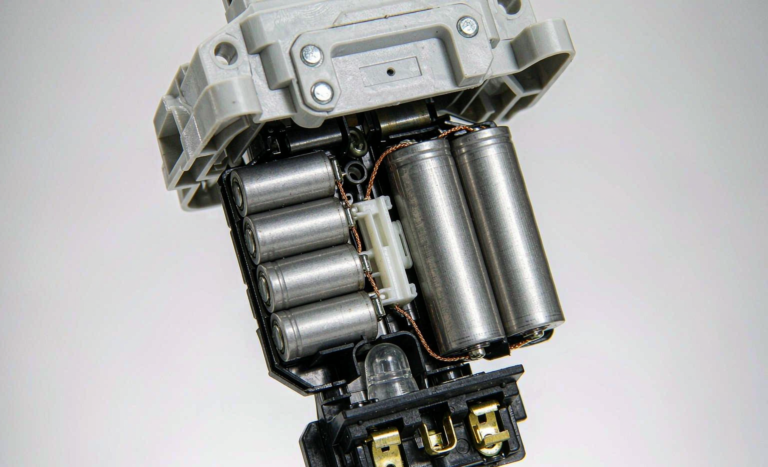
I solve this with three layers. First, every cell is retained in a precision-molded cradle so it cannot rattle. Second, the cell stack is potted in a flexible urethane compound that decouples the cells from the housing. Third, the pack uses vibration-damped terminal connections rather than rigid spot welds that can crack.
Drop testing follows a 1.5 meter six-face regime, after which I re-measure internal resistance and pulse capacity. If a pack passes ruggedization but the impact transient still trips protection, I raise the spike tolerance rather than weaken the cells. A battery that survives the job site is the only one worth shipping.
Thermal Limits, Ingress Protection and Certification
Hammering dumps heat into both the motor and the battery. My rule is a dual-thermistor layout: one sensor near the cells, one near the connector. At 45 degrees Celsius the pack enters soft derate, tapering current; at 60 degrees Celsius it cuts off entirely until it cools.
Dust is the silent killer on concrete sites. I seal the pack to at least IPX4 and add a pressure-equalization membrane so temperature swings do not pull moist air and concrete dust inside. The membrane breathes but filters, which is why a rotary hammer battery outlasts an unsealed one by years in the field.
Certification is not optional. Every pack we build complies with UN38.3 for transport safety and IEC 62133 for portable cell and battery safety. Industrial variants also meet IEC 62619. These standards are what let our customers ship globally and satisfy their own auditors, and I treat the test reports as part of the deliverable, not paperwork.
Capacity Sizing and Voltage Platform Selection
Sizing comes down to runtime math. A 4 amp-hour 18 volt lithium battery pack stores about 72 watt-hours. At 400 watts average hammering draw, that is roughly 10 to 15 minutes of continuous work, or far more in intermittent use. A 9 amp-hour pack roughly doubles that.
Voltage platform sets the current. On 18 volt, which is 5 series cells at a 21.6 volt peak, the same 400 watts draws about 22 amps. Move to a 36 volt or 40 volt platform, which is 10 series, and the current drops to around 11 amps. That reduces I-squared-R heating and extends cell life. For heavy demolition I steer customers to the higher platform.
My standard recommendation: 4 to 6 amp-hour packs for light trade use, 9 amp-hour for full-day hammering, and a two-pack rotation so one charges while the other works. If your tool draws more than 1000 watts peak, talk to us about a custom battery solution before you spec the cells.
Frequently Asked Questions
What battery voltage platform is best for a cordless rotary hammer?
For light trade work an 18 volt platform keeps the tool compact and the lithium battery pack light. For continuous demolition or SDS-max bits, a 36 volt or 40 volt platform halves the current and runs cooler. I pick the higher platform whenever peak draw exceeds about 800 watts.
How many amp hours do I need for a full day of hammering?
Plan on roughly 10 to 15 minutes of continuous hammering per 4 amp-hour 18 volt pack. A full day on concrete means carrying at least two 9 amp-hour packs and rotating them through a fast charger, or one high-capacity pack plus a backup.
Why does my rotary hammer battery get hot during use?
Hammering converts electrical energy into impact, and losses become heat in the cells and connector. A pack that reaches 45 degrees Celsius enters soft derate by design, and 60 degrees Celsius triggers a safety cut-off. If it heats fast on light work, check for a weak cell group or a dirty connector.
Is an LFP battery better than NMC for impact tools?
LFP wins on cycle life, often 2000 to 4000 cycles, and tolerates abuse better, which suits rental and demolition use. NMC wins on weight, about 180 to 220 Wh/kg, which matters for all-day handheld comfort. Choose LFP for durability, NMC for lightness.
What certifications does a rotary hammer lithium battery need?
At minimum UN38.3 for transport and IEC 62133 for portable battery safety. Industrial packs should also meet IEC 62619. These standards are required by most global distributors and auditors, and Horizon Power supplies the test reports with every shipment.
Can I take a rotary hammer battery pack on a plane?
Yes, within limits. Under FAA and EASA rules a pack up to 100 watt-hours can travel in carry-on baggage without approval, and up to 160 watt-hours with airline approval. Most 18 volt 4 to 6 amp-hour lithium battery packs fall under 100 watt-hours and are permitted; always carry them onboard, never in checked luggage.
Further Reading
References