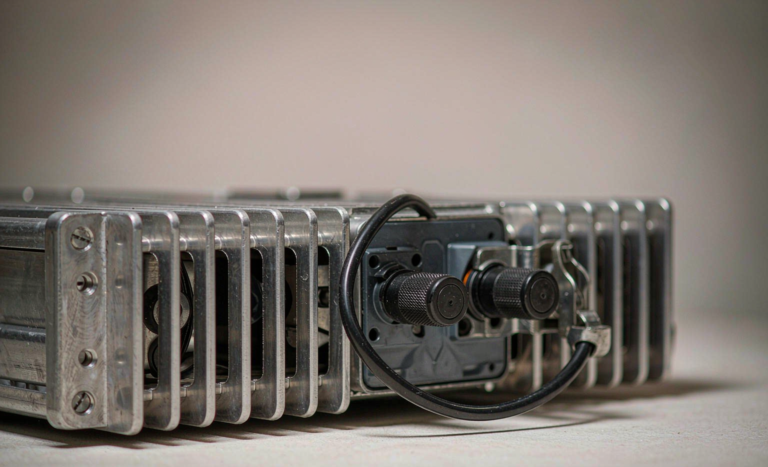
Sodium-Ion Battery for Mobile Signage and Event Trailers
Standing beside a signage trailer at 5:40 in the morning, in November, on a wet fairground, gives you an honest view of what mobile power really means. The screen has already run from 08:00 to 23:00 the day before. The operator wants one press of a switch before the gates open, and the bank has to repeat that trick every night for a six week run with nobody watching. Over the last few seasons I have moved a steady number of these trailers off flooded lead-acid and lithium iron phosphate and onto sodium-ion, and the reason is not headline energy density. It is the failure mode nobody budgets for: the pack is left flat and cold for a week, the sun comes out, and the customer complains at 07:00.
What a Mobile Signage Trailer Actually Draws From Its Bank
People size these banks from the panel wattage, which is the wrong number. A 3.8 square metre outdoor LED panel on a 16 foot trailer is quoted at 900 W at full white, but the brightness schedule and the gate times bring the real average closer to 620 W across a twelve hour operating window. Add the control box, the RF link, the site gateway and a small audio loop at about 60 W, and the bank supplies somewhere between 7.4 and 8.2 kWh on a normal show day.
The peaks are short but sharp. A cold start after a reboot, a video transition at full white and a cabinet fan can pull 1.6 to 1.9 kW for a handful of seconds, and the inverter or generator branch has to survive that without tripping. That is a design note rather than a sizing note: the string has to hold two kilowatts for a few seconds while sitting at 20 percent state of charge, which is where most cheap battery solutions fall over first.
Why Sodium-Ion Survives an Unattended Duty Cycle
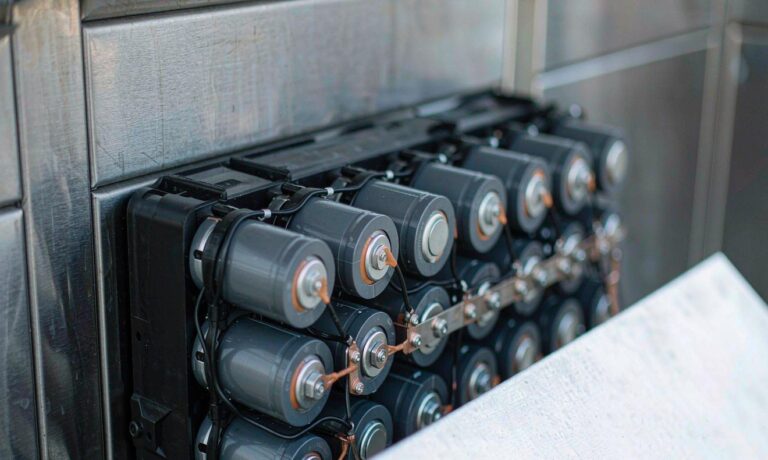
The sodium cell pairs a layered oxide cathode with a hard carbon anode and moves sodium ions instead of lithium. Two properties matter on a trailer. First, the cell has no copper current collector dissolving into the electrolyte when you drive it to zero, which is exactly what quietly kills a lithium pack after one forgotten weekend. Second, the electrolyte in most sodium designs is a non-flammable carbonate system, so a cell that finally gives up does not bring its own fuel source to the party.
The other numbers are convenient. A well built sodium module delivers 3000 to 6000 cycles at 80 percent depth of discharge and keeps more than 80 percent of its room temperature capacity at minus 20 degrees Celsius, while accepting charge current well below freezing, where a lithium iron phosphate pack should be held off the charger entirely. The open circuit voltage against state of charge is closer to linear than the lithium plateau, so a coulomb counter plus a simple voltage check gives the operator a credible remaining runtime on the handover sheet.
The trade you accept is weight. Sodium sits near 120 to 160 Wh per kilogram against roughly 160 to 200 for lithium iron phosphate. On a trailer that penalty is cheap. You are not flying the unit and the axle ratings already absorb a few hundred extra kilos, so paying in mass to buy back tolerance is a sound trade.
Sizing the Bank With a Cold Margin
Work from the worst night, not the average one. Take the 8.1 kWh measured above, hold a 25 percent reserve so the screen never browns out before the operator arrives, apply a 15 percent derate for a minus 10 degrees Celsius morning, and add 10 percent for cell-to-cell spread after a few thousand cycles. That lands you near 12.5 kWh of usable capacity. At an 80 percent depth of discharge ceiling the installed bank needs about 16 kWh, and in practice I quote 20 kWh so the strings stay in a comfortable band all season.
That is roughly two 10 kWh modules in a 24 volt configuration, a tidy answer on a 16 foot deck. On a 40 foot unit with a larger panel you are looking at 48 volt and four modules. The rule I give customers is plain: if the bank cannot carry the show day at 20 degrees Celsius without dropping under 30 percent state of charge, it is undersized, whatever the spreadsheet said.
Cabinet, Wiring and Vibration Details
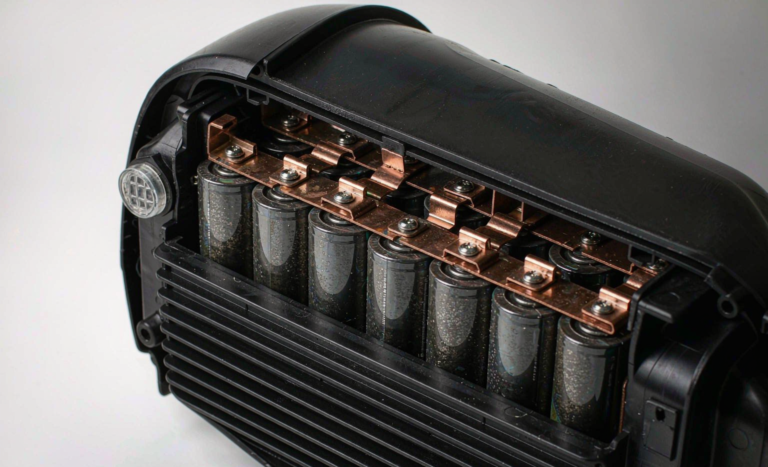
Sodium cells sit near 3.0 V nominal, so a 24 volt bank is eight cells in series and a 48 volt bank is sixteen. Do not drop a sodium module into a lithium charger and expect the tail to land where the battery management system expects. The absorption setpoint and the low voltage cutoff differ, and a cutoff written for a lithium cell at 2.5 V will happily drag a sodium cell toward 2.0 V day after day. Set the low voltage guard from the cell datasheet, and hang the sensor on the cell rather than on the inside of the cabinet door.
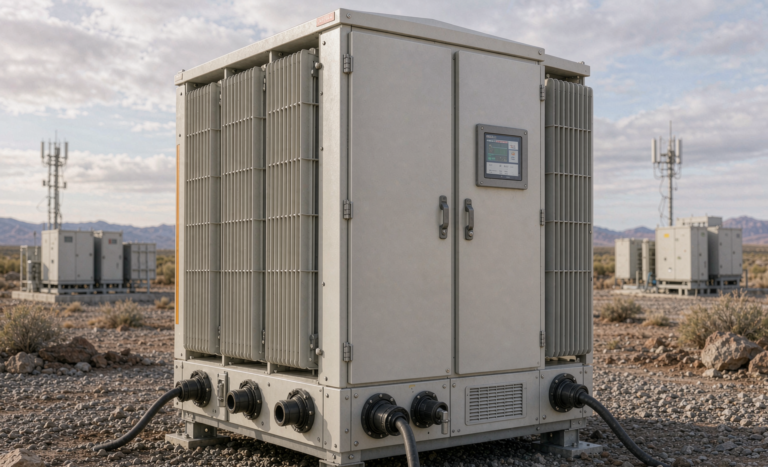
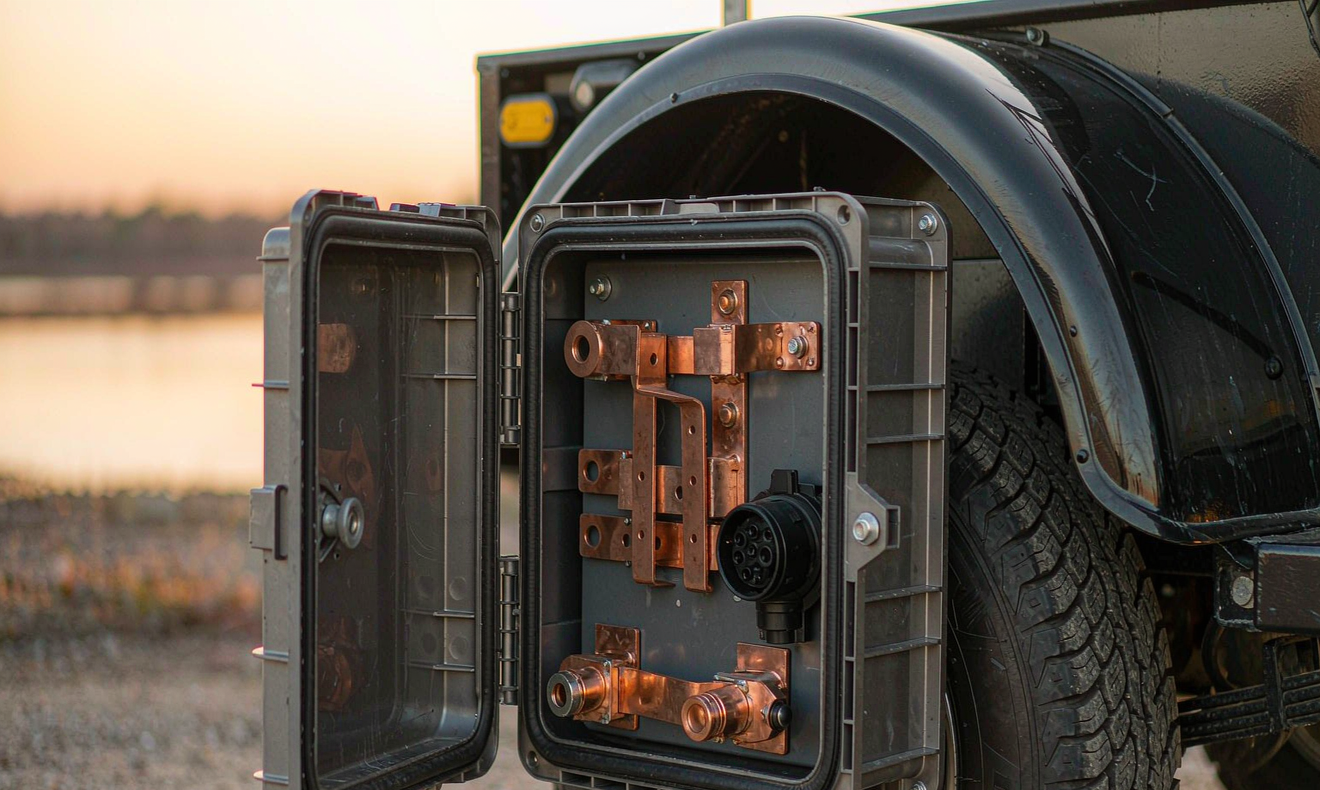
Trailers are a vibration environment. Random road input, brake judder and the thump of a tail lift all land on the terminal ends. We specify stranded silicone wire, ring terminals torqued to the datasheet value, a fuse per branch rather than one fuse at the bus, IP65 gasketed enclosures with a demountable drain so the condensation has somewhere to go, and a small film heater on the cell wall for nights below minus 10 degrees Celsius. The heater costs a few watts. It is also the difference between a morning start and a callout.
Charging Between Events and the Shipping Paperwork
Most of these units see shore power at night, a generator on the road and a roof panel during the day. A 600 W rooftop array with an MPPT controller programmed in the sodium curve will refill the bank between shows without the operator touching anything, which is the entire point. When a generator does run, the bank absorbs the peak and the set holds a steady output, so the engine spends less time hunting and burns less fuel for the same programme.
Paperwork surprises people. Sodium cells are not covered by the Class 9 lithium provisions, but most carriers still want a UN 38.3 test summary and a signed classification before they will book the pallet, so get the forwarder answer in writing. For the pack itself, ask for IEC 62619 or UL 1973 cells with a test report behind them, and keep the installation drawing with the handover so the next operator does not re-learn the whole system in the rain.
How long will a sodium-ion battery run an LED sign for one night?
On the bank described, about 10 to 12 hours of scheduled programme at the measured 620 W average, with roughly a quarter left when the gates open. Cold costs you some of that. At minus 10 degrees Celsius expect the bank to give back over half of that reserve, which is why the sizing above carries a 15 percent derate in the first place.
Is a sodium-ion bank safe to install inside a crowded event tent?
Yes, within reason. Sodium cells use a non-flammable electrolyte and do not show the cascading runaway you see in a damaged lithium pack, so the hazard a fire officer asks about is mostly thermal rather than chemical. You still owe the unit a fuse per branch, a vent path and a cabinet that is not sealed against rainfall.
Can I drop a sodium module into a trailer that already runs lithium iron phosphate?
Physically sometimes, electrically no. The nominal cell voltage differs, so the series count and the charge setpoints change, and a lithium battery management system mapping sodium voltage onto its own state of charge table will drift badly. Retune or replace the management board, or the pack will look fine right up to the morning it is not.
What is the real operating temperature range of a sodium-ion trailer battery?
Discharge down to minus 40 degrees Celsius is realistic for the cell, with more than 80 percent of room temperature capacity still available at minus 20. Charging is the real limit, so hold the pack above freezing for bulk current in the coldest applications or run the film heater. Storage falls between minus 40 and plus 60 degrees Celsius.
Do sodium-ion trailer batteries need a special charger or charge controller?
They need a controller programmed for the sodium curve, and they need the temperature sensor on the cells. A lithium MPPT unit may sit in absorption too long or cut float too early for a cell whose nominal voltage is lower. For shore charging, an inverter-charger with a user settable absorption profile beats a fixed desktop unit every time.
How many seasons will a sodium-ion signage bank last before it needs replacing?
With daily deep cycling, 3000 to 6000 cycles puts the calendar side in front: eight to twelve seasons in an outdoor cabinet, closer to six if the unit lives on a generator and sits at high state of charge for weeks. Track the discharge amp hours. The cycle counter on the board tells you when you are approaching the end of the useful curve.
Further Reading
References