Semi-Solid State Battery Sample Validation Before Mass Order
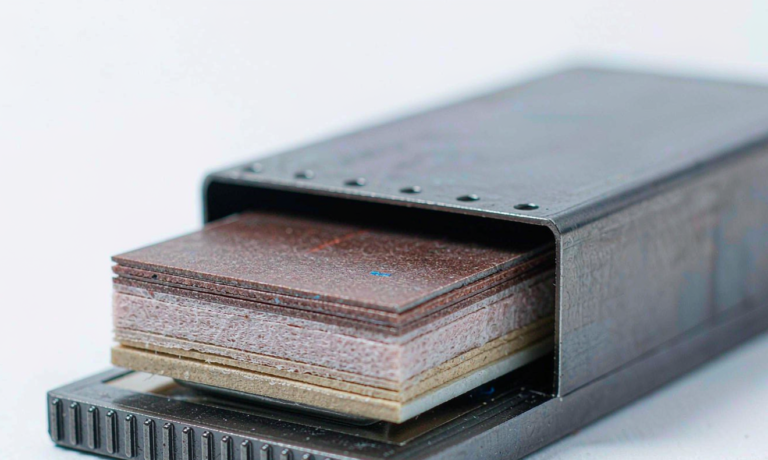
By the time a semi-solid state battery reaches your assembly line, the chemistry has already decided most of what your pack will ever do. What I learned across eleven years of cell qualification work is that the sample you hold in month one and the part you buy in month nine are rarely the same component, even when the drawing number matches. A semi solid state cell keeps roughly 10 to 30 percent of its electrolyte weight as liquid and casts the remainder into a solid skeleton. That hybrid structure widens the gap between the lab sample and a production lot far more than a conventional pouch lithium battery does. This is why I never release a volume purchase order on a single team of samples. I validate across three independent lots, and I write the acceptance numbers into the contract before the first pallet ships.
Why a Semi-Solid Sample Behaves Differently From Its Data Sheet
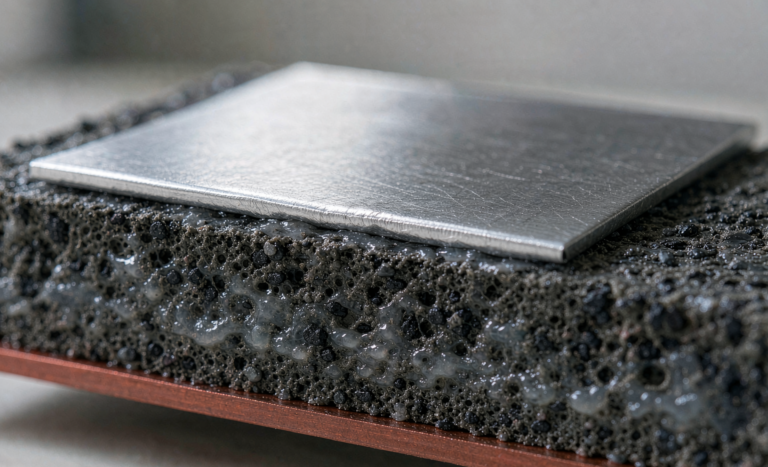
The first thing to understand is that sample validation for this chemistry is not a shorter version of the same test you would run on a liquid cell. It is a different test. In a conventional pouch cell, electrolyte is a free liquid that wets the separator and electrodes, so small dosing differences wash out. In a semi solid state build, the solid framework carries the ion path, and the remaining liquid only fills the residual pores. Change the dosing by one percent and the ionic resistance at the interface can move by eight to fifteen percent.
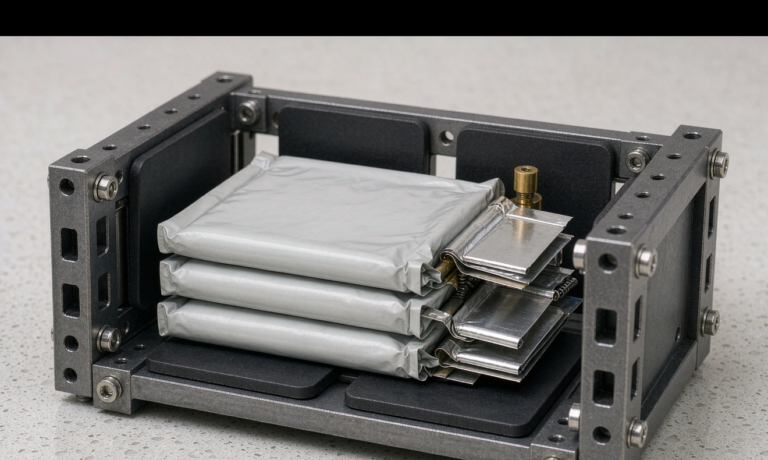
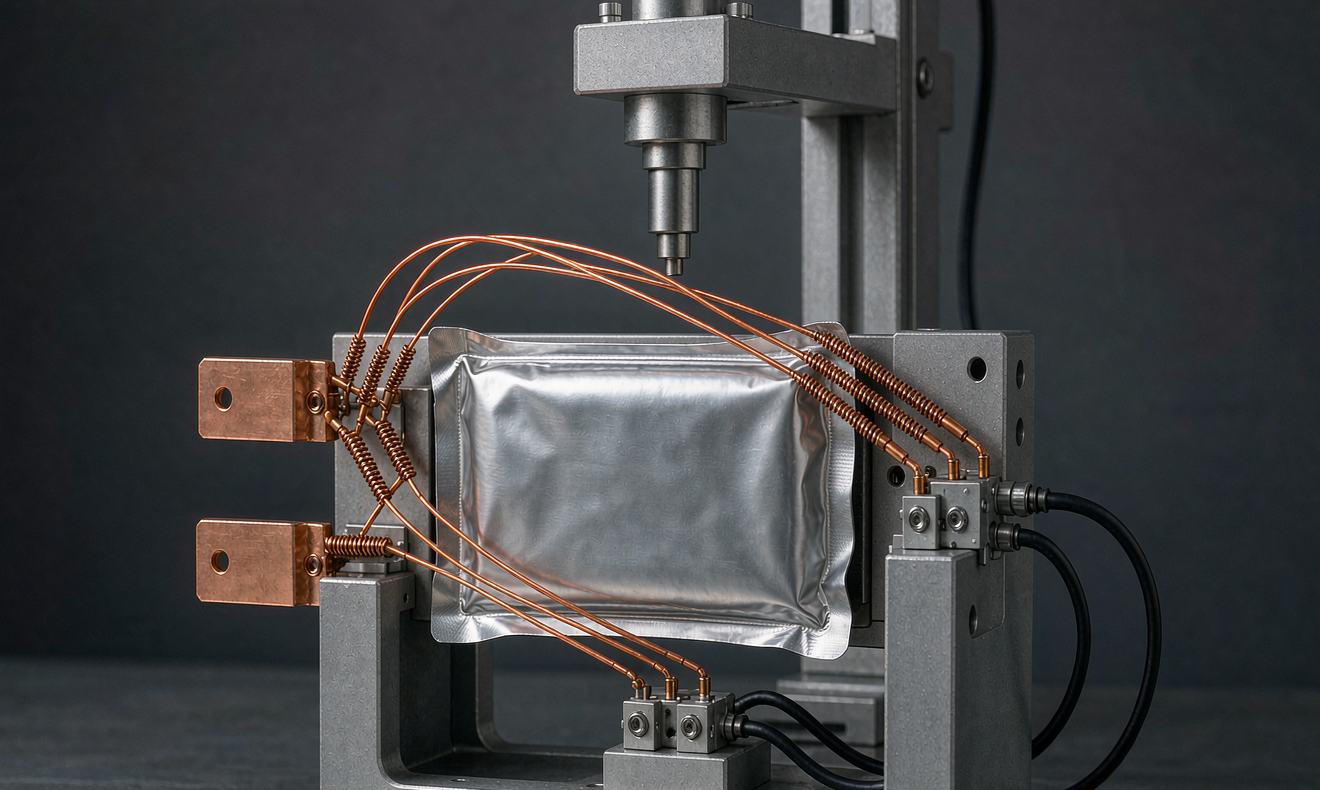
It also means the contact pressure applied to the cell during testing matters. A semi solid cell without stack pressure behaves like a different product. Under roughly 0.3 to 1.5 megapascals of clamp load the solid electrolyte holds contact with the cathode and anode faces, and the interfacial resistance settles into a stable band. Take the clamp off and that resistance climbs back within a few cycles. If your sample report was generated on a fixture with different clamping to your own pack, you are comparing two different parts and drawing the wrong conclusion.
The Three Lot Rule Before Any Volume Order
My standard gate is three consecutive production lots, each tested by the supplier and then independently retested by us. The first lot is almost always good because it comes off a freshly commissioned line. The second lot tells you the process is repeatable. The third tells you it survives a shift change, a holiday and a new material batch.
Sample sizes I usually ask for are 30 cells from lot one, 20 from lot two and 20 from lot three. That is enough to say something honest about the mean and about the tail. Ten cells per lot leaves me arguing about outliers instead of process capability. Three lots of twenty is the minimum that turns a sample into a process statement.
Suppliers also need to hand over the lot records, not just the test summary. I want the electrolyte dose per cell, the dry room dew point for that shift, the formation schedule actually run, and the cell state of charge at the end of formation. Without those, the numbers cannot be traced back to a cause when something drifts later.
What I Measure on Every Sample Cell
Capacity, Efficiency and the Spread That Matters
Capacity is the easy part and it is also the part that hides problems. What matters is the spread. Inside one lot I hold the discharge capacity to within two percent, and lot to lot I allow no more than three percent. Coulombic efficiency during formation is the number I watch next. For a semi solid cell built around a hard carbon or graphite anode, a first efficiency in the mid eighties is normal and anything above 92 percent usually means the formation window was too generous and the real cycle life is being borrowed from the future.
Interfacial Resistance and Fill Verification
DC resistance is measured at 40 and 80 percent state of charge at 25 degrees Celsius, and I accept a spread of no more than five percent across a lot. Electrochemical impedance spectroscopy is worth running at 1 kilohertz on the first sample of each lot. What you are looking for is the mid frequency arc moving, which is the solid electrolyte interface. When that arc grows lot over lot, the fill volume is drifting long before capacity drops enough to fail a grade.
Moisture, Dew Point and the Hydrogen Sulfide Risk
This is the semi solid specific gate that no liquid cell qualification ever needs. If the supplier builds with a sulfide solid electrolyte, that material hydrolyses on contact with water and generates hydrogen sulfide. I hold every sulfide containing lot to a dew point of minus 40 degrees Celsius in the cell building area, and I ask for the measured water content in parts per million of the electrolyte before filling. Above roughly 20 parts per million the interface chemistry changes, and you will find it in the gas measurement of the formation chamber long before you find it in a capacity number.
Form the Sample Exactly the Way the Line Will
A sample that was formed with a gentle schedule and tested immediately will look excellent and will not represent the cell you get later. I insist that the samples are formed on the production formation recipe, not on a laboratory profile, and that they then rest for the same hold time before testing. My usual preconditioning is a low rate soak at 0.05C for eight to twelve hours at 25 degrees Celsius, followed by a charge at 0.1 to 0.2C. On cold starts we preheat the cell to 40 to 45 degrees Celsius before current goes in, which changes what happens at the interface far more than the ambient rating on the data sheet suggests.
Transport state of charge belongs in the same conversation. Semi solid cells are normally shipped at 30 percent or less state of charge under UN38.3, and a supplier who ships samples at full charge is telling you something about how they treat thermal events in transit. I also run the environmental screens on the samples: ten thermal cycles between minus 20 and 55 degrees Celsius, and the damp heat section of IEC 60068-2-78 at 40 degrees Celsius and 93 percent relative humidity for 21 days. Semi solid cells usually pass these better than liquid ones, which is exactly the point worth documenting before your competitor documents it for you.
Failure Modes That Only Show Up in Lot Three
For semi solid production, across three qualified factories, four failure modes repeat:
- Interfacial delamination after extended high rate cycling, which surfaces as a growing voltage spread between cells in a module rather than as a single dead cell.
- Lot-to-lot filling variation, where cells from a new electrolyte drum start at the right capacity and separate by five percent by cycle 400.
- Hydrolysis drift in sulfide based lines, giving a slow, steady gas rise and a mild capacity loss that reads as aging rather than as a defect.
- Tab and current collector joints that pass pull testing on the sample and drift out of spec once the welding parameters drift with electrode thickness.
None of these is visible in a first lot. All four are visible if you hold the three lot gate and keep the lot records.
Put the Validation Clause in the Purchase Order
Validation that lives in an email is validation that disappears. The purchase order should name the lot sizes, the acceptance window, who pays for the retest, and what happens when lot three fails. In my contracts the retest is at the supplier cost, the shipment is held on a lot hold until the third lot passes, and any lot that fails gets a root cause report within fifteen working days, not a replacement shipment.
The commercial side belongs there too. Semi solid volume in 2026 still carries a premium of roughly 25 to 45 percent over an equivalent lithium ion pouch, and pilot quantities of 200 to 500 cells carry a different lead time entirely, typically 16 to 24 weeks against eight to ten for a conventional cell. Agree the price hold, the tooling ownership and the technology lock before you validate, because a validation report you cannot enforce is just a test result.
The documents that should travel with every lot are UN38.3 for the cell, IEC 62133-2 for small format or IEC 62619 for stationary and traction grade, a material declaration naming the solid electrolyte family, the welding pull test record, and the batch traceability back to the electrolyte drum. Pack level fire behaviour for installation projects still wants a UL 9540A study, and an EU battery passport record will be increasingly expected on the compliance side.
Frequently Asked Questions
How many sample cells do I need before placing a semi-solid mass order?
Three production lots is the standard I use. Thirty cells from the first lot, twenty from the second and twenty from the third gives enough statistical weight to judge both the mean and the tail. A single team of samples proves the process can build a good cell. Three good lots prove it can keep building one.
Why is semi-solid sample validation different from validating a lithium battery?
Because the ion path is shared between a solid skeleton and a small amount of liquid, the cell is far more sensitive to electrolyte dosing, to applied stack pressure and to moisture at the moment of filling. A one percent dosing change can move interfacial resistance by eight to fifteen percent, and a sulfide solid electrolyte will hydrolyse if the dry room dew point slips.
What capacity spread should I accept between lots of sample cells?
Two percent inside a single production lot and no more than three percent between lots, measured at the same state of charge and formation state.
Can a supplier ship semi-solid samples at full charge for testing?
They can, but I treat it as a warning sign. UN38.3 expects cells to travel at 30 percent or less state of charge, and a supplier who ignores that on a sample shipment is telling you how the production pallets will travel. Ask for the transport state of charge in the shipping documentation.
Which standards should the sample report cover for a semi-solid cell?
UN38.3 for the cell, IEC 62133-2 for small format or IEC 62619 where the pack is stationary or traction rated, plus the damp heat screen from IEC 60068-2-78 and a thermal cycling screen between minus 20 and 55 degrees Celsius. Pack level installations should additionally carry a UL 9540A study.
How long does semi-solid sample validation normally take?
Six to ten weeks for the testing itself, assuming three production lots are available on schedule. Add four to eight weeks for supplier lot generation and the pilot lead time of 16 to 24 weeks, so first production delivery lands four to six months after the first sample request.
Further Reading
References