Sodium-Ion Battery Module Build and Configuration
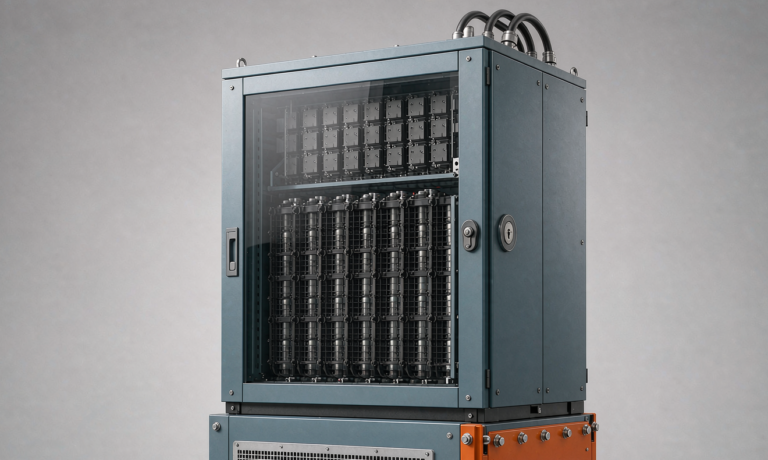
When a procurement manager asks me to quote a sodium-ion battery module, the first thing I do is stop thinking about the cell and start thinking about the pack. At Horizon Power we have built hundreds of sodium-ion modules for telecom, storage, and motive applications, and the cell is only half the story. The module is where chemistry meets mechanics, and a poor build will undo every advantage the chemistry gives you. In this guide I walk through how we design and assemble a sodium-ion battery module, from cell selection to the compliance checks that let it ship legally.
Sodium-Ion Cell Basics That Drive the Module Layout
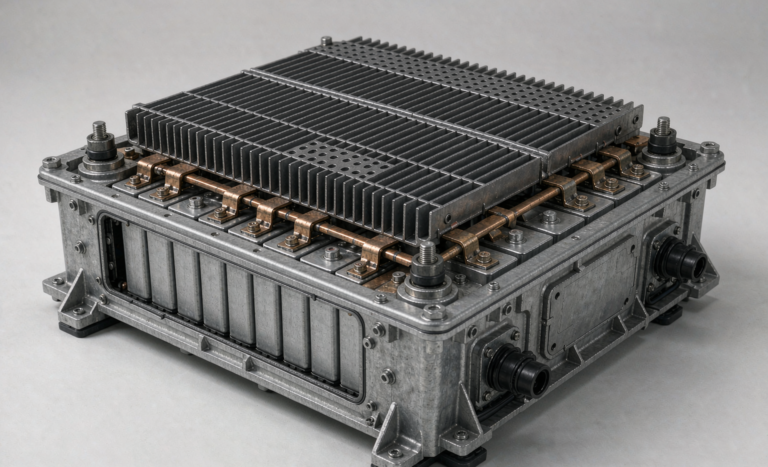
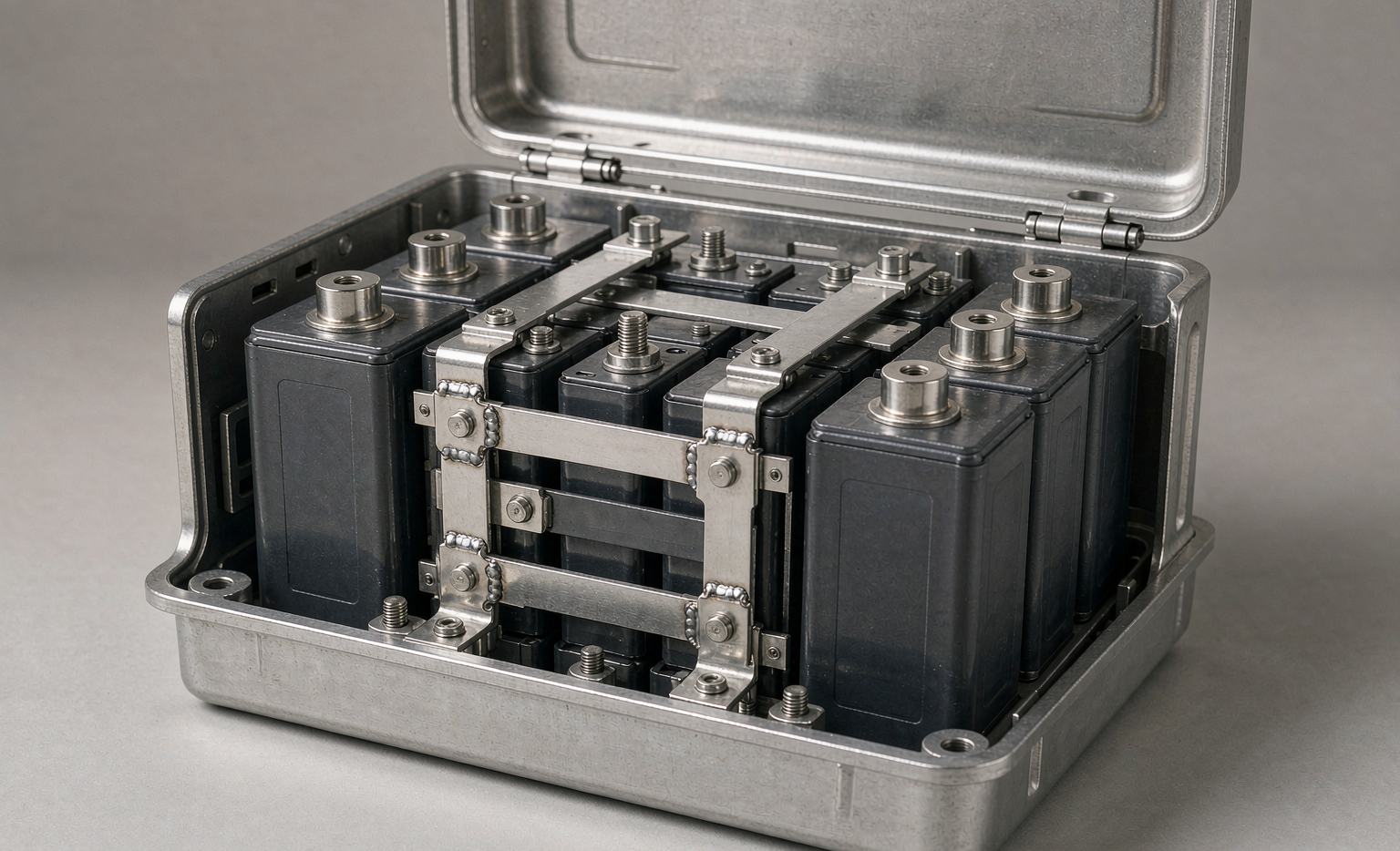
A sodium-ion battery module is a fixed group of cells wired in a defined series and parallel pattern and held in a structural frame with shared busbars. The layout always starts from the cell. Most commercially available sodium-ion cells today use a layered oxide or polyanion cathode and a hard-carbon anode, giving a nominal voltage of 3.0 to 3.2 volts per cell. That is roughly 15 to 20 percent lower than a lithium iron phosphate cell, so you need more cells in series to reach the same module voltage.
For a 48 volt nominal module you are looking at 15 cells in series with layered oxide chemistry, versus 15 or 16 for LFP depending on the exact cutoff. The usable state of charge window for sodium-ion sits around 10 to 90 percent, and we set the charge cutoff at 3.90 to 4.00 volts for layered oxide and 3.65 to 3.75 volts for polyanion chemistries. Hold those numbers and the module will deliver its rated cycles. Ignore them and you watch capacity fade inside a single season.
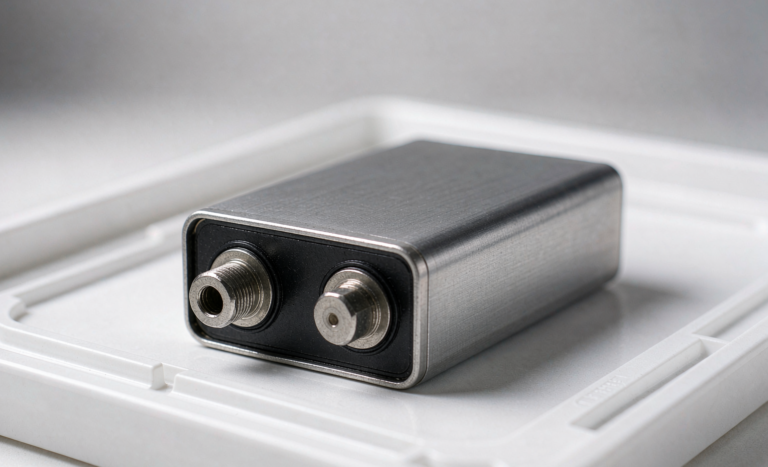
Cell format also sets the layout. We mostly build with prismatic sodium-ion cells in the 10 to 50 ampere hour range, at an energy density near 100 to 160 watt hours per kilogram. Prismatic cells stack cleanly and give a flat, predictable footprint for busbar design.
Series and Parallel Topology Decisions
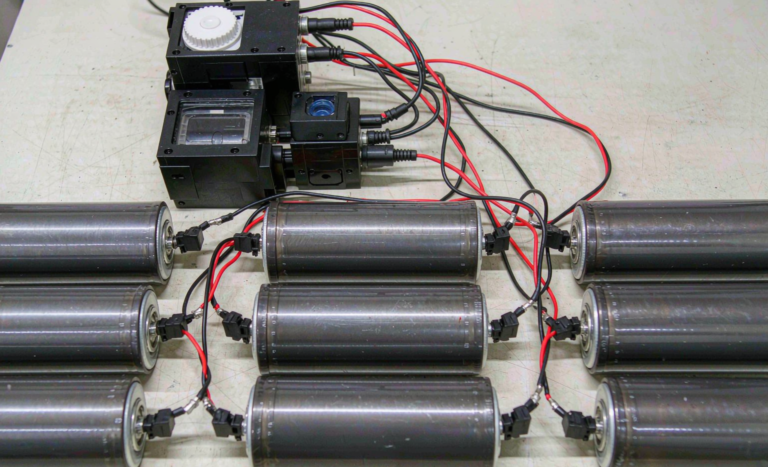
Series connections set the module voltage; parallel connections set the capacity. If you need a 24 volt module from 3.1 volt nominal cells, you run 8 in series. If your load needs 100 ampere hours and you have 50 ampere hour cells, you run 2 in parallel. The product of those two gives you an 8 series 2 parallel module, or 8S2P.
One advantage of sodium-ion in a module is the tighter voltage spread during operation. Because the cell voltage curve is flatter than LFP in the mid range, state of charge estimation from voltage alone is harder, but the cells tolerate shallow imbalance better. We still balance, but the parallel groups stay closer without aggressive active balancing.
The rule we follow is simple: never parallel cells with more than a 10 millivolt open circuit voltage gap at incoming inspection, and never mix formats in one module. A module is only as strong as its weakest parallel group.
Busbars, Interconnects, and Welding
The busbar is the backbone of the module. For sodium-ion we use nickel-plated copper or solid nickel strips, dimensioned so the temperature rise stays under 30 degrees Celsius at the worst-case continuous current. Because sodium-ion cells run at a slightly higher current density for the same power than LFP, the busbar cross-section matters more than engineers expect.
We join cells by resistance welding or laser welding rather than loose crimped lugs. A welded joint keeps resistance below 0.2 milliohm per connection and survives the vibration profiles in motive applications. Torque on mechanical terminals is specified per the cell datasheet, typically 1.5 to 2.5 newton meters, and we re-torque after a thermal cycle before final acceptance.
We insulate every exposed busbar with laser-cut PET or FR4 shields, and we keep a minimum 2 millimeter creepage to the enclosure wall. A short inside a module is the one failure that turns a safe chemistry into a field recall.
Balancing and the BMS Interface
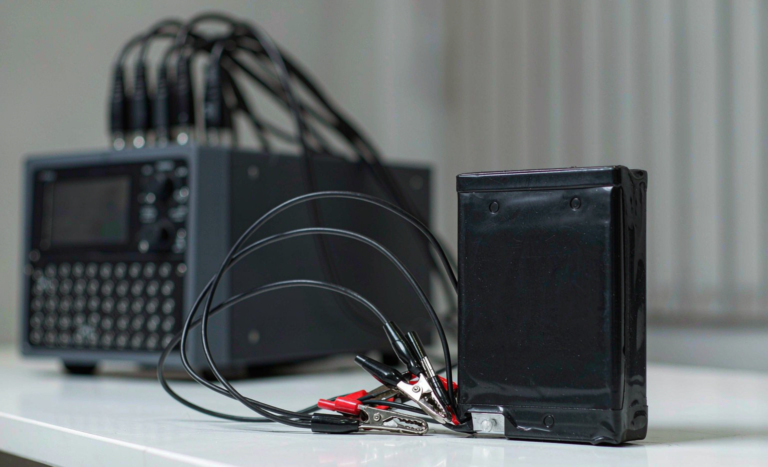
A sodium-ion battery module needs a clean voltage and temperature interface to the battery management system. We bring out every series junction to a balancing resistor network and a temperature sensor per 4 to 6 cells. Passive balancing at 50 to 100 milliamps is enough for most stationary modules because the cells self-discharge slowly, often below 3 percent per month at 25 degrees Celsius.
For motive or high-cycle modules we specify active balancing above 1 ampere when the pack value justifies it. The BMS must understand the sodium-ion voltage window: under-voltage at 2.0 volts per cell and over-voltage at 4.0 volts for layered oxide. Set those limits wrong and the BMS either trips early or lets a cell drift into its knee.
State of health tracking relies on coulomb counting plus periodic capacity references, not voltage alone. We log the first-cycle capacity at formation and treat any module that drops below 80 percent of that reference as end of its first warranty tier.
Thermal Spacing and Enclosure
Sodium-ion is more thermally forgiving than high-nickel lithium, but a module is still a sealed energy brick. We design for natural convection first: at least 2 millimeter side gaps between cells and a continuous vent path to the enclosure relief. Sodium cells do off-gas if abused, and the vent must go somewhere that is not the BMS board.
The enclosure is aluminum for heat spreading, with an ingress rating matched to the duty. Indoor stationary modules get IP20; outdoor or motive modules get IP54 or better with drained-and-vented seams. We avoid fully potting sodium modules because the small amount of off-gas needs room to move, and potting traps it against the cell pouch or prismatic seal.
Compliance and Validation Before Shipping
Before any sodium-ion battery module leaves our line it passes the same transport and safety gates we use for lithium. UN38.3 covers the transport simulation: altitude, thermal, vibration, shock, external short, impact, and forced discharge. IEC 62133-2 applies to the portable cell safety, and IEC 62619 plus UL 1973 cover the industrial module for stationary and motive use.
For systems that sit behind an inverter we add UL 9540A thermal runaway propagation testing so the building code reviewer signs off. Every module is formation-cycled and capacity-graded before assembly, and we keep the grade spread inside 2 percent within a single parallel group. That single step prevents the imbalance complaints that otherwise show up at month six in the field.
Documentation is part of the build. Each module ships with a test record, a bill of materials, and the certification references the customer’s market requires. A module without a traceable test record is not a product, it is a liability.
What voltage should a sodium-ion module be?
Match the module voltage to the load. Common builds are 12 volt, 24 volt, and 48 volt nominal. Because each sodium-ion cell is about 3.1 volts nominal, a 48 volt module is typically 15 cells in series. The exact count depends on whether you use layered oxide or polyanion chemistry and on the charge cutoff you set.
How many cells should be in parallel in a sodium-ion module?
Parallel count is driven by the required capacity and the cell ampere hour rating. If you need 100 ampere hours from 50 ampere hour cells, use 2 in parallel. Keep the incoming cell voltage gap under 10 millivolts across the parallel group to avoid one cell carrying most of the load.
Can I mix sodium-ion cells from different batches in one module?
No. Even within the same model, cells from different production batches can have different internal resistance and capacity. Mixing them forces the weaker group to do more work and shortens module life. Always build a module from a single graded batch.
Does a sodium-ion module need active balancing?
Not always. Stationary modules with slow self-discharge do well with passive balancing at 50 to 100 milliamps. Active balancing above 1 ampere pays off for high-cycle or motive modules where downtime is expensive, but it adds cost and complexity to the build.
Is a sodium-ion module safer to build than a lithium one?
The chemistry is more forgiving on thermal runaway and operates at lower energy density, which reduces risk during assembly. But the module still carries enough energy to weld a tool or start a fire if shorted. We follow the same lockout, insulation, and venting discipline we use for any industrial battery.
What certifications apply to a sodium-ion battery module?
For transport, UN38.3 is mandatory. For product safety, IEC 62133-2 covers cells, while IEC 62619 and UL 1973 cover industrial modules. Systems behind inverters often need UL 9540A for thermal propagation. The exact set depends on the destination market and application.
Further Reading
References