Sodium-Ion Battery Overcharge Protection and Cutoff
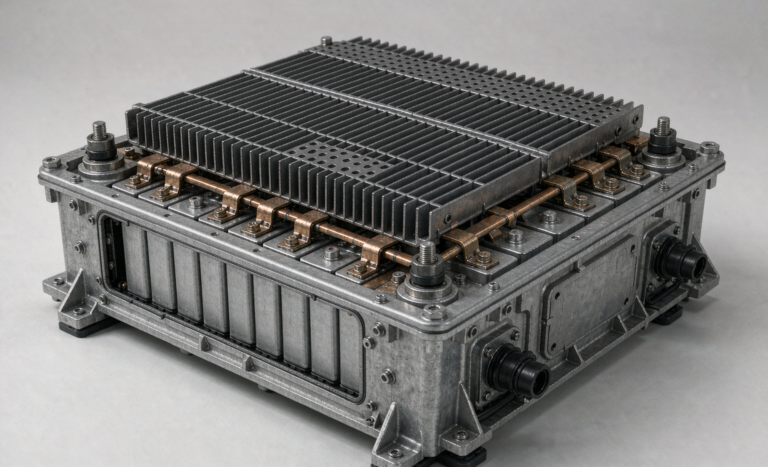
As a Senior lithium battery Engineer at Horizon Power, I have spent the last decade qualifying cells and packs for commercial deployment, and one failure mode keeps showing up in field returns: overcharge. A sodium-ion battery overcharge protection scheme is not optional. When a cell is pushed past its upper voltage limit, layered-oxide cathodes lose reversible capacity, gas evolves, and in the worst case the cell enters thermal runaway. This guide walks through the layered defense we build into every sodium-ion pack we ship, from the cell-level pressure interrupt device to the pack-level battery management system overvoltage cutoff. If you are specifying a custom battery solution and want predictable end-of-life behavior, the cutoff strategy is where reliability is won or lost.

Why Overcharge Damages Sodium-Ion Cells
The first thing to understand is that a sodium-ion battery is not a forgiving device when you exceed its design envelope. Our cells use two main cathode families, and each has a hard ceiling. Layered oxides such as O3 and P2 sodium transition-metal oxides are stable up to roughly 4.0 to 4.1 volts per cell. Polyanion cathodes such as sodium iron manganese phosphate (NFPP) sit lower, around 3.75 to 3.85 volts. Push past those numbers and the structure begins to release sodium faster than it can be re-inserted on discharge.
In our bench testing, forcing a layered-oxide cell to 4.5 volts causes rapid electrolyte oxidation, measurable carbon-dioxide gas generation, and a surface temperature rise past 80 degrees Celsius within minutes. The cell does not immediately ignite, but the reversible capacity loss is permanent and the safety margin is gone. A sodium-ion battery overcharge protection circuit exists precisely to keep every cell inside that safe window, cell after cell, for the full service life.
One difference from lithium-ion is worth stating clearly. At normal operating temperatures, a sodium-ion cell does not plate metallic sodium during overcharge the way a lithium-ion cell plates lithium. That removes one of the most dangerous lithium failure modes. But at sub-zero temperatures, sodium deposition on the anode becomes possible, so cold-weather charging still demands its own limits. The takeaway is simple: sodium is safer than NMC, not immune.
Cell-Level Protection Devices
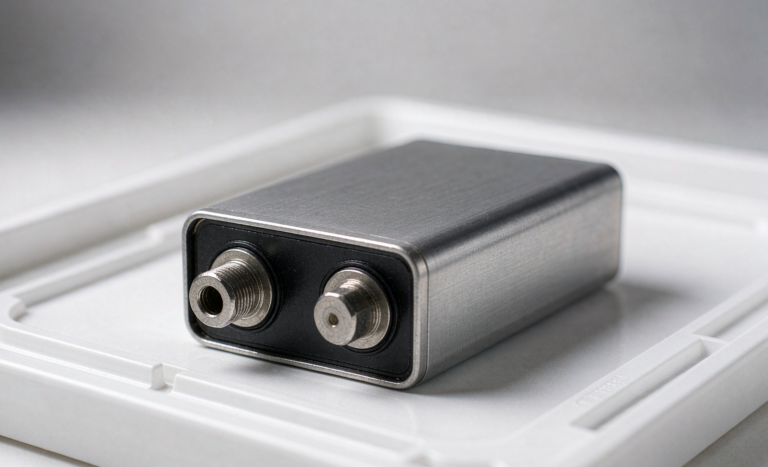
The deepest layer of defense lives inside the cell itself. Every sodium-ion cell we build into a pack carries at least two passive safety devices. The first is a positive temperature coefficient (PTC) resettable element in series with the terminal. As current climbs, the PTC heats and its resistance jumps, choking the fault current before the separator is stressed. The second is a current interrupt device (CID), a mechanical disc that snaps open if internal pressure crosses a threshold.
The separator is the third line. Our separators are engineered to shut down their pores at an elevated temperature, blocking ion transport locally and stopping the cascade. These devices are the last resort, not the primary control. Their job is to fail safely when everything upstream has already failed. We validate them against the abuse expectations in IEC 62133-2 and the transport requirements in UN38.3, because a cell that merely vents instead of igniting is the difference between a returned pack and a recall.
Pack and BMS Overvoltage Protection
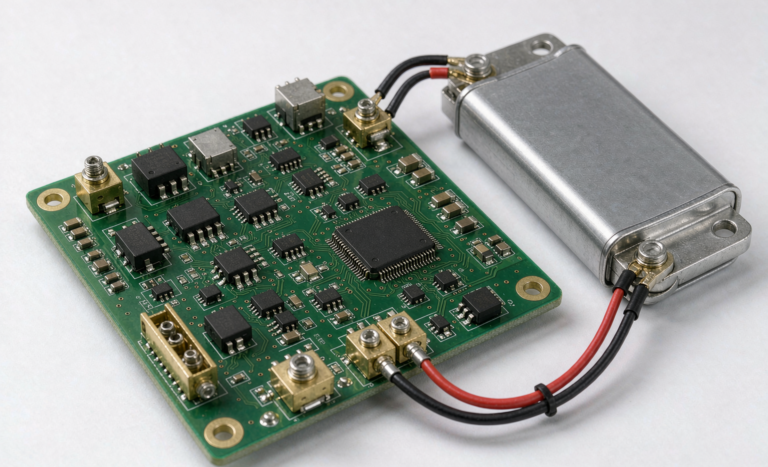
Above the cell sits the pack and its battery management system, and this is where most real-world overcharge events are actually stopped. The BMS measures every cell voltage continuously, typically at one kilohertz or faster on the protection loop. When any cell reaches the overvoltage protection (OVP) threshold, the BMS opens the charge contactor and latches the fault. On the Horizon Power packs I sign off, we set OVP at roughly 50 millivolts above the nominal charge cutoff, a margin that catches a runaway cell without nuisance trips during normal balancing.
Balancing is the quiet hero here. During the constant-voltage tail of charge, cells with slightly higher capacity or lower self-discharge drift upward. Passive balancing bleeds those cells through a resistor; active balancing shuttles energy between cells. Without it, one strong cell hits OVP while the pack is still charging, and the BMS must stop the whole pack prematurely. Good balancing is what lets a custom battery solution reach a true 100 percent state of charge without inviting overcharge on the strongest cell.
We add a second, independent hardware comparator as a watchdog. The firmware OVP is smart but it is software; a frozen microcontroller must not be able to defeat protection. The hardware comparator drives the contactor directly on a hard voltage threshold, so the pack opens even if the main processor is dead. Redundancy is not luxury here, it is the design baseline.
Charger Handshake and CC-CV Termination
The charging profile itself prevents most overcharge. We use a constant-current, constant-voltage (CC-CV) curve. The pack charges at a fixed current until it reaches the cutoff voltage, then the charger holds voltage and lets current taper. Charge ends when current falls below a termination threshold, typically between C/20 and C/50 of rated capacity. A sodium-ion battery overcharge protection plan assumes this taper exists; a charger that holds constant current past cutoff is a hazard.
Equally important is the handshake. Our packs authenticate the charger over a digital bus before allowing high current. A dumb lead-acid or unspecified charger connected by mistake will be rejected. I have seen field failures traced to exactly this: an operator grabbed the nearest power supply, set it to 5 volts, and watched a cell swell. The handshake is the gate that keeps that mistake from becoming a fire.
Standards and Compliance You Must Cite
If you are writing a specification or a safety case, cite the documents your customers and insurers expect. For industrial sodium-ion cells and packs, IEC 62619 is the baseline for safety requirements, and it includes an overcharge abuse test that pushes a cell well beyond its cutoff to prove it fails safely rather than igniting. In North America, UL 1973 covers stationary and motive battery systems and addresses overcharge among its abuse tests. For transport by air or sea, UN38.3 remains mandatory, and the International Air Transport Association (IATA) and civil aviation authorities such as the FAA and EASA enforce it for lithium-class batteries, with sodium-ion handled under the same dangerous-goods logic.
In China, GB/T 36276 defines stationary lithium-ion (and by extension sodium-ion) cell and pack safety tests, including overcharge. We keep a test matrix that maps each pack variant to the exact clause it satisfies, because a buyer in one region will ask for IEC 62619 while another asks for GB/T. A custom battery solution that clears all of them is a product; one that clears only the easy ones is a liability.
Field Practices from Our Engineering Bench
Beyond the standards, the habits matter. On every pack we ship, we log the cell-voltage spread at end of charge. If the constant-voltage tail stretches past 30 minutes, we tighten the balancing resistance or re-screen the cells, because a long tail usually means one cell is fighting the others. We also run a forced-overcharge bench test on a sample from each batch: we inject 1.2 times the cutoff voltage on one cell and confirm the BMS opens the contactor within 200 milliseconds while the neighboring cells stay safe.
We set the charge cutoff with a margin for age. A fresh cell holds 4.05 volts comfortably, but after five hundred cycles the same cutoff can let a weakened cell creep upward under a stiff charger. Our firmware trims the effective cutoff down by a few millivolts as cycle count climbs, trading a sliver of top-end capacity for a decade of safe operation. That is the kind of decision a sodium-ion battery overcharge protection strategy has to make, and it is why off-the-shelf chargers are never enough on their own.
What voltage is the safe cutoff for a sodium-ion battery?
For layered-oxide sodium-ion cells we terminate charge at about 4.0 to 4.1 volts per cell, and for polyanion cathodes such as NFPP we use 3.75 to 3.85 volts. The exact number depends on the cathode chemistry and cell design, so always use the value on the cell datasheet rather than a generic guess.
Does sodium-ion plating occur during overcharge like lithium-ion?
At normal temperatures, sodium-ion cells do not plate metallic sodium the way lithium-ion cells plate lithium, which makes them safer under abuse. At sub-zero temperatures, however, sodium deposition on the hard-carbon anode becomes possible, so cold-weather charging still requires reduced current and its own cutoff discipline.
How does a BMS stop overcharge?
The battery management system monitors every cell voltage and opens the charge contactor when any cell crosses the overvoltage threshold, typically about 50 millivolts above the nominal cutoff. A separate hardware comparator provides an independent cutoff in case the main processor fails, so protection does not depend on software alone.
Which standards cover sodium-ion overcharge testing?
IEC 62619 is the industrial baseline and includes an overcharge abuse test, while UL 1973 covers stationary and motive systems in North America. Transport falls under UN38.3 enforced by aviation authorities such as the FAA and EASA, and in China GB/T 36276 defines the overcharge safety test for stationary cells and packs.
Can a sodium-ion pack recover from a mild overcharge?
A small, brief excursion of a few millivolts above cutoff usually causes no visible damage and the pack can return to service after inspection. A sustained or large overcharge that generates gas or heats the cell beyond its design limit causes permanent capacity loss and must be retired, because the safety margin cannot be restored in the field.
Overcharge is the one failure mode you can design out almost entirely with disciplined cutoff strategy. From the cell-level PTC and current interrupt device, through redundant BMS overvoltage protection, to a proper CC-CV charger handshake and the right compliance paperwork, every layer earns its place. At Horizon Power we treat the sodium-ion battery overcharge protection scheme as the spine of pack reliability, and if you are building a custom battery solution, I would start the conversation there rather than at the headline energy density.
Further Reading
References