Semi-Solid Halide Oxide Electrolyte Selection Guide
I am often asked which electrolyte wins in a semi-solid cell, as if a single chemistry could answer every application. After more than a decade building, testing, and yes, failing cells on the bench, my answer is that the decision is less about picking a champion and more about choosing which failure mode you are willing to manage. Oxide ceramics and halide salts sit near opposite ends of a practical trade. One is chemically rugged but mechanically stubborn; the other is compliant and highly conductive but sensitive to water. This guide walks through the numbers I actually use when choosing between them for semi-solid packs, and the questions I ask before I let a formulation near a pilot line.

I write this as Karl Huang, a senior lithium battery engineer who has spent years translating material data sheets into cells that survive shipping, cycling, and a customer’s warranty period. The figures below are the ranges I have measured or specified in qualification work, not marketing claims. Treat them as starting points for your own validation.
Two Chemistry Families, Two Different Engineering Problems
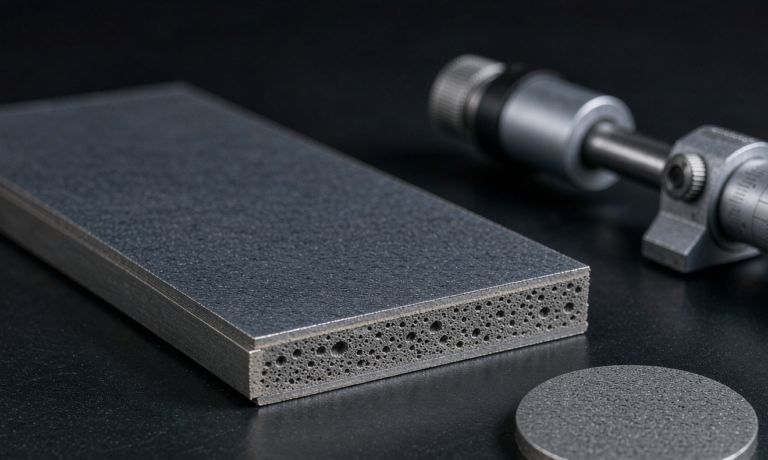
Oxide electrolytes are ceramics. The workhorse is garnet-type LLZO, with the composition Li7La3Zr2O12, and the NASICON family of LATP and LAGP. Their defining trait is a rigid crystal lattice that conducts lithium ions while resisting oxidation. In a semi-solid cell they are usually milled into a powder, blended with a small fraction of liquid or gel to soften interfaces, and pressed into a composite separator or electrode layer.
Halide electrolytes are salts, typically chlorides such as Li3InCl6, Li2ZrCl6, and Li3YCl6. They are softer, deform under modest pressure, and form intimate contact with cathode particles without the aggressive sintering oxides demand. In my characterization work, a cold-pressed halide pellet reaches useful density at a few hundred megapascals, while a dense LLZO body often needs furnace treatment above 1000 degrees Celsius to close grain boundary resistance.
That processing gap is the first filter I apply. If a supplier cannot show me how the electrolyte becomes a reproducible, thin layer at production rates, the conductivity number on the data sheet is not worth much.
Ionic Conductivity: Lab Numbers vs Delivered Numbers
Bulk ionic conductivity is the most quoted figure and the most misused. Good LLZO and LATP compositions reach roughly 1 times 10 to the minus 3 siemens per centimeter at room temperature, and optimized halide chlorides such as Li3InCl6 land in a similar or slightly higher band, around 2 times 10 to the minus 3. On paper they look comparable.
The number that matters in a cell is the effective conductivity of the composite layer after you add binders, liquid content, and interfaces. Here halides often pull ahead in practice because their soft particles weld together under pressure, lowering grain boundary resistance. Oxide powders leave more point contacts, and each point contact is a barrier. I have seen a halide composite deliver three to five times the effective conductivity of an oxide composite built from powders with identical bulk ratings.
Do not accept a single-temperature measurement either. Ask for conductivity across minus 20 to 60 degrees Celsius with activation energy reported. A material that drops steeply at low temperature will fail a winter duty cycle even if its room-temperature value is excellent.
Interfacial Resistance and Stack Pressure
Solid electrolytes touch solids imperfectly. The interface between the electrolyte and a high-nickel cathode is where most semi-solid cells lose power. Halides wet cathode surfaces well and keep interfacial area high with moderate stack pressure, which is why I favor them for pouch formats that cannot sustain enormous clamp loads.
Oxides need more help. Rigid-on-rigid contact means area-specific resistance climbs as the cell breathes during cycling. In a cell with LLZO, I typically design for a compliant interlayer and a controlled stack pressure in the range of a few megapascals, then verify that resistance stays flat over hundreds of cycles. Without that compliance, capacity fades not because the electrolyte degrades but because the contact simply walks away.
One caution from experience: stack pressure that looks fine on a fresh cell can drift as the fixture relaxes. Specify the pressure window in the pack design, not just on the test jig, or your field data will never match your lab data.
Moisture Sensitivity and Dry-Room Discipline
This is where the two families separate most sharply. Halide chlorides hydrolyze readily. Exposed to humidity, Li3InCl6 releases hydrogen chloride and loses conductivity, and the byproducts corrode current collectors. Every halide line I have specified runs in a dry room held below roughly 1 percent relative humidity, with sealed transfer and short exposure windows. That is a real cost, and it belongs in the total cost model, not in a footnote.
Oxides are far more forgiving in air. LLZO and LATP pellets can be handled with far less stringent controls, which is one reason oxide routes attract teams scaling from prototype to pilot production. LATP does carry an indium-free cost advantage but a limitation against lithium metal, because titanium can be reduced at low potential. Garnet is more stable against lithium but still needs a wetting layer to avoid dendrite initiation at the interface.
My rule is simple. If your facility already runs a dry room for conventional lithium-ion, the halide penalty is manageable. If you are building a new line and want to avoid that capital cost, oxide deserves a serious look.
High-Voltage Cathode Compatibility
Semi-solid packs earn their keep by enabling aggressive cathodes. Both halides and oxides tolerate high-voltage operation better than carbonate liquids, but the mechanisms differ. Chloride halides are stable above 4 volts versus lithium and form a thin, resistive cathode interface that grows slowly with cycling. In tests with high-nickel NMC and with lithium-rich layered oxides, I have seen halide cells hold voltage fade in check at upper cutoffs near 4.3 volts.
Oxides bring a wide electrochemical window and high mechanical modulus, which helps suppress this penetration. The catch is brittle fracture. A microcrack in a ceramic layer creates a low-resistance path for lithium filaments, and that is a failure mode you want to catch during qualification, not in the field.
Whichever route you choose, validate with the actual cathode and the actual upper cutoff you intend to ship. Published stability windows measured on platinum current collectors do not transfer to a porous composite cathode.
Cost, Raw Materials, and Scale-Up Reality
Cost is not just dollars per kilogram of powder. Indium-based halides carry a pronounced raw-material premium, and zirconium-based halides trade some conductivity for a friendlier bill of materials. Oxide ceramics avoid scarce metals but add sintering energy, milling, and scrap from brittle handling. The delivered cost of a square meter of electrolyte layer is the metric I ask suppliers to quote, because it folds in yield and thickness.
Scale-up favors whichever route fits existing equipment. Halide processing looks a lot like conventional electrode coating once the dry-room requirement is met. Oxide processing may demand new furnaces or specialized rolling equipment. For a buyer comparing bids, that capital difference often outweighs the material price by a wide margin.
Ask for a bill of materials with named precursor purity, a yield history from pilot lots, and a change-control commitment. Electrolyte performance is sensitive to trace water and impurity levels, and a supplier who will not freeze those specs will not give you a stable cell.
A Practical Selection Framework
When a customer asks me to choose, I run a short checklist. First, the duty cycle: high power and cold starts tend to favor halides for their interfacial contact. Second, the environment: a dry-room-constrained facility pushes toward oxides. Third, the cathode and voltage ceiling: both work above 4 volts, but each needs its own interface validation. Fourth, format: soft pouch cells reward compliant halides, while prismatic cells with robust clamp hardware can accommodate oxides. Fifth, volume and capital: pilot quantities tolerate more exotic chemistry than a million-cell program.
There is no universal winner. The engineers who get into trouble are the ones who pick a chemistry from a headline conductivity figure and discover the constraints later. Start from your pack-level failure modes, work backward to the electrolyte, and demand cell-level data measured on your own cathode and your own thermal profile.
Frequently Asked Questions
Are chloride halide electrolytes stable against lithium metal anodes?
Generally no. Chloride halides such as Li3InCl6 are reduced at low potential and can form mixed conducting interphases against lithium metal. Most designs either pair them with a graphite or silicon anode and a protective coating, or insert a separate stable interlayer. Do not assume the cathode-side stability extends to the anode.
How much stack pressure does an oxide electrolyte cell need?
Typically a few megapascals of maintained pressure with a compliant interlayer to keep contact area stable. The exact window depends on layer thickness and cathode morphology, and it must hold through cycling as fixtures relax. Specify the pack-level pressure envelope, not just the bench jig setting.
Can halide and oxide electrolytes be blended in one semi-solid cell?
Yes, and this is an active area of development. A common approach mixes a small fraction of oxide ceramic into a halide matrix to add mechanical strength and suppress dendrite paths while retaining halide contact quality. The two must be chemically compatible at your processing temperature, so verify with impedance and post-mortem analysis rather than assuming.
Which electrolyte suits a high-nickel cathode above 4.2 volts?
Both halide chlorides and oxide garnets can work, but halide chlorides often give lower interfacial resistance with high-nickel layered oxides at those voltages. The decision still hinges on moisture handling and anode compatibility, so qualify the full cell at your upper cutoff before committing.
What standards apply when qualifying a semi-solid cell?
Transport and safety testing follows UN 38.3 for shipment, IEC 62133-2 for portable applications, and IEC 62619 for stationary and industrial use. These standards test the cell and pack, not the electrolyte in isolation, which is another reason to qualify the actual design rather than the material alone.
Further Reading
References