Battery Solution for Electric Mining Haul Trucks
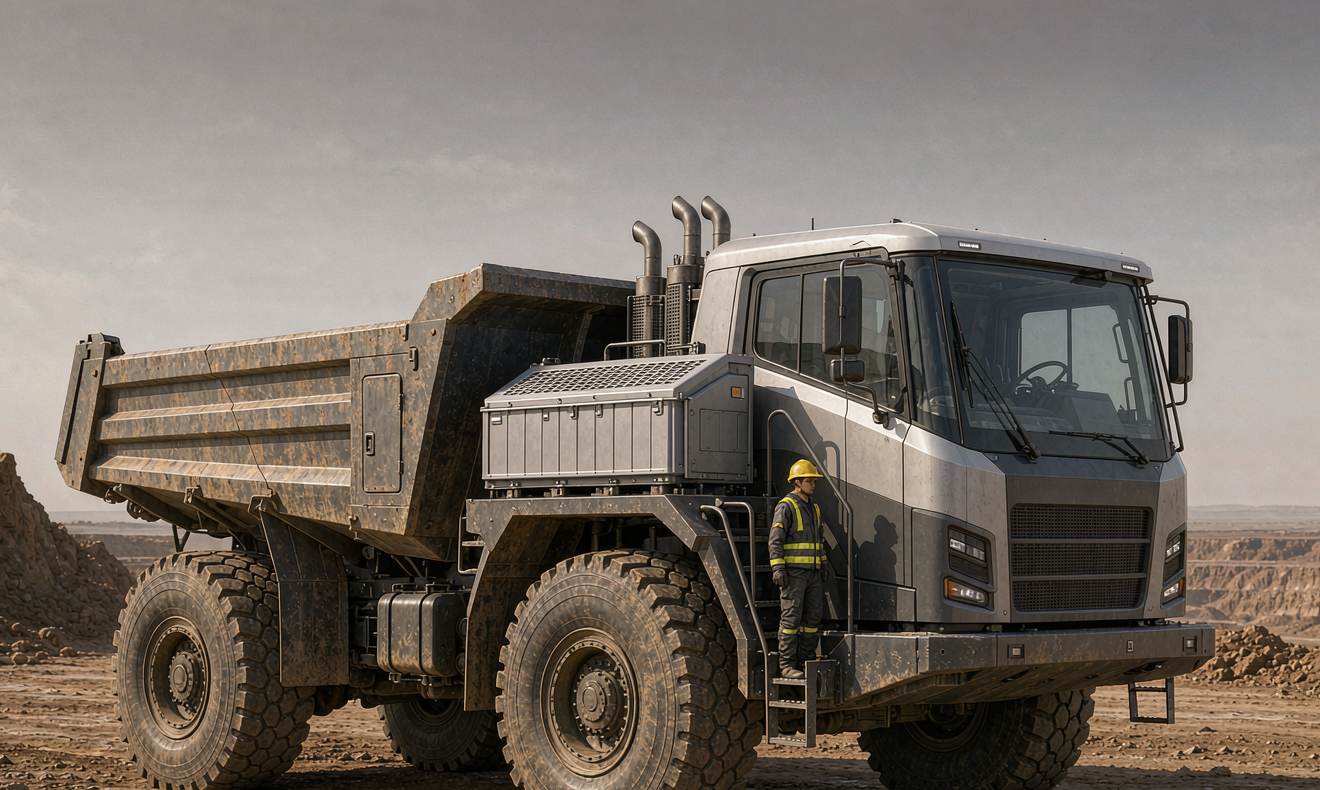
Moving a 240-ton haul truck up a mine bench used to mean burning diesel by the hundreds of liters per cycle. As a senior lithium battery engineer at Horizon Power, I have spent the last six years helping mining operators replace that diesel powertrain with a battery solution built for punishment. An electric mining haul truck is not a passenger car with a bigger pack; it is a mobile substation on wheels. This article explains how we size, cool, charge, and certify a mining haul truck battery so it survives years of loaded climbs, regenerative descents, and abrasive dust.
Why Mining Haul Trucks Are Moving to Battery Power
The economic case for a battery solution in haul trucks is not about green branding; it is about energy per ton-kilometer. A diesel haul truck burns roughly 0.4 to 0.6 liters of fuel for every ton of material moved one kilometer, and that fuel cost is exposed to volatile oil prices. A mining haul truck battery turns the same work into a grid or on-site renewable charge that is far more stable in price.
What makes the duty cycle unusually friendly to electrification is the descent. After dumping its load at the top of a bench, the empty truck rolls back down a long grade, and a well-tuned regenerative brake can recover 60 to 80 percent of the energy spent climbing. On a trolley-assist haul road, overhead lines add another charging path during the steepest segments. In my field tests, regeneration alone cut net pack throughput by roughly a third compared with a flat-site duty cycle.
Underground mines gain a second advantage: removing diesel engines eliminates local NOx and particulate emissions, which sharply reduces ventilation requirements. That ventilation saving is often the swing factor that pays for the custom battery solution faster than the surface fuel saving does.
Pack Architecture and Energy Density Requirements
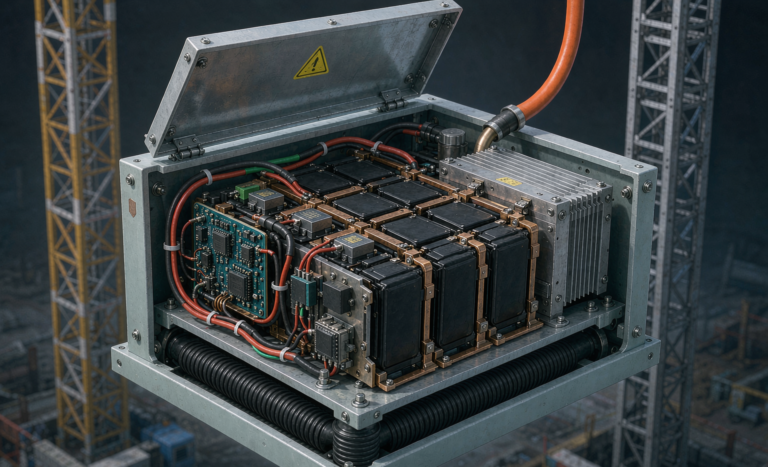
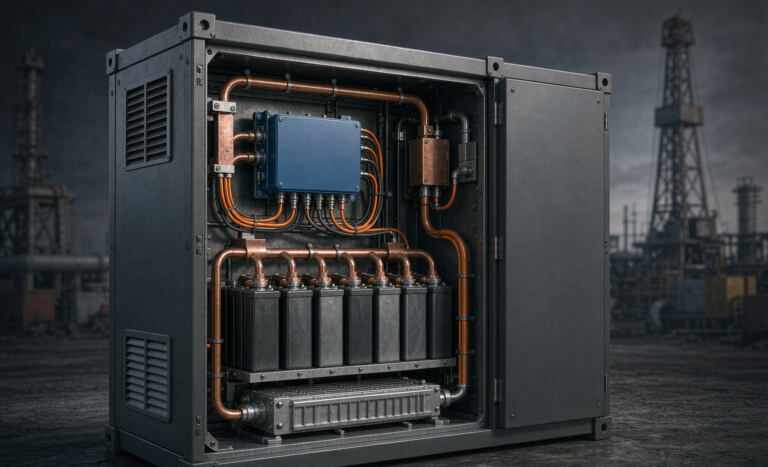
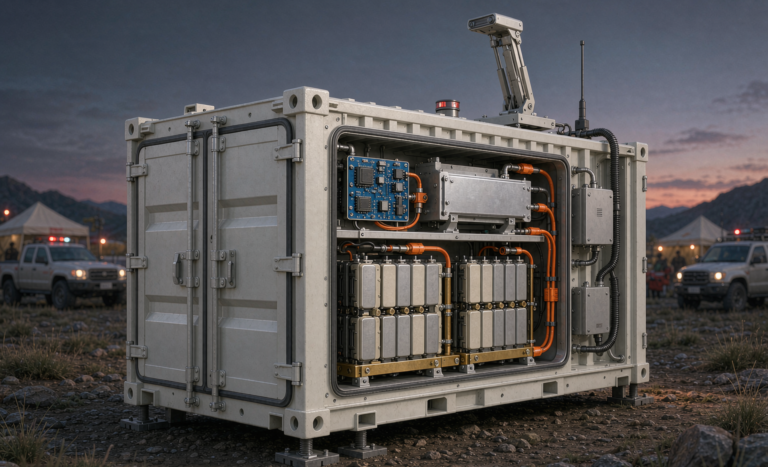
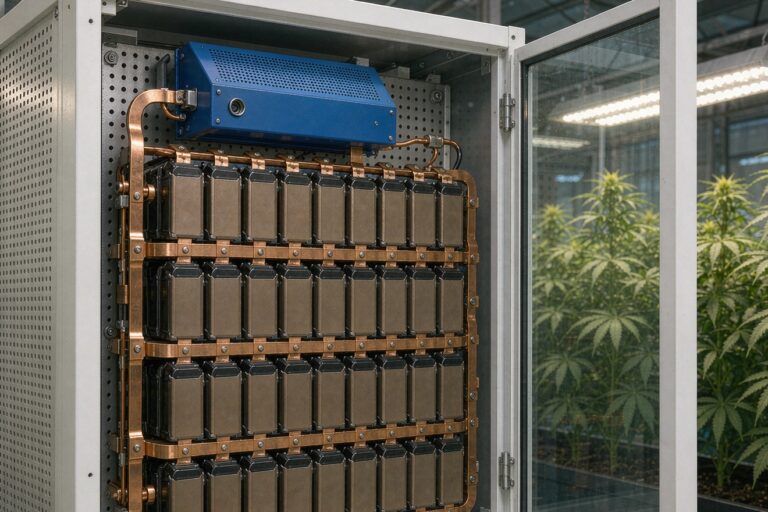
A 240-ton class rigid haul truck typically needs a usable pack of 1.6 to 2.0 megawatt-hours to complete a full loaded cycle on a single charge. At the pack level that means a specific energy around 150 to 180 watt-hours per kilogram, delivered through a 1000 to 1500 volt DC bus. We build the mining haul truck battery as a set of modular rack enclosures rather than one monolith, because a single failed module must be field-swappable without stranding the whole truck.
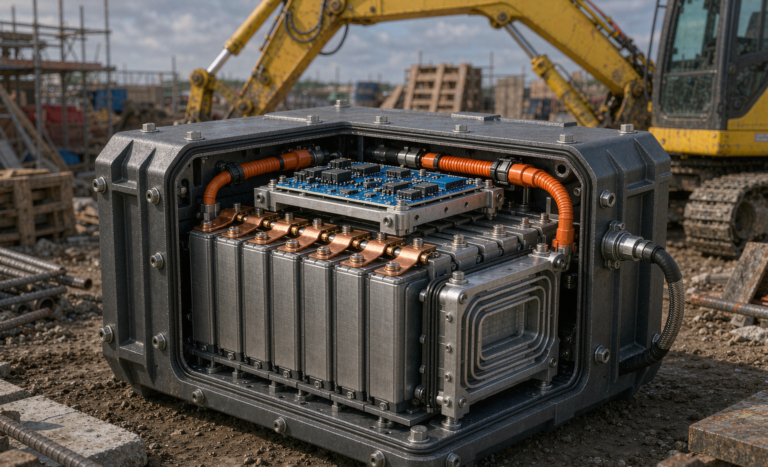
Chemistry choice is the first decision. Lithium iron phosphate, or LFP, runs at a 3.2 volt nominal cell and gives us 3000 to 6000 cycles with excellent thermal tolerance, which is why we default to it for surface trucks. Nickel manganese cobalt, or NMC, buys 15 to 25 percent more energy per kilogram when bench height or payload leaves no room for a bigger LFP pack. Each module carries its own sensing string, pyro-fuse, and isolated comms to the central battery management system, and the pack uses series contactors sized for the full short-circuit current of the bus.
In practice the enclosure, busbar, and cooling hardware eat 30 to 40 percent of the pack mass. A good battery solution spends engineering effort on the mechanical interface, because the pack has to bolt into a chassis that was originally designed around a diesel engine and a torque converter.
Fast Charging and Opportunity Charging at the Loadout Point
The cheapest charger is the one you already have time for. Instead of a single nightly full charge, most sites run opportunity charging: a liquid-cooled DC charger feeds the truck during loadout and shift changes at rates of 1C to 3C, meaning the pack can accept 1 to 3 times its capacity per hour. At 600 kilowatts to 1.5 megawatts, a 20 to 80 percent top-up lands in about 30 to 45 minutes.
The limit is rarely the charger; it is cell temperature and voltage taper. A mining haul truck battery managed by a competent BMS will hold a high charge rate until roughly 70 percent state of charge, then taper to protect calendar life. We precondition the pack toward the ideal temperature window before the charger connects, so the truck does not waste its loading window waiting for the cells to warm up.
For remote pits, we pair the charger with on-site solar or a buffer generator so the grid connection stays modest. The battery solution thus doubles as a load-leveling asset for the whole mine, not just a fuel tank for one vehicle.
Thermal Management in Harsh Mine Environments
Mine sites run from minus 30 degrees Celsius in northern operations to above 50 degrees Celsius in arid pits, and the air carries abrasive silica dust that defeats ordinary cooling fins. We seal every enclosure to IP6X on the dust side and use liquid cold plates bonded directly to the module frames. Target cell temperature is a narrow 15 to 35 degrees Celsius band, held by a dielectric coolant loop with redundant pumps.
Cold starts get a resistive or coolant-fed heater so the pack reaches charge-ready temperature before the operator rolls out. In heat, the loop rejects energy through a remote radiator sited away from the dust plume. I have seen packs lose 12 percent of usable capacity in a single season simply because the cooling design assumed clean factory air; a mining haul truck battery must be validated against the real site, not a lab bench.
Safety, Certification and Compliance
A pack this large is treated as dangerous goods from the moment it is built. Transport follows UN38.3, which exercises the cells through altitude, thermal, shock, and external short-circuit abuse. Cells are designed to IEC 62133, and the industrial pack as a whole is assessed under IEC 62619 for stationary and motive large-format use. In North America we build to UL 1973 for the cells and modules and demonstrate containment under UL 9540A so the site fire plan can rely on the pack not propagating.
Physically, the enclosure is IP67 against water and dust ingress, with a dedicated vent path that directs any off-gas away from the operator cabin and the electronics bay. An isolation monitor watches the resistance between the bus and the chassis continuously, and a fault isolates the contactors in milliseconds. A correct battery solution treats these as primary safety systems, not optional add-ons.
Total Cost of Ownership and Second-Life
The purchase price of a mining haul truck battery is only the first line of the spreadsheet. The operating case rests on three numbers: energy cost per ton-kilometer, avoided diesel engine maintenance, and second-life residual value. With no engine, filters, or exhaust aftertreatment, scheduled maintenance drops sharply, and the dominant recurring cost becomes electricity plus cell replacement.
When pack capacity fades to about 80 percent after 3000 to 6000 cycles, the truck no longer needs it, but a stationary microgrid does. We redeploy retired modules as site backup or renewable buffering, which recovers a meaningful slice of the original capital. Over a ten-year horizon, a properly specified mining haul truck battery usually beats diesel on total cost, and it removes the site from fuel price swings entirely.
How much battery capacity does an electric mining haul truck need?
A 240-ton class rigid truck typically needs 1.6 to 2.0 megawatt-hours of usable capacity for a full loaded cycle, sized against bench height, payload, and the share of energy recovered on the descent through regenerative braking.
Which cell chemistry works best for a mining haul truck battery?
Lithium iron phosphate, LFP, is the default for its long cycle life and thermal tolerance, while nickel manganese cobalt, NMC, is chosen when space or mass forces a higher energy density. The right battery solution matches chemistry to the duty cycle rather than defaulting to one chemistry.
How long does it take to charge a mining haul truck battery?
With opportunity charging at 1C to 3C from a 600 kilowatt to 1.5 megawatt liquid-cooled charger, a 20 to 80 percent top-up takes about 30 to 45 minutes, with the rate tapering above roughly 70 percent state of charge to protect cell life.
How do you keep mining truck batteries cool in hot, dusty conditions?
Enclosures are sealed to IP6X on the dust side and cooled by liquid cold plates bonded to the modules, holding cells in a 15 to 35 degrees Celsius band through a dielectric loop with redundant pumps and a remote radiator sited away from the dust plume.
What certifications apply to mining haul truck battery packs?
Cells follow UN38.3 for transport and IEC 62133, the pack is assessed under IEC 62619, and North American builds use UL 1973 with a UL 9540A fire-containment demonstration, backed by an IP67 enclosure and continuous isolation monitoring.
Is a battery-electric haul truck cheaper than diesel over its lifetime?
Over a ten-year horizon a well-specified mining haul truck battery usually beats diesel on total cost of ownership, driven by lower energy cost per ton-kilometer, eliminated engine maintenance, and second-life reuse of retired modules as stationary storage.
Further Reading
References