Battery Solution for Wastewater Aeration Blowers
Aeration blowers are the lungs of a wastewater treatment plant, and they are also the single largest electricity consumer on site. In most activated-sludge facilities they account for 45 to 65 percent of total plant load, running day and night to push dissolved oxygen into the biology that actually cleans the water. I am Karl Huang, Senior lithium battery Engineer at Horizon Power, and I have commissioned battery-backed aeration systems where a single grid fault used to mean a fish kill and a permit violation within hours. This article explains how a properly engineered battery solution keeps those blowers breathing through outages, shaves demand charges, and survives the harshest site conditions in the utility world.
Why Aeration Blowers Dominate Plant Load
Activated sludge depends on a stable population of aerobic microbes. Those microbes need dissolved oxygen, and dissolved oxygen comes from blowing air through diffusers at the bottom of the aeration basin. The blowers that do this work are continuously loaded, typically rated from 30 kW in small package plants up to 250 kW or more at regional facilities. Because the process cannot stop, the blowers run at partial to full load for thousands of hours per year. That steady, heavy draw is exactly why the aeration train is the first place a battery solution pays for itself: the load is large, predictable, and absolutely critical. When operators ask me where to start with energy storage, I point at the blower house before I point at anything else, because the energy intensity is highest there and the consequence of failure is immediate. To put the number in perspective, a 1 MW regional plant spending 50 dollars per megawatt-hour on electricity can burn more than 400,000 dollars a year just moving air. Even a 10 percent reduction in blower energy cost through smarter backup and peak control pays a meaningful fraction of the battery’s capital cost. That is why I treat the aeration train as the anchor load for any plant-scale energy storage plan rather than a side project.
What a Battery Actually Changes for the Blower
A battery does three distinct jobs for an aeration blower, and the value case is stronger than most people expect. First, it is a backup source: during a grid outage the battery inverts to keep the blower running so the biology stays alive. Second, it is a peak-shaving device: by discharging during the utility’s coincident peak window, the system trims the demand charge that often dominates a treatment plant’s bill. Third, it can provide grid services such as frequency response or load shift when the interconnection agreement allows it. In practice I size the pack for backup first, then check whether the same energy can be discharged daily for demand reduction without hurting cycle life. A custom battery solution designed around the blower’s real duty cycle captures all three benefits instead of just one, and that is what turns a compliance expense into a measurable operating saving.
Sizing the Battery From Air Demand, Not Nameplate
The mistake I see most often is sizing from the blower’s nameplate horsepower. Nameplate tells you nothing about how long the battery must run. Start from process air demand and the required backup duration. A 75 kW blower that must stay online for four hours needs roughly 300 kWh of usable energy; add a margin for inverter losses, temperature derating, and the fact that you should never discharge a lithium battery below about 10 percent state of charge, and you arrive near a 350 kWh pack. Most blower applications discharge at a gentle 0.25C to 0.5C rate, which is kind to cell life and keeps temperature rise modest even in a warm enclosure. If the blower uses a variable-frequency drive with soft start, inrush is manageable and the inverter can be sized closer to continuous rating rather than locked-rotor current. Do the duty-cycle math before choosing anything, and the battery will fit the process instead of fighting it.
Temperature matters more than operators expect. LFP loses usable capacity as it cools, and a pack sited outdoors in a northern climate needs either internal heating or a larger nameplate to guarantee the same autonomy in January as in July. I account for a 10 to 15 percent winter derate in the sizing margin rather than pretending the nameplate holds year round. The battery management system should also limit charge current below freezing to protect the cells, which is another reason to keep the enclosure climate controlled and to model the worst-case month rather than the average one.
Chemistry Choice for a Humid, Corrosive Site
Wastewater sites are brutal on electronics. I recommend lithium iron phosphate, LFP, for the vast majority of aeration battery solutions. LFP offers excellent thermal stability, a long cycle life well beyond 4000 cycles, and strong tolerance to partial-state operation. It should be specified to IEC 62133 for cell safety and IEC 62619 for industrial stationary use, and the pack must be UN38.3 compliant for transport. Sodium-ion is an emerging option where cold ambient temperatures or lowest-possible cost matter more than energy density, because it keeps usable capacity at low temperatures where LFP fades. I avoid nickel-manganese-cobalt chemistries here: the thermal runaway margin is poorer and the corrosion exposure is already high. Whatever chemistry you choose, house the cells in a sealed IP65 or NEMA 4X enclosure with a properly rated battery management system, cell-level fusing, and temperature-controlled cooling so the pack behaves the same in July and in January.
Site Conditions That Kill Batteries Faster Than Cycling
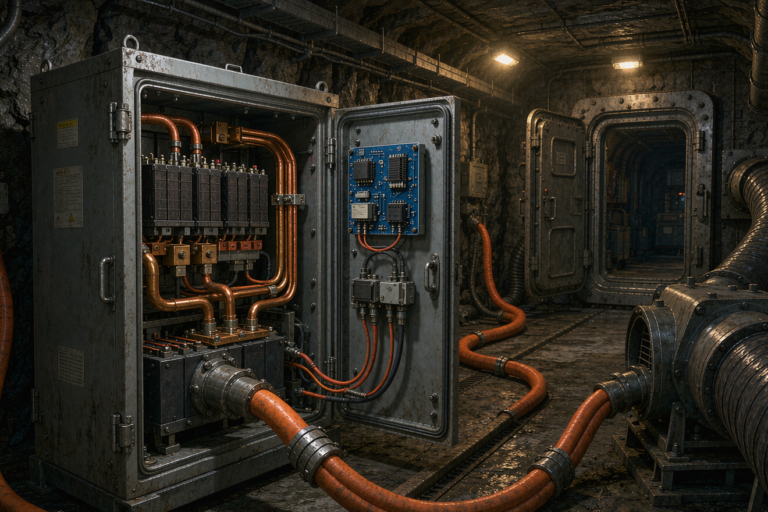
The enemy at a wastewater plant is not the number of cycles, it is the air itself. Digester gas and stale process air carry hydrogen sulfide, H2S, which corrodes copper busbars, terminal joints, and even stainless fasteners if left unchecked. High humidity condenses inside poorly sealed cabinets, and the blower’s own vibration works loose any connection that was not torqued correctly. My mitigations are straightforward: keep the battery in a sealed, climate-controlled enclosure with filtered intake air positioned upwind of the digester; specify tinned or silver-plated copper busbars; apply conformal coating to control boards; and verify torque on every connection during commissioning. I also place the hydrogen sulfide scrubbing or odor-control intake away from the battery enclosure. Get these details right and the pack outlasts the blower it supports, which is the only outcome a plant manager should accept.
Vibration is the quiet killer. I isolate the battery rack from the blower foundation with spring or elastomeric mounts and route DC cabling with enough slack to absorb movement without pulling on terminals. Every connection gets a torque wrench and a witness mark so the next technician can see at a glance whether something has loosened. These are small steps, but they are the difference between a pack that needs service calls and one that simply runs while everyone else forgets it is there.
Codes, Commissioning and the Permit Path
An aeration battery solution is a stationary energy storage system, so it enters the electrical code. In the United States that means NFPA 70, the National Electrical Code, with Article 706 covering energy storage systems, and UL 9540A for the fire propagation test that most authorities having jurisdiction now require. Grid interconnection follows IEEE 1547 for inverter behavior. Before energizing, I run a commissioning sequence: insulation-resistance test on the DC bus, functional test of automatic transfer to battery, a controlled load test on the blower, and a 24 to 72 hour burn-in at partial load while I watch cell temperatures and voltage balance. The maintenance calendar is simple but non-negotiable: infrared scan of connections quarterly, capacity check annually, and firmware review of the battery management system each time the utility changes its interconnection rules. A lithium battery that is commissioned properly and inspected on schedule will deliver its rated cycles without surprising anyone.
Frequently Asked Questions
How do I size a battery for one aeration blower?
Size from required backup hours and the blower’s actual running kilowatts, not nameplate. Multiply the running load by the hours of autonomy you need, add 15 to 20 percent for losses and usable-depth limits, and confirm the inverter can carry the blower’s starting current if it lacks a soft start.
Can the battery run the blower through a full grid outage?
Yes, if it is sized for autonomy rather than just peak shaving. A backup-first battery solution keeps the aeration train online for the designed outage window, typically four to eight hours, which is usually enough for the utility to restore service or for a standby generator to take over.
Which battery chemistry is best near digester gas and H2S?
Lithium iron phosphate in a sealed, corrosion-resistant enclosure is the safest and most durable choice. Sodium-ion is a reasonable alternative in cold climates. Keep the enclosure upwind of digester emissions and use coated busbars to resist hydrogen sulfide attack.
How long must the battery hold up during a power failure?
That is a process decision, not an engineering one. Most plants I work with target four to eight hours of aeration autonomy, which covers the vast majority of outages and bridges to generator start or manual intervention without a permit violation.
Will adding a battery change my blower controls?
Usually not. With a variable-frequency drive and a properly rated inverter the blower sees stable frequency and voltage just as it would from the grid. The change is on the supply side: an automatic transfer switch and the battery management system handle the transition without touching the blower’s own controls.
Are battery-backed aeration systems eligible for demand-response payments?
Often yes. Because the pack can discharge during peak windows, many utilities and grid operators count it toward demand response or distributed energy programs. Eligibility depends on your interconnection agreement and local rules, so confirm with the utility before you size for daily cycling.
Further Reading
References