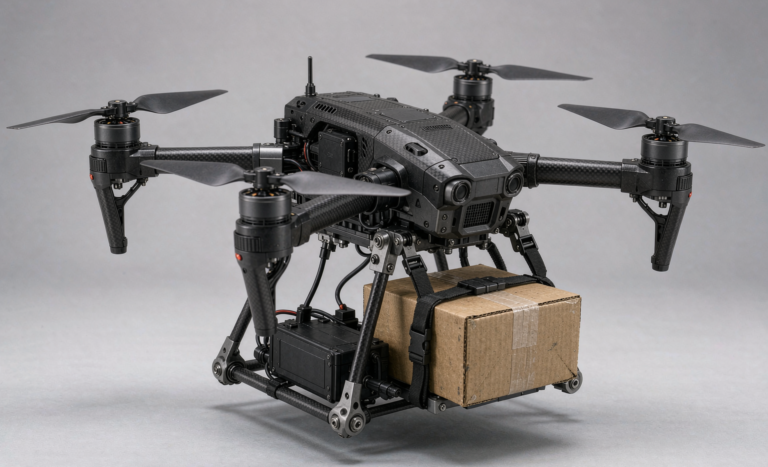
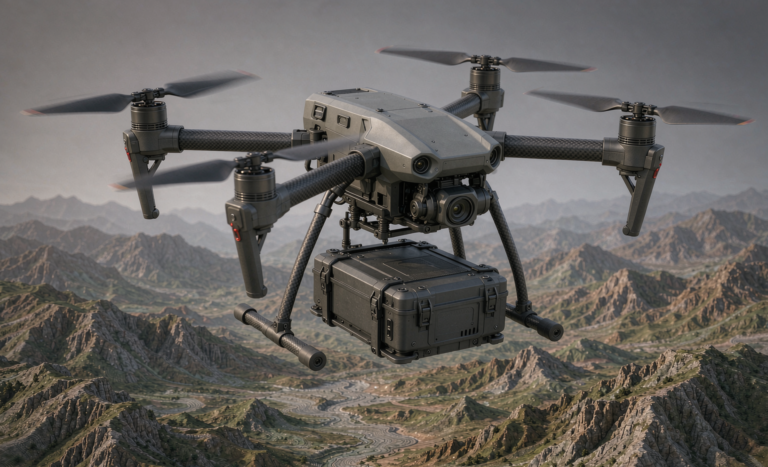
Drone Battery for Forestry and Wildfire Mapping
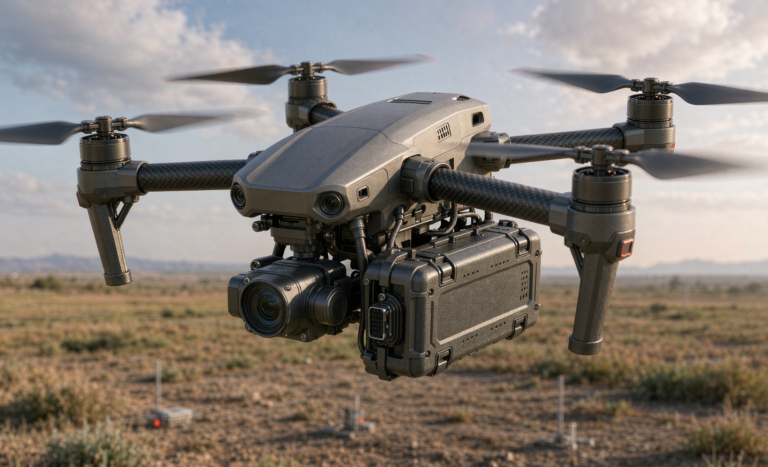
As a senior lithium battery engineer at Horizon Power, I have spent the last several fire seasons sitting at the edge of incident command posts, watching our survey drones return from overfire sorties with packs warm enough to feel through the landing skids. Forestry and wildfire mapping is one of the harshest jobs we design a drone battery for — and it is really two jobs wearing the same airframe. On a calm morning you are loitering over a plantation counting tree crowns with a multispectral camera. By afternoon the same aircraft may be holding station above an active fire front, radiating heat into the cells while a thermal gimbal hunts for spot fires. The pack that survives that swing has to be engineered for both worlds at once.
Two Missions, Two Very Different Battery Problems
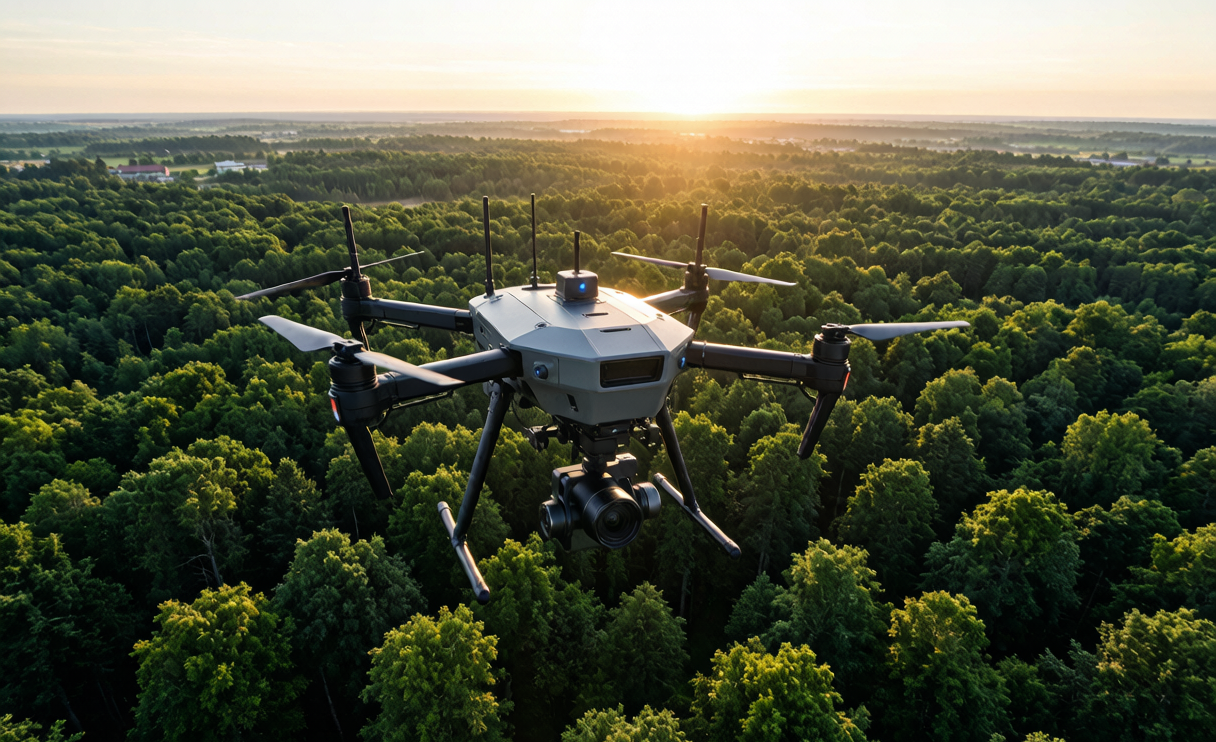
When operators talk about “forestry mapping,” they usually mean one of two things, and the battery engineering for each is almost opposite. The first is forest inventory and health surveying: photogrammetry of canopy, multispectral NDVI for species and stress, LiDAR for under-canopy terrain, and reforestation monitoring. These are cool, clean, daylight missions with long loiter times over large tracts. The second is active wildfire mapping and situational awareness: thermal hotspot detection, fire-perimeter tracking, spot-fire scouting, and BVLOS flight over the active front. That mission is short, hot, dirty, and unforgiving.
A drone lithium battery built only for the first mission will cook itself over a fire. One built only for the fire line will be overweight and over-spent for routine survey. Our job is to find the chemistry, thermal, and BMS balance that lets one airframe do both — or, more honestly, to define two pack variants from one cell platform so the fleet can swap the right pack onto the right mission.
The Wildfire Environment: Heat, Smoke, and Embers
An active fire front is the most hostile place a small aircraft battery will ever operate. Ground temperatures in a burning compartment reach 200–1000 °C, and even at flight altitude the surrounding air can sit at 40–70 °C inside the convective plume, with radiant load on the underside of the airframe. Add ash — fine, dry, and mildly conductive — that fouls connectors and cooling paths, plus embers that can ignite any exposed meltable polymer.
- Radiant and convective heat pushes pack temperature toward 50–60 °C; cells above ~45 °C age faster and risk thermal runaway if a weak cell is present.
- Smoke and ash demand sealed packs — no fan should ever draw plume air across the cells.
- Ember exposure means the enclosure must be flame-retardant (UL94 V-0, self-extinguishing), with no exposed vents or drip-melt parts.
- GPS and RF degradation from the ionized plume cause signal dropouts and multipath, so the aircraft must hold or auto-return without a link — which means a larger state-of-charge reserve than a normal survey.
These are not hypothetical risks. In our own overfire bench testing we saw pack skin temperature climb 18–25 °C above ambient within a single 20-minute sortie when the radiant shield was removed. The shield is not optional.
Energy Budget for Overfire Thermal Sorties
The energy math for a thermal sortie is dominated by two terms: hover power and payload. A typical multisrotor used for wildfire mapping draws 1.5–2.2 kW in hover and 0.8–1.4 kW in cruise. The thermal gimbal is the hungry payload: 20–45 W for a cooled FLIR-class camera, against 5–15 W for an RGB sensor, 8–20 W for multispectral, 15–40 W for LiDAR, and 5–12 W for RTK. Add 10–25% for gust and updraft near the fire, and you arrive at a usable energy of roughly 0.30–0.55 kWh.
In pack terms that is a 6S 22 Ah lithium pack (≈0.49 kWh) or a 12S 14–18 Ah pack. For overfire work we reserve 30% state of charge for contingency — comms loss, a stronger-than-expected updraft, or a longer RTL around the smoke column. A custom drone battery for this role is sized to the worst-case loiter, not the cruise average, because the aircraft spends most of a fire sortie hanging in one place watching the front.
Chemistry Choice: NMC Endurance vs LFP Heat Tolerance
For wildfire work the chemistry debate is sharper than usual. NMC (nickel-manganese-cobalt) delivers 200–250 Wh/kg and 500–1000 cycles — the higher energy density stretches overfire loiter and reduces the lift penalty of a heavy thermal payload. LFP (lithium iron phosphate) gives only 120–160 Wh/kg and 2000–4000 cycles, but it is far more tolerant of heat and mechanically safer near an open flame, with a much longer calendar life for daily prevention patrols.
Our standard custom battery solution splits the difference by mission: NMC packs for the overfire sorties where every minute of loiter matters, and LFP packs for the daily prevention and inventory patrols where durability and heat safety outweigh raw endurance. Both share the same mechanical envelope and connector so the airframe swaps in seconds. A lithium battery that ignores this split either flies too short over the fire or costs too much to replace on a patrol fleet.
Thermal Management and Sealing Near the Fire Front
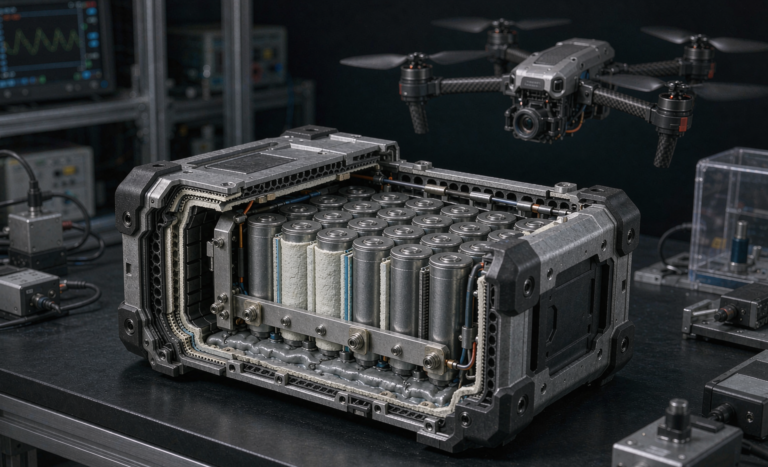
Because we cannot use a fan in a smoke environment, overfire packs are passively cooled inside a sealed pod wrapped in a radiant shield — we use a ceramic-fiber or aerogel blanket between the airframe belly and the cell stack. The target is to keep cells in a 15–45 °C window; when pack skin approaches 55–60 °C we command a controlled derate or RTL rather than risk the cells.
- Sealing: IP5X–IP6X against ash, with conformal coating and potting, 316L or nickel-plated terminals, and an internal desiccant pack rated for ~50 cycles.
- Cold-start: for high-altitude or alpine fire zones, a 5–15 W pad heater holds the core at 10–25 °C before launch. Lithium capacity fades hard in the cold — 100% at 25 °C, 85% at 0 °C, 70% at −10 °C, and 55–60% at −20 °C — so a morning sortie above a mountain fire without pre-heat quietly loses a third of its range.
- Enclosure: flame-retardant, no exposed meltable parts, self-extinguishing on ember contact.
BMS and Autonomy When Comms Drop Out
Over a fire, the link is the first thing to fail. The battery management system therefore has to do more than protect the cells — it has to feed the flight controller enough state that the aircraft can make the right call without a pilot. We monitor per-cell voltage to ±2–5 mV, current to ±0.5–1%, and temperature to ±1 °C, with a cell-delta alarm at 20–30 mV.
The BMS flags isolation and leak faults, streams state of charge and state of health to the ground over a 2.4/900 MHz link at a 1–5 s heartbeat, and enforces a hard 30% state-of-charge floor for contingency. If the link drops, the flight controller already knows the pack is healthy and can hold or return autonomously. A drone lithium battery without that telemetry is a liability over a fire line, because the pilot is flying partially blind the moment RF degrades.
Forestry Inventory Surveys: The Cooler, Longer-Loiter Half
The other half of the job is gentler but still demands endurance. Canopy photogrammetry needs 75–80% forward and side overlap, multispectral sensors read tree health and species, and LiDAR maps terrain beneath the canopy for biomass and erosion models. These missions run cooler and cleaner, so the battery can bias toward LFP for cycle life and lower cost across a large survey fleet.
The constraint here is loiter time over big tracts, not heat. A 6S 22 Ah pack gives 25–40 minutes of mapped flight depending on payload mass, and we typically run multispectral or LiDAR at 8–40 W. The same custom drone battery platform serves both survey and fire roles; only the chemistry and thermal wrap change. That commonality is what lets a small operator keep one charger, one spare-parts bin, and one training curriculum across the whole fleet.
Field Charging and Fleet Logistics at the Incident Base
At an incident, the battery bay is a mobile command post. An incident commander running overfire sorties through a 12-hour shift needs 6–10 packs in rotation, supported by two 6-channel ~1 kW chargers running at 1C–2C. Packs are charged, cooled, and staged in FIFO order, then stored at 3.80–3.85 V/cell between shifts to minimize calendar aging.
We retire a pack at 80% of original capacity, at 2× its baseline internal resistance, at a 50 mV cell delta, or at any sign of 5% puffing. In fire-zone service those thresholds arrive faster than in clean survey work, simply because of the heat cycling, so the rotation discipline matters more, not less. A disciplined custom battery solution is as much about the logbook as the cells.
Compliance and Transport to the Fire Line
Public-safety and forestry-agency flights are regulated, and the pack has to travel to the incident by road or air within the rules. Every pack we ship meets UN38.3 T.1–T.8 (altitude, thermal, vibration, shock, external short, crush, overcharge, forced discharge), IEC 62133-2:2017 for portable cell safety, and carries UN3480/UN3481 markings. For air transport to a remote fire base we stage at 30% state of charge per IATA rules, and for carry-on or operator transport we stay inside the FAA/EASA 100–160 Wh band per cell group. None of this is decoration — an agency cannot launch a drone whose battery paperwork fails inspection at the staging area.
Frequently Asked Questions
What is the best drone battery chemistry for wildfire mapping?
There is no single answer. NMC (200–250 Wh/kg) wins on endurance and payload lift for short, hot overfire sorties, while LFP (120–160 Wh/kg, 2000–4000 cycles) wins on heat tolerance and service life for daily prevention patrols. Most fleets run both from one cell platform and swap by mission.
How hot can a drone battery get over an active fire front?
Ambient air in the convective plume can reach 40–70 °C, and pack skin can climb 18–25 °C above ambient in a single sortie without a radiant shield. We keep cells in a 15–45 °C window and command a derate or RTL at 55–60 °C to protect the lithium cells.
Why does a wildfire drone need more battery reserve than a survey drone?
Smoke and the ionized plume degrade GPS and RF, causing link dropouts and multipath. The aircraft must hold or auto-return without a pilot, so we reserve 30% state of charge for contingency rather than the smaller buffer used on a clean survey flight.
Can the same drone battery do both forestry surveys and fire mapping?
Yes, with the right platform. A common mechanical envelope and connector let one airframe accept an NMC overfire pack or an LFP survey pack. The chemistry and thermal wrap change by mission, but the charger, spares, and training stay shared.
How are wildfire drone batteries transported to the incident?
They travel under UN38.3 T.1–T.8 and IEC 62133-2:2017 compliance with UN3480/UN3481 markings, staged at 30% state of charge per IATA for air movement, and kept within the FAA/EASA 100–160 Wh limit for operator carry-on.