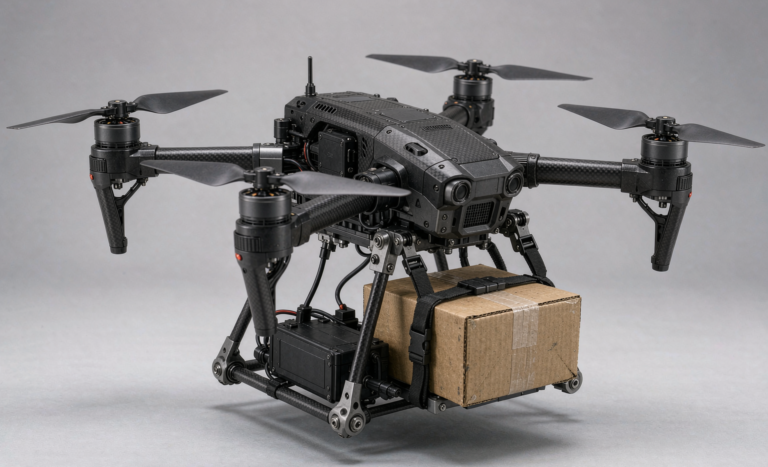
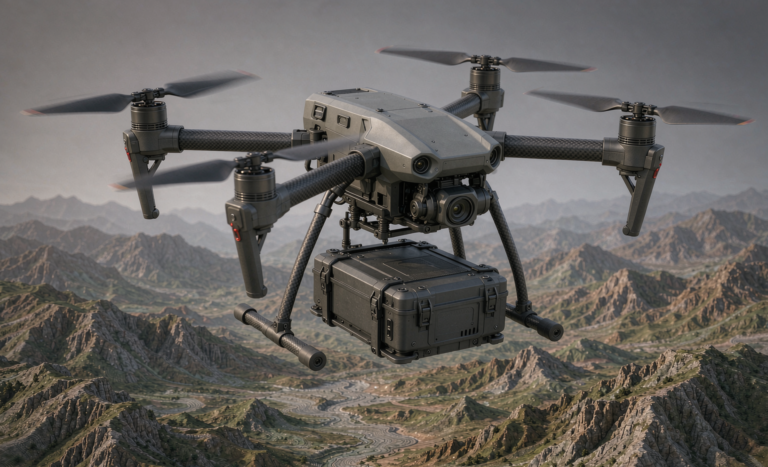
Drone Battery for Sports Broadcast and Cinematography
I am Karl Huang, Senior lithium battery Engineer at Horizon Power. Most of my week is spent on inspection and industrial packs, where the customer asks a simple question: how many minutes can you give me? Broadcast and cinematography crews ask something much harder. They ask whether the footage will be clean. A drone battery that delivers 14 honest minutes but lets its terminal voltage collapse during a whip pan has already failed, because the gimbal will telegraph that sag as micro-vibration and the director will see it on the monitor. In live sports there is no second take.
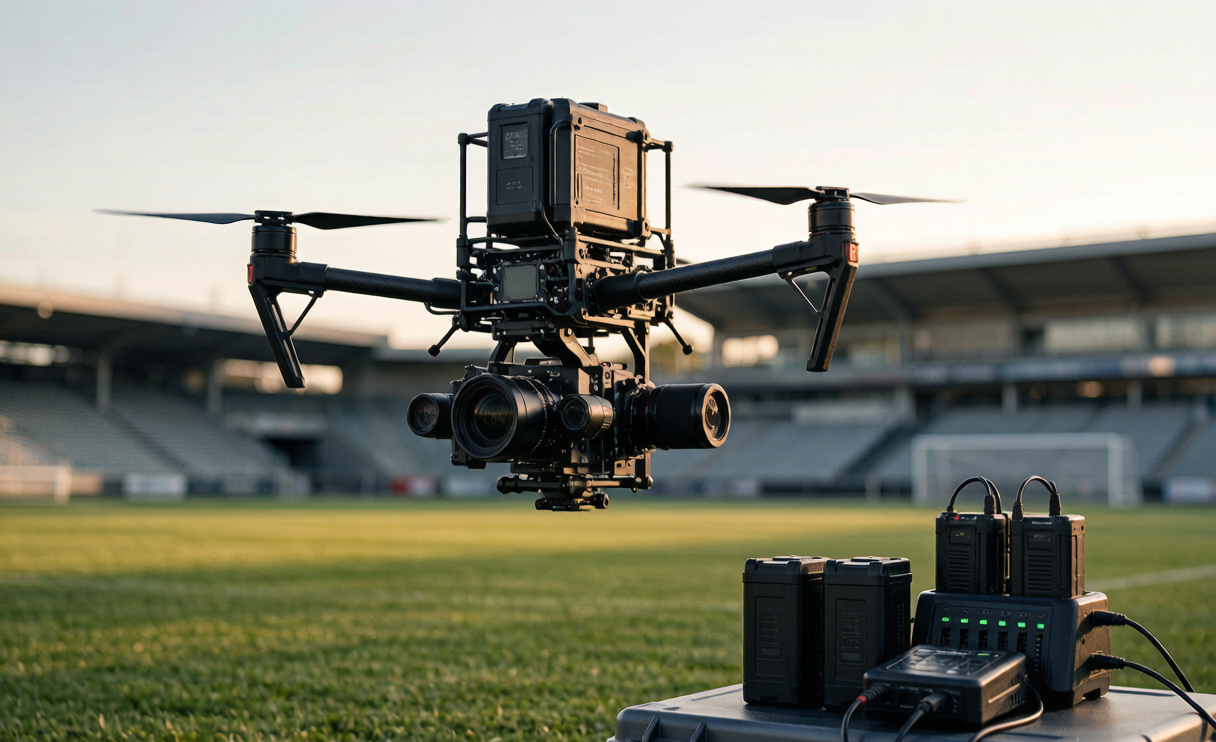
This article is the engineering brief I give to broadcast integrators and rental houses. It covers how I budget energy for heavy camera payloads, why power quality matters more than raw capacity for image integrity, how to build a pack rotation that survives a 90-minute match, and how touring crews get their packs through airport security legally. Every number below comes from bench data and field logs on production rigs, not from marketing sheets.
Why Cinema and Broadcast Are a Different Power Problem
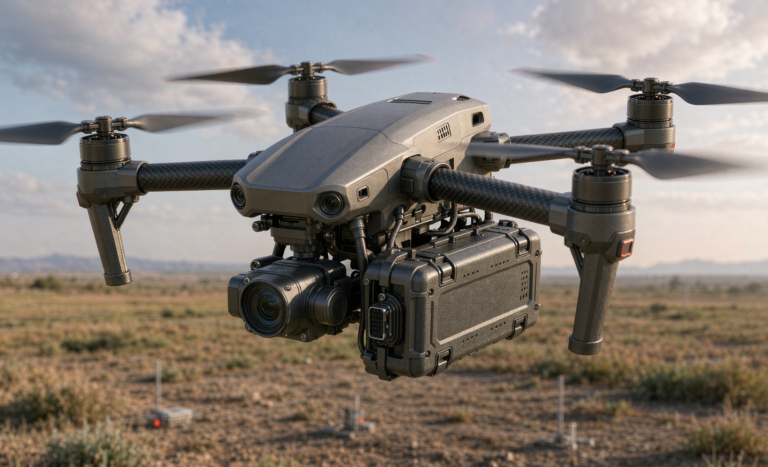
An inspection quadcopter hovers at 1.5–2.2 kW with a 1.5 kg sensor head. A cinema platform carrying a large-format camera body, a three-axis gimbal, cine glass, and a follow-focus motor set is typically hauling 4–9 kg of payload on a heavy-lift hexacopter or octocopter. Hover power on those airframes lands between 3.5 kW and 6.5 kW depending on disc loading and propeller choice. That single fact reshapes everything: the pack must sustain a much higher continuous current, and the flight window shrinks to roughly 8–14 minutes of usable air time.
Then the payload itself starts drawing. In my measurements on production rigs, a three-axis cine gimbal idles around 20 W and spikes to 60–80 W during aggressive stabilisation, a large-sensor camera body draws 30–90 W depending on frame rate and internal recording, a broadcast-grade video transmitter needs 10–25 W of DC to put 1–3 W of RF on air, FIZ lens motors add 5–15 W, and an SDI converter or onboard receiver adds another 5–10 W. A realistic cinema payload bus load is 80–200 W. Over a 12-minute flight that is 16–40 Wh, which on a 900–1100 Wh pack is 2–4 percent — small in energy terms but critical in electrical terms, because that load must be clean and uninterrupted while the propulsion rail is swinging by hundreds of amps.
The second difference is rhythm. An inspection crew flies a mission, lands, and reviews data. A broadcast crew flies short, intense sorties tied to the clock: pre-match beauty shots, the walk-out, first-half cutaways, half-time, second half, trophy lift. Six to ten launches in three hours, each preceded by a pack change with the director already counting down. The battery system is therefore a logistics problem as much as an electrochemical one.
Building the Energy Budget for a Camera Ship
I size cinema packs from measured power, never from a claimed flight time. The method I use with clients is deliberately conservative.
- Hover power at all-up weight. Measure it on a thrust stand or from flight telemetry at the actual take-off weight, including gimbal, lens, filters, and mounting cage. For a 15–20 kg AUW octocopter this is usually 3.8–5.5 kW.
- Manoeuvre overhead. Dolly moves, reveals, and altitude changes cost more than hover. I add 15–25 percent over the hover figure for a typical cinema move set, and up to 40 percent for tracking a moving vehicle or an athlete at speed.
- Wind penalty. Open stadium bowls create gusty vertical shear. Add 10–20 percent for sustained 6–10 m/s conditions.
- Payload bus. Add the 80–200 W measured above.
- Landing reserve. I insist on 25–30 percent state of charge remaining at touchdown. This is not conservatism for its own sake; over a crowd, it is the difference between a controlled descent and an incident.
Worked example from a live football production: hover 4.6 kW, manoeuvre overhead 20 percent → 5.5 kW effective, wind 10 percent → 6.1 kW, payload 150 W → about 6.25 kW average. A 10-minute working flight needs 6.25 kW × 0.167 h ≈ 1.04 kWh of usable energy. With a 30 percent reserve, installed capacity must be roughly 1.49 kWh. On a 12S platform that is around 33 Ah, which in practice means two parallel 12S 16–17 Ah packs of approximately 750 Wh each. That parallel architecture is not accidental, and I will come back to why.
Power Quality: The Part That Shows Up in the Footage
This is the section broadcast clients care about most once I explain it. Every pack has internal resistance. A well-built 12S 16 Ah high-power pack sits around 8–12 mΩ when new. During a hard climb or a whip pan, propulsion current on a heavy-lift octo can hit 150–200 A. Ohm’s law is unforgiving: 175 A through 10 mΩ is 1.75 V of instantaneous sag on a 44–50 V rail, plus another few hundred millivolts across connectors and harness if the interconnect was specified carelessly.
Three consequences follow. First, ESC input voltage dips, so motor RPM briefly deviates from command, and the frame sees a transient torque ripple. On a long lens that ripple appears as micro-jitter or, with a rolling shutter sensor, as a faint wobble in vertical lines. Second, if the gimbal and camera share the raw propulsion rail through a simple regulator with insufficient holdup, the payload rail dips too. IMU noise rises, and stabilisation quality degrades exactly when the shot is most dynamic. Third, deep sag triggers conservative low-voltage cutoff logic and can force a return-to-home mid-take.
My design rules for a broadcast drone lithium battery are therefore specific:
- Specify cells by resistance, not just by capacity. I target a pack-level DC internal resistance under 10 mΩ at 25 °C for 12S cinema packs, verified by 1 kHz AC measurement plus a DC pulse test at 3C for 10 s.
- Keep total sag under 8 percent of nominal at peak current. On a 44.4 V nominal rail, that means under 3.5 V of combined cell and interconnect drop at the worst-case burst.
- Give the payload its own isolated, regulated rail. A DC-DC converter with 20–40 ms of holdup capacitance decouples camera and gimbal from propulsion transients entirely. This single measure has cleaned up more “mystery jello” complaints than any propeller change I have witnessed.
- Budget interconnect resistance to under 15 percent of pack resistance. On a 10 mΩ pack that means 1.5 mΩ or less through connectors and wiring — realistically XT150 or AS150-class contacts and 8 AWG silicone-insulated conductors on the main leads.
Chemistry Selection: Energy Density Against Power Delivery
There is no single best cell for aerial cinematography, and I refuse to pretend otherwise. The choice is driven by the shot list.
- High-energy NMC or NCA pouch cells, 200–250 Wh/kg. These maximise air time for slow, elegant moves — establishing shots, cranes, reveals, long lens follows. Their weakness is internal resistance and heat under sustained high C-rate. Typical usable cycle life in cinema service: 300–600 cycles to 80 percent capacity.
- High-power lithium polymer, 150–200 Wh/kg with 3–6 mΩ cell resistance. These give the flattest voltage curve under abuse, which is what FPV-style cinema rigs and fast athlete-tracking work demand. You pay 20–30 percent in flight time and often see only 150–300 cycles because crews run them hard.
- Semi-solid-state cells, 250–300 Wh/kg in current qualification builds. The energy gain is real and the thermal behaviour is better, but present-generation continuous discharge capability is more modest, so I currently recommend them for long-endurance camera ships rather than aggressive action work. This is the technology I expect to reshape heavy-lift cinema packs within a few product cycles.
- LFP, 120–160 Wh/kg. Too heavy for the air on a cinema ship, but excellent for the ground: the DIT cart, the video village, the charging station power buffer. I fit LFP on the ground side of almost every broadcast package I quote.
For a mixed shot list, the answer is usually two pack types in the same case: a high-energy set for long lens and beauty work, and a high-power set for dynamic sequences. Any competent supplier can build both to the same mechanical interface as a custom drone battery programme, so the crew swaps chemistry without swapping hardware.
Redundancy and Flying Over People
Cinema and broadcast work routinely means operating near crowds, and regulators treat that as a distinct risk category. FAA Part 107 Subpart D and the EASA specific-category SORA process both push operators toward demonstrable failure tolerance rather than optimism. The battery architecture is central to that argument.
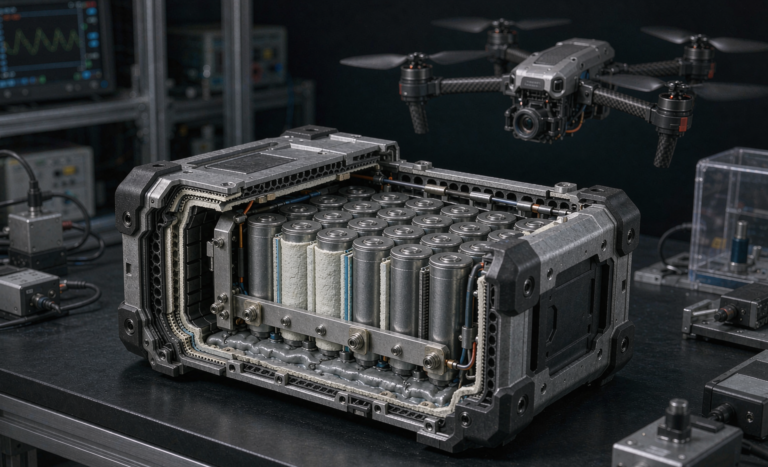
On multirotor camera ships above roughly 10 kg AUW, I specify dual parallel packs with independent BMS protection and an ORing arrangement so that the loss of one pack — an internal open circuit, a blown protection FET, a disconnected lead — does not cut propulsion. To make that claim honestly, the surviving pack must be able to sustain hover long enough for a controlled descent. That constrains sizing: each pack should be capable of at least 60 seconds of hover current on its own within its temperature and voltage limits. That is why my worked example above split 1.49 kWh into two packs rather than one large one.
I also require the BMS to report per-cell voltage to the operator’s telemetry at 1–10 Hz, with alarms at a 30 mV cell delta and hard warnings at 50 mV. On a live broadcast, the pilot needs to know a pack is drifting before it becomes an aborted sequence, not after.
Turnaround Discipline: Surviving a 90-Minute Match
Here is the arithmetic that decides whether a shoot runs smoothly. A three-hour production window with 10-minute flights and 6–10 sorties requires roughly 6–10 kWh of delivered energy. Chargers are the bottleneck, not batteries.
- Pack count. I recommend two to three complete flight sets per airframe, so 4–6 packs for a dual-pack camera ship, plus a spare set. Twelve packs for a two-ship broadcast package is normal, not excessive.
- Charge rate. Charging a high-energy cinema pack at 1C is safe and preserves life. Pushing to 2C to make the half-time window costs measurable cycle life and generates heat that the next flight inherits. If the schedule forces 2C, buy more packs instead.
- Thermal gating. Never begin charging a pack above 45 °C cell temperature, and I prefer a 40 °C gate. After a hard tracking sequence, packs commonly come down at 45–55 °C. Charging at that temperature accelerates SEI growth and is the single most common reason rental packs lose 20 percent of their capacity in one season. Let them rest 10–15 minutes in shade with airflow.
- Charger capacity. Two six-channel chargers at roughly 1 kW each will replenish 6–10 kWh across a production day only if pack count is adequate. Plan generator or venue supply accordingly, and never park charging cases against a hot stadium wall.
- FIFO rotation and storage voltage. Rotate strictly first-in-first-out and return packs to 3.80–3.85 V per cell if they will not fly within 24 hours. Packs left at full charge overnight in a hot truck age faster than packs that flew.
Cell temperature during discharge should stay within 15–45 °C for consistent output. On a summer pitch with 40 °C tarmac and enclosed battery bays, that requires deliberate shading and inter-flight airflow. It is unglamorous work that directly protects both footage quality and asset value.
Touring, Transport, and Compliance
Broadcast crews travel, and this is where I see the most expensive mistakes. Every cell and pack I ship is qualified to UN 38.3 tests T.1 through T.8 — altitude simulation, thermal cycling, vibration, shock, external short circuit, impact or crush, overcharge, and forced discharge — and pack-level safety is assessed against IEC 62133-2:2017. Without that documentation the shipment is not legally air-freightable, full stop.
The rules that catch crews out are the passenger-carriage limits. Under FAA and EASA guidance, lithium batteries up to 100 Wh travel in carry-on without approval; 100–160 Wh requires operator approval and is limited in quantity; anything above 160 Wh cannot travel as passenger baggage at all. A 12S 16 Ah cinema pack is roughly 750 Wh, so it will never fly in the cabin. It must move as declared dangerous goods under UN3480 (batteries alone) or UN3481 (with equipment), at a state of charge not exceeding 30 percent per the IATA provision, in approved packaging with correct marking.
My practical advice, and a frequent reason clients ask for a custom battery solution, is to design the pack architecture around travel from the outset. Splitting a 750 Wh flight pack into modular sub-packs under 100 Wh each is often mechanically awkward but occasionally worth it for small crews. More often the right answer is to keep large packs and build a proper dangerous-goods shipping process with pre-printed documentation, approved cases, and a 30 percent SoC pre-flight routine that the assistant executes the night before travel. Crews that treat this as a checklist item stop missing flights.
Logging, Retirement, and Honest Lifetime Expectations
Cinema packs live harder lives than inspection packs, and I set retirement thresholds accordingly. Each pack gets a serial number, a baseline capacity measurement, a baseline internal resistance figure, and a recorded thickness at three points. It is retired from airborne service when any of the following is true:
- Measured capacity falls below 80 percent of the baseline.
- Internal resistance reaches twice the baseline value.
- Resting cell delta exceeds 50 mV after a full balance charge.
- Thickness grows more than 5 percent, or any visible swelling appears.
- The pack has experienced a hard landing, an over-discharge below 3.0 V per cell, or immersion.
In broadcast rental service I expect 150–300 cycles from high-power packs and 300–600 from high-energy packs before one of those thresholds trips. A retired airborne pack still has second-life value on the ground for lighting or monitor power, and that is a better outcome than keeping a marginal lithium battery in the air over an audience.
The teams that get the best results treat the drone battery as a piece of the camera package with the same discipline they apply to lenses and media cards: labelled, logged, temperature-managed, and retired on data rather than on feel. Do that, and the pack stops being a variable in the shot.
Frequently Asked Questions
How many minutes of flight time should I expect from a cinema drone battery?
On a heavy-lift camera ship at 15–20 kg all-up weight, plan for 8–14 minutes of usable air time with a 25–30 percent landing reserve. Anything above that on a large-format camera package usually means the reserve has been quietly spent. Lighter mirrorless payloads on hexacopters can reach 16–20 minutes.
Does battery choice really affect image quality?
Yes, indirectly but measurably. Voltage sag under high current causes ESC and motor RPM transients that a long lens will resolve as micro-vibration, and a shared unregulated payload rail lets those transients reach the gimbal IMU. Specifying low internal resistance cells and giving the camera and gimbal an isolated regulated rail with 20–40 ms of holdup removes that mechanism.
Can I fast-charge packs between takes at 2C?
You can, but you should not make it routine. Charging at 2C measurably shortens cycle life, and charging a pack still sitting at 45–55 °C after a hard sequence accelerates capacity fade sharply. The correct fix is more packs and more charger channels, not a higher charge rate. If you must fast-charge, gate on cell temperature below 40 °C first.
How do I legally fly my batteries to an away game?
Large flight packs exceed the 160 Wh passenger limit, so they cannot travel in cabin or checked baggage. Ship them as declared dangerous goods under UN3480 or UN3481, at 30 percent state of charge or below, in approved packaging with UN 38.3 test summaries available. Batteries under 100 Wh, such as camera and monitor packs, may travel in carry-on.
Should broadcast rigs use one large pack or two smaller ones?
Two parallel packs with independent protection, sized so either one can sustain hover for at least 60 seconds. That gives a defensible failure-tolerance argument for operations near people under Part 107 Subpart D or an EASA SORA assessment, and it is why I specify dual packs on essentially every camera ship above 10 kg.
What is the fastest way to lose money on cinema battery packs?
Charging hot packs, storing them fully charged in a hot truck, and skipping per-pack logging. Those three habits routinely strip 20 percent or more of usable capacity within a single season. Temperature discipline, 3.80–3.85 V per cell storage, and data-driven retirement will roughly double the service life of the same hardware.