Home Energy Storage Cost Optimization for New Homes: An (2)
I have spent the last twelve years designing lithium battery packs for residential and light-commercial storage, and if there is one conversation I keep having with builders and new-home buyers, it is this: they price a home energy storage system by the sticker on the cabinet, not by the cost per delivered kilowatt-hour over fifteen years. That is how a $9,000 system ends up costing more per usable kWh than a $13,000 system. Home energy storage cost optimization for new homes is not about buying the cheapest box — it is about right-sizing capacity against your actual load profile, matching the inverter, designing the installation for the construction phase instead of retrofitting it, and keeping the battery in its thermal and state-of-charge comfort zone so it survives long enough to reach the payback you were promised. In this guide I will walk you through the same cost model I use when a developer asks me to quote a residential battery storage package for a new subdivision.
Why New Homes Are the Cheapest Point to Install Storage
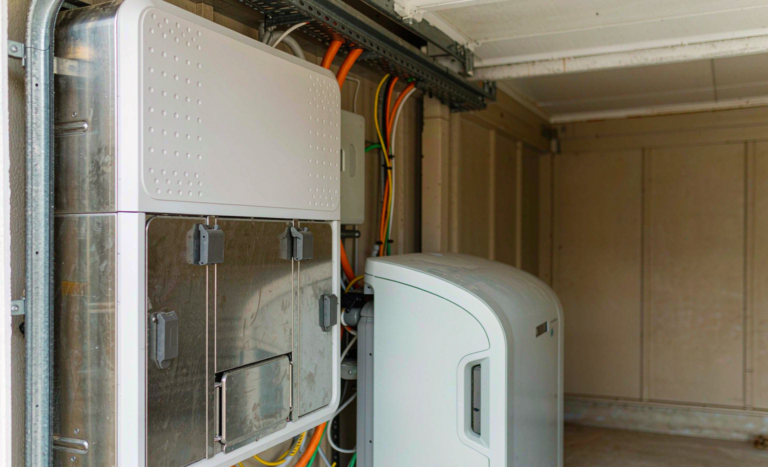
Retrofitting a home battery backup into a finished house typically adds 20–35% to installed cost compared with integrating the same hardware during construction. I see it on nearly every retrofit job: an electrician has to chase conduit through finished drywall, upgrade a sub-panel to make space for a backup loads panel, and sometimes pour a new pad or build a fire-rated enclosure because the only free wall happens to back onto a bedroom. In new construction, none of that exists yet. The wall cavity is open, the service panel is not purchased, and the garage or utility room layout can be drawn around the equipment instead of around it.
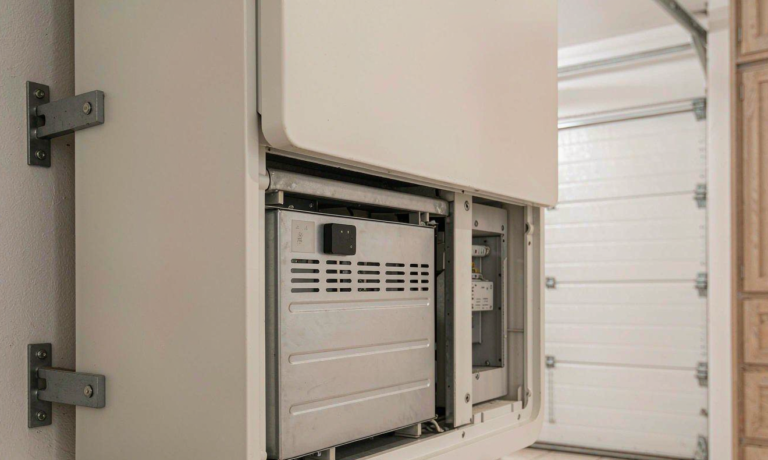
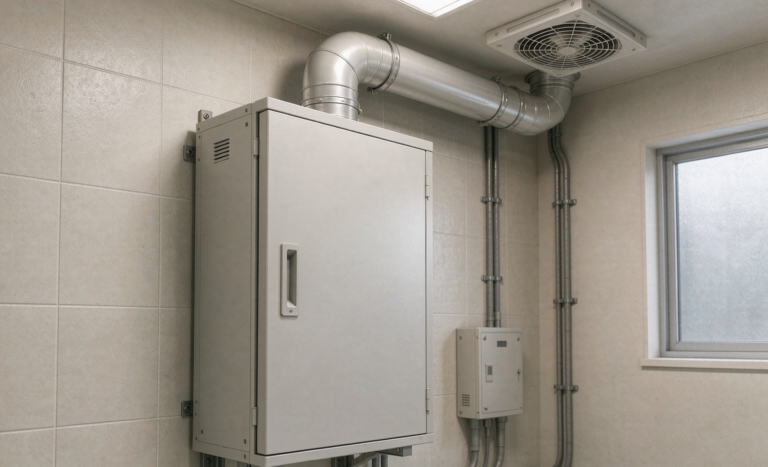
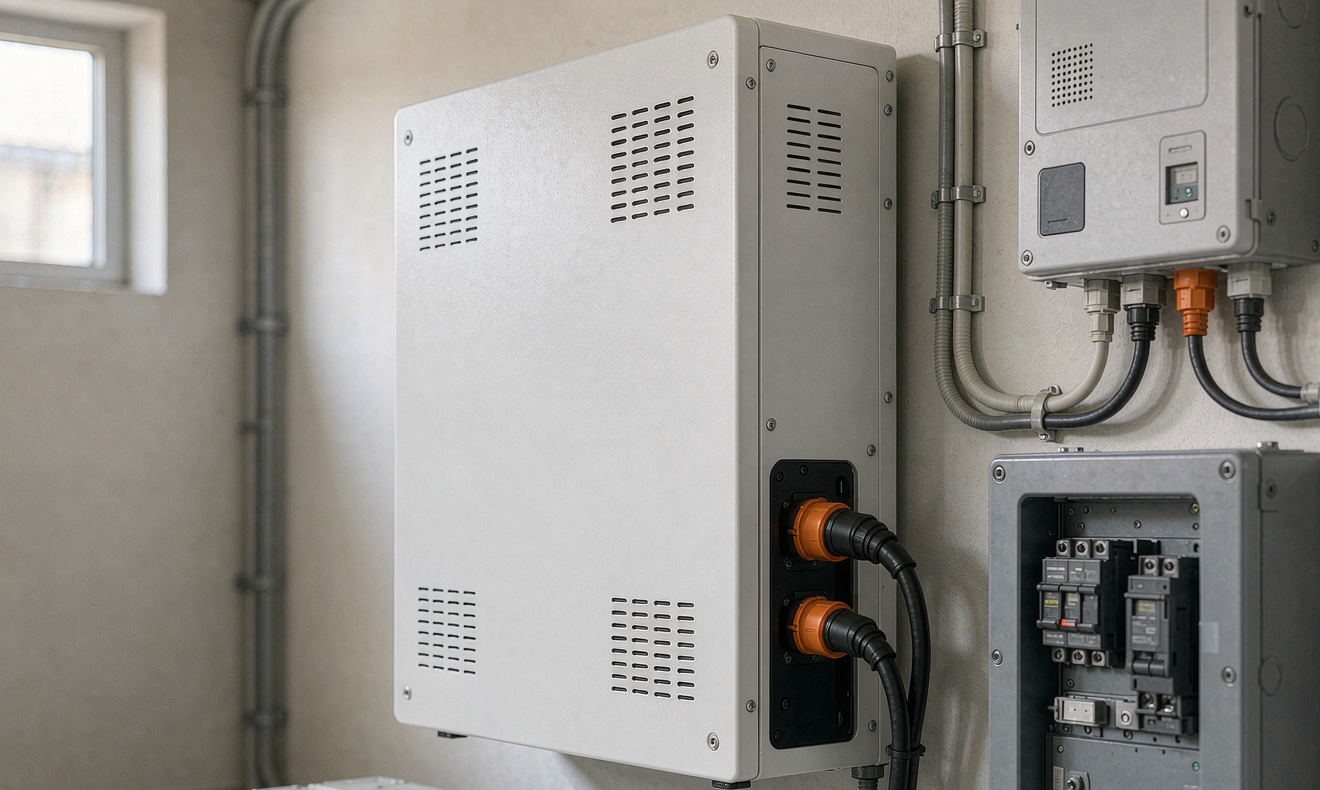
Three design decisions made at the framing stage carry most of the savings. First, group the inverter, battery cabinet, and backup loads panel on a single wall — every meter of DC and AC conductor you save is money and efficiency. Second, specify 25–40 mm of clearance behind wall-mounted enclosures so convection cooling works as designed; I have measured cabinet internals running 6–8 °C cooler with a simple stand-off bracket, and every 10 °C reduction roughly doubles lithium cell calendar life. Third, pre-run a grounded communication conduit (CAT5e/6 or RS-485 pair) between the meter, inverter, and battery location. Retrofitting comms through finished walls is one of the most common change orders I quote, and it is a $40 item during construction.
Right-Sizing: The Single Biggest Cost Lever
The most expensive mistake in residential storage is oversizing on paper. A typical U.S. household consumes 25–30 kWh per day, but the critical load — refrigerator, lighting, network equipment, well pump or furnace blower, a few outlets — is usually 6–10 kWh per day. When a client asks for a 30 kWh home energy storage battery “to run the whole house,” I pull their interval meter data and show them that 90% of that energy would serve a pool pump and an electric water heater they would shed during an outage anyway.
My sizing procedure is deliberately boring. Take twelve months of utility interval data if it exists, or a room-by-room load audit for new builds. Define the backup load list explicitly — what stays on, what gets switched off. Size continuous inverter output for the largest simultaneous critical load plus 25% headroom, then size energy capacity for one to two days of critical autonomy in your climate. For most new homes this lands at a 5–7 kW inverter with 10–15 kWh of usable capacity, not the 20+ kWh systems that dominate showroom marketing. In my projects, moving from an aspirational 27 kWh spec to an engineered 13.5 kWh system cut the battery line item by 48% while measured outage performance was identical for the agreed critical loads.
Modularity is your insurance policy here. Choose a platform that accepts additional battery modules later. A stackable 5 kWh module architecture lets you start at 10 kWh and expand when you actually buy the EV or heat pump. The module-level premium — usually 5–8% versus a single large cabinet — is cheap optionality compared with stranding $6,000 of unused capacity from day one.
Cell Chemistry and Why I Specify LFP for Homes
Chemistry choice drives both upfront price and lifetime cost, and this is where the residential market has largely converged. Lithium iron phosphate (LFP) cells dominate new home energy storage system designs for good reason: cycle life of 6,000+ cycles at 80% depth of discharge, excellent thermal stability — LFP does not exhibit thermal runaway propagation below roughly 270 °C in abuse testing, compared with significantly lower onset temperatures for NMC — and no cobalt in the supply chain. NMC packs still show up in compact all-in-one units where energy density matters, but in a garage, floor space is cheap and safety margin is not.
On lifetime cost, run the numbers rather than trusting the warranty card. A 10 kWh usable LFP pack at 6,000 cycles to 80% retention delivers roughly 48 MWh over its service life. Divide installed cost by delivered energy and compare candidates on that single figure — $/kWh-throughput. In my own quoting, well-engineered LFP systems land between $0.09 and $0.14 per delivered kWh, while bargain import systems with unverified cell grading often exceed $0.20 once you derate their inflated cycle claims. Every cell shipment destined for residential cabinets must pass UN 38.3 transport testing, and I require pack-level certification to IEC 62133-2 or UL 1974-adjacent validation of the cell grading report before I accept a supplier. Ask for the grading certificate; legitimate manufacturers produce one per batch.
Inverter Matching, Efficiency, and the Hidden Costs
The inverter is where cost optimization quietly succeeds or fails. Round-trip efficiency between a mismatched battery and inverter can sit at 82–86%, while a properly matched DC-coupled pair achieves 92–95%. On a system cycling 8 kWh daily, that 8-point spread wastes about 230 kWh per year — modest in dollars, but it also means the battery works harder and ages faster because every charge cycle runs hotter at the cell terminals.
Watch these integration points, which are where retrofit jobs bleed money and new builds can pre-empt everything:
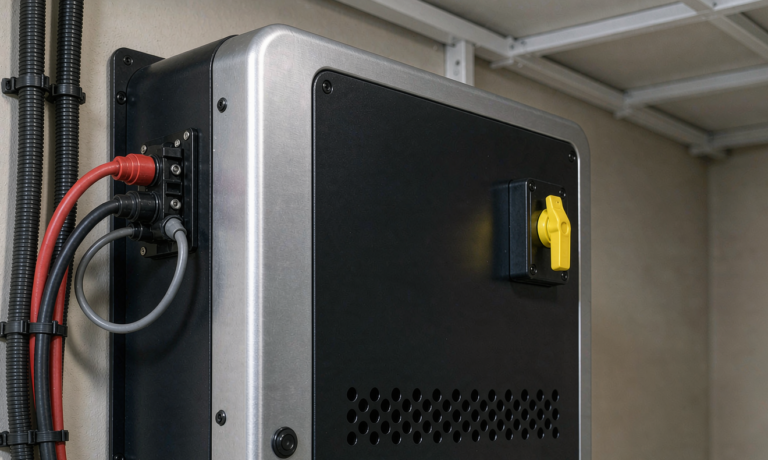
- Voltage window alignment: the battery’s charge/discharge voltage range must map cleanly onto the inverter’s MPPT or DC bus window. A 48 V low-voltage battery with a high-voltage (150–500 V) hybrid inverter requires a DC-DC converter stage — typically 3–5% efficiency loss plus $800–1,500 in hardware.
- Backup transition: whole-home transfer in under 20 ms requires an inverter with a built-in transfer switch; adding an external automatic transfer panel later costs $1,200–2,500 installed.
- Standby consumption: I have measured idle draws from 8 W on good designs to 60 W on poor ones. A 40 W difference is 350 kWh/year — your battery literally spends a week of its annual output powering its own controller.
- Warranty alignment: pair components whose warranties are mutually recognized. Some inverter warranties void third-party batteries, and discovering this after a failure is an expensive lesson.
Budget rule of thumb I give developers: hardware is 55–65% of installed cost, labor and electrical work 20–25%, permitting and interconnection 8–12%, and the remainder is monitoring, commissioning, and contingency. Any optimization that attacks only the hardware box ignores a third of the bill.
Codes, Standards, and Certification Costs You Cannot Skip
I understand the temptation to shave cost on certification, and I will talk you out of it every time. For residential installations in North America, the governing framework is UL 9540 for the energy storage system, UL 9540A thermal runaway test data for the battery, NFPA 855 for installation siting and separation, and NEC Article 706 for the electrical installation. In markets following IEC practice, you will encounter IEC 62619 for industrial-grade cells and IEC 62133-2 for portable/consumer applications. These are not bureaucratic trivia — an uncertified home battery backup can be refused by the utility, rejected by the insurer after a fire, and in several jurisdictions I have worked in, it simply cannot be legally energized.
For the buyer, certification is also a cost-recovery tool. A system with complete UL 9540 listing and manufacturer-supplied plan sets typically passes permitting in one review cycle; uncertified systems average two to three resubmissions in my experience, at $150–400 per cycle plus weeks of delay. Buy certified equipment and the certification cost is already amortized into the product price across thousands of units — that is the cheapest engineering review you will ever get.
Operating Strategy: Where Payback Is Actually Won
Once the home energy storage system is commissioned, the cost optimization shifts to operation, and this is where the 10-year payback model is won or lost. Under time-of-use tariffs, the battery arbitrages the peak: charge during off-peak or solar hours, discharge across the 4–9 p.m. peak window. With U.S. peak-to-off-peak spreads commonly at $0.25–0.45/kWh in California and parts of Australia exceeding $0.50, a 10 kWh system cycling one full equivalent cycle daily at 92% round-trip efficiency nets roughly $2.20–3.90 per day before degradation — which is why I model payback against delivered kWh with an annual 2.5–3.5% capacity fade assumption, not against nameplate.
Two operating habits materially extend life and therefore improve the economics. Keep the average state of charge between 20% and 85% when backup reserve is not needed; the BMS float at 100% SoC is the single fastest calendar-life killer in residential LFP packs, and most good systems let you set a “daily max” charge limit. And keep the battery thermally comfortable — an unconditioned garage in Phoenix or a Minnesota winter wall is hostile. If your climate spends months outside 0–35 °C, spend the $300–600 on an enclosure with active thermal management. Cell manufacturers’ cycle-life curves are published at 25 °C, and they are honest about it; your garage is not 25 °C.
Solar pairing changes the math substantially. A battery attached to new-construction solar captures the investment tax credit on the combined system in the U.S. (structure and eligibility vary — confirm with your tax professional), and self-consumption of solar that would otherwise export at $0.03–0.08/kWh to displace $0.30+/kWh imports is the cleanest arbitrage in the entire residential energy stack.
Frequently Asked Questions
What size home battery does a new house actually need?
For a 2,000–2,500 sq ft single-family home, my engineered starting point is 10–15 kWh usable capacity with a 5–7 kW hybrid inverter, sized from a critical-loads audit rather than total consumption. Expand modularly when actual load data — an EV charger, a heat pump — justifies it. This typically cuts first cost 35–50% versus sizing to whole-home consumption.
Is it cheaper to install battery storage during construction?
Yes, typically 20–35% lower installed cost than retrofit. The savings come from open walls (no drywall chasing), panel space designed in advance, shorter conductor runs, and integrated permitting for the combined electrical plan.
Which battery chemistry is best for home energy storage?
LFP (lithium iron phosphate) is the default for residential storage: 6,000+ cycle life, superior thermal stability, cobalt-free. NMC only wins where installed volume is severely constrained, which is rarely the case in a garage or utility room.
How long until a home battery pays for itself?
Under aggressive time-of-use arbitrage with solar pairing, 7–10 years is achievable in high-spread markets; backup-only duty in flat-rate markets rarely pays back inside the battery’s life, and should be justified as resilience. Model payback on delivered kWh with realistic fade, not nameplate capacity.
What certifications should I require before buying?
Require UL 9540 system listing, UL 9540A test report (or IEC 62619 in IEC markets), and UN 38.3 for transport. Ask the supplier for the cell grading certificate per batch — any legitimate manufacturer can produce it within a day.
Can I add battery capacity later?
If you selected a modular platform at design time, yes — most support stacking additional 5 kWh-class modules up to a platform maximum. Confirm the expansion path, busbar ratings, and firmware compatibility before purchase, because retrofitting a different brand’s modules onto an existing inverter is usually not supported.