Home Energy Storage Maintenance for Farms
Why Farms Break Home Battery Systems Faster Than Any Other Residential Site
I have commissioned home energy storage systems in coastal villas, mountain cabins and city apartments, and none of them age a battery like a working farm. Over the past eleven years I have serviced residential battery installations on dairy operations, orchards and mixed grain farms, and the failure statistics are unambiguous: a home energy storage system mounted in an average farmhouse utility room might need one filter cleaning and one torque check per year, while the same cabinet on a farm needs that attention every quarter — sometimes monthly during harvest. The reasons are physical, not anecdotal. Grain dust is hygroscopic and mildly conductive; it packs into heat sinks and blocks airflow. Livestock buildings carry ammonia concentrations that corrode copper busbars and silver-plated connector contacts within months. Rodents treat unfinished cable runs as nesting material. And the electrical load itself is brutal: a 7.5 kW submersible well pump starting across-the-line draws six to eight times its rated current, something no urban household ever demands from a home battery. None of this means farms should avoid battery storage — quite the opposite, because farms have the roof space for solar, the tariff exposure, and increasingly, the irrigation loads that make storage pay. It means farm systems need a maintenance discipline designed for the environment, and this playbook is the one I hand to farm owners before I leave the site.
Siting Decisions That Determine Your Maintenance Burden
More than half of the farm battery problems I get called out for could have been prevented at the siting stage, so start there. The single worst location I regularly encounter is inside or adjacent to the milking parlor or livestock housing. Ammonia off-gassing from manure attacks copper surfaces and, more aggressively, the silver plating on high-voltage connector contacts; I have measured contact resistance creep of 40 to 60 percent on connectors installed eighteen months in a dairy barn, versus under 5 percent in a clean utility room. The second-worst location is a dirt-floor cellar or anywhere subject to washdown — pressure washing near live battery equipment is a code violation under NFPA 855 and, more practically, a fast way to kill a cabinet.
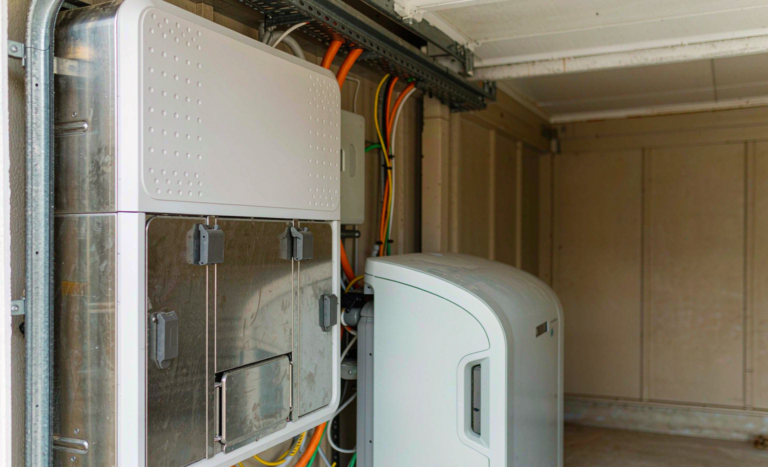
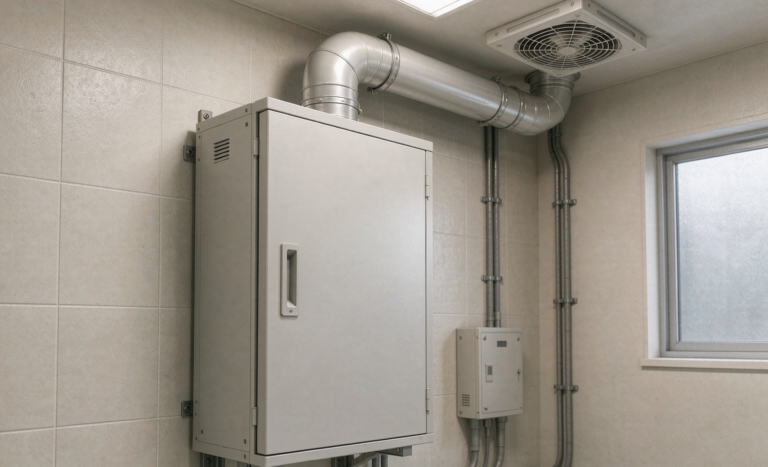
The right location is a dedicated utility room, machine room or enclosed equipment corner that is ventilated, lockable, and physically separated from livestock areas and grain handling. Mount the cabinet at least 300 millimeters off the floor — I use 400 to 600 millimeters on farms — so that wash water, snow-melt and the occasional rodent at floor level stay below the enclosure. Keep at least 100 millimeters of clearance behind and above the unit for convection. If the room also houses a generator, separate them: generators shed vibration that works busbar bolts loose, and their exhaust soots every filter in the room. I also ask farm owners to keep grain storage, straw bales and feed at least three meters from the battery wall; combustible dust accumulations near electrical equipment violate the spirit of every fire code I install against, including UL 9540A system-level fire testing assumptions.
Dust Management: The Filter Is Your First Line of Defense
Grain and silage dust is the defining maintenance issue on farms, and it is almost invisible until it becomes thermal. A forced-air cooled residential battery pushes its entire airflow through an intake filter; when that filter loads up, two things happen. First, internal temperature rises — I have logged 8 to 12 °C of additional cell temperature rise on systems with fully blocked filters, and every 10 °C of sustained elevation roughly halves the calendar life of LFP cells. Second, the BMS begins throttling charge and discharge current to protect itself, which farm owners experience as “the battery will not run the pump anymore,” when the battery is actually fine and the filter is the problem.
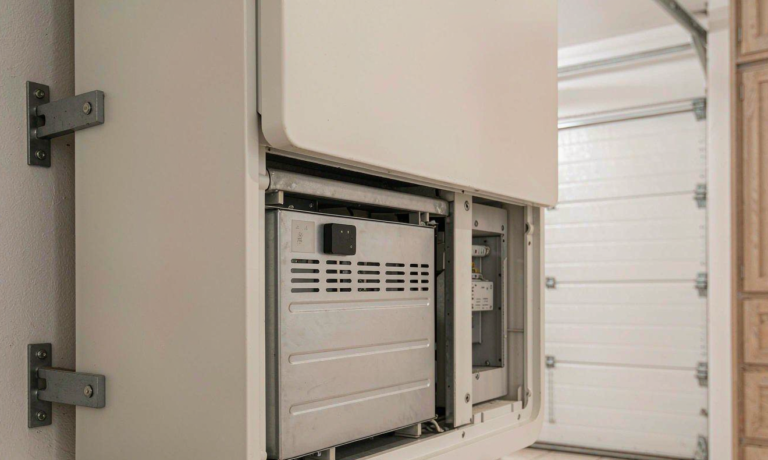
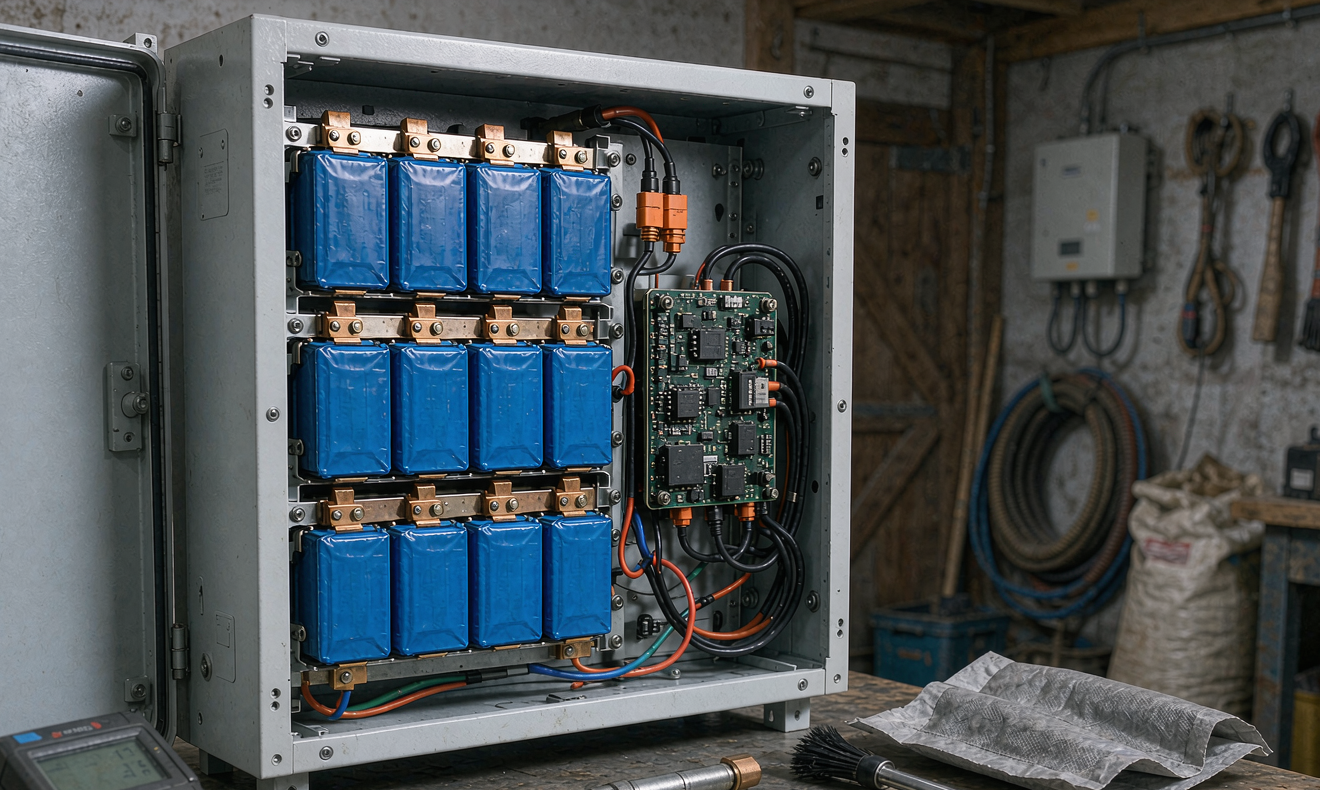
My cadence for farm installations: check the filter weekly during harvest and silage season, monthly the rest of the year, and replace it rather than clean it at every quarterly service. Vacuum the intake grille and the cabinet’s heat sink fins at the same time. Do not use compressed air inside the enclosure with the BMS board exposed — it drives dust under components, and I have traced two BMS faults to exactly that practice. Once a year, with the system de-energized, wipe internal surfaces with an anti-static brush and inspect whether dust has reached the busbar zone; dust on top of a busbar joint that also carries a marginal torque is how hot spots form. If your utility room has an unstable dust source you cannot control — an active grain dryer, for example — specify a cabinet with a higher ingress rating and replaceable external filter cartridges, and treat filter stock like any other consumable: keep three spares on the shelf.
Rodents, Corrosion and the Connector You Never Look At
Farm rodents cause the failures that make the news. Mice and squirrels strip insulation from any accessible cable, and a chewed communications harness between the battery and inverter produces fault codes that look like BMS failures. Every cable run I install on a farm goes in conduit — preferably steel where the run is exposed — and every wall penetration is sealed with steel wool plus sealant, not silicone alone, because rodents chew through cured silicone without slowing down. During monthly walk-throughs, look for droppings, gnaw marks and disturbed insulation near the cabinet. The detection tool that catches what your eyes miss is the insulation resistance test: once a year, I megger the DC harness at 500 V and expect above 1 megohm; a reading below that, with no visible damage, usually means moisture or a partially chewed conductor hiding in conduit.
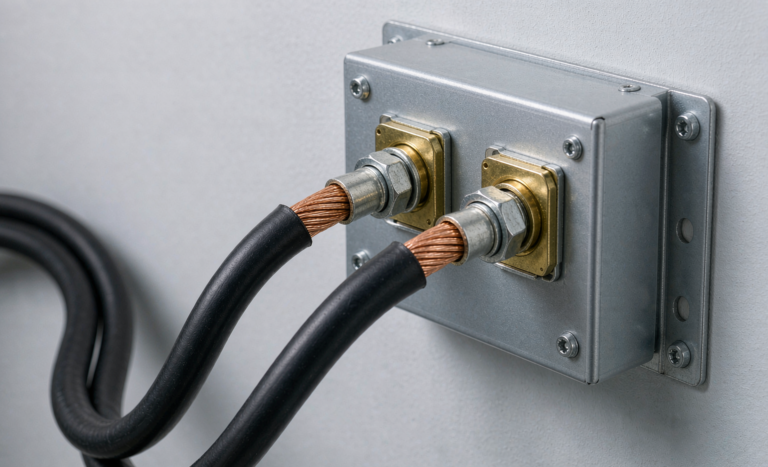
Corrosion is the quieter twin of this problem. Beyond ammonia, farm environments combine humidity swings, fertilizer vapors and temperature cycling that condense moisture inside connectors. Corroded contacts raise resistance, raised resistance generates heat, and heat accelerates further corrosion — a loop that ends with a melted connector housing. I mitigated this on every farm system by applying a thin coat of dielectric grease to HV connector mating surfaces at commissioning and re-applying at annual service, and by photographing each connector face with a borescope or phone camera so I can compare contact color across years. A connector face that shifts from bright silver to dull gray to white-green powder is a timeline of resistance climbing from milliohms toward real trouble, and it is a two-minute inspection.
Seasonal Loads: Size Your Habits Around the Pump, Not the House
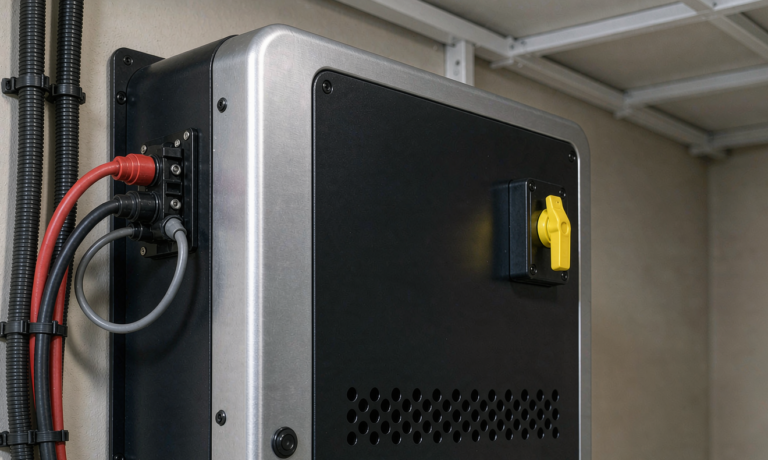
Farm electrical loads are seasonal in a way urban loads never are. In irrigation season, a well pump or booster pump may cycle forty times a day, and each start is the moment of truth for a home energy storage system. A direct-on-line start on a 7.5 kW motor can demand 45 to 60 kW for 200 to 400 milliseconds; the battery’s inverter either covers it from its surge rating or the voltage sags and the contactor drops out. This is a design conversation, not a maintenance one, but it produces a maintenance consequence: every start event stresses the DC bus, and loose busbar bolts that survive a year of household loads will work loose under a season of pump cycling. Torque-checking busbars is therefore non-negotiable on farms. My numbers: M6 terminals at 8 to 10 N·m, M5 at 4 to 6 N·m, M8 at 12 to 14 N·m, checked quarterly, marked with a paint pen so any rotation is visible at a glance.
The seasonal calendar also changes how you should manage state of charge. Through the heavy-load season I hold the daily window at 20 to 90 percent state of charge and let the system cycle — that is what LFP chemistry prefers, and per UL 1973 cycle-life definitions it is where the warranty cycles actually get consumed. Going into the light season — winter on most mixed farms, when irrigation stops — I drop the charge target toward 50 to 60 percent if the household load allows, because calendar aging at high state of charge, especially in a warm utility room, is the silent killer of residential batteries. And on farms in cold climates, remember the charging floor: LFP cells must not be charged below 0 °C without a heating circuit, because metallic lithium plating on the anode is permanent and dangerous. I verify at every autumn service that the low-temperature charge cutoff is enabled in the BMS and that its sensor is actually bonded to a cell surface — an unglued sensor reads the room, not the cells, and the protection is fiction.
The Farm Maintenance Calendar: Monthly, Quarterly, Annual
Consolidating everything above into a schedule I actually follow on farm sites:
- Monthly — 15 minutes. Visual inspection: no dust matting on the intake, no droppings or gnaw marks, no discoloration at connectors. Filter check (weekly during harvest). Glance at the BMS app for temperature spread across the string; a healthy 16S LFP pack shows cell-to-cell spread under 30 mV at rest and under 6 °C during pump-start events. Skim the event log for undervoltage events coinciding with pump starts — a cluster of them means either a loose connection upstream or a pump starting harder than it used to, which on a farm usually means a check valve failing.
- Quarterly — about one hour. Torque audit on all accessible busbar and terminal bolts with a calibrated driver, paint-pen re-marking. DCIR spot check: apply a short 0.5C pulse and compare against the commissioning baseline; more than 30 percent drift is a yellow flag I investigate before the next season, more than 50 percent is a red flag that usually points at a specific cell or a corroded interconnect. Connector face inspection and dielectric grease touch-up. Filter replacement. Blow out — gently, with the electronics shielded — or vacuum the room’s dust at the cabinet perimeter.
- Annual — half a day, ideally late winter before irrigation season. Full capacity test at 0.2C against the nameplate; I expect above 95 percent in year one through three, and anything below 80 percent is end-of-life per UL 1973 assumptions and the start of a warranty conversation. 500 V insulation resistance test on DC harnesses, above 1 megohm. Thermal camera scan of busbars and connectors under a deliberate pump-start load; any joint running more than 10 °C above its neighbors gets opened, cleaned and re-torqued. BMS firmware update and a full state-of-charge recalibration cycle. Rodent-proofing inspection: re-seal penetrations, replace any deteriorated conduit sections.
Two instruments make this calendar cheap to execute: a calibrated torque screwdriver and a clamp meter with inrush capture. Together they cost less than one emergency service call, and on farms, where the nearest installer may be two hours away, self-sufficiency on these two checks is worth more than any monitoring dashboard.
Standards, Acceptance and When to Call the Manufacturer
Farm owners often ask me which paperwork actually matters, because residential storage is flooded with marketing claims. The stack I accept for a farm-grade home energy storage system: UN38.3 for transport, IEC 62133-2 at the cell level, UL 1973 for the stationary battery itself, UL 9540A for system-level thermal runaway propagation data, and NFPA 855 compliance for the installation’s spacing and separation requirements. For installations outside North America, IEC 62619 covers the industrial-stationary equivalent. On acceptance, before signing off a farm install I require the cell date codes to be under nine months old, a DCIR curve at three temperatures from the manufacturer, and — specific to high-dust sites — written confirmation of the cabinet’s ingress rating and filter part number so consumables are orderable a decade later. When your own calendar maintenance surfaces a DCIR drift above 50 percent, a capacity test below 80 percent, or insulation resistance you cannot restore above 1 megohm, that is the manufacturer’s problem, not yours; those three numbers are exactly what a warranty claim hinges on, and keeping your dated test records is what turns a claim from an argument into a formality.
How often should I clean the filter on a farm home energy storage system?
Weekly during harvest and silage season, monthly otherwise, with a full replacement at every quarterly service. If you open the cabinet and see dust past the filter stage onto the heat sink fins, you are behind; at that point vacuum the fins and shorten the interval. A blocked filter typically adds 8 to 12 °C of internal temperature rise, which directly shortens battery life.
Is it safe to put a home battery inside a barn or near livestock?
Not directly. Ammonia from livestock corrodes connector contacts and busbars — I have measured 40 to 60 percent contact resistance growth in eighteen months in dairy barns — and combustible dust near electrical equipment is a fire code problem. Locate the system in a separate, ventilated, lockable utility space, mounted 400 to 600 millimeters off the floor, with conduit-protected cable runs and sealed penetrations.
Will a home battery start my well pump?
It depends on the inverter’s surge rating versus the pump’s locked-rotor current, which is typically six to eight times rated current on a direct-on-line start. Check the nameplate: a 7.5 kW pump can demand 45 to 60 kW for a fraction of a second. If your inverter cannot cover it, options are a soft starter or VFD on the pump, or a hybrid inverter with higher surge headroom. After installation, watch the BMS event log for undervoltage events during starts.
What state of charge should I keep my farm battery at during the off-season?
During the heavy irrigation season, cycle in a 20 to 90 percent window. Going into the low-load season, lower the target toward 50 to 60 percent if your loads allow, because high state of charge accelerates calendar aging. Never store an LFP system at 100 percent for months, and confirm the BMS low-temperature charge cutoff is enabled before the first frost.
How do I know if rodents have damaged my battery system?
Warning signs are droppings or gnaw marks near the cabinet, communication fault codes between battery and inverter, and unexplained BMS alarms. The definitive annual check is a 500 V insulation resistance test on the DC harness — above 1 megohm is healthy, and a low reading with no visible damage usually means a chewed conductor or moisture inside conduit. Re-run all exposed cabling in conduit and seal wall penetrations with steel wool and sealant.
Which certifications should a farm battery cabinet have?
Require UN38.3, IEC 62133-2, UL 1973 and UL 9540A data (or IEC 62619 outside North America), with the installation meeting NFPA 855 spacing rules. For high-dust sites, also confirm the enclosure ingress rating in writing and the filter part number, so you can source consumables for the life of the system.