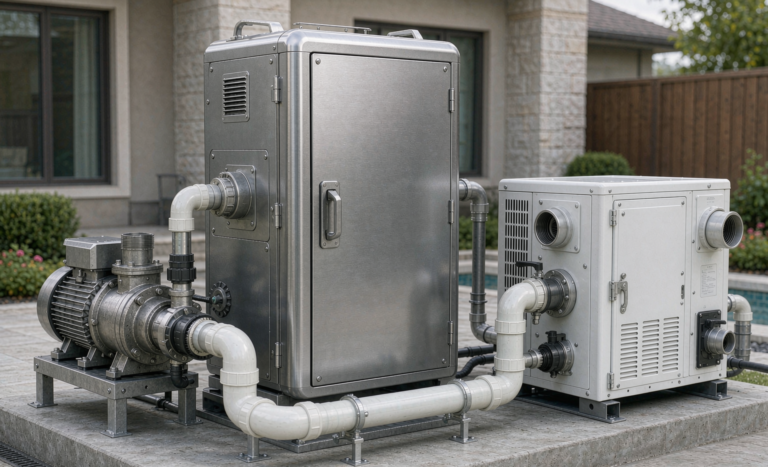
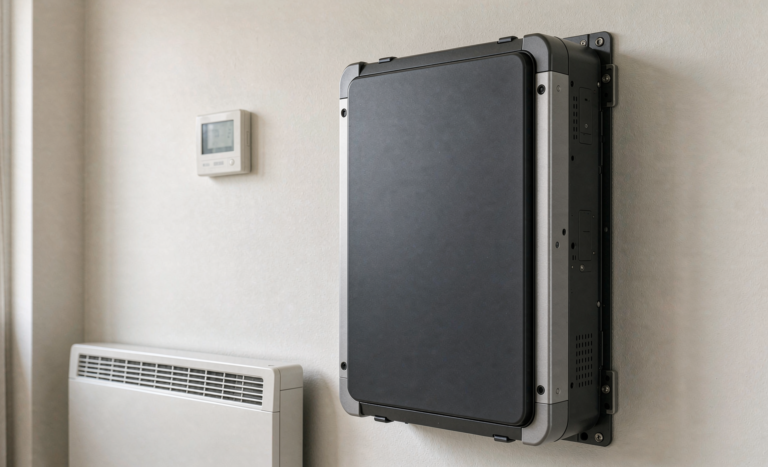
Home Energy Storage for Home Gym and Treadmill Loads
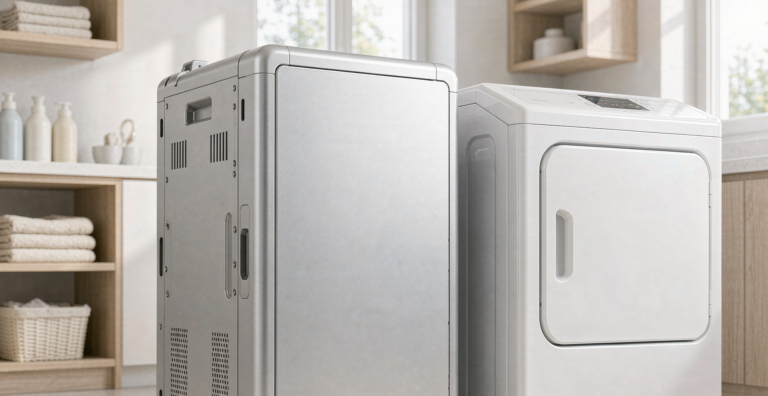
Eight years in lithium battery engineering teach you that the hardest installs are rarely the biggest ones. The last one I commissioned was a five kilowatt hour home storage cabinet in a two car garage, sized around a single treadmill. The owner had already been quoted three times, and every quote sized the battery from the motor label on the front of the deck. That mistake shows up most often with home gym equipment: horsepower ratings say nothing about the energy you actually move.
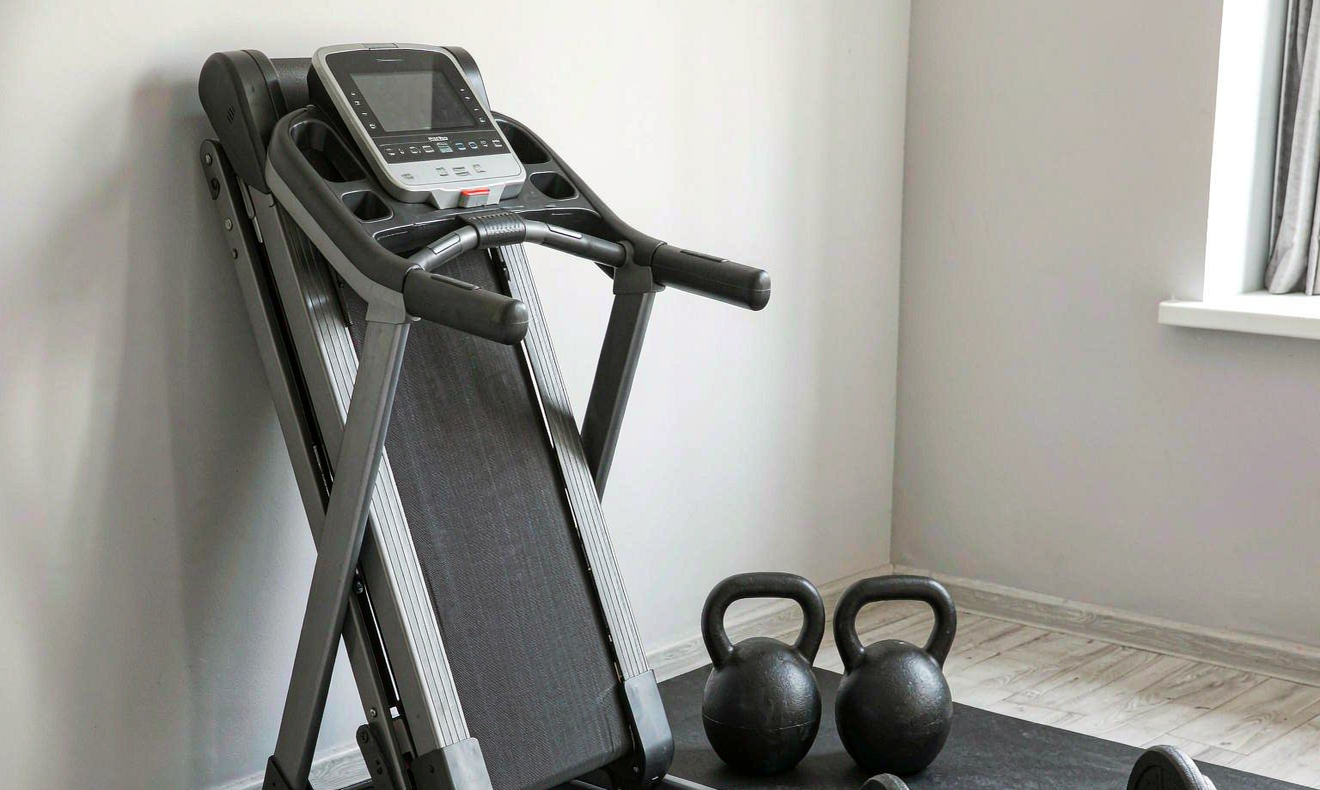
What a home gym actually draws from the wall
I instrument a load with a clamp meter on the circuit and a wall box energy meter before I recommend anything. On a typical residential setup the numbers look like this, measured over two weeks of ordinary use.
- Treadmill with a 1.5 horsepower continuous duty motor: 0.7 to 1.1 kilowatts during easy walking at 5 kilometers per hour, rising to 2.2 to 2.8 kilowatts on a 100 kilogram user running at 11 kilometers per hour with a 10 percent incline.
- Cross trainer or elliptical: 0.2 to 0.5 kilowatts steady, peaking near 1.2 kilowatts when the flywheel spins up from rest.
- Rowing machine with air resistance: 0.4 to 0.9 kilowatts during strokes, near 0.35 kilowatts averaged over a session.
- Stair climber and ski ergometer: 0.3 to 0.6 kilowatts continuous.
- Free weights, barbells, benches and racks: zero watts. Mechanical load, no electrons involved.
- Standby electronics: console, touchscreen, Wi-Fi module, cooling fan and the small power supply in the motor housing. Ten to forty watts per device, and that is what quietly eats the battery on days you never train.
Forty five minutes on that treadmill at 1.1 kilowatts moves 0.8 kilowatt hours. Add 25 watts of standby on the console, the elliptical display and the speakers for 24 hours a day and you add another 1.8 kilowatt hours, which is why standby beat training load in three sessions out of five.
Sizing the pack around real duty cycles
Size from energy per session and per week, not from peak watts. The calculation I run for every home gym battery quote is:
Usable capacity = (average kilowatts x hours per session) x sessions per week x days of autonomy, divided by depth of discharge and inverter efficiency.
Worked example, close to that garage: 1.1 kilowatts average, 45 minutes per session, five sessions a week, one day of autonomy, 80 percent depth of discharge, 92 percent inverter efficiency. That is 0.83 kilowatt hours per session and 4.1 per week, so about 5 kilowatt hours of usable capacity. The cabinet I commissioned was exactly that size.
For chemistry I specify lithium iron phosphate for gym duty without hesitation. A home gym cycles daily, five to seven times a week for a decade, and LFP gives 6000 to 10000 cycles at 80 percent depth of discharge against roughly 1500 to 2500 for a high nickel cell at the same duty. The pack is bigger and heavier for the same energy, around 12 to 15 kilograms for 5 kilowatt hours at cell level, but a home gym pack lives in a garage or a utility room where mass is free and cycle life is money.
Temperature matters more than people expect. LFP accepts charge down to 0 degrees Celsius and needs heater or garage heat below that, and long charging above 45 degrees Celsius drives accelerated fade. In a cold climate, put the cabinet in the conditioned part of the house or budget for a small self regulated heater that the management system can hold at 10 to 15 degrees Celsius.
Surge and inrush: the inverter decides
A treadmill belt with a flywheel behaves like a moderately hard starting motor, not a resistive heater. Starting current lands at three to five times the running current for half a second to two seconds, and a dry or newly fitted belt pushes that higher, so a 1.1 kilowatt running unit can ask for 4 to 6 kilowatts for a moment.
- Size the inverter for the worst moment, not the average: continuous rating above the motor peak, with a surge rating of at least two times continuous for five seconds.
- Use a pure sine wave inverter. Treadmill consoles and motor drivers need a clean waveform, and modified sine output has reset my test console clock and tripped its over voltage latch more than once.
- Choose a transformerless hybrid unit for daily cycling. Older transformer designs sit at 15 to 25 watts of no load draw for 24 hours a day, about 3 to 6 kilowatt hours of phantom load per month.
- Where the grid is still present, the system works in self consumption mode and the inverter handles the inrush from battery at close to full rated output. The surge rating then protects the breakers, not the battery.
Total harmonic distortion below 3 percent at full load keeps the treadmill motor cool and avoids the high frequency whine some belt motors develop when fed a dirty waveform.
Standby loads and the always-on problem
This is the part that surprises people who later audit their own bills. Three always plugged devices at 25 watts each is 75 watts, which is 1.8 kilowatt hours a day and about 54 kilowatt hours a year, more than the training energy of a heavy gym user by a wide margin. If the goal is to make the battery pay for itself, kill the standby before you buy capacity.
- Put the cardio kit on a switched smart strip and cut it at midnight. Saves 1.4 to 1.6 kilowatt hours a day on its own.
- Set the pack to a timed self consumption window so the daily top up happens on the cheapest tariff or from the solar surplus.
- Leave the treadmill plugged in only if you use it at least twice a week. Otherwise the standby is pure loss.
- Lithium iron phosphate self discharge is around 1 to 2 percent per month at 25 degrees Celsius, so an unused pack will not degrade on the shelf the way lead acid would sulfate.
Where the pack lives: heat, moisture and separation
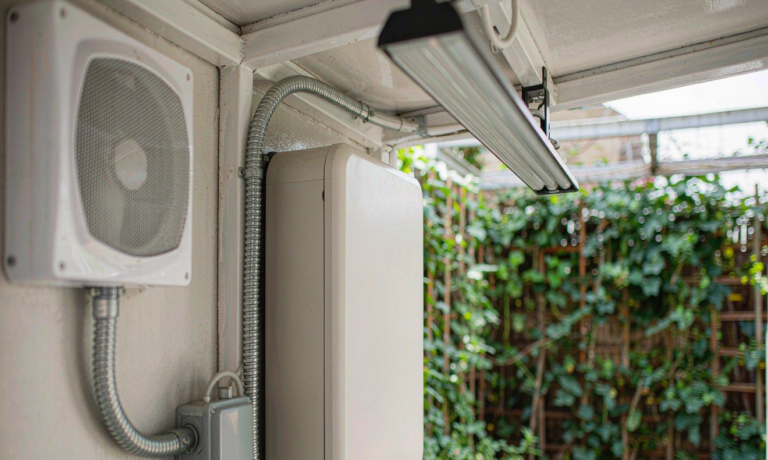
A garage is a hard room: summer floor temperatures pass 40 degrees Celsius, winter nights drop below freezing, humidity swings with every car wash, and the space doubles as storage.
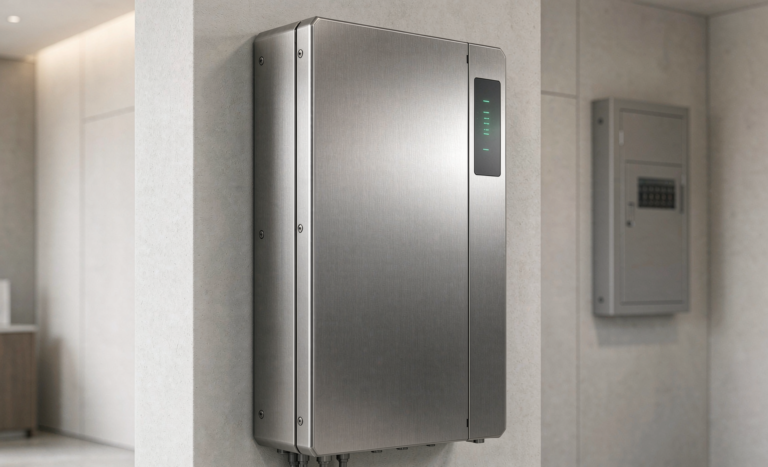
- Garage wall or utility closet, mounted 1.0 to 1.5 meters above the floor inside a vented enclosure with 50 millimeters of clearance.
- Enclosure rating of IP54 where water or a hose reaches the wall, on a corrosion resistant frame. I have replaced terminal lugs on cabinets within a meter of a driveway.
- Fire separation: look for a UL 9540A thermal runaway propagation test and UL 9540 system listing, and keep the cabinet off any shared wall with a bedroom. A one hour concrete or gypsum assembly is the minimum I would sign off in a garage.
- Charge temperature control, meaning the management system blocks charge below 0 degrees Celsius and derates above 45, rather than forcing the cycle and destroying the cell.
Cells in the pack carry IEC 62133-2 and UL 2054, and a spare pack shipped to a service engineer travels under UN38.3 with UN3481 labeling. Those are the documents a distributor asks for.
Wiring, protection and interconnection
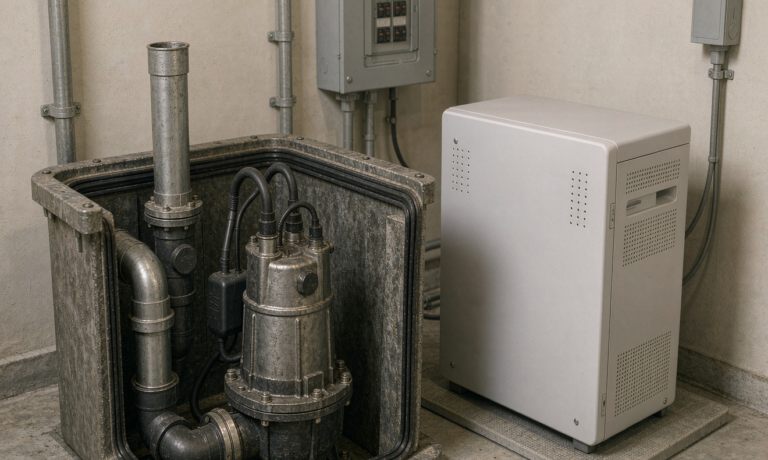
Every home gym pack I install sits on its own dedicated circuit with an arc fault and ground fault breaker, sized at 125 percent of the continuous inverter current in a 240 volt single phase or split phase panel. The cable is rated for inverter output, run in conduit with the neutral and ground bond at the panel only, and every terminal is torqued to the plate value and re torqued after 200 cycles, because vibration from a treadmill upstairs does loosen lugs.
Three notes from commissioning: add a Type 1 or Type 2 surge device at the panel, keep the pack on a subpanel with a load shed contactor so the gym drops first in a long outage, and never feed the inverter output through an extension cord. A cheap plug under a workbench is how a warranty claim starts.
Commissioning and the maintenance that matters
On day one I check the wall meter against the pack discharge. If the management system claims 5 kilowatt hours of use and the meter says 5.6, the accounting is off and the state of health estimate will drift. Expect agreement within 5 to 8 percent; beyond that, re calibrate.
- Balance the pack after 30 to 40 cycles. Cell spread above 50 millivolts means one cell will hit the low cutoff first and discard capacity for everyone.
- Insulation resistance on the DC side above 1 megohm, and above 100 megohm for the AC side of a healthy installation.
- Annual inspection: terminal torque, enclosure seal, breathers, cooling fan dust and an unobstructed vent path.
- Annual capacity check at shallow depth. LFP holds 80 percent of original capacity around 6000 to 8000 cycles, close to the eight to twelve year life of the treadmill itself.
- If the house is empty for months, park the pack at 40 to 60 percent state of charge and check it quarterly.
Match the pack warranty to the equipment life, not the other way round. A ten year cabinet on a nine year treadmill is a sale, not an engineering decision.
Frequently Asked Questions
How big a home battery do I need for a treadmill?
A single treadmill used 45 minutes a day needs 3 to 5 kilowatt hours of usable capacity if you also cover standby. Add the elliptical, the rower and the console chargers and move to 8 to 10 kilowatt hours. Size from measured average watts, never from the horsepower label.
Can a home energy storage system run a treadmill during a blackout?
Yes, with an inverter rated above the motor inrush. Plan for 4 to 6 kilowatts of surge for two seconds on a 1.1 kilowatt running unit, on a pure sine inverter, on a dedicated circuit that the panel actually feeds from the battery.
What inverter size is right for a home gym?
Continuous rating at or above the highest simultaneous draw of everything on the circuit, typically 3 to 5 kilowatts for one treadmill and 6 to 8 kilowatts for a full cardio room, plus a two times five second surge rating.
Will a home gym drain the battery when it is not in use?
Yes, through the electronics rather than the cells. The console and motor standby of 10 to 40 watts per device adds up to about 1.8 kilowatt hours a day across three devices. The battery itself barely self discharges, but the always-on equipment will quietly eat a third of a small pack per week.
Where should the battery cabinet be installed in a house with a gym?
On a conditioned garage wall, in a utility closet, or on a basement wall at 1.0 to 1.5 meters above the floor, inside a vented enclosure, clear of water sources and separated from bedrooms by a fire rated assembly.
How often does a home gym battery need servicing?
An annual inspection with a torque check, a state of health reading and a fan clean. Re torque the DC terminals after the first 200 cycles and then every two years, and re balance the pack once or twice a year.
Further Reading
References