Home Energy Storage for Seasonal and Vacation Homes
A seasonal home changes the battery math in a way most buyers do not see until the second year. I am Karl Huang, a senior lithium battery engineer, and I have commissioned home energy storage systems for coastal villas, mountain cabins, and lake houses that sit empty for six to nine months. The instinct is to size the battery as if the home were occupied every day, but the harder problems are what happens during the long idle and what it takes to bring the system back safely when the season opens. Here I walk through the engineering I apply for part-time residences, with the standards and numbers that matter.
The Seasonal Home Is Not a Smaller Full-Time Home
When a residence is occupied year round, the battery earns its keep through daily solar self-consumption, time-of-use shifting, and backup. A vacation home flips that pattern: the loads are bursty, a weekend arrival, a two week summer stretch, then silence. The battery may deliver only a few dozen cycle equivalents a year instead of the 250 to 350 a daily home sees. It still moves the failure modes from cycling wear to calendar aging, self-discharge, and neglect.
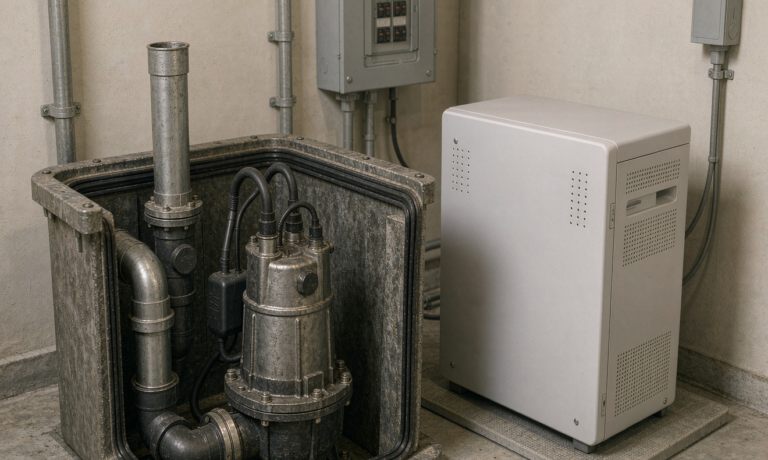
The first mistake I see is oversizing. A 10 kWh to 15 kWh home energy storage pack for a full-time family is dead weight in a cottage used six weeks a year. The second is undersizing the standby side: even an empty house draws the router, the alarm, the forgotten freezer, and the sump pump, and those always-on loads matter more for idle behavior than the weekend barbecue does.
Sizing a Battery for Intermittent Occupancy
I start from the realistic duty cycle rather than the nameplate. List the loads that run during occupancy: lighting, refrigerator, well or sump pump, a small cooktop, heaters or fans, and device charging. Then estimate the longest continuous stretch you actually use the place. A family that spends two weeks at the lake in July needs peak capacity for that fortnight, not for January.
My rule of thumb: size for the occupied week, then add a standby reserve. At 90 percent efficiency and 80 percent usable depth of discharge, I specify about a 17 kWh home energy storage system; a lighter user needs only 5 kWh to 8 kWh.
I also separate the always-on loads. A router and alarm draw 8 W to 20 W; a frost-free freezer left plugged in can pull 100 W to 150 W. Over a 200 day idle that freezer alone is 480 kWh, the surprise that flattens a poorly stored pack. I tell clients to empty and unplug, or put those loads on a small dedicated lithium battery topped by a trickle source.
Self-Discharge and the Right Storage State of Charge
Lithium cells are not perfectly sealed against internal loss. An LFP cell self-discharges at roughly 1 to 2 percent per month at 25 degrees Celsius; an NMC or NCA cell runs closer to 2 to 3 percent per month. Over a nine month idle, an LFP pack at 50 percent SOC lands near 32 to 41 percent, while an NMC pack can drop toward 25 percent. Neither is dangerous, but both fall below the window for a clean restart.
The storage SOC I recommend is 50 percent. I avoid 100 percent because high SOC accelerates calendrical capacity loss, and I avoid near empty because self-discharge plus a tiny parasitic load from the BMS or a connected inverter can drive cells into deep discharge and copper dissolution. For a seasonal home I park the system at 50 percent SOC and disable any inverter always-on mode that would quietly bleed the pack.
The BMS itself draws something, typically 5 mA to 20 mA; at 15 mA on a 100 Ah 51.2 V pack that is about 15 percent across a year. Small but not zero, so I prefer a manual disconnect for very long closures and a scheduled wake for shorter ones.
Temperature and Humidity While the House Sits Empty
An unoccupied home swings harder than an occupied one. Lithium cells tolerate cold storage well; an LFP cell at minus 10 degrees Celsius and 50 percent SOC loses little permanent capacity. The real risks are around the cell, not in it.
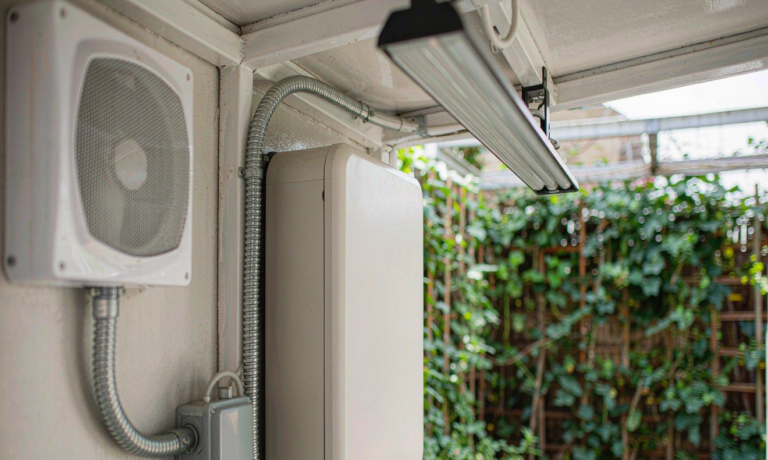
First, freezing. If condensation forms and then freezes, enclosures, seals, and terminals suffer. I specify at least IP65 for any home energy storage enclosure in an unheated shed, garage, or boathouse, kept off the floor on a wall mount. Second, heat. A closed attic or sun-baked shed in August can hit 50 degrees Celsius, and sustained heat above 45 degrees Celsius is where calendar aging and swelling accelerate. I place the battery on the coolest north wall, out of direct sun, with an inch or two of air gap behind it.
Humidity is the quiet killer. I keep desiccant packs inside if the location is coastal. The relevant test standard is IEC 60068-2-78, the damp heat steady-state procedure at 40 degrees Celsius and 93 percent relative humidity for 21 days; any pack I ship for a seasonal home is validated against that profile.
Re-Commissioning the Battery Before the Season Opens
The single biggest cause of a dead seasonal battery is a sloppy restart, not a failed cell. After months idle I run a fixed procedure before the home is occupied. I inspect the enclosure for condensation, pest ingress, and terminal corrosion, and I confirm the manual disconnect was open with no rodent nesting against the busbars.
Then I measure. I record the open-circuit voltage and compare it to the expected 50 percent SOC value; a drop of more than a few percent per month suggests a parasitic load I missed. I run a capacity check at 0.2C and a DCIR reading. A healthy LFP pack rests within about 20 to 30 mV across cells; anything past 50 mV means a cell or connection is degrading, and I rebalance or service before load.
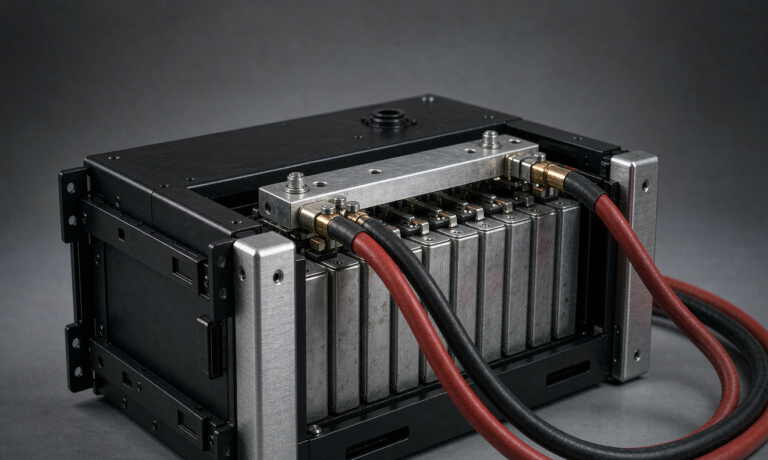
I also re-torque the busbar bolts to spec, because thermal cycling during an empty season loosens joints and a loose joint is a hot spot. Finally I update the BMS firmware and confirm the gateway wakes. At Horizon Power we print this restart checklist on the nameplate so the homeowner or local electrician repeats the same steps each spring.
Fire Safety and Monitoring When No One Is Around
A battery fire is more dangerous in an empty house, because no one is there to smell it or trip the breaker. I do not locate a home energy storage pack next to a fuel tank, a furnace, or flammables, and I keep clearances per the installation manual, separating the battery from living space with a fire-rated wall where code allows.
For unattended periods I recommend a cellular or LTE monitoring path reporting state of charge, temperature, and fault codes to a phone. The point is warning: a thermal event in an LFP pack announces itself with a temperature ramp and off-gas minutes before flame, and a text alert can trigger a neighbor or fire department response. I pair that with a listed smoke detector. The safety language to look for is UL 9540 for the installation and UL 9540A for fire propagation, alongside IEC 62133-2.
Warranty and Maintenance for Batteries That Idle
Many residential warranties are written around daily cycling: they promise a throughput or an 80 percent capacity floor after ten years, but assume the system is working, not parked. Some contracts require periodic use or a minimum health check, and a pack at the wrong SOC in a hot shed can drift outside the protected envelope without ever being used.
I read the pro-rata terms carefully. A prorated warranty degrades the covered value with each year and each cycle, so an idle pack that ages calendrically may reach the capacity floor on the clock rather than on the odometer. My advice is to log storage conditions, SOC at closure, ambient temperature range, and the re-commissioning readings each season, because that log proves the battery was stored inside the tested envelope. I also schedule a light maintenance cycle once or twice during a long closure if the site has grid or solar trickle, to keep cells balanced and the BMS awake.
The standards that frame a defensible seasonal installation are UN38.3 for transport and handling, IEC 62133-2 and IEC 62619 for cell and stationary pack safety, UL 9540 and UL 9540A for system and fire behavior, IEEE 1547 for grid interconnection, and NEC Article 706 for the energy storage wiring. None forbid idle storage; they define the safety envelope.
Frequently Asked Questions
How long can a home battery sit unused before it degrades?
An LFP home energy storage pack can sit unused for nine to twelve months with only minor calendar aging if stored near 50 percent SOC in a moderate range. The risk is neglect, not the clock.
What state of charge should I store a seasonal home battery at?
I store at 50 percent state of charge, with 30 to 60 percent as the acceptable band, leaving margin for the 1 to 3 percent monthly self-discharge.
Do I need to cycle the battery while the vacation home is closed?
Not every month, but I recommend a light balance cycle once or twice during a long closure if the site has a charging source. A shallow charge to 60 percent and back to 50 percent keeps cells balanced and confirms the BMS is alive, protecting warranty coverage.
Can I leave a lithium battery in an unheated home over winter?
Yes, if the enclosure is rated for it. Lithium cells tolerate cold storage, but the enclosure must resist condensation and freezing at IP65 or better, sit off the floor on a wall mount, and stay clear of summer heat.
How do I wake and test the battery before the season starts?
I open the manual disconnect, inspect for condensation and pests, check the resting voltage against the expected 50 percent value, run a 0.2C capacity check and a DCIR reading, re-torque the busbars, and update the BMS firmware, a sequence that catches most problems before the house is occupied.
Will long idle periods void the home energy storage warranty?
Not if the battery is stored inside the tested envelope. Keep a log of closure SOC and seasonal re-commissioning readings, and follow the pro-rata terms in the contract. A pack stored at 50 percent SOC in a moderate, dry enclosure stays within the warranty envelope defined by IEC 62133-2, IEC 62619, and UL 9540.
Further Reading
References