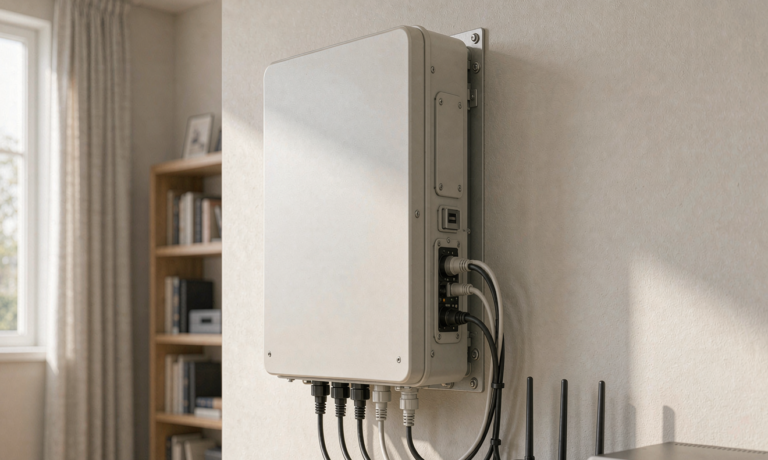
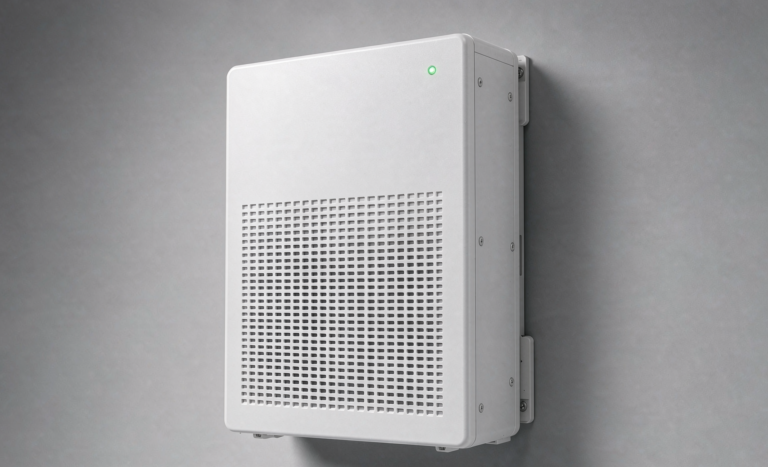
Home Energy Storage for Sewage Ejector Pump Backup
When we design a home energy storage system, most homeowners ask about refrigerators, lights, and internet. In my fifteen years specifying battery packs for residential backup, I have learned that one of the most urgent loads is the one nobody talks about: the sewage ejector pump. If your home has a basement bathroom, a below-grade laundry, or any plumbing that sits lower than the municipal sewer line, a small pump in a buried basin is the only thing moving wastewater uphill. Cut grid power and that pump stops. Within a few hours the basin fills, the float trips an alarm, and if the outage lasts, sewage backs up into your lowest drain.
I have stood in basements during storms where the ejector alarm was screaming and the only fix was a battery that could keep the pump alive. A properly sized home energy storage unit turns a potential health hazard into a non-event. This article walks through how these pumps actually load a battery, how to size storage for them, and the code and integration details I apply on real projects.
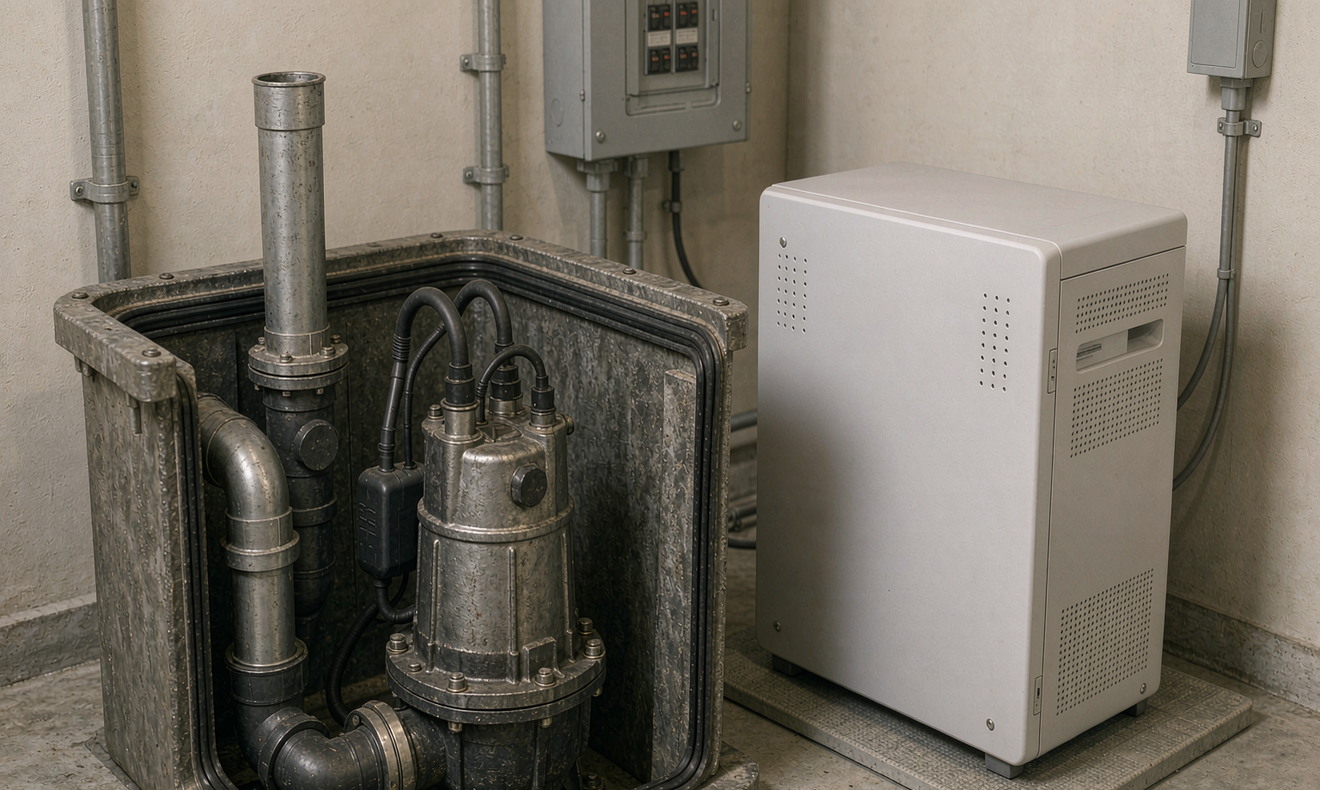
How a Sewage Ejector Pump Works, and Why a Blackout Is Urgent
A sewage ejector pump lives in a sealed basin, typically 15 to 50 gallons, set below the floor of a basement bathroom or utility room. Wastewater from toilets, sinks, and tubs flows in by gravity. When the basin level rises to a preset point, a float switch starts the pump, which pushes the contents up through a discharge pipe and a check valve into the main sewer or septic line. Grinder pumps do the same but first macerate solids so they can be forced through smaller pipes.
The running load is modest. A typical 1/2 to 1-1/2 horsepower unit draws 300 to 1100 watts at 115 or 230 volts. The problem is not the energy, it is the consequence of stopping. Sewage does not wait. A family of four on a weekend, or a finished basement with a half bath during a party, can fill a 30-gallon basin in well under an hour. No power means no lift, and the float eventually opens a normally closed contact that should trigger an alarm and, in good installs, a transfer to backup. If there is no backup, you are looking at a manual pump-out or a messy overflow.
The Real Constraint Is Starting Surge, Not Daily Energy
Here is the part that catches inexperienced specifiers. A 1 horsepower 115-volt ejector pump draws roughly 10 amps while running but pulls 50 to 70 amps of locked-rotor current for a fraction of a second at startup. That is 5 to 7 times the running current. Your home battery backup inverter must deliver that surge without tripping, or the pump never starts and the basin keeps filling.
In my field tests I size the inverter for at least 2 to 3 times the pump running watts as a short-term surge rating, held for 1 to 3 seconds. A 3 kW continuous inverter that can peak at 6 to 9 kW for a few seconds handles a 1 hp ejector without complaint. Cheaper inverters that clip at 1.5x will fault on every start. The energy side is trivial: even with frequent cycling, an ejector pump uses about 0.05 to 0.15 kWh per cycle and rarely more than 1 to 3 kWh across an entire day.
Sizing Storage for a Small Load With a High Reliability Bar
Because the daily energy is small, the battery is sized by reliability and by what else shares the backup panel, not by the pump alone. A 5 kWh LFP pack will run a sewage ejector, a sump pump, and a few lights for many days. If you want whole-home coverage, step up to 10 to 20 kWh.
Work the numbers from real runtime, not nameplate. Suppose a 1 hp pump actually runs 30 minutes total across a day, at about 0.75 kWh per hour of operation. That is roughly 0.4 kWh per day. Held to an 80 percent depth of discharge, a 5 kWh pack at 4 kWh usable gives you ten days of ejector coverage with margin. I always leave headroom because outages rarely come alone: a storm that kills grid power also tends to send more wastewater down the line as everyone is home.
Put the Pump on a Critical Loads Panel, Not Whole-House
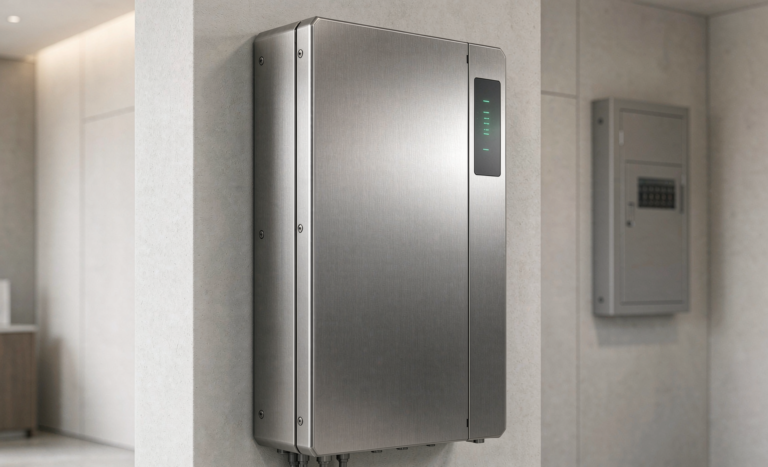
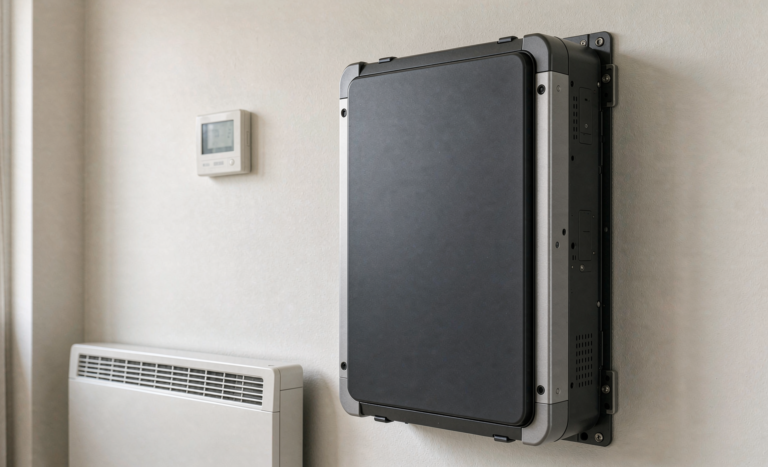
The cleanest install isolates the ejector pump onto a backed-up loads panel fed by the home energy storage inverter through a transfer switch. You do not put the entire house on battery; you pick the circuits that turn a blackout from dangerous to merely inconvenient. For flood-prone homes both the sump and the ejector are life-safety loads, so I rank them high: refrigeration first, then septic ejector and sump together, then communications and a few lights.
Code matters here. Modern backup loads panels fall under NEC Article 706 for energy storage systems, with proper neutral bonding and a listed transfer means. Plumbing codes in several jurisdictions, including provisions in the International Plumbing Code and local amendments, expect emergency power for sewage lift stations in flood-prone or below-grade conditions. I treat the ejector as a mandatory backup circuit rather than an optional one, and I label it so the homeowner never has to guess.
LFP Chemistry Is the Right Call for Stationary Backup
For a pump that sits in a temperature-stable basement and cycles partially, lithium iron phosphate (LFP) is the obvious choice. It delivers 4000 to 6000 cycles, shrugs off the partial-state-of-charge cycling that backup demands, and fails gently. Nickel-based cells are simply not needed: energy density is irrelevant for a stationary box, and the added thermal sensitivity buys nothing.
On the compliance side I specify cells built to IEC 62133 for the cell level, the pack and system to IEC 62619 for stationary use, and the enclosed system to UL 9540 with UL 9540A fire-test evidence. Basements usually sit at 10 to 25 degrees Celsius, which is ideal for LFP, but I still set the battery management system to block charging below 0 degrees Celsius and to taper above 45 degrees to protect calendar life.
Integration, Monitoring, and a Monthly Test
Most retrofits are AC-coupled: the existing battery inverter already feeds the backup panel, so the ejector simply lands on a backed-up circuit. If you are building new, a DC-coupled design can shave a few percent of conversion loss, but the difference is small for a load this size. The bigger win is solar: a PV array recharges the pack during a daylight outage so a multi-day event does not drain the battery.
Monitoring is where reliability is made or lost. The pump basin has its own high-level float alarm, and the battery has its state-of-charge readout. I ask homeowners to wire both into one visible indicator and to run a monthly drill: throw the transfer switch, confirm the pump starts on battery, and watch the surge. Any inverter that faults on start gets replaced before the storm, not during it. A home battery backup that has been tested once a month will not surprise you when it matters.
Frequently Asked Questions
How long will a home battery run a sewage ejector pump during an outage?
A 5 kWh pack at 80 percent usable depth of discharge covers roughly ten days of normal ejector use, because the pump draws only about 1 to 3 kWh per day. Whole-home systems extend that further, and solar recharge during daylight can make the runtime effectively open-ended for multi-day storms.
Can a standard home battery inverter start a sewage ejector pump?
Only if its surge rating clears the pump’s locked-rotor current, which runs 5 to 7 times running amps for about a second. I size for 2 to 3 times running watts as a 1 to 3 second peak. Inverters that clip at 1.5x will fault on every start and must be upgraded.
Should the ejector pump be on the critical loads panel or whole-house backup?
Always on the critical loads or backed-up panel. Whole-house backup is fine too, but the ejector must never be on a circuit that loses power during transfer. I isolate it with the sump and refrigeration as flood- and health-safety loads.
What size battery do I need for a basement sewage pump?
For the pump alone, even 2 to 3 kWh is plenty, but I recommend at least 5 kWh so the ejector shares the pack with a sump pump and essential lights. Whole-home coverage starts around 10 kWh. Size from real daily runtime at 80 percent depth of discharge, not nameplate horsepower.
Is LFP or NMC better for a sewage ejector backup?
LFP is better for this stationary, partial-cycling duty. It gives 4000 to 6000 cycles, tolerates partial state of charge, and fails safely. NMC’s higher energy density offers no benefit in a basement enclosure and adds thermal sensitivity you do not want near plumbing.
Do building codes require backup power for sewage ejector pumps?
In many flood-prone and below-grade installations, yes. Provisions in the International Plumbing Code and local amendments expect emergency power for sewage lift where gravity drainage is impossible. Even where not mandated, I treat it as a required backup circuit for health and safety.
Further Reading
References