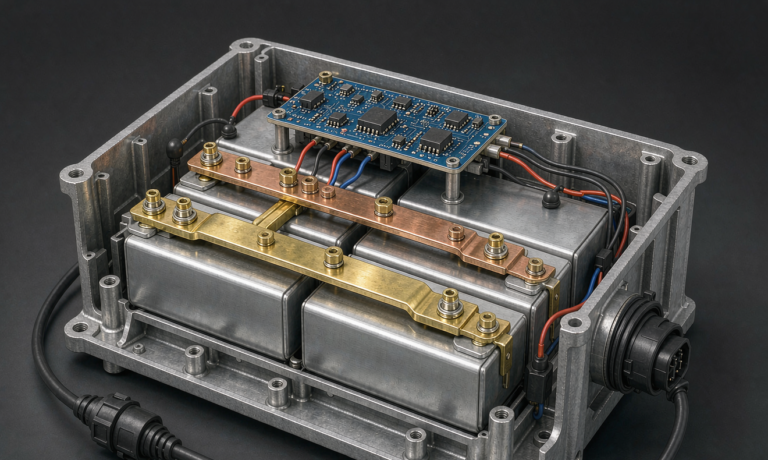
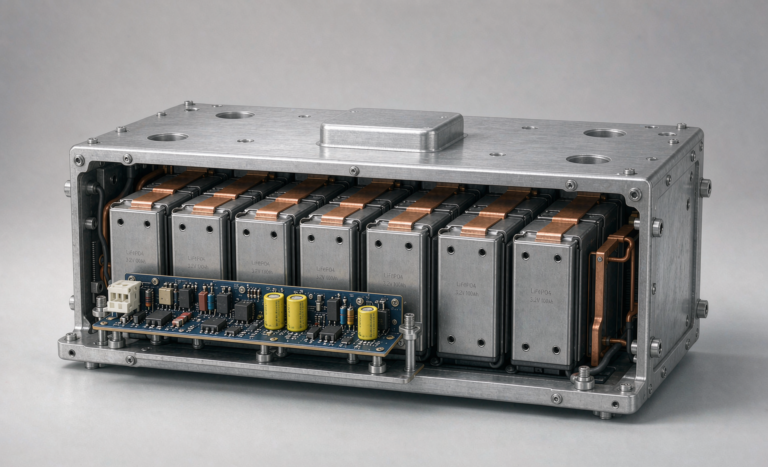
Lithium Battery for Cordless Chainsaws: Surge and Runtime
When people ask me what makes a cordless chainsaw battery different from the pack in a leaf blower or a drill, the short answer is shock load. I have spent years as a lithium battery engineer qualifying cells for warehouse robots, garden tools, and even drone battery programs, and few portable applications punish a cell quite like a chainsaw. A brushless saw motor at full throttle pulls a steady 15 to 30 amperes, but the instant the chain bites into wet oak or the operator slaps the chain brake, the current can spike to 80 or even 120 amperes for a tenth of a second. Most consumer cells are rated for none of that. A pack tuned for gentle discharge will sag, heat up, and trip its protection circuit on the first tough cut. The battery has to be engineered for surge, not just for capacity, and that changes almost every design decision downstream.
Why a Cordless Chainsaw Draws a Violent Current Spike
The physics is simple but unforgiving. A chainsaw bar and chain present a mechanical load with very high static friction at standstill. When the motor starts from zero, or when the chain suddenly meets dense grain, the required torque rises and the controller answers with current. A 40 volt saw drawing 1,200 watts is pulling roughly 30 amperes from the pack, but a stall event against a knot can briefly demand three or four times that. The pack must deliver that pulse without its terminal voltage collapsing below the tool cutoff.
This is where cell internal resistance matters more than raw energy. Two packs with identical watt-hour ratings can behave completely differently under a chainsaw load simply because one uses low-resistance high-discharge cells and the other uses cheap high-capacity cells. In my bench work I watch the pack voltage dip under the spike, then recover within a second as the chain reaches speed. If the dip is too deep, the saw stutters and the cut wanders, which is dangerous near a leg.
Cell Chemistry: NMC versus LFP in a Cutting Pack
For years the default chemistry in cordless outdoor power equipment was nickel manganese cobalt, or NMC. Its appeal is energy density: a 2.5 ampere-hour NMC 18650 cell weighs about 45 grams and stores roughly 9 to 10 watt-hours, so a 40 volt pack can stay light enough to swing overhead for an hour. The trade-off is cost and thermal sensitivity. A punctured NMC cell is more energetic in a failure, and the cells age faster in heat.
Lithium iron phosphate, or LFP, runs cooler, lasts 2,000 to 4,000 cycles, and is far more forgiving if a cell is damaged, but it gives up about 15 percent of the gravimetric energy density. The same runtime then needs a heavier pack. In my view a custom battery solution for a professional arborist fleet should lean LFP, because the abuse tolerance and cycle life crush the total cost of ownership, while a premium homeowner saw where weight wins can justify NMC. Both pass UN38.3 transit testing, but LFP simply returns fewer warranty packs from jobsite drops.
Voltage Platforms and Series Configuration
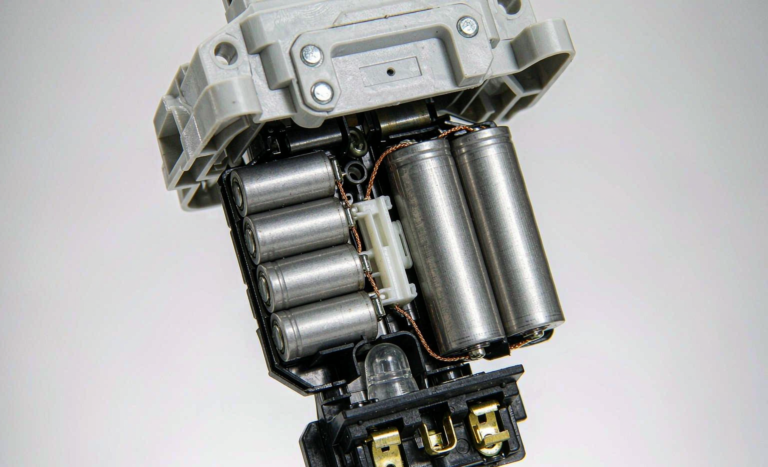
The market splits into two camps. The 18 volt and 20 volt platforms are nominally the same five-cell series stack, just marketed differently: a 20 volt max label counts each lithium-ion cell at its 4.2 volt peak, while the 18 volt figure uses the 3.6 volt nominal. The heavier 36 volt and 40 volt saws use a 10-cell series stack, and professional 25.2 volt packs run seven cells in series at a 3.6 volt nominal.
What matters for the engineer is the discharge rate of each series group. A 40 volt saw pulling 1,200 watts needs about 30 amperes from the pack, which on a 4 ampere-hour pack is a 7.5 C continuous draw. Not every cell survives that gracefully. I specify cells with a continuous rating of at least 20 amperes and a short pulse rating near 30 amperes, because the chain brake event is a transient the protection firmware must allow while still catching a true short.
BMS Functions That Earn Their Place on a Saw
The battery management system is not optional on a chainsaw. The first job is overcurrent protection: when the motor stalls against a knot, the pack must cut the line in under 10 milliseconds, before the windings cook. The second is short-circuit protection, because a frayed connector at the base of the handle is a real field risk after a season of vibration. Temperature sensing on at least two cells lets the pack throttle output above 60 degrees Celsius rather than shut down cold, which keeps the tool usable on a hot roof without masking a genuine fault.
I also specify a kickback-aware lockout on the tool side, so the battery is not the only line of defense when the bar pinches. The BMS should report state of charge honestly to the fuel gauge, because a saw that quits at 20 percent indicated charge erodes user trust faster than any spec sheet can rebuild it. Cell balancing during charge keeps the series string even across the 2,000 plus cycles a good LFP pack will see.
Thermal Management and Duty Cycle Limits
A chainsaw pack heats from both internal resistance and the ambient heat of the motor beside it. In my bench testing a 4 ampere-hour NMC pack on a 40 volt saw reaches about 45 degrees Celsius after three cuts through 150 millimeter hardwood, and the cut speed drops as the cells warm. The honest duty cycle is roughly 20 to 30 cuts per charge before the pack wants a five minute cool-down. LFP stays cooler and holds cut speed longer, which is why crews that run all day prefer it despite the weight penalty.
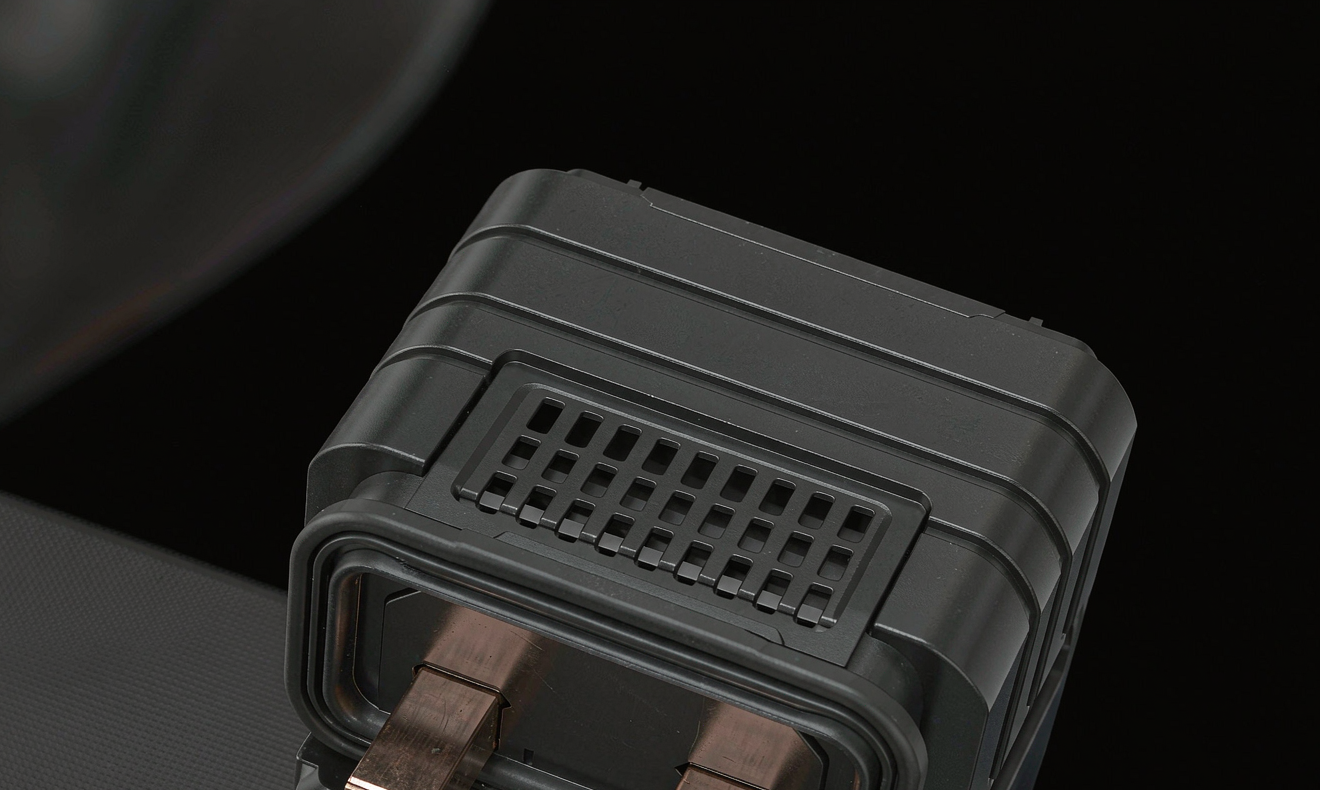
Cooling is mostly passive: a finned pack shell and a gap between cells and the motor housing do most of the work. I avoid sealing the pack so tightly that heat traps, but I never sacrifice ingress protection to get airflow. The balance is a vent path that equalizes pressure and sheds heat without inviting sawdust inside.
Ingress Protection and Jobsite Durability
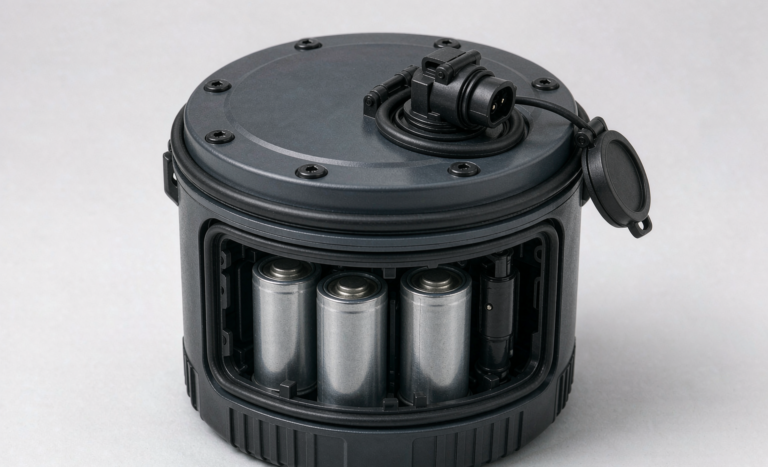
Sawdust, bar oil, and rain are the enemies of any battery contact. I specify at least an IPX4 rating for the pack shell and a gasket-sealed cell compartment, plus gold-flashed or nickel-plated terminals to resist the mild corrosion from oil vapor. A pressure-equalization membrane keeps the enclosure from ballooning in summer heat while blocking dust. The connector latches must survive being yanked off a frozen rail at minus 10 degrees Celsius, because that is exactly when a rental customer will abuse it.
Drop testing is where cheap packs die. I drop prototypes from 1.5 meters onto concrete on each face and then re-run the pulse test; if the internal resistance shifts by more than a few milliohms the mechanical design goes back to the drawing board. These are the unglamorous details that decide whether a pack survives a season.
Certifications and Safe Transport
Every pack we ship carries UN38.3 certification, the baseline for air and ground transport of lithium cells, and complies with IEC 62133 for portable sealed cells. For the European market we document CE marks, and for North America we align the smart BMS with the relevant FCC emissions limits. If a fleet operator flies saws between job sites, the FAA and EASA rules on spare lithium batteries in carry-on baggage apply, and a clearly labeled pack with the correct watt-hour stamp makes the checkpoint painless rather than a confiscation.
Frequently Asked Questions
How many cuts can a cordless chainsaw battery deliver per charge?
On a 40 volt 4 ampere-hour pack you can expect roughly 20 to 30 cuts through 150 millimeter hardwood before the voltage sags and a short cool-down is needed. Runtime scales directly with ampere-hour rating and falls in cold weather.
Is NMC or LFP better for a cordless chainsaw?
NMC is lighter and suits premium homeowner saws, while LFP runs cooler, lasts longer, and resists abuse, making it the better choice for daily professional or rental use despite the extra weight.
Why does my chainsaw battery cut out under heavy load?
The battery management system is protecting the cells from overcurrent or over-temperature. A spike above the rated pulse current, or a pack temperature past about 60 degrees Celsius, triggers a temporary shutoff until things cool.
What voltage platform should I choose for a new saw?
For occasional yard work an 18 or 20 volt platform is enough, but for thick hardwood or all-day work a 36 or 40 volt pack delivers the watts needed without excessive current sag.
Can I fly with a spare chainsaw lithium battery?
Yes, under FAA and EASA rules spare lithium-ion batteries must travel in carry-on baggage, protected from short circuit, and within the watt-hour limits printed on the UN38.3 label.
How should I store a chainsaw battery in winter?
Store it at about 40 to 60 percent state of charge in a dry space above freezing. A fully charged or fully empty pack degrades faster in cold storage, and a periodic top-up every few months keeps the cells balanced.
Further Reading
References