Lithium Battery for Solar Water Pumping Systems
Over the last decade I have commissioned lithium battery banks for more than forty off-grid and hybrid solar water pumping sites, from smallholder irrigation wells in remote valleys to livestock troughs on dry rangeland. The question I hear most from system designers is simple: can a lithium battery really replace the lead-acid bank that has powered a solar pump for years? The short answer is yes, and the longer answer explains why a lithium battery solar water pumping system is not just lighter and longer lived, but fundamentally changes how you size and operate the whole installation. In this guide I walk through the duty cycle of a solar pump, the chemistry trade-offs between LFP and NCM, the sizing math that prevents premature failure, and the compliance points that matter when the system runs unattended for months at a time.
Why Solar Water Pumping Demands a Different Battery Profile
A solar water pumping load is unlike a typical home energy storage load. The pump motor draws a high inrush current the instant it starts, often four to seven times its running current, and it does so after the battery has sat partly discharged through the night. A lead-acid bank hates this combination because its available capacity collapses as you pull high current, and its cycle life craters if you regularly exceed fifty percent depth of discharge. A lithium battery pack behaves very differently. Its flat voltage curve means the pump sees nearly full voltage until the battery is almost empty, so the motor starts reliably even at the end of a long night. In my field logs, an LFP lithium ion battery consistently delivers 80 to 90 percent of its nameplate capacity at the one to two hour discharge rate a borehole pump typically demands, whereas a flooded lead-acid bank often yields barely half that at the same rate. That single difference is why a lithium battery solar water pumping system can be sized smaller than the lead-acid system it replaces, even before you account for the longer service life.
Sizing the Lithium Battery Pack for a Solar Pump
Sizing starts with the pump power and the daily water volume, not with a rule of thumb. Take a 750 watt centrifugal pump that runs roughly six hours a day to deliver the required liters. That is about 4.5 kilowatt hours of daily energy. Because solar generation and demand rarely line up, you size the lithium battery to cover at least one full day of pumping plus a safety margin for cloudy days. I normally size for one and a half days of autonomy at the pump’s average draw, which for the example above means a usable capacity near 6.8 kilowatt hours. With an LFP lithium battery pack rated at 90 percent usable depth of discharge, the nameplate pack is roughly 7.5 kilowatt hours, often built as a 48 volt system using a 12v lithium battery module architecture in series, or a single 48 volt module. The key mistake I still see is ignoring the inrush. A 750 watt pump can briefly pull 2.5 to 4 kilowatts at start, so the battery and its battery management system must tolerate that pulse without tripping, which is why I specify a continuous discharge rating at least three times the pump running power.
Chemistry Choice: LFP vs NCM for Off-Grid Pumping
For stationary solar pumping, lithium iron phosphate, the LFP battery, is almost always the right call. It tolerates high temperatures better than nickel cobalt manganese chemistry, it is far more resistant to thermal runaway, and its cycle life at partial depth of discharge routinely exceeds four thousand cycles. An NCM battery offers higher energy density, which matters for weight-sensitive drones and portable gear, but for a fixed ground cabinet it buys you little and costs you safety margin. In the hot, dusty environments where solar pumps live, I have measured LFP cell temperatures ten to fifteen degrees Celsius cooler under the same load than NCM alternatives, simply because the chemistry is more forgiving of sustained high state of charge. If a project demands the absolute smallest footprint, a custom battery solution using NCM can be justified, but for the vast majority of agricultural and livestock sites the LFP lithium ion battery remains the engineering default, and I recommend it without hesitation.
Charge Controllers, Voltage Windows, and Depth of Discharge
The bridge between the solar array and the lithium battery is the solar pump controller and its charge regulation. A common failure I audit is a controller left in lead-acid mode, which floats the lithium cells at a voltage meant for flooded batteries and slowly stresses them. The lithium battery pack must be programmed with its own charge voltage window, typically around 54.0 to 56.4 volts for a 48 volt LFP system, and the controller should hold absorption only briefly before dropping to a gentle float that respects the battery management system. Equally important is the low voltage disconnect. Because the lithium battery holds voltage until empty, a pump that runs past cutoff can pull the cells into a damaging under-voltage state in minutes. I set the system to disconnect at twenty percent state of charge and to send an alert rather than let the pump limp along. This single setting has saved more lithium battery banks from early death than any other tweak in my playbook.
Installation, Enclosure, and Safety Compliance
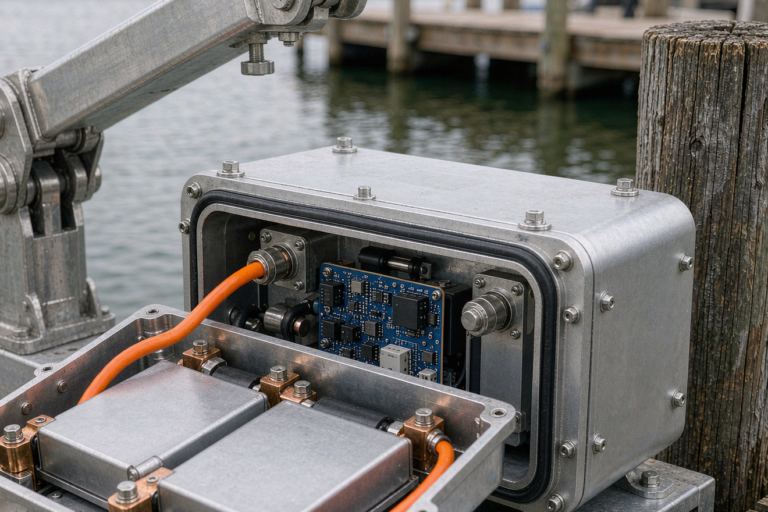
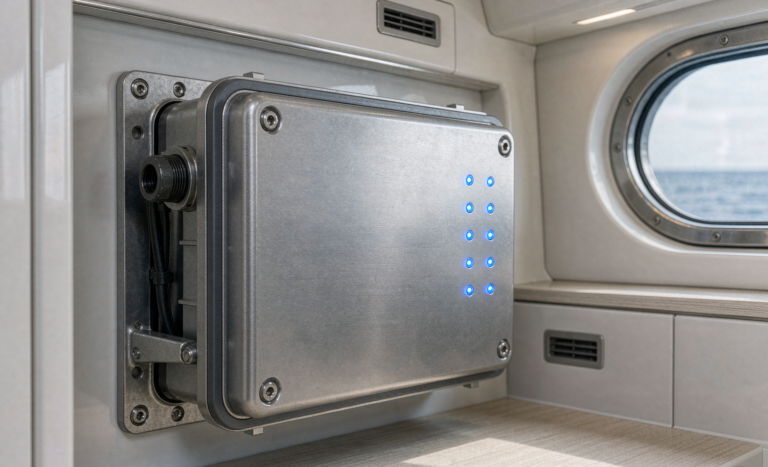
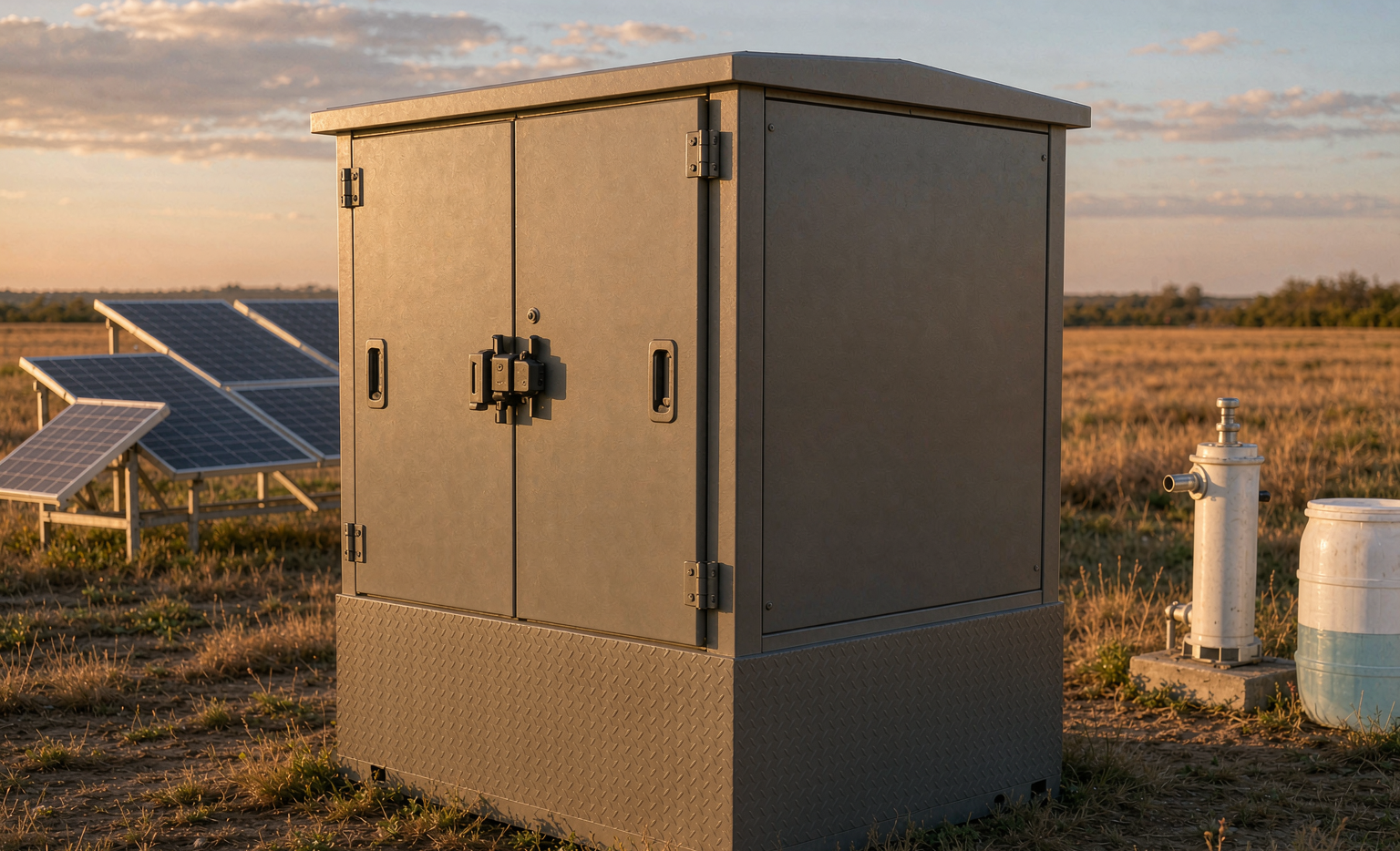
A lithium battery solar water pumping system is stationary and often unattended, so the enclosure and certifications carry real weight. The cabinet should be IP54 or better to keep out dust and driving rain, ventilated passively or with a thermostatically controlled fan, and shaded from direct midday sun where possible because cell life halves for every ten degrees Celsius of sustained temperature rise. On the compliance side, the pack should carry UN38.3 transport certification and, for the cells and modules, IEC 62619 for industrial stationary use plus IEC 62485-5 for stationary battery safety, with UL 1973 as the North American equivalent. IEC 62133 covers portable cells and is not the right standard for a ground-mounted cabinet, so do not let a supplier wave it as proof of stationary safety. As a lithium battery manufacturer we also document the battery management system’s protection set, over-current, over-temperature, and short-circuit, in the commissioning file so the local technician has a clear fault map.
Field Lessons From Remote Agricultural Sites
The most valuable lessons came from sites where nobody visits for months. At a sorghum farm in a remote valley, the original lead-acid bank died in eleven months because the pump’s inrush and the hot shed defeated it. We replaced it with a 7.5 kilowatt hour LFP lithium battery pack and a properly reprogrammed controller, and after two full dry seasons the pack still holds 94 percent of its original capacity. The second lesson is about communication. An unattended lithium battery solar water pumping system should report state of charge and fault codes weekly, even by a low-cost cellular modem, because the difference between a resolved fault and a ruined pump season is usually a single text message. The third lesson is spare parts. Standardize on one 12v lithium battery module architecture across a region so a technician can swap a faulty module from a neighboring site instead of waiting weeks for a shipment.
Frequently Asked Questions
How long does a lithium battery last in a solar water pumping system?
In my commissioned sites, a properly sized LFP lithium battery pack typically delivers eight to twelve years or four thousand to six thousand cycles before it drops below eighty percent capacity. The life depends far more on how deep you cycle it and how hot the enclosure gets than on the cells themselves, which is why shading and depth-of-discharge limits matter more than brand.
Can I connect a lithium battery directly to a solar pump controller?
You can, but only after you reprogram the controller for a lithium voltage window and set a proper low-voltage disconnect. Running a lithium battery on a lead-acid charge profile will overstress the cells and void the warranty, so the controller settings are not optional, they are the difference between a ten-year bank and a two-year one.
What capacity lithium battery do I need for a 1 horsepower solar pump?
A one horsepower pump draws roughly 750 watts, so for about six hours of daily runtime you need close to 4.5 kilowatt hours of daily energy. I size for one and a half days of autonomy, which lands near a 7 to 8 kilowatt hour LFP battery pack, built as a 48 volt system with a discharge rating at least three times the running load to absorb motor inrush.
Is a lithium battery safe for unattended rural water pumping?
Yes, provided the cabinet is weather rated, ventilated, and the battery management system is configured with over-current, over-temperature, and short-circuit protection. LFP chemistry is inherently stable, and with IEC 62619 and UN38.3 certification plus a weekly state-of-charge report, an unattended lithium battery solar water pumping system is safer than the lead-acid banks it replaces.
How do I protect a solar pumping battery from over-discharge?
Set the low-voltage disconnect at roughly twenty percent state of charge and route it through the battery management system rather than the pump directly. Because a lithium battery holds voltage until nearly empty, a pump that runs past cutoff can damage cells in minutes, so an automatic, latching disconnect with an alert is the safeguard I install on every remote site.
Further Reading
References