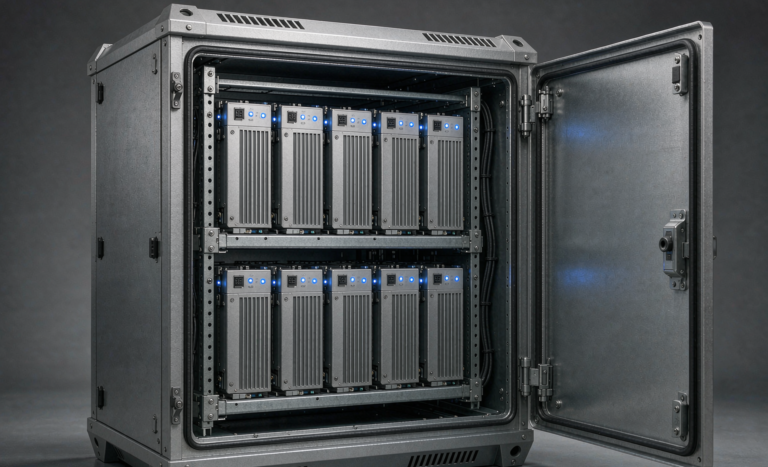
Lithium Battery for Telecom Backup
When a cell tower loses grid power, everything downstream goes dark: the baseband unit, the remote radio heads, the transmission gear, the alarm system. In my fifteen years specifying lithium battery systems for carriers and tower companies, I have seen a single weak backup string take an entire district offline during a storm. That is why the 48V telecom backup bank is one of the most unforgiving designs an engineer will ever sign off on. There is no second chance, no operator on site, and often no climate control. The battery has to work, silently, for years.
This guide walks through how we at Horizon Power size, build, and certify a 48V lithium battery telecom backup system — from the Ah math to the BMS telemetry to the safety standards a buyer should actually verify before the truck rolls. If you are an OEM, a towerco procurement lead, or a systems integrator, treat this as the field notes I wish every RFQ included.
Why the Telecom World Standardized on 48V
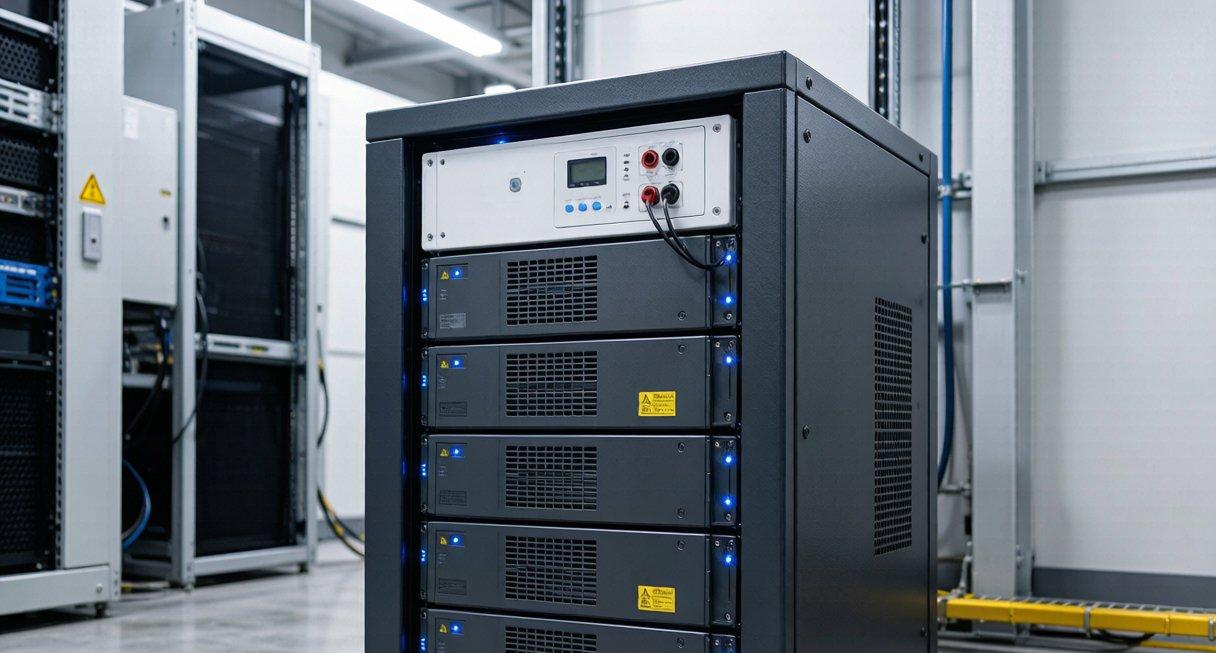
The -48V DC bus is a legacy of early telephone exchanges, chosen because a nominal 48V string sits safely below the 60V SELV (safety extra-low voltage) threshold while still allowing long cable runs with acceptable losses. Lead-acid plants used 24 cells in series. When we migrate to a lithium battery replacement, we keep the same 48V architecture so the existing rectifiers, distribution frames, and low-voltage disconnect (LVD) controllers don’t have to be ripped out.
Two common lithium configurations appear in the field. A 15S LiFePO4 pack gives a nominal 48.0V (15 × 3.2V), with a working window of roughly 40–54.75V. A 16S pack gives a nominal 51.2V, which many modern rectifiers treat as the preferred float target. We almost always match the cell count to the customer’s rectifier profile rather than forcing the battery to fit the math. Getting this wrong means the charger either never fully tops the pack or constantly trickle-charges past absorption — both quietly destroy cycle life.
Sizing a 48V Lithium Backup Bank: The Ah and Runtime Math
Sizing starts with load, not battery. A typical macro site pulls 1.5–3 kW continuously once you add the BBU, RRUs, and microwave/optical transport. A rural site with diesel genset support may only need 4 hours of bridging; a critical hub with no genset may be specified for 24 hours. The runtime equation is straightforward:
- Energy needed (Wh) = Load (W) × Backup hours × Design margin (typically 1.15–1.25).
- Usable capacity (Ah) = Energy needed ÷ Nominal pack voltage ÷ Allowed depth of discharge (DoD).
- Rated Ah = Usable Ah ÷ DoD. At 80% DoD, a 2.5 kWh usable bank at 51.2V needs about 61 Ah rated; at 90% DoD, about 54 Ah.
As a concrete example: a 2 kW site needing 6 hours at 20°C, with a 1.2 margin and 80% DoD on a 51.2V lithium battery pack. Energy = 2000 × 6 × 1.2 = 14,400 Wh. Usable Ah = 14,400 ÷ 51.2 ÷ 0.8 = 351 Ah. That is a 48V 350Ah bank, or roughly four 100Ah modules wired in parallel. We always round the parallel count up and leave 5–10% headroom for cable losses and connector resistance, which the spec sheet never mentions but the field always feels.
LFP vs NCM for Telecom Cabinets: Why LFP Wins
For stationary backup, lithium iron phosphate (LFP) is the default chemistry and has been for a decade. The reasons are practical, not academic. LFP offers 3000–6000 full cycles at 80% DoD, a thermal runaway onset near 270°C versus roughly 150°C for nickel-cobalt-manganese (NCM), and essentially flat voltage across most of the discharge curve, which simplifies SoC estimation. An NCM lithium-ion battery can deliver higher energy density, but in a vented cabinet where weight is irrelevant and safety is everything, that advantage is a liability.
We still quote NCM where space is genuinely constrained — a wall-mounted cabinet in a dense urban node, for instance — but the default answer to “which chemistry” is LFP. The LFP battery also tolerates the partial-state-of-charge abuse that backup duty dishes out: a telecom pack may sit at 95% for months, take a shallow discharge, and recharge. NCM hates that profile; LFP shrugs it off. Self-discharge below 3% per month means a site idle through a quiet season still has its reserve when the next outage hits.
BMS and Telemetry: Keeping a Remote Site Honest
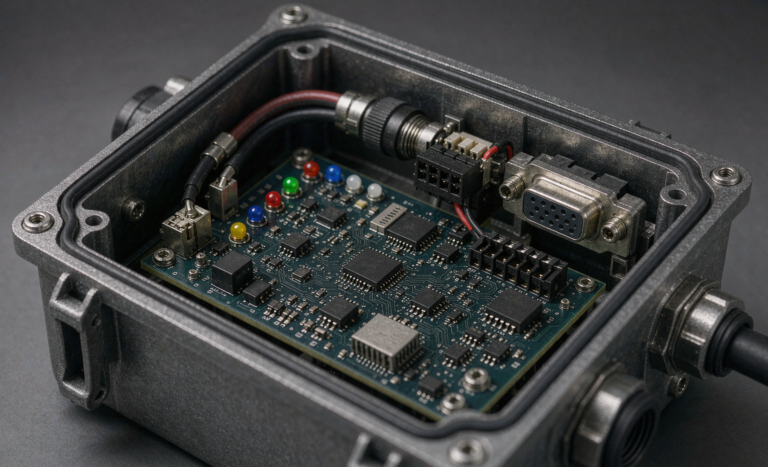
A backup battery you cannot see is a backup battery you cannot trust. The BMS solution in a 48V telecom bank does far more than protect cells. It measures per-module voltage and temperature, balances the series string, manages the LVD, and — critically — reports state of charge (SoC) and state of health (SoH) to the site controller over RS485, CAN bus, or SNMP.
- Cell balancing: passive balancing at 50–100 mA is adequate for backup; active balancing only pays off in high-cycle duty.
- SoH tracking: capacity fade against the original baseline, flagged automatically before it drops below the contracted threshold.
- Remote alarm: a stuck LVD, a swollen module, or a failed fan should page the NOC, not wait for the next site visit.
- Charge control: the BMS tells the rectifier when to stop, preventing the chronic overcharge that kills lead-acid and silently ages lithium.
In one regional deployment we audited, three of forty sites had BMS units reporting 30% capacity loss that the legacy monitoring never surfaced because the old system only read pack voltage. Voltage lied; the BMS knew. After we standardized on telemetry-reporting packs, unplanned overnight outages from “full” batteries dropped to near zero.
Thermal Envelope and Site Environment
Telecom cabinets live everywhere: desert nodes at 55°C, alpine sites at -40°C, coastal shelters thick with salt fog. The pack must match the environment class, not the brochure. We design to ETSI EN 300 019 environmental classes and specify the cabinet ingress rating accordingly — typically IP55 for outdoor cabinets, with the battery module itself rated to at least IP20 internally.
At temperature extremes, the BMS enforces charge and discharge limits. Below 0°C we inhibit charging entirely unless the module includes self-heating; above 45°C we taper the charge current. These are not optional niceties. A lithium-ion battery charged below freezing without heating develops lithium plating that is permanent and dangerous. For cold-region sites we either specify heated cabinets or heated modules, and we document the warm-up time in the acceptance test so operators know the bank is “soft” for the first minutes after a cold start.
Certifications and Safety Every Buyer Should Verify
A 48V backup bank is a stationary energy store, so the certification stack differs from a drone pack, but the foundation is the same. Before any shipment, the cells must clear UN38.3 for transport and IEC 62133 for cell-level safety. For the assembled lithium battery pack in stationary duty, insist on IEC 62619 (industrial battery safety) and, for the North American market, UL 1973 (stationary storage) plus UL 9540A (fire propagation evaluation). CE marking and EMC to IEC 61000 round out a defensible package.
I tell every buyer: ask for the test report, not the certificate thumbnail. A real IEC 62619 report names the exact cell model and configuration. If the vendor hedges, that is your answer. We publish ours alongside the datasheet because a battery in an unattended cabinet is a long-term liability, and the certification is the only thing standing between a quiet night and a fire investigation.
From Prototype to Certified Volume: Working With a custom battery solution Provider
No two sites are identical. Cabinet volume, rectifier float voltage, alarm protocol, and backup hours all vary, which is why most serious deployments start from a custom battery solution rather than an off-the-shelf box. The right partner runs a disciplined path: EVT to prove the electrical and thermal concept, DVT to validate against the environmental and certification stack, and PVT to lock the production process before volume shipment.
In our practice the RFQ we want to receive lists load profile, backup hours, ambient range, cabinet dimensions, communication protocol, and the required certifications by market. Hand us those and we return a pack that drops into the existing 48V bus without a single field modification. Hand us a vague “send a 48V battery” and we will still help — but the first article will be a learning unit, not the production unit.
Frequently Asked Questions
How long will a 48V lithium telecom backup last during a grid outage?
Runtime is purely a function of load and capacity. A 51.2V 100Ah lithium battery bank holds about 5.1 kWh usable at 80% DoD. At a 1 kW load that is roughly 4 hours; at 3 kW it drops to about 1.3 hours. Size the Ah to the site’s actual load and required bridge time, then add a 15–25% margin.
Can I mix new and old lithium battery packs in the same 48V string?
Avoid it. Parallel modules with different internal resistance and SoH force the stronger pack to carry the weaker one, accelerating imbalance and hiding capacity loss. If you must expand, keep each parallel branch matched in model, age, and cycle count, and let the BMS manage crossing currents.
What is the typical cost premium of a 48V lithium backup over lead-acid?
Upfront, a lithium-ion battery bank often costs two to three times the VRLA it replaces. Over a ten-year horizon it usually wins on total cost of ownership: 3–6× the cycle life, near-zero maintenance, no equalize charging, and far less floor weight. For hard-to-reach sites, the truck-roll savings alone pay back the premium.
Do 48V lithium telecom batteries need ventilation or cooling?
Not like lead-acid. LFP emits no gassing and minimal heat at backup C-rates, so many cabinets run naturally vented. Active cooling is only needed in hot climates or high-cycle duty. The bigger environmental job is keeping the pack within its charge-temperature window, which the BMS handles through current limiting and, on cold sites, self-heating.
How do I size the charger for a 48V lithium backup bank?
Size the rectifier for the load plus recharge current. A common rule is 0.2C to 0.5C for recharge — so a 100Ah bank wants 20–50A of available charge current after the load is served. The BMS caps the actual current, so overspecifying the rectifier only helps recover faster after a deep discharge.
Which certifications matter most for shipping a 48V lithium battery pack internationally?
At minimum, UN38.3 for transport and IEC 62133 for the cells. For the assembled stationary pack, IEC 62619 is the global baseline, with UL 1973 and UL 9540A required for the U.S. market. Your custom battery solution provider should hand you the test reports, not just a certificate image, before the first container leaves the factory.