Lithium Battery Recycling Process
Every lithium battery I have signed off on the factory floor eventually comes back to us as a responsibility, not just a product. After fifteen years as a lithium battery engineer at Horizon Power, I have watched the conversation shift from “how do we build more capacity” to “what happens to the cells when they retire.” The numbers make the urgency clear: a single electric-vehicle pack can hold 8 to 12 kilograms of lithium, 30-plus kilograms of nickel, and meaningful cobalt and manganese. Throwing that into a landfill is both an environmental failure and a supply-chain own-goal. In this field guide I walk through the lithium battery recycling process the way we evaluate it for our own production lines and for the custom battery solution programs we run with OEM clients — focusing on how critical materials are actually recovered, and what an engineer should verify before trusting a recycler.
Why Recycling Has Become a First-Order Engineering Problem
When I started in cell manufacturing, end-of-life was somebody else’s problem — usually a vague “take-back scheme” that few people audited. That has changed for three hard reasons. First, the raw-material economics: cobalt and nickel prices have swung violently, and a recycler that returns battery-grade salt is now a strategic supplier, not a waste handler. Second, regulation: the EU Battery Regulation and similar frameworks in China and North America now demand documented material recovery rates and carbon-footprint declarations. Third, the volume curve — the first wave of LFP battery and NCM battery packs from the early 2010s is hitting retirement at scale, and drone,储能, and mobility programs are adding to it.
From an engineering standpoint, recycling is no longer a disposal step. It is the back end of a closed design loop. The decisions we make in cell selection, welding method, and BMS solution firmware directly determine how cleanly a pack can be taken apart and how pure the recovered material will be.
The Physical Pre-Treatment Line: Discharge, Shred, Sieve
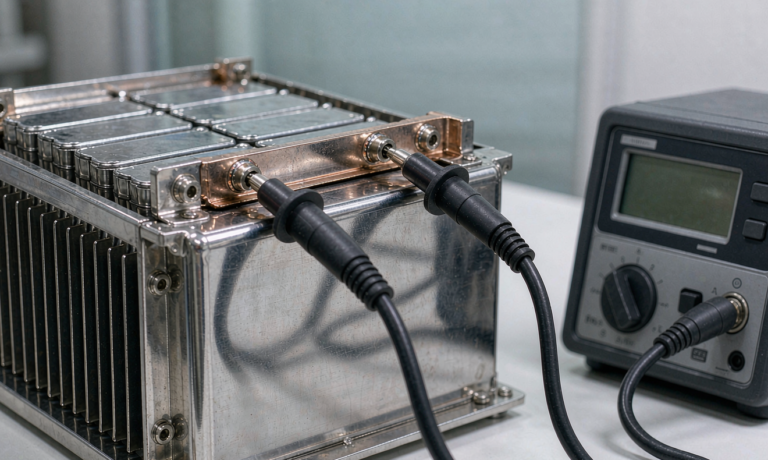
Before any chemistry happens, the pack must be made safe. A retired lithium battery pack still holds real energy, and puncturing a charged cell is how fires start. The standard sequence we specify for our incoming streams is:
- Full discharge and stabilization. Packs are discharged to a safe voltage window (typically below 1 V per cell for LFP chemistries) under controlled load, often using the BMS solution telemetry to confirm state of charge.
- Mechanical dismantling. Modules are separated from enclosures, cooling plates, and wiring harnesses. Manual teardown recovers high-value, low-contamination parts — busbars, aluminium trays, and intact modules.
- Shredding and size reduction. Cells are shredded in an inert (nitrogen) atmosphere to suppress oxidation. The output is a granular mix of foil, plastic separator, and active material.
- Sorting by density and magnetism. Air classification, sieving, and magnetic separation split the stream into fractions: aluminium and copper foil, plastic, and the dense powder we call black mass.
In our experience, the cleanliness of this pre-treatment step sets the ceiling on final recovery purity. A custom battery solution designed with snap-fit enclosures and minimal adhesive is dramatically easier to dismantle than one welded into a sealed brick.
Hydrometallurgy vs Pyrometallurgy: Where the Materials Come Back
There are two dominant routes to recover the metal value, and buyers should understand the trade-off because it affects the carbon story and the lithium yield.
Pyrometallurgy smelts the shredded feed at 1,200–1,500 °C. It is robust and tolerant of mixed feedstock, and it recovers cobalt and nickel into an alloy. The downside: lithium and aluminium are largely lost to slag, and the energy and emissions footprint is significant. Most legacy recyclers are pyro-first.
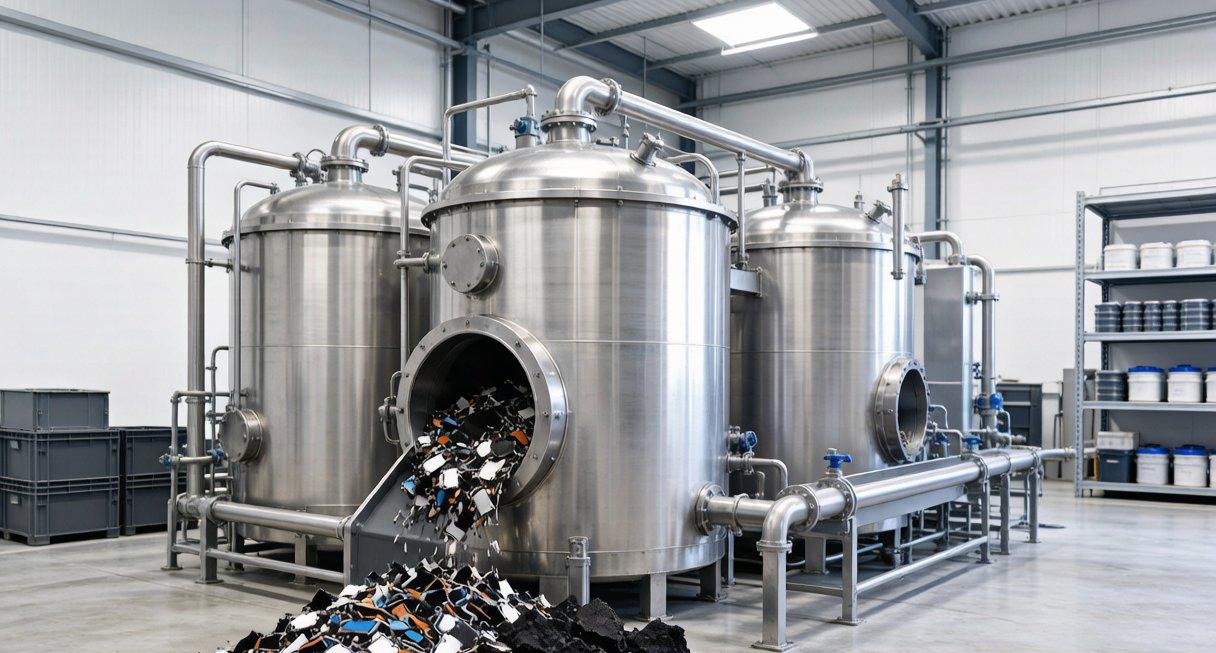
Hydrometallurgy leaches the black mass in acid or alkaline solutions, then selectively precipitates or electrowins individual metals. A well-run hydromet route recovers lithium, nickel, cobalt, and manganese separately at high purity — often battery-grade. The catch is feedstock consistency: the leach chemistry must be tuned to the cathode type (an NCM battery stream behaves differently from an LFP battery stream).
The direction of travel is clear. New capacity coming online in 2026 leans hydrometallurgical, frequently with a direct-recycling prep step that preserves the cathode crystal structure. For a lithium battery engineer specifying sustainable supply, hydromet recovery of lithium is the metric that matters most.
What “Black Mass” Really Contains (and Why Grade Matters)
Black mass is the fine dark powder left after foils and plastics are removed. Its value depends entirely on the source chemistry. A typical NCM-811 black mass might contain 10–12% nickel, 5–8% cobalt, 1–2% lithium, and 5–10% manganese by weight. An LFP battery black mass is cobalt-free but still carries 3–4% lithium and iron-phosphate that can be regenerated.
Why does grade matter to an engineer? Because the economics of a lithium battery recycling process live or die on the assay. A mixed, poorly sorted feed produces a “blended” black mass that is hard to leach cleanly and yields off-spec salt. That is why we push OEM partners toward chemistry-segregated collection: keep NCM streams away from LFP, keep prismatic separate from pouch. Clean sorting upstream is cheaper than purification downstream.
Recovering the Critical Materials: Cobalt, Nickel, Lithium, Manganese
In a hydromet plant, the recovered salts come out roughly in this order:
- Copper and aluminium are stripped first as base metals — easy wins that offset operating cost.
- Nickel and cobalt are precipitated as hydroxides or sulfates. These command the highest value and are the primary revenue driver for recycling an NCM battery pack.
- Lithium is recovered later in the flow, often as lithium carbonate or lithium hydroxide. This is the step legacy pyro plants skip, and it is the one that closes the loop for new cell production.
- Manganese from high-voltage and LMO blends is recovered as sulfate for reuse or sold to adjacent industries.
What I tell procurement teams: ask for the recovery rate on each metal, not a single blended number. A vendor advertising “95% recovery” may be counting copper while losing most of the lithium. For a credible lithium battery recycling critical materials claim, insist on documented lithium recovery above 80% and cobalt/nickel above 95%.
Designing Packs for Recyclability: A BMS Solution Perspective
The cheapest recycling decision is made at the design stage. Three things we bake into every custom battery solution we ship:
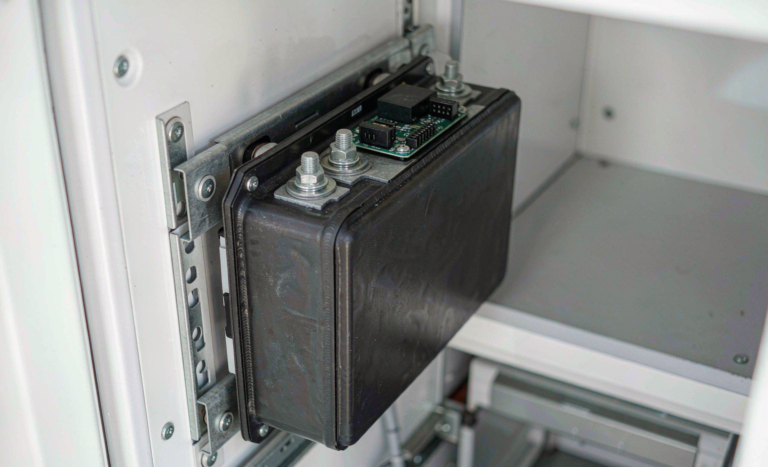
- Design for disassembly. Mechanical fasteners over potting; labelled module boundaries; accessible busbars. A pack that takes 20 minutes to open is far more likely to be properly recycled than one that must be cut apart.
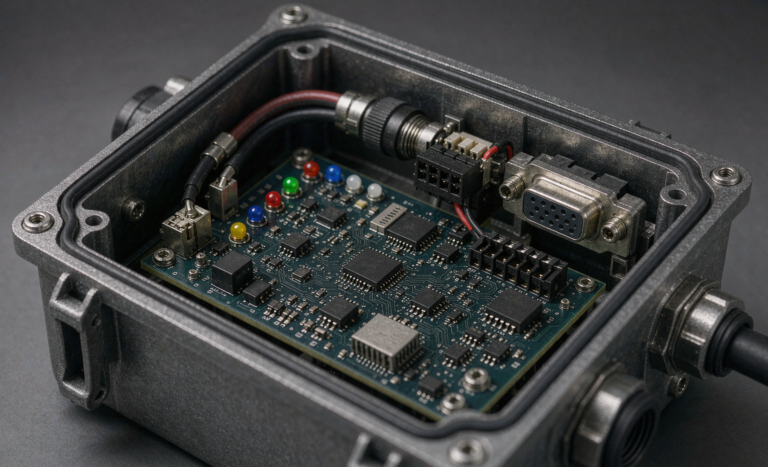
- State-of-health data. A BMS solution that logs cycle history and SOH lets a recycler grade the pack before shredding — second-life modules get diverted, only true end-of-life goes to black mass.
- Material passport. Embedding the cathode chemistry, cell count, and approximate metal content in the pack documentation (ideally readable by the recycling line) turns a mystery brick into a known, sortable feedstock.
These are not nice-to-haves. They are what let a lithium battery pack re-enter the supply chain as battery-grade feed rather than contaminated scrap.
What a Buyer Should Verify in a Recycling Partner
If you are an OEM vetting a take-back or recycling vendor, here is the short checklist I use:
- Documented recovery rates per metal, with third-party assay of output salts.
- Compliance with UN38.3 transport rules for moving spent cells, and local hazardous-waste licensing.
- Process route disclosed (hydro vs pyro) and whether lithium is actually recovered.
- Traceability: can they show where your material ended up, ideally back into cell production?
- Safety record and inert-atmosphere handling for the shred step.
A credible partner should also be comfortable discussing the carbon intensity of their process — because that is increasingly what your own ESG report will be graded on.
Frequently Asked Questions
Can all lithium battery chemistries be recycled the same way?
Not economically. An LFP battery pack and an NCM battery pack need different leach chemistry. LFP has no cobalt to recover, so its value comes from lithium and iron-phosphate regeneration; NCM’s value is cobalt and nickel. That is why chemistry-segregated collection matters more than a single “one-size” process.
Is lithium actually recovered, or just cobalt and nickel?
In modern hydrometallurgical lines, yes — lithium is recovered as carbonate or hydroxide, typically above 80% yield. Older pyrometallurgical smelters largely lose the lithium to slag. When you evaluate a lithium battery recycling critical materials claim, confirm the route and the lithium-specific recovery rate.
What is the difference between recycling and second-life use?
Second-life means the pack (or module) still has enough capacity — say 70–80% SOH — to serve a less demanding role like stationary storage. True recycling recovers the raw metals. A good BMS solution with SOH logging helps route each pack to the higher-value path first.
How pure are the recovered materials?
Battery-grade nickel sulfate, cobalt sulfate, and lithium carbonate from a well-run hydromet plant meet the same specs cell makers buy from mines. That is the whole point of hydrometallurgy over smelting.
Does recycling a lithium battery pack really save carbon?
Yes, when the recovered metal replaces virgin mining and refining. The biggest savings come from avoiding virgin nickel and cobalt production, which are energy-intensive. The benefit shrinks if the recycler uses a high-heat pyro route with no lithium recovery, which is why process choice matters.
What should an OEM put in a battery passport?
At minimum: cathode chemistry, cell format and count, nominal capacity, approximate metal content, and cycle/SOH history. That information lets a recycler sort and leach correctly instead of guessing — and it is becoming a regulatory expectation, not a bonus.