Lithium Battery Pack Vibration and Shock Qualification Testing
As a lithium battery engineer I have watched more packs fail on a test shaker than from any chemistry defect. Vibration and shock are the quiet killers of a lithium battery pack in the field: a cell that is perfect on the bench can open its weld, crack a busbar, or chafe an insulation layer after a few weeks of rough service. At Horizon Power we treat vibration and shock qualification as a first-class design gate, not a checkbox at the end of the line. This article walks through how we qualify a lithium battery pack for real-world mechanical abuse, the standards we cite, and the failure modes we design out before a unit ever ships.
Why Vibration and Shock Kill Packs Before Cells Ever Fail
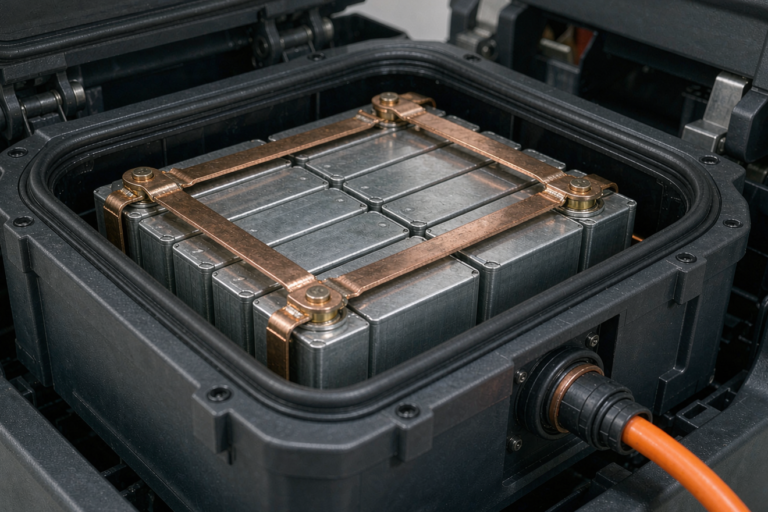
A lithium battery pack is a stack of stiff and soft parts bolted to something that moves. Cells are rigid, busbars are rigid, and the enclosure is rigid, but the joints between them carry every micro-strain the platform throws at the assembly. In steady driving that strain is small. In a pothole, a hard landing, or a dropped tool case it spikes to tens of g in a few milliseconds. The damage is cumulative and hidden: a weld that survives one shock may have a hairline crack that grows under the next thousand cycles of random vibration until it opens.
The failure is rarely the cell. It is the pack. A swollen or cracked lithium battery pack almost always traces back to a mechanical joint that was never qualified, not to the lithium-ion chemistry itself. That is why we qualify the complete assembly, mounted at its real interface, rather than trusting cell-level certificates alone.
The Standards That Frame a Qualification Program
We do not invent profiles from intuition. A qualification program is built on a stack of recognized documents, each covering a different slice of the lifecycle.
- MIL-STD-810H Method 514.8 defines random vibration for military and rugged equipment, with tailorable PSD profiles for ground vehicular, helicopter, and jet aircraft environments.
- MIL-STD-810H Method 516.8 defines shock, including the classic half-sine pulse used for transit and crash survivability.
- IEC 60068-2-6 covers sine vibration for generic products, and IEC 60068-2-27 covers shock for the same population.
- UN38.3 Test T.3 (vibration) and T.4 (shock) are the transport safety baseline every lithium battery pack must pass before it ships by air, road, or sea.
- IEC 62133 qualifies the cells, while IEC 62619 qualifies the industrial pack and its battery management system for stationary and vehicular duty.
For a custom battery solution we usually run UN38.3 first as the legal floor, then layer MIL-STD-810 or IEC 60068 on top to match the customer’s duty cycle. A pack that only meets UN38.3 is safe to ship but not necessarily safe to mount on a utility vehicle for five years.
Random Vibration: Profiles, Grms and Frequency Bands
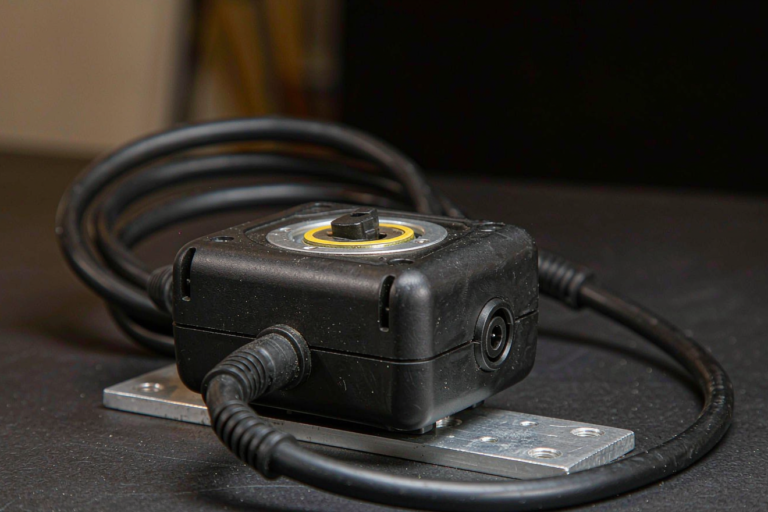
Random vibration is described by a power spectral density, or PSD, curve across frequency, and the area under that curve is the root-mean-square acceleration, Grms. The number matters more than people expect. A benign ground-vehicle profile might sit at 0.8 to 1.5 Grms from 5 to 500 Hz. A helicopter cabin mount can run 5 to 7 Grms in the same band, and a rotor-pylon location can exceed that. We always confirm the band and level with field measurements on the actual platform before we commit to a number.
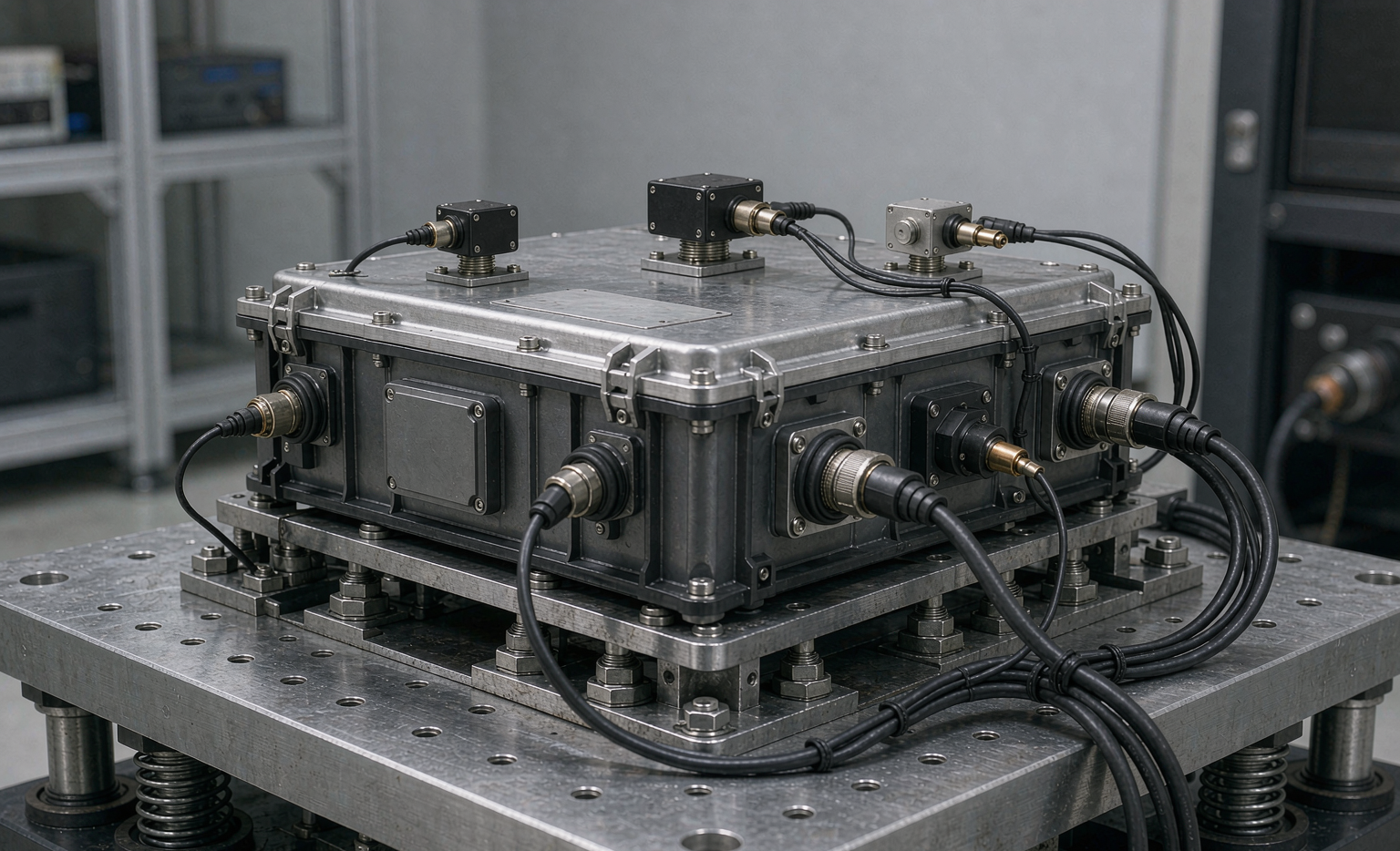
A typical run is one to two hours per axis, across three orthogonal axes, with a sweep rate of one to two octaves per minute. We log the pack voltage, case temperature, and busbar resistance at the start and end. A healthy lithium battery pack shows no shift in capacity and no rise in joint resistance after the run. If resistance climbs, a joint is loosening, and we stop and teardown rather than pass and hope.
Shock Pulses and the Mounting Interface
Shock is shorter and sharper than vibration. The workhorse shape is the half-sine pulse: for MIL-STD-810H we often use 30 to 40 g for 11 milliseconds, applied as three pulses in each direction of each axis, positive and negative. IEC 60068-2-27 uses a similar half-sine but allows higher g and shorter duration, such as 100 g for 6 milliseconds, for products expected to survive a hard drop.
The mistake teams make is mounting the pack on a generic plate instead of its true interface. A pack bolted to a thick steel fixture behaves nothing like the same pack hung on a thin aluminum bracket with compliant grommets. We fixture at the real mounting points, with the real grommets and torque, because that is the only condition that predicts field life. A lithium battery pack qualified on a rigid block will surprise you the first time it meets a flexible frame.
A Qualification Flow We Run at Horizon Power
Our internal flow is deliberately boring, because boring is repeatable. For each new lithium battery pack design we do the following.
- Define the duty environment from the customer’s application: on-road, off-road, airborne, handheld, or seaborne.
- Adopt or measure a PSD profile and a shock pulse that matches that environment, citing the standard.
- Build a fixture that replicates the real mounting interface, including grommets and torque values.
- Pre-condition the pack to 50 percent state of charge and ambient temperature, the worst case for mechanical stress on terminals.
- Run random vibration on three axes, then shock on three axes, with a functional check between stages.
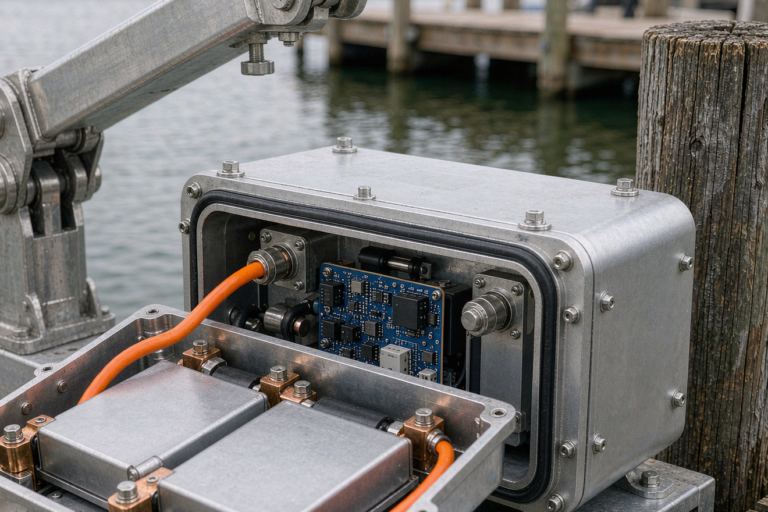
- Teardown the pack and audit every weld and busbar with X-ray and torque verification.
Acceptance is strict. No venting, no external heat, no voltage sag beyond specification, and less than 5 percent capacity shift after the full sequence. Insulation resistance between the pack and enclosure must stay above our internal limit, typically in the low megohm range at 500 V dc. A pack that meets all six points earns its qualification record.
Failure Modes We Design Out
Qualification only pays off if you feed the results back into design. The failure modes we see most often, and the fixes we apply, are consistent across programs.
- Weld cracking at cell tabs. We move from single-spot welds to overlapping laser seams and add a structural adhesive so the joint is not the only thing carrying load.
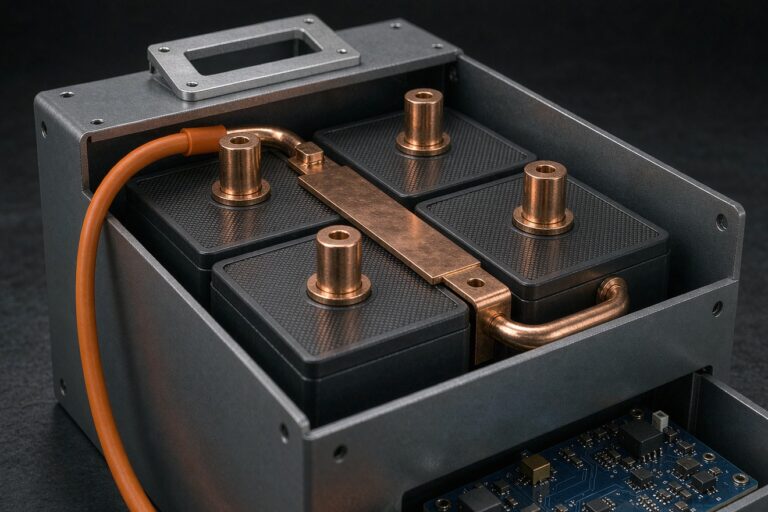
- Busbar fatigue. We route busbars with strain relief and keep them short, and we avoid long unsupported spans that ring under shock.
- Cell-to-cell rub. We insert compression mats and bonded spacers so cells cannot scuff each other and expose foil.
- Harness chafe. We clip and route sense and balance wires away from moving edges, then re-check them after the shake.
- Potting voids. We vacuum-degas potting and X-ray the result, because an air void becomes a local stress riser under shock.
None of these are expensive to fix early. They are very expensive to fix after a fleet comes back with cracked enclosures. A qualified lithium battery pack costs a little more to design and saves a field recall later.
Frequently Asked Questions
What vibration test standard applies to lithium battery packs?
For transport the legal baseline is UN38.3 Test T.3, while product qualification usually follows MIL-STD-810H Method 514.8 or IEC 60068-2-6. We pick the standard that matches the duty cycle, not just the easiest one to pass.
How do random vibration and sine-sweep vibration differ?
Random vibration excites all frequencies at once with a PSD shape and is closer to real road and rotor noise, while sine sweep steps one frequency at a time and is better for finding a pack’s resonant peaks. We use random as the qualification workhorse and sine sweep to locate resonances during development.
What shock pulse shape does MIL-STD-810 use?
The classic shape is a half-sine pulse, often 30 to 40 g for 11 milliseconds, applied as three pulses per direction on three axes. Some programs also use sawtooth or trapezoidal pulses depending on the impact source being simulated.
How many hours of vibration testing does a pack need?
A typical random-vibration run is one to two hours per axis across three axes, so three to six hours of shaking plus shock. The duration is set by the standard profile, not by a fixed clock, and we extend it for high-G helicopter or rail environments.
Can a pack pass UN38.3 without shock qualification?
No. UN38.3 includes both Test T.3 vibration and Test T.4 shock, so a compliant lithium battery pack must survive both to be shipped. UN38.3 proves it is safe to transport, not that it survives years of field service.
How does vibration testing relate to a custom battery solution warranty?
Vibration and shock qualification is the evidence behind a warranty. When we qualify a custom battery solution against the customer’s real mounting and environment, the warranty rests on measured data instead of a guess, and field returns drop sharply.
Further Reading
References