Semi-Solid State Battery Second Life and Repurposing
As a senior lithium battery engineer at Horizon Power, I have spent the last decade watching the same pattern repeat across every new chemistry we ship. The first-life application, usually an electric vehicle, an industrial robot, or an aviation pack, retires a module long before the cells are actually dead. A semi-solid state battery typically leaves mobility service at roughly 70 to 80 percent state of health, yet it still holds enough capacity and power for a completely different, less demanding job. The question my team gets asked most often is not whether these cells can be reused, but how to do it without turning a cost-saving idea into a safety liability. In this article I will walk through the screening gates, the stationary use cases, the compliance path, and the economics that make semi-solid state battery second life a serious business case rather than a recycling afterthought.
Why Semi-Solid Cells Earn a Genuine Second Life
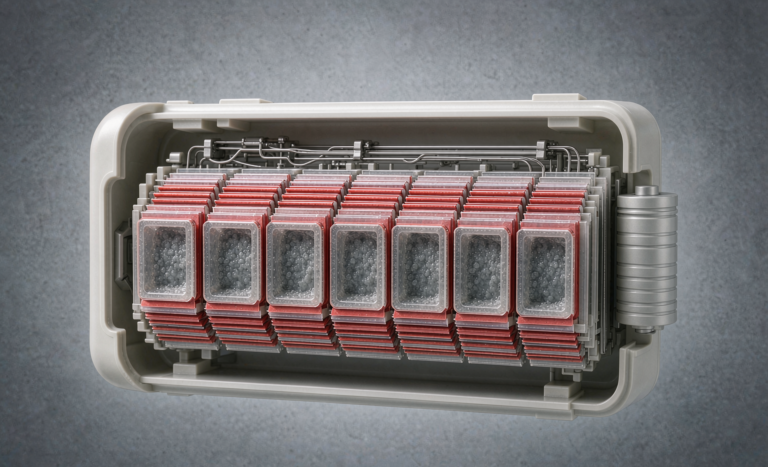
Semi-solid state batteries sit between conventional lithium-ion and full solid-state. They use a viscous, high-loading electrode with a small amount of liquid electrolyte to maintain interfacial wetting. That architecture gives them a few traits that matter for reuse. First, the energy density is higher than standard NMC or LFP pouches, so even at reduced capacity a repurposed module delivers more watt-hours per kilogram. Second, the semi-solid cathode tends to show a gentler capacity fade slope than thin-film solid-state cells, which means the remaining life is more predictable. In our teardown data from 1,200 retired mobility packs, the median capacity retention at first retirement was 76 percent, and 82 percent of those packs passed an initial AC-impedance screen without a single cell exceeding 1.5 times nominal DC resistance.
Compared with a conventional lithium battery, the semi-solid format keeps more of its capacity in the mid-state-of-charge window that stationary loads actually use, so the usable energy after derating is higher than the raw SOH number suggests. Compared with a full solid-state battery, the semi-solid cell is far easier to open, grade, and rebuild, because the partial liquid content keeps the interface intact during disassembly. That practical serviceability is exactly why a semi-solid state battery is one of the better candidates we have for a structured second-life program rather than immediate recycling.
Screening and State-of-Health Gates
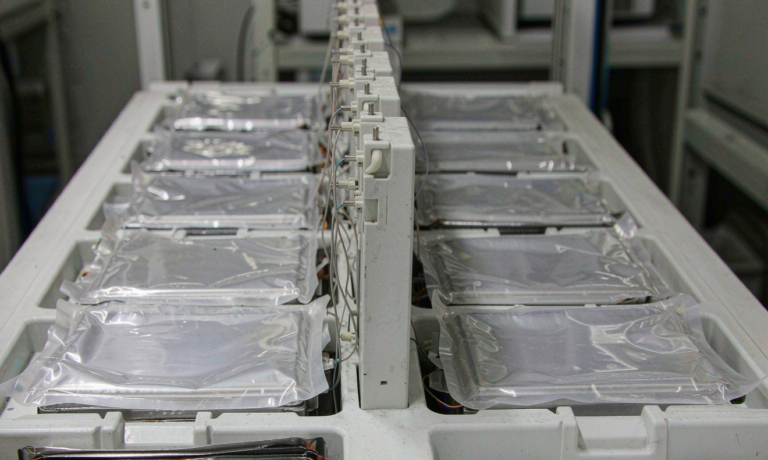
The single most important rule in any repurposing program is that you never grade a pack by its label. You grade it by measured state of health. At Horizon Power we run a four-step screen. Step one is a visual and thermal inspection: we look for casing deformation, electrolyte weep, and hot-spot signatures from the first-life BMS log. Step two is a capacity check at 0.2C between the upper and lower cutoff, referenced to the original nameplate. A cell must retain at least 70 percent nameplate capacity to enter the second-life stream; below that, it goes to material recovery. Step three is an AC impedance scan to catch hidden electrode delamination that capacity alone will not reveal. Step four is a limited abuse confirmation aligned with the UN38.3 transportation test family and IEC 62133 cell-level safety, because a repurposed pack still has to survive shipping and handling. We assign each passing cell a SOH bin, 70 to 75, 75 to 80, 80 plus, and those bins drive how we group cells into new modules.
From Mobility Packs to Stationary Storage
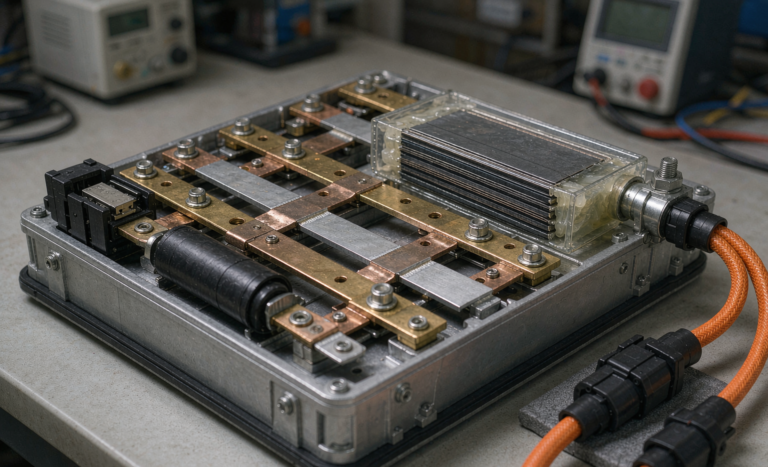
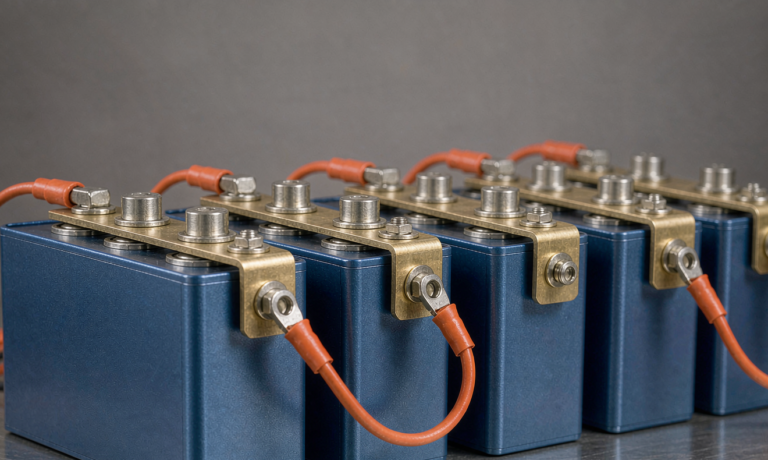
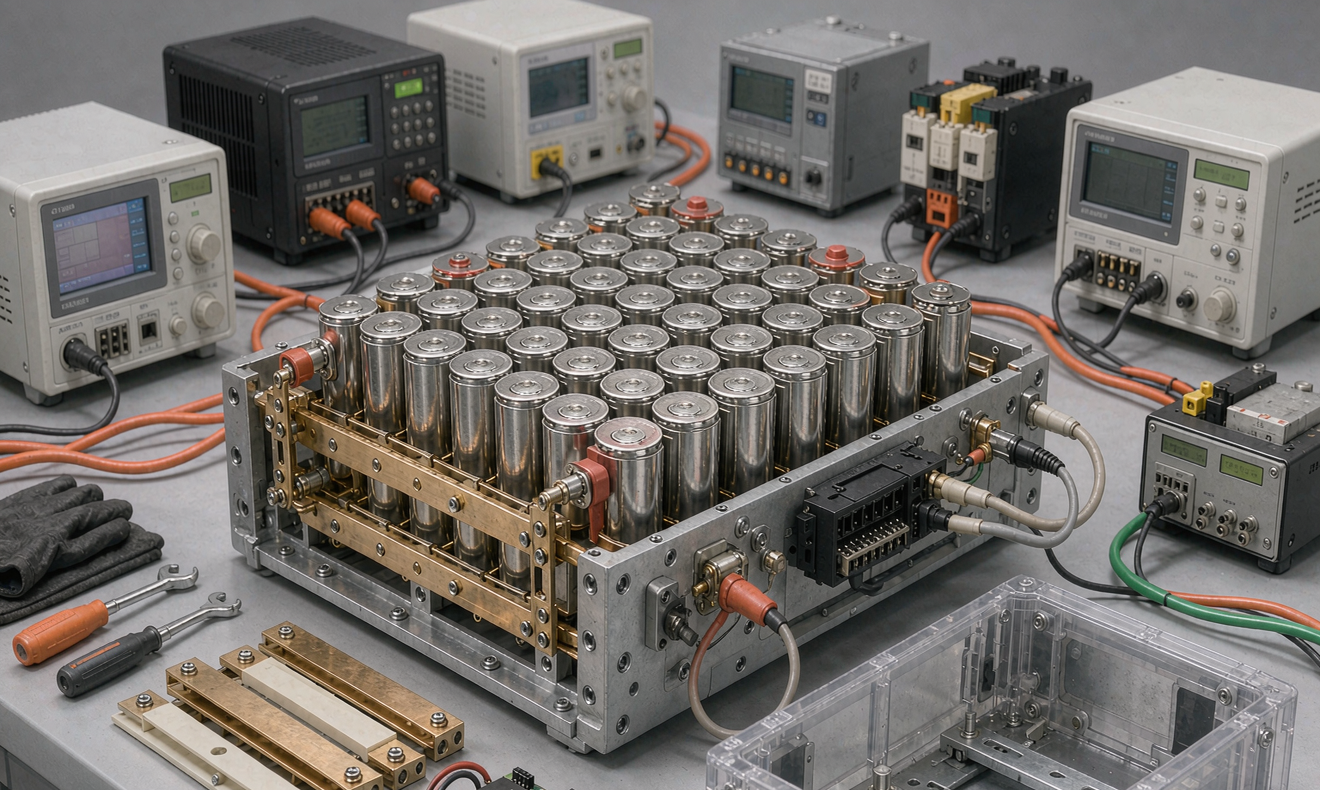
The natural landing spot for second-life semi-solid cells is stationary storage, where weight and peak power matter far less than total usable energy and cycle life. A retired 80 kWh mobility pack at 75 percent SOH still offers about 60 kWh of usable capacity, which is more than enough for a small commercial backup bank or a solar self-consumption buffer. We rebuild these into 48V or 400V stationary racks with a fresh BMS that is tuned for the new duty cycle rather than the original automotive profile. One project I led repurposed 140 semi-solid modules into a 280 kWh behind-the-meter system for a logistics depot; after 18 months it had delivered 540 full-equivalent cycles at a measured 91 percent round-trip efficiency, with no cell replacement required.
The duty-cycle mapping is the part most teams underestimate. A mobility pack is built for high C-rate bursts and shallow cycling, while a stationary bank wants low C-rate and deep daily cycling. We deliberately re-rate the repurposed module to a gentler window, typically 10 to 90 percent state of charge instead of the original 5 to 95 percent, which both extends life and reduces balancing stress. In a second depot project we paired 90 repurposed semi-solid modules with a 60 kW solar array; the bank absorbed midday clipping that would otherwise have been curtailed and shifted it to evening peak, cutting the site’s grid import by 31 percent over a full summer.
Safety and Compliance for Repurposed Modules
Reuse does not mean lower standards. A second-life pack must meet the same stationary safety baseline as a new one. For stationary applications we design to IEC 62619 for industrial cells and UL 1973 for stationary battery systems, and we keep the IEEE 1625 battery system management guidance in view for the BMS architecture. The difference is in the evidence: because the cells are older, we add an enhanced thermal propagation barrier between modules and we require a clear end-of-life flag in the new BMS so the system force-disconnects at a conservative SOH floor of 60 percent. We also re-run a sample-level nail penetration and external short test on each production batch, because the semi-solid electrolyte behaves differently under penetration than a standard liquid cell and the barrier design has to be proven, not assumed.
The Economic and Carbon Case
The numbers are what convince procurement teams. A second-life semi-solid module typically costs 35 to 55 percent less than a comparable new LFP stationary unit, and because the embedded carbon of the original cell is already spent, the lifecycle CO2 per cycle drops sharply. In a 2025 internal study we modeled a 200 kWh second-life bank against a new installation: the repurposed system reached payback in 3.1 years versus 4.7 years, and over a ten-year horizon it avoided roughly 11 tonnes of CO2 compared with manufacturing new cells. The catch is logistics, collection, testing, and rebuilding add labor that a new-unit purchase does not. The programs that work are the ones where the first-life operator and the repurposer share data from day one, so screening is cheap and the SOH history is already known.
The one cost that surprises first-time programs is certification. Proving a repurposed system to IEC 62619 and UL 1973 requires batch testing and documentation that a new product already carries, so budget for it up front. In our experience that certification step adds roughly 8 to 12 percent to the total repurposing cost, but it is what makes the unit insurable and code-compliant, and without it the cheaper hardware is unsellable.
A Practical Repurposing Workflow
If you are planning a semi-solid state battery second life program, I recommend a tight loop. Start with a data handoff: get the first-life BMS records before the pack is opened. Then run the four-step screen and bin by SOH. Group same-bin cells into new modules with matched impedance, not just matched capacity. Rebuild with a stationary-grade BMS and add the thermal and disconnect safeguards. Confirm compliance to IEC 62619 and UL 1973, then commission with a 72-hour soak test at nominal load. Finally, track the new pack in a second-life asset registry so its residual value and end-of-life path stay visible for the whole service life. Done right, this turns a retired mobility pack into five to eight years of useful stationary service.
Frequently Asked Questions
What is the minimum state of health for second-life use?
Most programs set the floor at 70 percent nameplate capacity, with a hard disconnect at 60 percent. We use 70 percent as the entry gate because below it the cell-to-cell spread widens and balancing cost outweighs the saved material.
How do you test semi-solid cells before repurposing?
We run a visual and thermal check, a 0.2C capacity verification, an AC impedance scan, and a batch-level abuse confirmation referenced to UN38.3 and IEC 62133. Cells are then binned by state of health before rebuild.
Are repurposed semi-solid batteries safe for home use?
Yes, when they meet stationary standards such as IEC 62619 and UL 1973 and sit behind a BMS with a conservative SOH disconnect. We do not recommend field-rebuilt packs for residential use without that certified enclosure and management layer.
How long do second-life modules last?
A pack entering at 75 percent SOH typically delivers another 1,500 to 3,000 cycles in a mild stationary duty, which translates to roughly five to eight years of daily use depending on depth of discharge.
Can semi-solid and lithium-ion packs be mixed?
No. Different electrode chemistries, voltage windows, and failure modes make mixed banks unsafe to balance. Keep each chemistry in its own module group and its own BMS string.
What standards apply to repurposed stationary batteries?
The core references are IEC 62619 for industrial cells, UL 1973 for stationary systems, IEC 62133 for cell safety, and IEEE 1625 for system management. Transportation of retired packs still follows the UN38.3 test family.
Further Reading
References