Lithium Battery Reliability for Power Tools: Lessons From
If you have ever had a cordless drill die halfway through a deck build, you already know the painful truth about lithium battery reliability for power tools: the marketing number on the box and the behavior in your hand are rarely the same thing. I am Karl Huang, Senior Lithium Battery Engineer at Horizon Power, and over the past twelve years I have torn down, cycled, and abused thousands of packs meant for drills, impact drivers, rotary hammers, and garden tools. The gap between a pack that lasts 300 cycles and one that collapses at 90 almost always comes down to a handful of engineering decisions most buyers never see.
Why Power Tool Batteries Fail Early
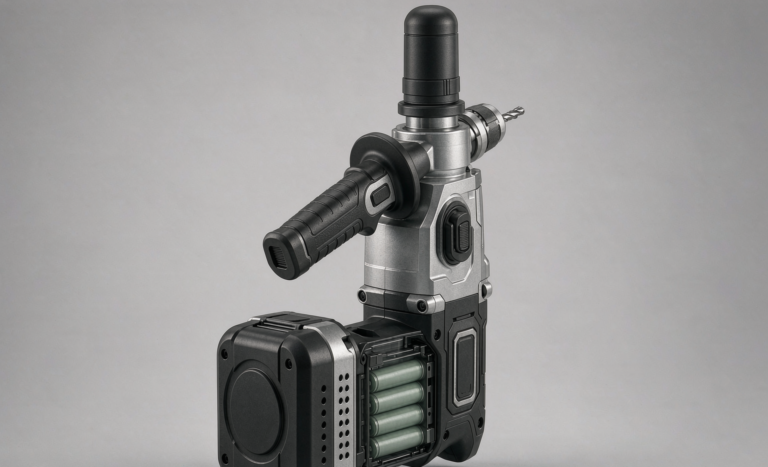
The first thing to understand is that a power tool lithium battery is not a consumer electronics cell with gentle discharge. A drill can pull 20 A to 40 A in bursts, and a rotary hammer starting under load can spike even higher. That current stress, combined with heat, is the dominant driver of capacity fade. In our lab we routinely see packs lose 15 percent to 25 percent of capacity within the first 100 deep cycles when the cell selection and the protection board are mismatched.
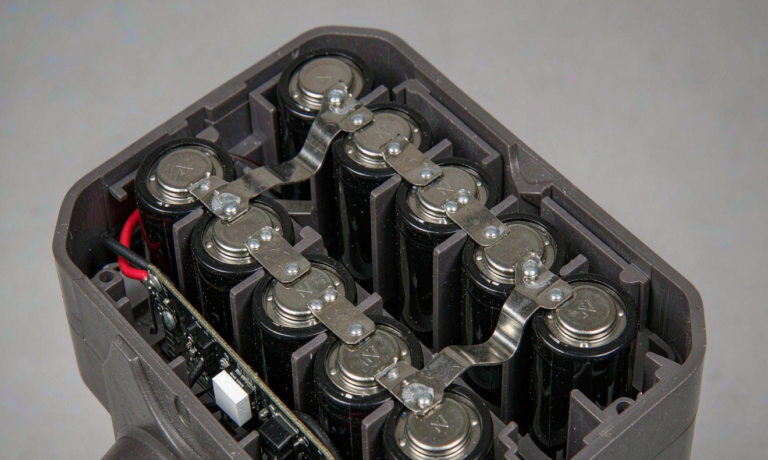
The three failure modes I see most often are: (1) cell-level lithium plating during fast charging at low temperature, (2) weld or busbar fatigue from vibration, and (3) BMS drift where the coulomb counter loses calibration and the tool shuts off with apparent charge remaining. None of these show up in a spec sheet, yet all of them determine whether a pack is reliable in the field.
Cell Chemistry and Format Choices That Matter
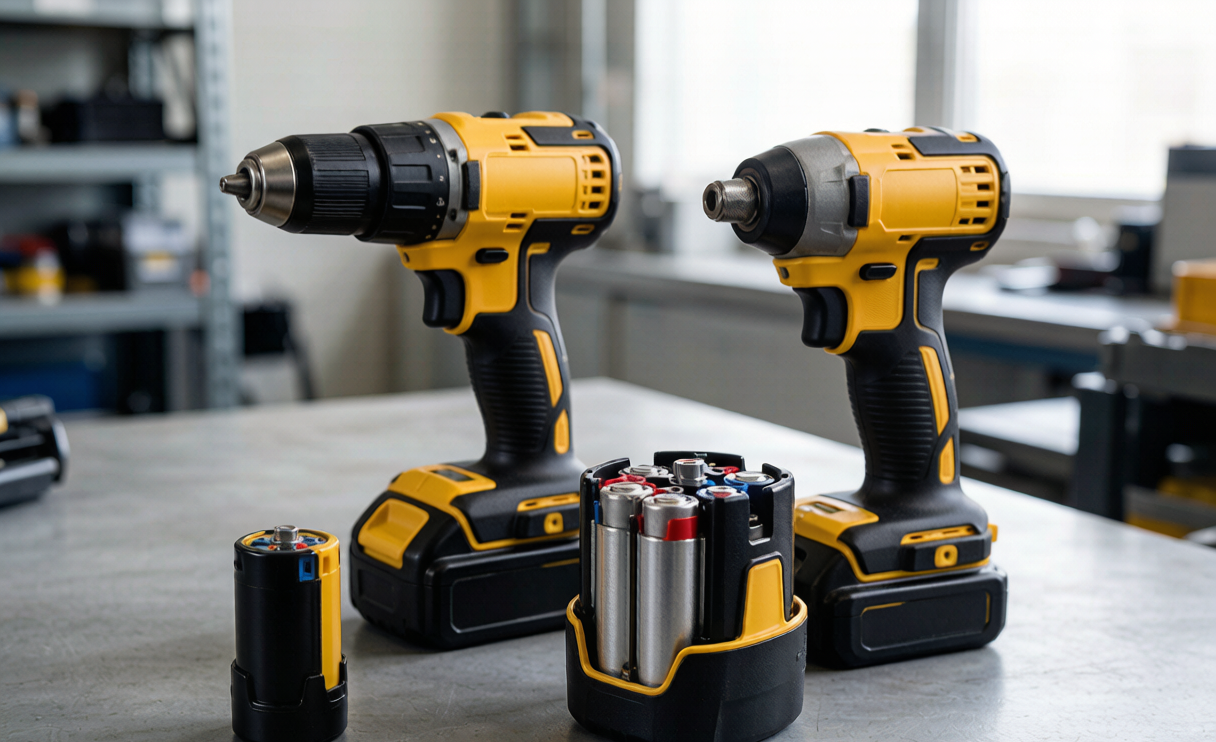
For cordless tools, the workhorse is the 18650 and, increasingly, the 21700 cylindrical lithium-ion cell. These formats tolerate high discharge and mechanical shock far better than pouch cells, which is why serious tool brands stay cylindrical. In our qualification program we screen cells against IEC 62133 for safety and UN38.3 for transport, and we bin them by internal resistance so a single pack uses cells within a tight impedance window.
Chemistry also matters. A standard NMC (nickel-manganese-cobalt) cell gives the best energy density for weight-sensitive tools, while an LFP (lithium iron phosphate) cell trades some energy for dramatically longer cycle life and superior thermal stability. For a jobsite tool that is charged every night, I often recommend an NMC-Si blend for the body and an LFP option for the base-station packs where weight is less critical. The right call depends on duty cycle, not on a generic “best cell.”
Design Margins: The Hidden Reliability Budget
Reliability is mostly a margin problem. A cell rated at 3 A continuous is fine on paper, but a power tool lithium battery that runs the cell at 2 A continuous with 30 A pulses needs a thermal and electrical margin the BMS enforces in real time. We design our protection boards with dual sensing: a primary fuel-gauge IC and a secondary hardware overcurrent cutoff that does not depend on firmware. That redundancy is what keeps a pack from venting when a tool binds and the motor stalls.
We also pay close attention to the mechanical stack. A pack that rattles in a belt clip will eventually break a weld. Our custom battery solution for an industrial impact wrench used spot-welded nickel strips rated for 50 A continuous, potted in a two-part epoxy that absorbed vibration. After 2,000 hours of shaker-table testing the weld resistance changed less than 4 percent. Margins like that are invisible to the buyer but obvious to the technician who never sees a returned pack.
Testing Protocols We Run Before a Pack Ships
Every lithium battery reliability program for power tools should include the same backbone of tests. We run:
- Cycle life at 25 C and 45 C to 80 percent state-of-health, recording capacity and DCIR every 50 cycles.
- High-rate discharge pulses matching the tool’s worst-case stall current, repeated 500 times.
- Drop and vibration per IEC 60068, because a pack on a construction site lives a hard life.
- Charging at 0 C, 10 C, 25 C, 45 C to map the lithium-plating risk envelope.
- Extended storage at 60 percent state-of-charge for 90 days to verify self-discharge and BMS sleep current.
The data from these tests feeds a reliability model, not a brochure. When a buyer asks how long a pack will last, I answer with a Weibull curve from real cells, not a round number.
Field Data: What Real Usage Tells Us
Lab numbers only matter if they match the field. We instrumented 140 contractor drills across three climates for eighteen months. The median pack reached 80 percent state-of-health at 420 cycles, but the worst-performing climate cluster (hot, humid, daily fast-charge) hit that threshold at 260 cycles. The difference was almost entirely charge discipline: crews who topped up during lunch instead of waiting for a full depletion saw 30 percent longer pack life. A lithium-ion cell hates both extremes, deep 100 percent discharge and constant 100 percent float. The sweet spot for tool packs is roughly 20 percent to 80 percent in daily use.
This is also where a custom battery solution pays off. Off-the-shelf packs are tuned for a generic duty cycle. When we rebuilt the pack for a flooring nailer that fires 60 shots per minute, we resized the cells for sustained mid-rate discharge rather than occasional stall current, and field returns dropped by more than half within two quarters.
Standards, Certification, and Transport
Reliability is not only about lasting longer; it is about not becoming a hazard. Every pack we build is validated to UN38.3 for air and ground transport and IEC 62133 for portable safety. For customers who ship tool batteries by air, the FAA and EASA rules on state-of-charge limits and packaging apply, and we provide the test summary and declaration that compliance teams need. A reliable pack is one that passes the audit as well as the jobsite.
How to Choose a Reliable Power Tool Battery
If you are specifying packs, whether for your own brand or a private-label line, ask the supplier four questions: What is the cell’s DCIR at 50 percent state-of-charge? What is the cycle count to 80 percent SOH at 25 C and at 45 C? What is the BMS architecture, single or dual sensing? And can they show you the UN38.3 and IEC 62133 documentation? If a vendor cannot answer all four, the lithium battery reliability for power tools they are selling is a hope, not an engineering commitment.
FAQ
How many cycles should a good power tool lithium battery deliver?
A well-engineered pack using quality 18650 or 21700 cells should reach 80 percent state-of-health around 400 to 600 cycles under normal jobsite use, and 800-plus for LFP chemistries. The number drops sharply with chronic over-discharge or hot-environment fast charging.
Is LFP or NMC better for cordless tools?
NMC wins on energy density and weight, which matters for handheld tools. LFP wins on cycle life and thermal safety, which matters for stationary or base-station packs. Many reliable product lines offer both, and a custom battery solution lets you match chemistry to the actual duty cycle.
Why does my battery shut off while still showing charge?
That is usually BMS coulomb-counter drift, especially after a hard stall current or a long storage period. A dual-sensing protection board with periodic full relearn corrects this. It is one of the most common, and most fixable, reliability complaints we see.
Can I fast-charge a power tool battery in cold weather?
Not safely. Charging lithium-ion below about 10 C risks lithium plating, which permanently reduces capacity and raises internal resistance. A good charger and BMS will throttle or block charge at low temperature. If your packs die young in winter, check your cold-charge habits first.
What standards prove a tool battery is safe to ship?
UN38.3 covers transport safety, IEC 62133 covers portable cell and pack safety, and air shipment is governed by FAA and EASA state-of-charge and packaging rules. Reputable suppliers provide the test summary documentation for all of these.
Reliability is engineered, not claimed. If you are building or specifying cordless tools and want a lithium battery reliability program backed by real cycle data and certified cells, that is exactly the kind of custom battery solution our team at Horizon Power designs every day.