Semi-Solid State Battery Deployment for Robotics
I have put semi-solid packs into warehouse fleets, onto cold-storage shuttles and into a handful of autonomous platforms that never should have been battery-powered in the first place. The pattern I keep seeing has nothing to do with chemistry. The teams that struggle with semi-solid state battery deployment for robotics are almost never beaten by the cell. They are beaten by the program around it: the pack shows up before the site is ready, the pilot starts before anyone has written down what would make it fail, and the fleet order is placed before anyone has counted the spares.
This is my rollout playbook. It is written for the engineer who has to make the case, run the pilot and then live with the decision for five years. My name is Karl Huang, I am a senior lithium battery engineer, and most of what follows I learned by getting it wrong once.
Deployment Is a Program, Not a Purchase Order
The word deployment gets used loosely. On a robotics program it means the interval between the first article arriving on the dock and the moment the fleet runs at a predictable cost per mission hour with a spare pool you can actually defend in a budget meeting. That interval is six to nine months for a first-time fleet, and it contains six workstreams that have to move in parallel: site and power readiness, pilot design, ramp gates, charge and swap infrastructure, data and spares, and people and procedure.
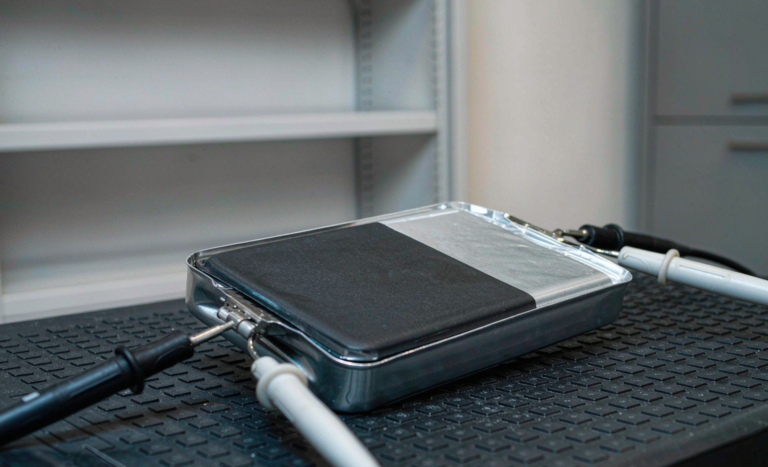
Semi-solid cells change three things you need to plan for from day one. First, a semi-solid state battery behaves differently under abuse: with less free electrolyte there is less of the violent venting you see from a conventional liquid cell, but the heat that is released stays localised for longer. Your detection strategy has to lean on rate-of-rise and cell delta-T rather than waiting for smoke. Second, the stack pressure that keeps the electrode-electrolyte interface honest has to be maintained by the pack structure, not just applied once on the assembly line. Years of vibration and thermal cycling will relax any preload you do not mechanically lock in, and the symptom is a slow, confusing capacity loss that looks like cell aging but is really mechanical. Third, low-temperature power is more sensitive than the liquid-electrolyte equivalent. On a cold-storage platform, preheating before a high-power move is not an optional comfort feature, it is the difference between a robot that completes the pick and one that browns out at the rack face.
Everything below assumes you already know the cell is good enough. The question is whether your organisation can absorb it.
Site Readiness Before the First Pallet Arrives
Do the electrical arithmetic first, and do it on paper where it is cheap. Take a common AMR configuration: a 48 V nominal pack at 200 Ah is 9.6 kWh. A robot drawing 500 W average over a 20-hour operating day consumes about 10 kWh, so it needs roughly 1.05 full equivalent charges per day. Fifty robots means about 500 kWh per day has to pass through chargers. If your fleet duty concentrates charging into a four-hour lull, that is a 125 kW average demand before you account for charge losses and the fact that lithium tapers. Most warehouses do not have 125 kW of headroom sitting in the panel that feeds the racking. I have watched a deployment stall for eleven weeks waiting on a service upgrade that a half hour of arithmetic in week one would have caught.
Then look at the floor. Autonomous navigation is a battery problem wearing a disguise. Poor floor flatness, cracks and expansion joints all drive localisation drift, which drives re-docking events, which drives extra charge cycles, which shows up in your battery data as accelerated aging caused by a civil engineering defect. Ask for defined-traffic F-numbers on the routes the robots will actually run, not on the aisles that were poured carefully.
Thermal zones matter more than people expect. In a high bay, air temperature stratifies by roughly half a kelvin to a kelvin per metre of height, so a roof void at 15 m can sit 8 to 12 K above the floor in summer. Dock doors create a microclimate that swings 20 K every time a trailer backs in. And cold storage is its own world: at -25 °C you cannot charge a lithium pack at all. Below 0 °C, lithium plates onto the anode instead of intercalating, and that damage is permanent, it is a dendrite nucleus, and it does not heal on the next warm cycle. Semi-solid cells are somewhat better at low-temperature discharge than their liquid cousins but they are not exempt from the charging rule. The cheapest fix I know is a heated charge vestibule at the cold-room entrance rather than a heated pack on every robot.
Finally, pick your charging topology from the duty cycle, not from the brochure. If each robot can dwell for ten to fifteen minutes in every hour, contact-based opportunity charging will carry the fleet at the lowest capital cost. If you are running genuinely continuous 24/7 work with no natural dwell, you are into battery swap, and that is a logistics project with a battery attached to it.
Designing the Pilot: Five Robots, One Shift, and Pre-Agreed Kill Criteria
The right pilot is small, instrumented, and short enough that nobody loses interest. Five units, one shift, ninety days. Run them in shadow alongside your incumbent chemistry for the first two weeks so you can compare a semi-solid state battery against something rather than against memory.
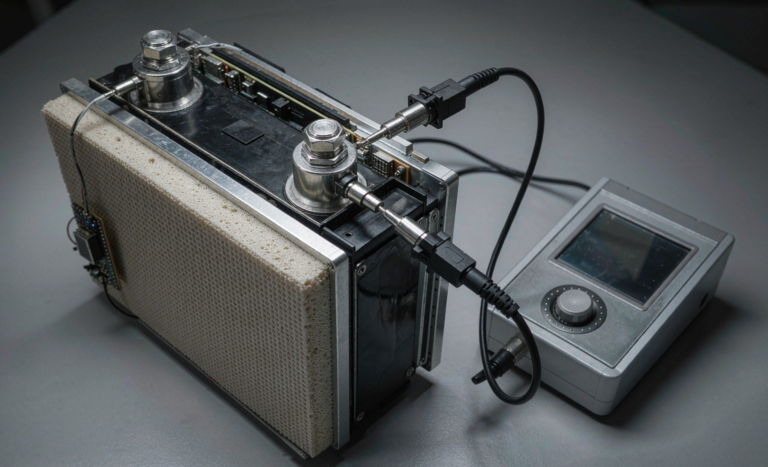
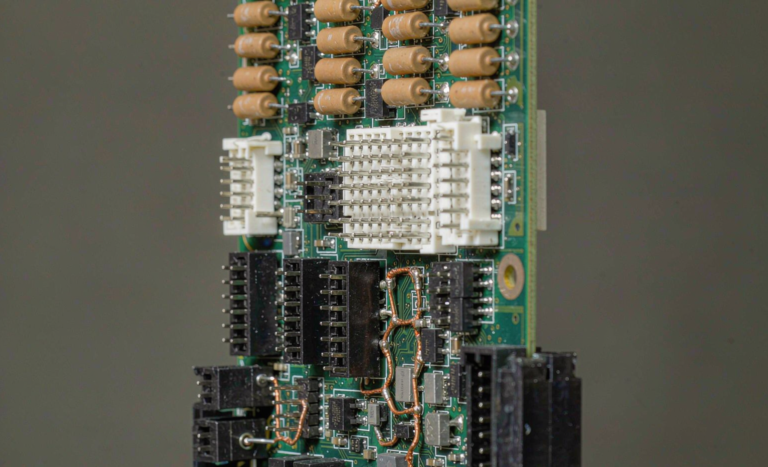
Instrument the packs properly. Per pack, on every unit: pack current and voltage, minimum and maximum cell voltage, at least three thermistor points (coldest cell, hottest cell, and one on the busbar or terminal), state of charge, and every fault code with its parameter snapshot. One hertz is comfortable; 0.2 Hz is survivable. What is not survivable is discovering in month four that your edge gateway was dropping 30% of packets and your fleet dashboard was averaging over the gaps.
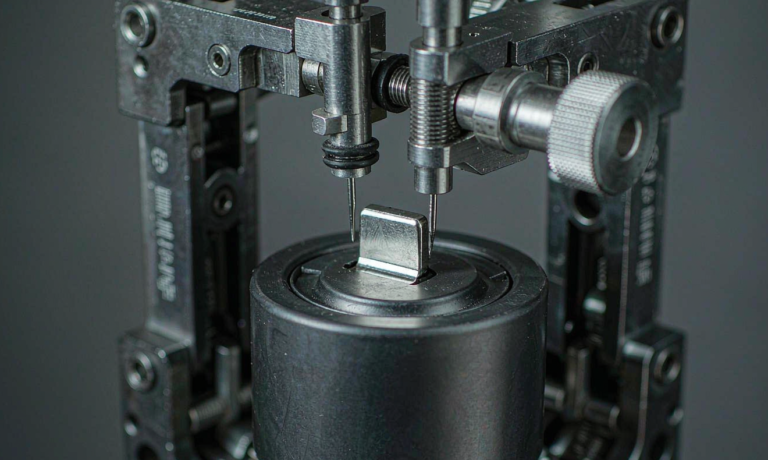
On day zero, take a baseline before the robots turn a wheel: a controlled capacity check, a standardised DCIR pulse, cell voltage deviation after rest, insulation resistance measured from each polarity to chassis, and a torque audit with paint marks on every fastener you can reach. All five of those numbers are worthless as absolutes and priceless as a trend line. The DCIR pulse measures the internal resistance of a lithium battery pack under a known current step, and it needs to be standardised or your trend is fiction: same rest period, same ambient temperature, same state-of-charge window, same current, same duration, same instrument, written into a one-page procedure that the night shift will actually follow.
From the first two weeks of logs, build the duty-cycle profile: kWh per day, equivalent full cycles, peak and sustained C-rate, a depth-of-discharge histogram, hours spent below 0 °C and above 40 °C, the number and timing of charge events, the state-of-charge window actually used, and dwell temperature. This profile is the single most useful input to the fleet order, and it is also the evidence you will need when someone asks why the packs are fading faster than the datasheet said.
Then write the kill criteria before you start. What rate of battery-related stops would make you cancel? What capacity deviation from the model? What thermal finding? A pilot without pre-agreed failure conditions always passes, because the people running it are the people who argued for it.
Ramp Gates: The Numbers That Decide Whether You Buy Fifty
I run three gates: five units, then twenty-five, then the fleet. Each gate is a written review against measured data, and each one has a small set of metrics that carry real weight.
- Battery-related unplanned stops per 1,000 robot-hours. Below 0.5 after a four-week shakedown, and trending down. If it is flat rather than falling, you have a systematic problem, not a teething problem.
- Capacity retention against the model. Within about 3% of the forecast curve at ninety days. A pack that is beating the model is suspicious too, usually it means the coulomb counter has drifted.
- DCIR growth, normalised to 25 °C. Investigate at 1.15 times baseline, plan replacement at 1.3 times, retire at 1.5 times.
- Cell voltage deviation at rest, in millivolts. Record the number. The words “balanced” and “unbalanced” are not data.
- Maximum cell temperature and pack delta-T. A delta-T that drifts from 3 K to 9 K over a quarter is the finding, even if the absolute maximum never trips a limit.
- Charge session success rate and mean dock time. Attempted versus completed sessions, and how long a robot actually spends on the dock versus how long the scheduler assumes.
- Telemetry completeness. Ninety-eight percent minimum. Below that you do not have a fleet dashboard, you have a decoration.
- Thermal events. Zero tolerance. One event is a program stop, not a variance to be managed.
- Mechanical findings. Connector contact resistance trend, torque audit pass rate, any ingress or seal degradation, any sign of cooling path fouling.
Gates are also the point at which you re-baseline. The twenty-five-unit batch should be measured on arrival, not trusted from the certificate of conformity, and the numbers should be compared against the five-unit cohort before the fleet order goes in.
Charging and Swapping Infrastructure: Where Fleets Actually Lose Uptime
Charge contacts are consumables. They pit, they carbonise, the strain relief works loose, and pin retention falls off long before anybody notices visually. Give them a cleaning interval, and use comparative millivolt-drop testing across the fleet rather than an absolute threshold: a dock sitting 20 to 30% above the fleet median is a finding even if it passes the spec sheet.
Treat chargers as assets, not appliances. Keep their firmware under configuration control. I once watched a silent firmware update reduce charge current across an entire fleet and leave dozens of robots at 60% state of charge with no alarm raised anywhere, because nothing had actually failed, the robots had simply not finished charging. Calibrate annually: a charger running 5% high on current is overcharging your whole fleet by 5%, gently and continuously, for a year. Derate for enclosures that sit in the sun or against a warm wall; a sealed cabinet facing west can cost you real current every afternoon.
Handshake failures are diagnostic signals if you group them correctly. Many robots failing on one dock means the dock. One robot failing on many docks means the robot. Both patterns are cheap to detect and expensive to ignore.
If you are swapping rather than docking, design the swap for the human being doing it at 03:00. Keep modules under roughly 18 kg so one person can handle them safely, put the handles where a gloved hand can actually grip, orient the connector so it cannot be mated wrong, and check the blind-mate tolerance against the robot’s docking repeatability rather than against the drawing. Separate the swap station and any charged-pack storage, hold spare packs at 30 to 50% state of charge in a cool room, and rotate them first-in-first-out so your spares do not calendar-age into uselessness while waiting to be needed.
Budget the spare pool at 5 to 10% of fleet size in year one and 3 to 5% thereafter, and hold failed modules until the warranty period expires. A module scrapped in month three cannot be evidence when the same failure mode comes back across a batch in month twenty.
Data, Spares and People Decide Year Three
The chemistry determines what is possible. The data determines what you can prove. Keep five things: the commissioning baseline, the duty-cycle profile with its temperature histogram, every service record with the measured value rather than the word “OK”, fault codes with their parameter snapshots, and excursion events with a note on who saw what.
The temperature-time histogram is the most valuable and least retained artefact in the whole program. Calendar aging roughly doubles for every 10 K rise, which means the hottest two hundred hours of a pack’s life can cost more than the coolest two thousand. When a fleet fades faster than the cycle count explains, that histogram is the only thing that will let you quantify it, and it is the only thing that will let you specify better thermal management on the next generation.
It also decides whether retirement is a cost or an asset. A pack retired from mobile duty at 75 to 80% of beginning-of-life capacity, with a full history, is a genuinely good candidate for stationary work at 0.2C in a home energy storage application, where the duty is gentler than anything a warehouse will ever ask of it. The same pack with no history is an unknown object that nobody should warranty. Second life is won or lost on documentation, not on electrochemistry.
On people, run two tiers of authorisation. Tier one is awareness: operators and yard staff who can recognise a damaged pack and know to stop and report. Tier two is authorised: the people who isolate, prove dead, and work. Lock-out/tag-out with a meter verified both before and after. Personal protective equipment selected against the actual arc energy, gloves of the right class with inspection dates, and insulated tools that are inspected rather than merely present. And walk the rescue plan on the floor with the people who will execute it; a plan that exists only in a binder is a plan that will be improvised.
Write the thermal-event procedure down, and put one rule at the top of it: do not charge. Stop, isolate, move the pack outdoors onto a non-combustible surface if it can be moved safely, do not charge it, and start timed temperature checks. Semi-solid and lithium thermal events can be delayed by hours or even days after the initiating damage, so the decision to re-energise is never made in the first hour. Escalate on rate of temperature rise, swelling, smoke, or the sweet solvent smell that means electrolyte is escaping. When you call the fire service, tell them the chemistry, the capacity, the pack voltage and the exact location; water in volume is the right medium for exposure control, and they need to know how much.
When a Standard Pack Is the Wrong Answer
Catalogue packs are right more often than a custom battery solution, and I say that as someone who sells custom work. Go custom when at least two of these are true: the envelope or the mounting points are dictated by the robot structure rather than chosen by you; the sustained C-rate exceeds what the catalogue part can shed as heat; the temperature window is permanently outside the standard range; the environment brings conductive dust, wash-down or corrosion; the BMS has to talk to a specific fleet manager or charging control logic, whether that is a VDA 5050 interface, an MQTT topic structure or a ROS 2 node; the stack-pressure structure has to survive a defined vibration and thermal profile for years; or maintainability is a contractual requirement, meaning module weight, handle placement, connector orientation, and the ability to service the service disconnect without stripping half the robot.
Whatever you buy, expect to be asked for a documentation set: IEC 62619 for industrial secondary cells and batteries, IEC 62133-2 where the portable scope applies at cell level, a UN38.3 test summary for every shipment, and UL 1973 on the pack for some markets. The machine integration will drag in ISO 13849-1 or IEC 62061 for control reliability, ISO 10218 and ISO/TS 15066 where a robot arm is involved, ISO 3691-4 and ANSI/ITSDF B56.5 for driverless trucks and AGVs, IEC 60068-2-64 and 2-27 for random vibration and shock, and IEC 60529 ingress at IP54 minimum, IP65 if it will ever see a wash-down. If you are installing a charged-pack store or a large swap bank, NFPA 855 and UL 9540A may apply, and the one thing I would insist on is getting your authority having jurisdiction to state its position in writing before you buy, not after.
battery pack design for mobile platforms is mostly a mechanical and thermal discipline wearing an electrical badge. Treat a semi-solid state battery as a lithium battery first and a novelty second: the charging rules, the transport classification and the thermal-event response are all the same ones you already apply to the rest of your fleet. The pack that is easiest to live with in year eight is the one that was designed for the person who has to service it, not the one with the best spreadsheet in year zero. And when the envelope, the duty or the integration genuinely will not fit a catalogue part, a custom battery solution is cheaper than five years of workarounds.
Frequently Asked Questions
How many robots should be in a semi-solid battery pilot?
Five is enough. One shift, ninety days, instrumented per pack, run in shadow against your incumbent chemistry for the first two weeks. More units buys you statistical confidence you do not yet need and costs you the ability to change course cheaply.
Is a semi-solid state battery worth the premium over LFP for AMRs?
When you are volume-constrained. A semi-solid cell typically gives you 20 to 30% more energy in the same envelope, which you can spend either as longer runtime per charge or as a smaller pack with more payload or a slimmer deck. If you have space and weight to spare and the duty is benign, LFP still wins on cost per kWh and on cycle count.
Can we charge inside a cold room?
No. Below 0 °C, lithium plates on the anode and the damage is permanent. Semi-solid cells discharge better in the cold than liquid-electrolyte cells but they are not exempt from the charging limit. Heat the charge location, not the whole pack.
Is opportunity charging bad for cycle life?
Partial cycles themselves are fine, lithium batteries tolerate them well. What hurts is repeatedly pushing a warm pack to the top of the state-of-charge window and leaving it there. A 15 to 85% daily window, with a full charge only when the shift genuinely needs it and timed to finish close to departure, will outlast almost any alternative.
What is the highest-return single maintenance item on a robot fleet?
Thermal and charging discipline, followed closely by contact cleaning. Heat is the first-order lever on aging, and dirty or loose charge contacts are the most common cause of the low-grade faults that eat dispatcher time.
How long until a fleet reaches steady state?
Six to nine months from pilot start for a first-time fleet, assuming the site work happened in parallel. Most of that time is not spent on batteries; it is spent finding out what you did not know about your own duty cycle.
Should we consider a sodium-ion battery instead?
For cold-storage platforms and stationary site loads, yes, it deserves a serious look: better low-temperature charge acceptance and no lithium resource exposure. For mobile platforms where payload and volume are tight, the lower energy density is the wrong trade. My working answer is sodium for cold rooms and site storage, semi-solid or LFP for the mobile fleet.
Can we retrofit semi-solid packs into robots that currently run LFP?
Usually, if the bay, the connector and the charger profile can be reconciled. Check three things before you commit: peak discharge C-rate against the existing contactor and harness, the charger’s voltage window and taper behaviour, and whether the BMS handshake with the robot controller will actually complete. The last one is the one that bites.
What should be in the supply contract?
Module availability in years, firmware support duration, a last-time-buy notice period, end-of-warranty capacity and DCIR definitions, spare-part lead time, ownership of the telemetry, and what happens to data when the contract ends. The second-worst outcome in this industry is waiting eleven weeks for a module that went out of production.
Does the same playbook apply to aerial fleets?
The structure is identical. A drone battery fleet has charge cabinets instead of docks, swap logistics driven by flight windows rather than shift patterns, and a much harsher tolerance for dispatch failures, but the ramp-gate logic is the same. We even schedule agricultural drone battery charging cabinets as dispatchable load on farm microgrids, because the duty is predictable and the timing is negotiable.