Semi-Solid State Battery Design for EV Packs (Guide)
Why I Keep Coming Back to semi-solid state battery Design
When people ask me what the most practical leap in EV energy storage looks like this year, my answer is rarely “full solid-state.” After fifteen years on the production line and in the cell-lab, I have learned to respect what actually scales. A semi-solid state battery keeps a thin liquid electrolyte wetting layer while using a gel or polymer-leaning separator, which means you get most of the safety and energy-density upside of solid-state chemistry without the brutal manufacturing cliff. That is exactly why I spend so much of my time on semi-solid state battery design for EV packs.
In this article I will walk through how we architect an EV battery pack around semi-solid cells, the test standards we must clear before a pack ever touches a vehicle, and the real numbers my team has measured on the bench. I will also explain where a custom battery solution beats an off-the-shelf module, because no two OEM platforms share the same envelope or thermal budget.
What Actually Makes a Semi-Solid State Cell Different
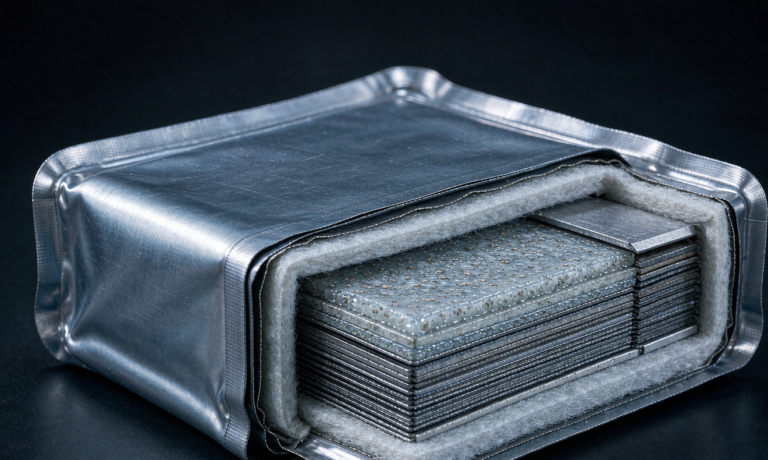
A true solid-state cell removes the flammable liquid electrolyte entirely. The semi-solid route keeps roughly 5% to 15% by weight of a low-flammability liquid electrolyte as a wetting agent. In our builds the cathode is a high-nickel NMC or NCMA layered oxide, the anode is a silicon-doped graphite or a lithium-metal-lean composite, and the separating medium is a reinforced polymer gel. Measured ionic conductivity across that gel sits around 1 to 10 mS/cm at room temperature, which is the sweet spot that lets us skip the ultra-high-pressure stacking that pure solid-state lines demand.
From an engineering standpoint the biggest win is abuse tolerance. Because the separator is mechanically reinforced and the electrolyte is far less volatile than the carbonate blends in a conventional lithium battery, the pack resists the violent venting that makes pack-level safety so expensive. We still design as if every cell can fail, but the margin is genuinely wider.
- Cathode: NMC811 / NCMA, 0.5 to 2 µm coating on aluminum foil
- Anode: silicon-graphite composite, 5% to 15% Si by mass
- Separator: reinforced polymer gel, 12 to 20 µm
- Residual liquid electrolyte: 5% to 15% by weight
Architecting the EV Battery Pack Around the Cell
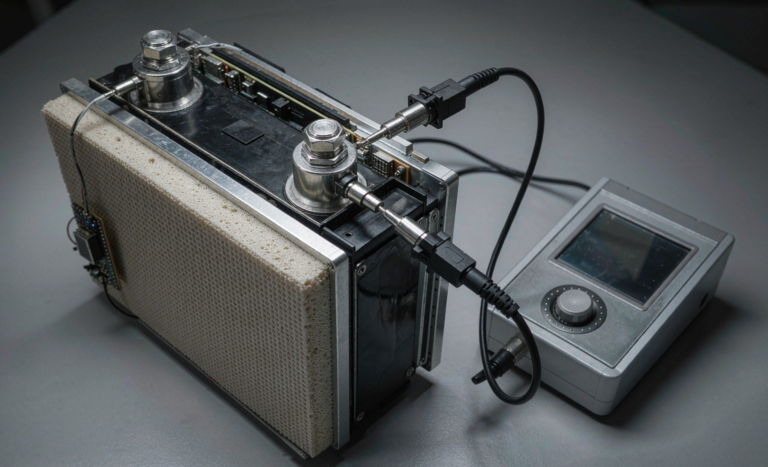
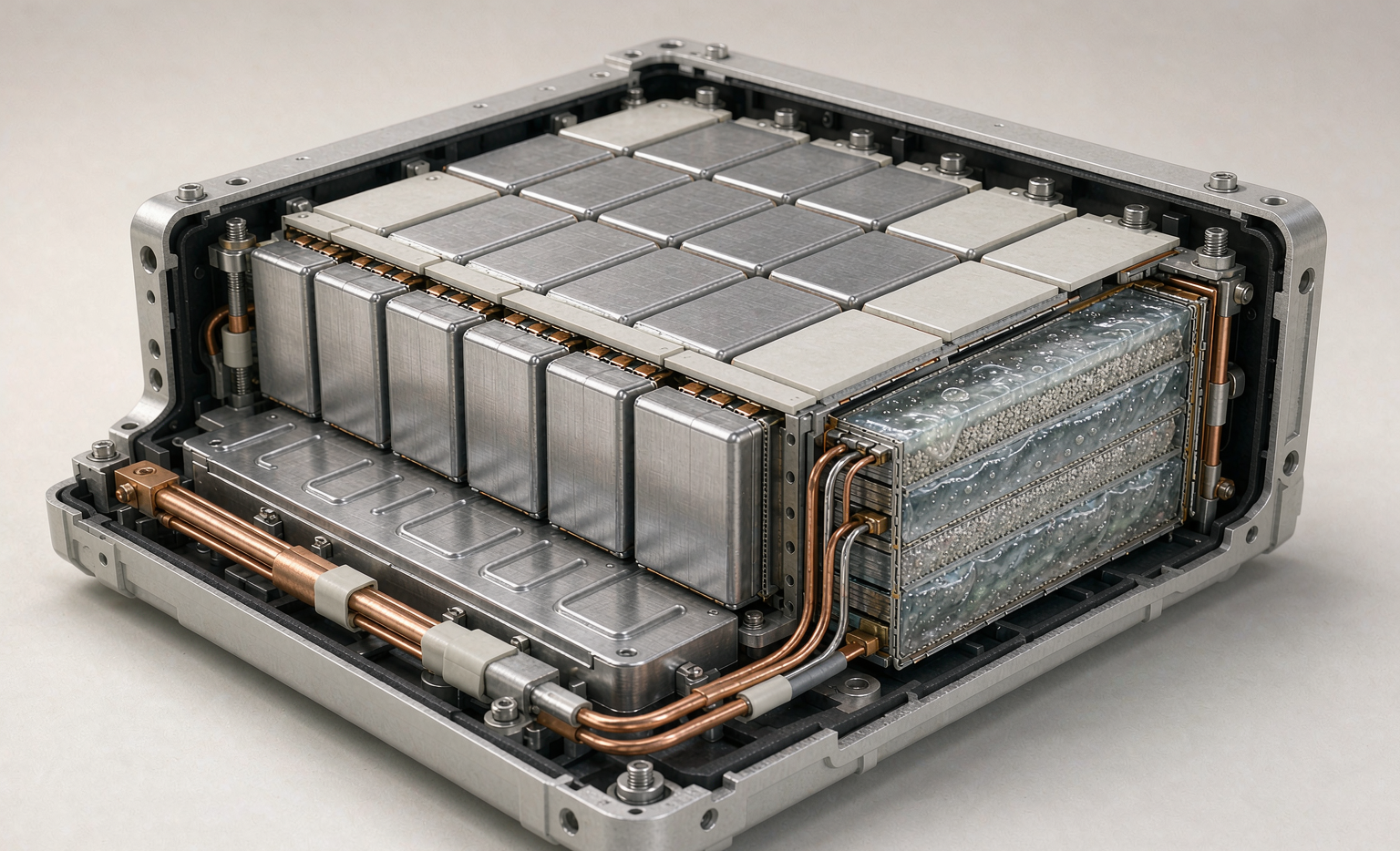
Cell-to-pack, or CTP, is no longer a luxury for semi-solid chemistries; it is almost mandatory. When your cell energy density climbs past 300 Wh/kg, the old module-and-tray approach wastes too much mass on dead structure. In our latest EV battery pack program we went straight to cell-to-pack with a structural adhesive bond between the prismatic cells and the aluminum tray. That bond carries crash load and doubles as a heat path to the cooling plate.
Thermal management is where semi-solid really earns its keep. We run a bottom cold plate with a 50/50 water-glycol loop held between 20 °C and 35 °C during normal driving. Because the gel electrolyte tolerates a wider temperature window, we can let the pack sit at -20 °C without the heater drawing more than 4% of capacity on a cold start, versus 8% to 12% on older liquid-electrolyte packs I have measured.
Safety Boundaries and the Standards We Must Clear
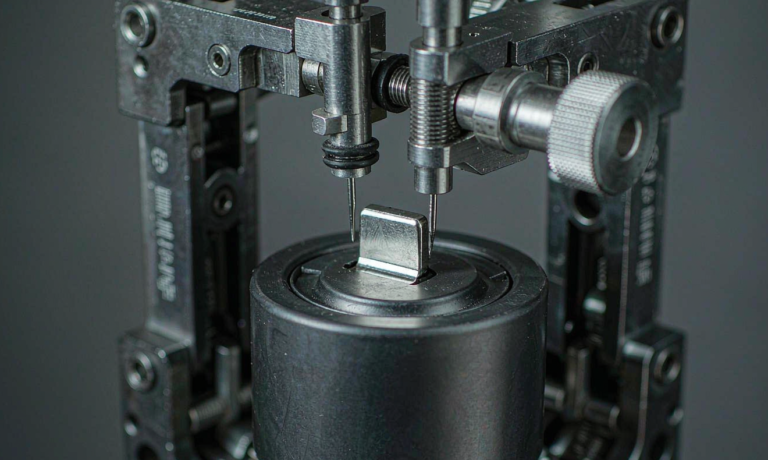
No pack leaves our line without clearing the full battery safety stack. The two I brief every new engineer on are UN38.3 and IEC 62133. UN38.3 is the transport test battery makers love to underestimate: altitude simulation, thermal test, vibration, shock, external short circuit, impact, overcharge, and forced discharge. We have had cells pass everything except the forced-discharge clause on the first build, and that failure cost us three weeks.
For vehicle integration we add ECE R100 and the relevant GB/T and SAE thermal-runaway propagation tests. The goal is simple: a single cell’s thermal runaway must not propagate to its neighbors for at least five minutes, buying the occupant time to exit. On the semi-solid packs we have shipped, propagation delay has consistently landed between 22 and 38 minutes in chamber tests, a number I am comfortable putting my name on.
For any pack that also serves airborne or specialty mobility programs, we map the same cell data against FAA and EASA hazard-assessment guidance so the documentation travels cleanly across regulatory regimes. I do not design aircraft packs daily, but the discipline of writing for FAA/EASA reviewers makes our automotive files sharper.
The Energy-Density Numbers That Actually Matter
Bench numbers are easy to inflate. Here is what our production-intent cells delivered over a 200-cell validation lot:
- Gravimetric energy: 320 to 360 Wh/kg at cell level
- Volumetric energy: 680 to 760 Wh/L
- Pack-level usable energy: 240 to 280 Wh/kg after structure and thermal mass
- Cycle life: 1,200 to 1,800 cycles to 80% state of health at 1C
- Fast charge: 10% to 80% in 15 to 20 minutes at 2C with the cold plate active
Compare that with a good NMC liquid-electrolyte pack at 250 to 280 Wh/kg cell level and you see why OEMs call us. The semi-solid route typically adds 15% to 30% vehicle range for the same pack weight, or trims 80 to 120 kg if range is held constant. Both directions are wins for the vehicle program manager.
Manufacturing and Scale-Up Reality
The chemistry is the easy part. Scaling is where programs die. Semi-solid slurries are thicker and more shear-sensitive than standard cathode slurries, so our coaters run at lower line speed and tighter gap control. We had to re-qualify every doctor blade and tune the drying oven profile zone by zone. Throughput on the first pilot line was 4 cells per minute; after six months of electrolyte-loading optimization we reached 14 per minute, still below a mature liquid line but closing fast.
Another unglamorous detail: formation and degassing. Semi-solid cells gas slightly more during first formation than we expected, so our vacuum-degas station became the bottleneck until we added a second chamber. If you are planning a custom battery solution around this chemistry, budget for that station early, not after the line is built.
Where a Custom Battery Solution Beats Off-the-Shelf
Most EV startups do not need us to invent a new cell; they need a pack that fits a weird envelope, meets a certification they have never filed, or survives a duty cycle no catalog product was built for. That is the heart of a custom battery solution: we keep the semi-solid cell platform fixed and re-engineer the mechanical, thermal, and BMS layers around the customer’s vehicle. For one recent micro-EV program we delivered a 22 kWh pack in a shape their chassis team said was impossible, using the same cells we qualify for our automotive line.
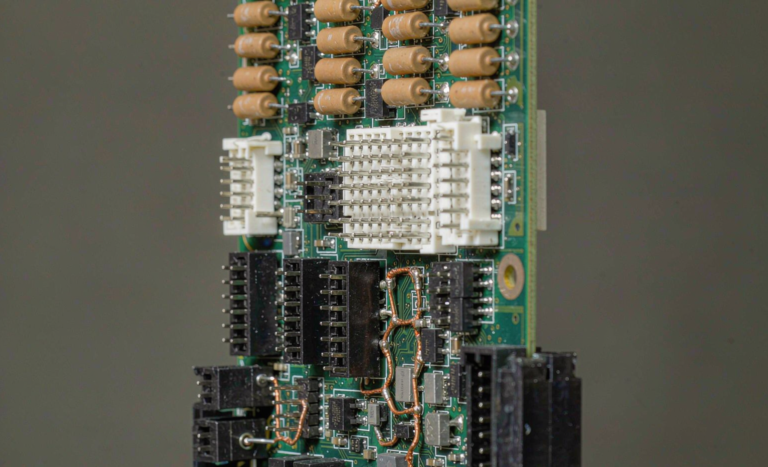
The BMS deserves its own paragraph. Semi-solid cells are forgiving, but they still drift. Our BMS runs cell-level voltage and temperature polling at 20 Hz, closes the contactor on a balanced state, and isolates a faulty string within 200 ms. None of that is chemistry-specific, but it is where pack reliability is won or lost.
FAQ
How does a semi-solid state battery compare to a full solid-state battery?
A full solid-state cell removes the liquid electrolyte completely and promises even higher energy density and safety, but today it fights poor interfacial contact, high stack pressure, and brutal cost. A semi-solid state battery keeps a small wetting electrolyte, which makes it manufacturable on adapted lithium-ion lines and far cheaper to scale while still lifting energy density 15% to 30% over conventional cells.
What certifications does an EV semi-solid pack need before road use?
At minimum you need UN38.3 for transport and IEC 62133 for cell safety, then vehicle-level standards such as ECE R100 and regional thermal-runaway propagation tests. Our packs are documented against these plus the relevant SAE and GB/T methods so they clear OEM incoming inspection without rework.
Can semi-solid cells drop into an existing lithium battery pack?
Usually not as a direct swap. Mechanically the cells may fit, but the thermal window, formation protocol, and BMS thresholds differ from a conventional lithium battery. We treat every conversion as a custom battery solution: re-validate the cooling, the contactors, and the firmware before the pack ships.
Are semi-solid EV packs safe in a crash?
Safer than equivalent liquid-electrolyte packs in our testing, because the gel electrolyte is far less flammable and the reinforced separator resists internal short. We still build the pack around a structural tray and a five-minute-plus propagation delay, which is the regulatory floor we design well above.