Semi-Solid State Battery Maintenance for EV Packs
I have spent enough nights in a service bay next to an elevated van to know that the maintenance manual is where a battery programme’s promises get tested. Nobody reads the cell datasheet at 40,000 km. What they read is a fault code, a coolant conductivity number, and a capacity figure that has quietly drifted four points below where the commissioning engineer wrote it down. In my eighteen years as a lithium battery engineer, and the last six working almost exclusively on semi-solid architectures for traction, I have learned that a semi-solid state battery pack does not fail like the conventional liquid-electrolyte pack it replaced, and it certainly should not be maintained like one.
My earlier articles in this EV pack series covered performance, reliability, cost optimisation, design, testing, manufacturing, safety, integration and deployment. This is the last piece in the sequence, and the one that operators tell me they actually use: what to do with a semi-solid state battery EV pack after it leaves the factory, month after month, year after year, until the day it either comes back for a second life or goes to recycling. Everything below comes from service programmes I have written, warranty claims I have argued, and packs I have personally torn down after a failure.
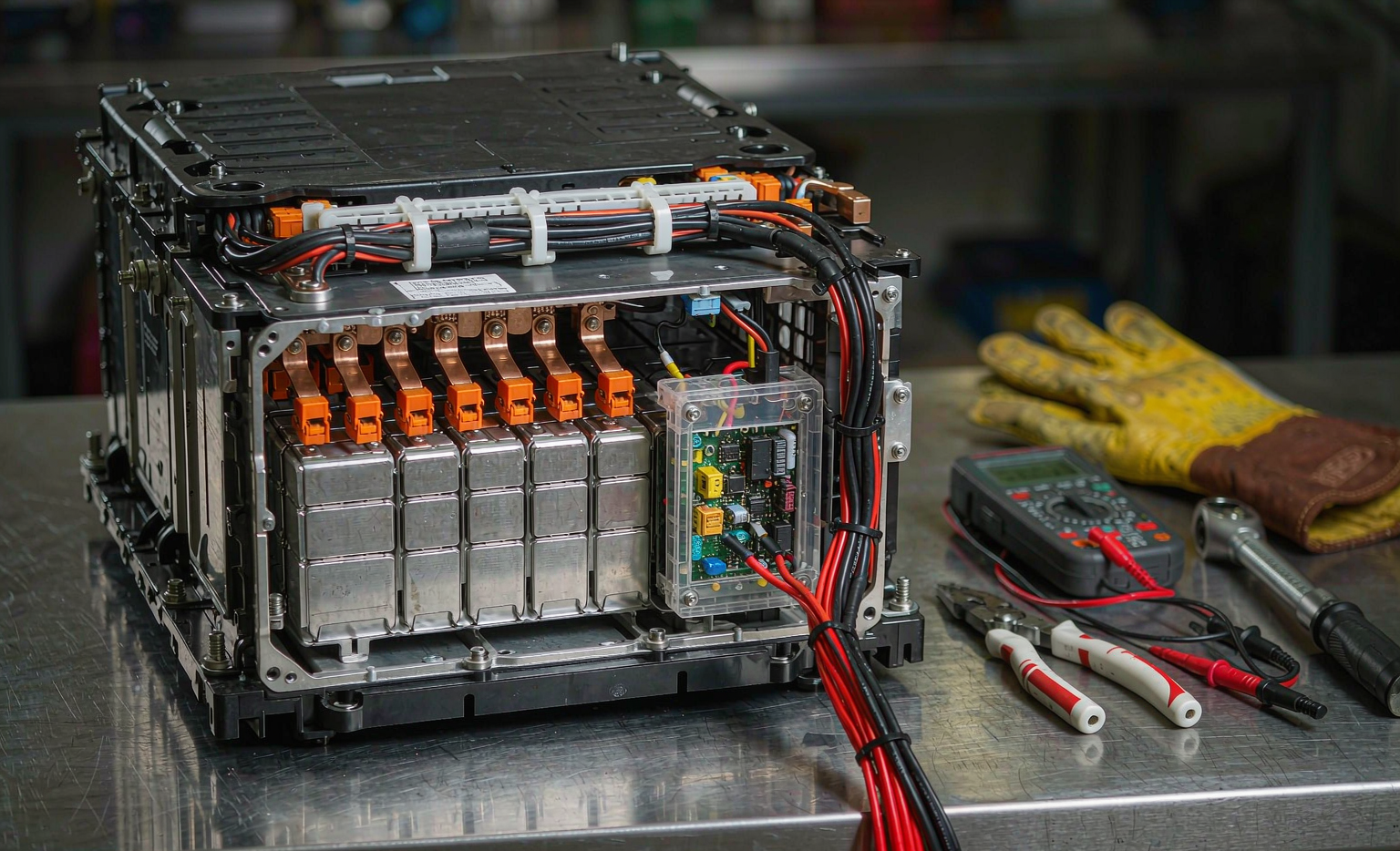
Why a Semi-Solid Pack Cannot Be Maintained Like a Conventional Liquid-Cell Pack
The word “semi-solid” is doing a lot of marketing work in this industry, so let me define what I am maintaining. The cells I work with retain a small liquid electrolyte fraction — typically a few percent by mass, against twenty to thirty percent in a conventional lithium-ion cell — soaked into a gel or paste electrode structure, sometimes with a ceramic or polymer-coated separator. Energy density at cell level in 2026 sits roughly in the 280–350 Wh/kg band for the automotive grades we qualify. That is a long way from a conventional LFP cell, and the reason OEMs accept the cost.
But the maintenance consequences are not about energy density. They come from three physical differences.
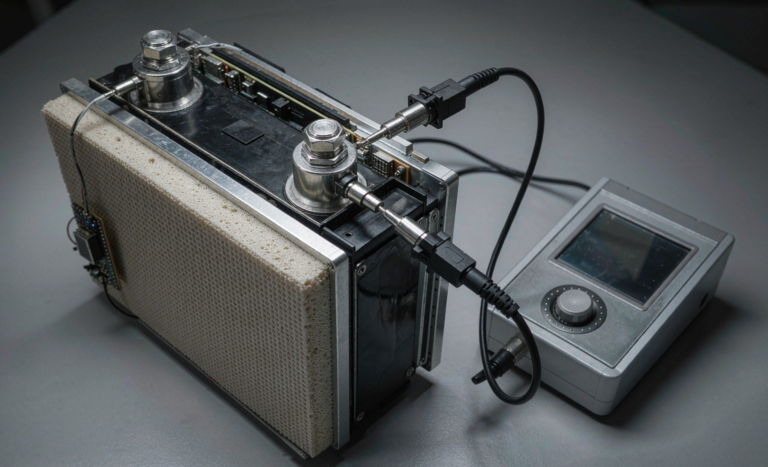
First, the electrode–electrolyte interface in a semi-solid cell is a solid-contact problem, not a wetting problem. Ionic transport across that interface degrades with mechanical contact quality. That means stack pressure is not an assembly detail — it is a maintenance variable. A liquid cell tolerates a slightly relaxed module because the electrolyte fills the gaps. A semi-solid cell turns that relaxation into interfacial resistance growth, which shows up as rising DCIR and, at the cold end of the operating map, as lithium plating.
Second, the swelling signature is different. In a conventional NCM pouch, thickness growth over life is dominated by gas from electrolyte decomposition, and everyone has learned to read it as a state-of-health proxy. In a semi-solid cell there is less gas, but the interfacial layer thickens. So the “ten percent thickness growth means replace it” heuristic that your technicians carry over from LFP service simply does not transfer. I have seen perfectly healthy semi-solid modules condemned against liquid-cell swelling limits, and I have seen genuinely degraded modules pass because nobody was watching DCIR.
Third, low-temperature charge acceptance is worse, not better. Reduced liquid fraction means lower bulk ionic conductivity at the same temperature. On the packs I commission, the charge current derating map starts biting earlier than a fleet manager coming from LFP expects. Every cold-climate field failure I have been called in on has had a charging event at low temperature somewhere in the log.
The Four Degradation Mechanisms I Design Every Maintenance Plan Around
A maintenance programme is only as good as the failure physics it was built for. These are the four that matter for a semi-solid traction pack.
Interfacial resistance growth
This is the dominant mechanism, and it is reversible to a degree in the first months of life. A fresh semi-solid cell does not give you its true DCIR at cycle zero. During the first fifty to one hundred cycles the interface conditions and the resistance actually falls before it starts a slow, linear climb. If you baseline your pack at commissioning and then set a thirty percent rise alarm, you will generate false positives in year one. I always take the official baseline after break-in, and I record both numbers so the trend is interpretable.
Stack pressure relaxation
Compression hardware — belleville washers, constant-force springs, tie rods, or a structural pack bond — loses preload over thermal cycles and vibration. The pressure bands we design to are modest by solid-state standards, generally in the range of a few tenths of a MPa, but they are narrow. What you can measure in the field is not pressure directly but its consequence: end-plate gap growth and the module-to-module DCIR spread. A module that drifts away from its neighbours is telling you something mechanical before it tells you anything electrochemical.
Lithium plating under cold or aggressive fast charge
Plating is the mechanism that turns a maintenance miss into a safety event. On a semi-solid pack the window is narrower than the marketing suggests, because the interface that gives you the energy density is also the interface that resists lithium insertion when the cell is cold. Every pack I sign off has a hard preheat interlock: no charge above roughly 0.5C below 10 °C, no charge at all below 0 °C, and the preheat target set by the coldest cell rather than the coolant inlet sensor.
Connection and harness degradation, which is not chemistry at all
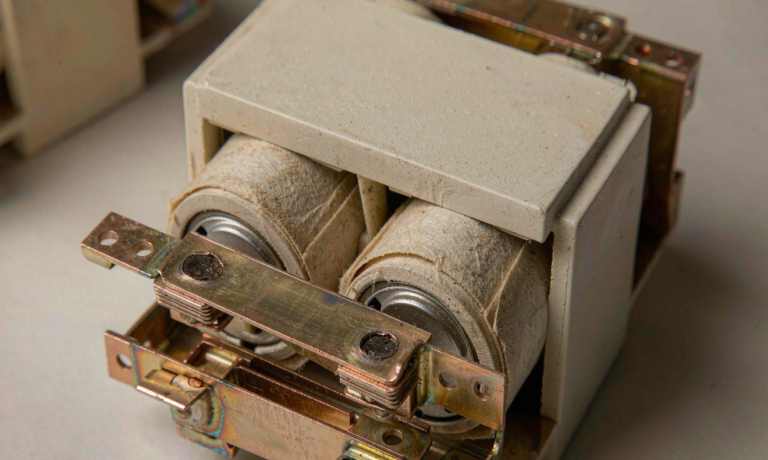
Across every EV service programme I have reviewed, connectors, busbar joints and harness terminations account for more “the battery is dead” callouts than the cells do. On a 400 V pack, a busbar joint that has loosened from 8 N·m to 5 N·m will add tens of milliohms, produce local heating, and drag the pack into a low-power derate that looks exactly like capacity fade in the driver’s seat. If your diagnostic sequence does not measure terminal drop before it condemns cells, you will replace healthy modules at enormous cost.
The First 90 Days: Building a Baseline You Can Actually Warrant Against
Every warranty argument I have ever lost was lost because the baseline was wrong or missing. The first ninety days of a semi-solid pack’s life are not a maintenance period, they are a measurement period, and the deliverable is a signed commissioning record.
What goes into that record:
- Break-in DCIR at defined conditions. Same cell temperature window (±2 °C), same state of charge (±5%), same current step and pulse duration, repeated on every module. You cannot compare a DCIR taken at 15 °C with one taken at 32 °C; the difference from temperature alone swamps a year of real degradation.
- Reference capacity test. A controlled constant-current discharge, typically C/3 at 25 °C with the pack conditioned to a thermal soak, from 100% to the manufacturer’s discharge cutoff. Record the ampere-hours and watt-hours delivered, not just the BMS state-of-charge estimate.
- Static voltage delta at rest. After a full charge and at least two hours of rest, record the spread between highest and lowest cell in every module. Under 50 mV is comfortable; 50–100 mV is a watch item; above 100 mV, the module does not go into revenue service.
- Coolant baseline. Glycol concentration, pH, and conductivity at 25 °C, plus flow rate and the temperature rise across the pack at a fixed pump speed and load point. Factory-fresh coolant in the systems I work on reads well under 50 µS/cm.
- Insulation resistance. Measured with an insulation tester at the correct test voltage, both poles to chassis. Regulatory minimums are expressed in ohms per volt of working voltage under ECE R100 and GB 38031, but a healthy pack reads in the megohm range. I treat anything under 1 MΩ on a 400 V pack as an investigation, not a pass, regardless of what the minimum says.
- Torque witness marks on every HV joint, photographed. The photograph is what makes the twelve-month re-torque check meaningful.
One more thing that belongs in the commissioning record: the firmware version and the full fault-code snapshot format. When you are debugging a warranty issue three years later, a fault code without the parameter snapshot that accompanied it is close to useless.
The Service Ladder: Six-Month, Annual and Event-Driven Tasks
Fleet maintenance fails in two directions. Over-servicing costs availability and money; under-servicing costs packs. The structure I use separates routine inspection from measurement from intervention.
Every six months or 20,000 km
- Visual inspection of the enclosure: impact damage, corrosion at fasteners, breather membrane condition. A breather vent that has been painted over during bodywork repair is a real failure I have found more than once.
- Verify the enclosure sealing. Semi-solid packs in traction service are typically specified to IP67 or IP6K9K; the gasket is a service item, not a permanent feature.
- Coolant level, glycol concentration, pH and conductivity. Sample from the same point every time — conductivity readings taken from different points in a loop are not comparable.
- HV connector and busbar torque verification against the documented specification, using the commissioning witness marks.
- Insulation resistance check on both poles.
- BMS log download: fault codes, maximum and minimum cell temperatures, number of fast-charge events below the preheat target, number of deep discharges.
Annually
- Full capacity verification test under the same protocol as commissioning, with temperature correction applied.
- DCIR measurement on every module, compared against the post-break-in baseline. Alarm at +30%; investigate hard at +60%; condemn a module at +100% of baseline.
- Balance verification: passive balancing systems on semi-solid packs need a periodic full charge followed by a rest period, or the state-of-charge estimate will drift. I specify a monthly full charge and two-hour rest for fleets that otherwise live in partial-state-of-charge operation, because opportunity charging starves the balancing circuit.
- Coolant loop service: strainer or filter cleaning, flow verification, air bleed, and a pressure-drop comparison against the commissioning value. A rising pressure drop is usually a partially blocked cold plate before it is a pump problem.
- Thermal performance check under a repeatable drive or load cycle: peak cell temperature and pack temperature spread. A spread that has grown from 4 K to 9 K at the same duty point is a coolant-side problem long before it is a cell problem.
Event-driven (do these immediately, not at the next scheduled visit)
- Any thermal event, derate, or isolation fault: full diagnostic before the vehicle returns to service.
- Any impact or underbody strike, however minor. Internal mechanical damage to a semi-solid module does not announce itself.
- Any immersion or flood exposure, at any depth. Water ingress and HV do not negotiate.
- Any fault code relating to cell voltage limits, temperature limits, or insulation monitoring.
- Any opening of the enclosure by anyone other than authorised personnel — which brings me to the warranty section.
Diagnostics That Work: Capacity, DCIR, Voltage Delta and Self-Discharge Read Together
Single-signal diagnosis is how fleets waste money. The four signals below are only interpretable as a set, and the order in which you measure them matters.
Start at the terminals. Measure the voltage drop across the pack terminals and compare it with the sum of the module voltages reported by the BMS. A difference that grows under load, and that appears and disappears with mechanical disturbance, is a connection problem. Fix the connection and re-measure before you order anything.
Then read the BMS log. A single cell collapsing under load while its neighbours hold is a cell problem. The whole stack sagging in unison is a current path, thermal, or calibration problem. This one distinction saves more modules than any other step.
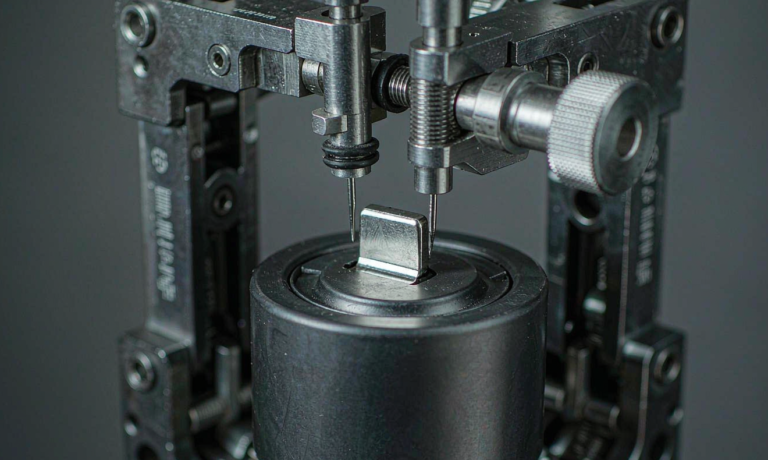
Then DCIR. Relative to baseline, always. Absolute milliohm values are meaningless across different measurement equipment, temperatures and states of charge.
Then capacity. Capacity is the slowest, most expensive measurement to make properly and the one everyone reaches for first. It is the confirmation, not the screen.
Finally, self-discharge. Below roughly two to three percent per month is normal for a healthy semi-solid module. Above five percent per month, and rising, points to an internal micro-short and is one of the few genuinely urgent findings in this business. A module in that condition does not wait for the next scheduled service.
Coolant and Thermal Hardware — The Most Under-Serviced Subsystem on an EV Pack
If I could change one thing about how fleets maintain high-energy packs, it would be this. The cells get all the attention because they are expensive; the cooling system gets ignored because it is plumbing. Yet in the failure reviews I have run, thermal-side causes — low flow, air locks, degraded coolant, blocked cold plates, a pump that has lost twenty percent of its head — account for a larger share of capacity loss than cell chemistry does.
Coolant conductivity is the single most useful number on the sheet. As glycol degrades and as any ionic contamination enters the loop, conductivity climbs. Our internal action threshold is 50 µS/cm and the service limit is 100 µS/cm at 25 °C, well below the point where the coolant becomes a shock hazard, because by the time it is a hazard the cold plates have already started corroding. Track it every six months and you will see the trend a year before you see the failure.
Equally important: air. An air pocket in a cold plate produces a local hot spot that the pack’s own thermal model will not predict, because the model assumes a full loop. After any coolant service, verify flow, verify pressure drop, and run a thermal soak cycle before releasing the vehicle.
Warranty, Records and the Unauthorised-Opening Trap
Warranty terms on traction packs are usually quoted as years and kilometres at a capacity retention threshold — eight years and 160,000 kilometres at 70% retention is the common pattern, with some semi-solid programmes pushing toward ten years and 75–80%. What the brochure does not tell you is that the warranty is conditional on a documented maintenance record, and that the most common reason for a declined claim is not abuse. It is missing paperwork.
Three clauses deserve particular attention on a semi-solid pack:
- Unauthorised opening. On a conventional pack, opening the enclosure voids the ingress protection and the warranty. On a semi-solid pack it also destroys the compression preload that the cells depend on. Reassembling a module in a workshop does not restore factory-set stack pressure. This is not a warranty technicality; the module will genuinely not perform as designed afterwards. Semi-solid packs are serviceable at module level with factory-set compression, not at cell level in the field.
- Operating window exclusions. Charging outside the specified temperature map, sustained operation above the maximum continuous cell temperature, and immersion are exclusions on essentially every contract I have reviewed. Your BMS log is the evidence, and it will be read.
- The test protocol definition. A capacity warranty is meaningless unless the contract specifies how capacity is measured: which C-rate, which temperature, which cutoff, and whether the BMS estimate or a controlled discharge governs. If the contract is silent, expect a dispute. I insist on writing the protocol into the supply agreement.
On our side of the business, a custom battery solution for a fleet customer always ships with the maintenance schedule written into the supply agreement rather than an appendix — because an unmaintained pack is a warranty claim waiting to happen, and a maintained one is the best reference any manufacturer can have.
End of Life, Second-Life Repurposing and Transport
A semi-solid EV pack typically leaves traction service between 70% and 80% state of health, not at zero. That residual capacity has real value in stationary applications, and the decision points are worth planning for.
Repurposing is a module-level exercise. Modules are graded by measured capacity, DCIR and self-discharge, then regrouped into strings with matched characteristics. Mixing modules whose DCIR differs by more than about twenty percent inside one string guarantees that the weakest module sets the performance of the whole string.
Transport is where good programmes get caught out. A removed lithium battery module being shipped for diagnosis, return, or redeployment is a dangerous-goods consignment. UN38.3 test summaries must be available — that has been a documentation requirement since 2020 and enforcement has not loosened — and the shipment falls under UN3480 for batteries shipped alone. If any leg is by air, the state of charge must be at or below 30%. I have seen a second-life project lose three weeks because modules were palletised at 80% state of charge and no one checked the freight mode.
Storage between removal and redeployment: 30–50% state of charge, 10–25 °C, dry, with a state-of-charge check every six months. A module stored at full charge for a year is not a spare; it is a degraded asset with a plausible-looking nameplate.
What I Would Tell a Fleet Manager on Day One
Maintain the thermal system more seriously than the cells. Baseline after break-in, not at delivery. Diagnose terminal drop before you diagnose chemistry. Never open a semi-solid module outside a factory-authorised process. And write the capacity test protocol into the contract before you sign it, not after the first disputed measurement.
Do those five things and a semi-solid state battery EV pack will give you the cycle life it was sold on. Skip them and you will buy the most expensive cells on the market to get conventional-cell reliability — which, in the fleets I have audited, is exactly what happens.
Frequently Asked Questions
How often does a semi-solid EV battery pack actually need service?
Two scheduled levels: a six-month or 20,000 km inspection covering visual checks, coolant chemistry, torque verification, insulation resistance and a BMS log download; and an annual measurement visit covering capacity verification, module DCIR against baseline, balance verification and thermal performance. Event-driven diagnostics after any impact, thermal derate, isolation fault or immersion take priority over both.
Does semi-solid chemistry really need less maintenance than a conventional lithium-ion pack?
Less of some things, more of others. There is less gas generation and typically slower capacity fade, so swelling-driven interventions reduce. But the pack is more sensitive to stack pressure, more restrictive on cold-temperature charging, and effectively not field-serviceable at cell level. The total service hours are comparable; the skill mix is different, and the diagnostic equipment matters more.
Can a semi-solid pack be repaired at cell level in the field?
Not in any design I would approve. The compression preload is set at the factory and releasing it during disassembly cannot be replicated with workshop tooling. Field service is module-level, using factory-built replacement modules; anything inside the module is a factory or authorised-centre operation.
What state-of-health threshold triggers a warranty claim?
Whatever your contract says, which is why the measurement protocol belongs in the contract. The common structure is 70% of nameplate capacity within eight years or 160,000 km, with some semi-solid programmes at 75–80% over ten years. The dispute is almost never about the number; it is about how the number was measured.
Is fast charging a semi-solid pack in cold weather safe?
Not without preconditioning. Charge current must be derated as cell temperature falls, no charge above roughly 0.5C below 10 °C, and no charging at all below 0 °C. Critically, the interlock should be driven by the coldest cell in the pack, not by coolant inlet temperature or ambient. Lithium plating from a cold fast charge is permanent, and it is the pathway from a maintenance miss to a safety event.
How do I tell whether rising DCIR is a cell problem or a connection problem?
Measure in order. Compare pack terminal voltage drop against the sum of module voltages under load — a discrepancy that responds to mechanical disturbance is a connection. Then read the BMS log: one cell collapsing is a cell; the whole stack sagging together is a current path, thermal or calibration issue. Only then measure module DCIR against baseline. Re-torque and re-measure before condemning anything.
Can I store a removed semi-solid module at full charge?
No. Store between 30% and 50% state of charge at 10–25 °C in a dry space, and check state of charge every six months. Full-charge storage accelerates calendar degradation and, if the module ever needs to fly, it has to be discharged to 30% anyway.
Do I still need UN38.3 documentation for a module being returned under warranty?
Yes. Any lithium battery shipped on its own travels as UN3480 dangerous goods and the UN38.3 test summary must be available on request; air freight additionally requires state of charge at or below 30%. Packs or modules installed in a vehicle ship under a different entry, but a module on a pallet does not.