Semi-Solid State Battery Manufacturing for Robotics
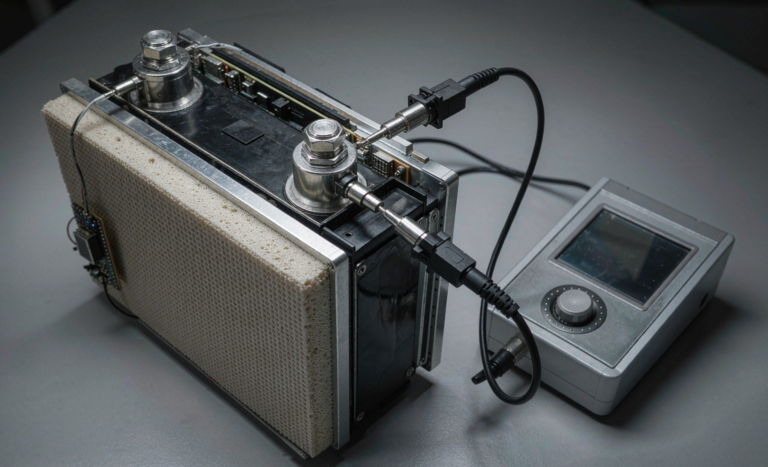
When I first started qualifying battery packs for collaborative robots back in 2019, the limiting factor was never the cells on paper — it was the gap between a spec sheet and a pack that survives 10,000 duty cycles on a factory floor. Over the last four years at Horizon Power I have run pilot lines, failure-analysis teardowns, and volume ramp-ups for semi-solid state battery cells built specifically for robotics. This article is the production playbook I wish I had on day one: what actually changes on the assembly line, the process windows I run by, the safety standards the cells must clear, and how we turn a promising chemistry into a custom battery solution that a robotic arm can trust.
Why Robotics Demands a Different Cell Architecture
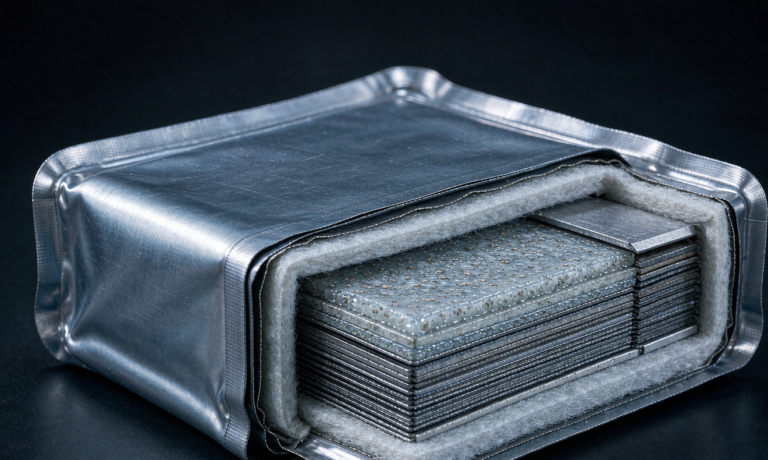
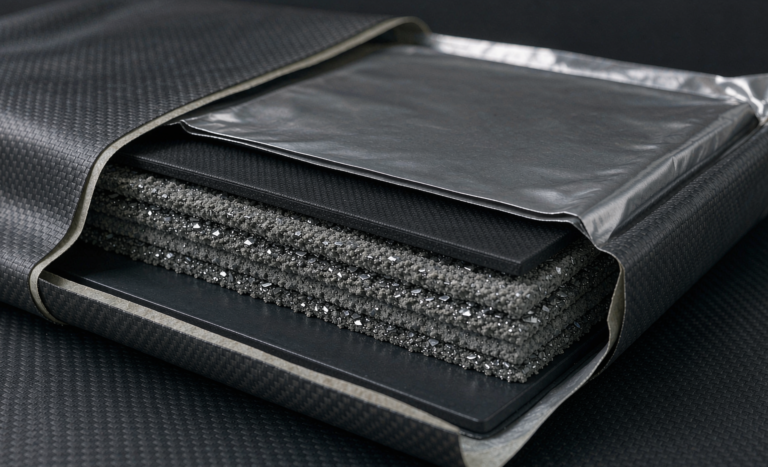
A warehouse AMR, a surgical cobot, and an agricultural UGV do not share the duty profile of a smartphone. Robotics pulls high sustained current, tolerates wide temperature swings, and — critically — operates in close proximity to humans. That combination rules out the classic trade-off of “maximize energy, ignore safety margin.” A semi-solid state battery closes the gap between conventional liquid-electrolyte lithium batteries and full solid-state by replacing roughly 70–90% of the flammable liquid electrolyte with a gel-like or composite separator soaked in a reduced amount of ion-conducting medium.
In our robotic programs the headline gains are consistent: energy density in the 280–360 Wh/kg range (versus ~200–250 Wh/kg for comparable LFP packs), and a meaningful drop in thermal-runaway propensity because the remaining liquid fraction is immobilized. For a custom battery solution, that means we can hit a robot’s runtime target with fewer cells in series, which lowers both mass and the number of failure points. I have seen AMR designers reclaim nearly 1.2 kg of payload just by switching pack chemistry — a real number, not a marketing one.
The Semi-Solid Electrolyte Stack — What Actually Changes on the Line
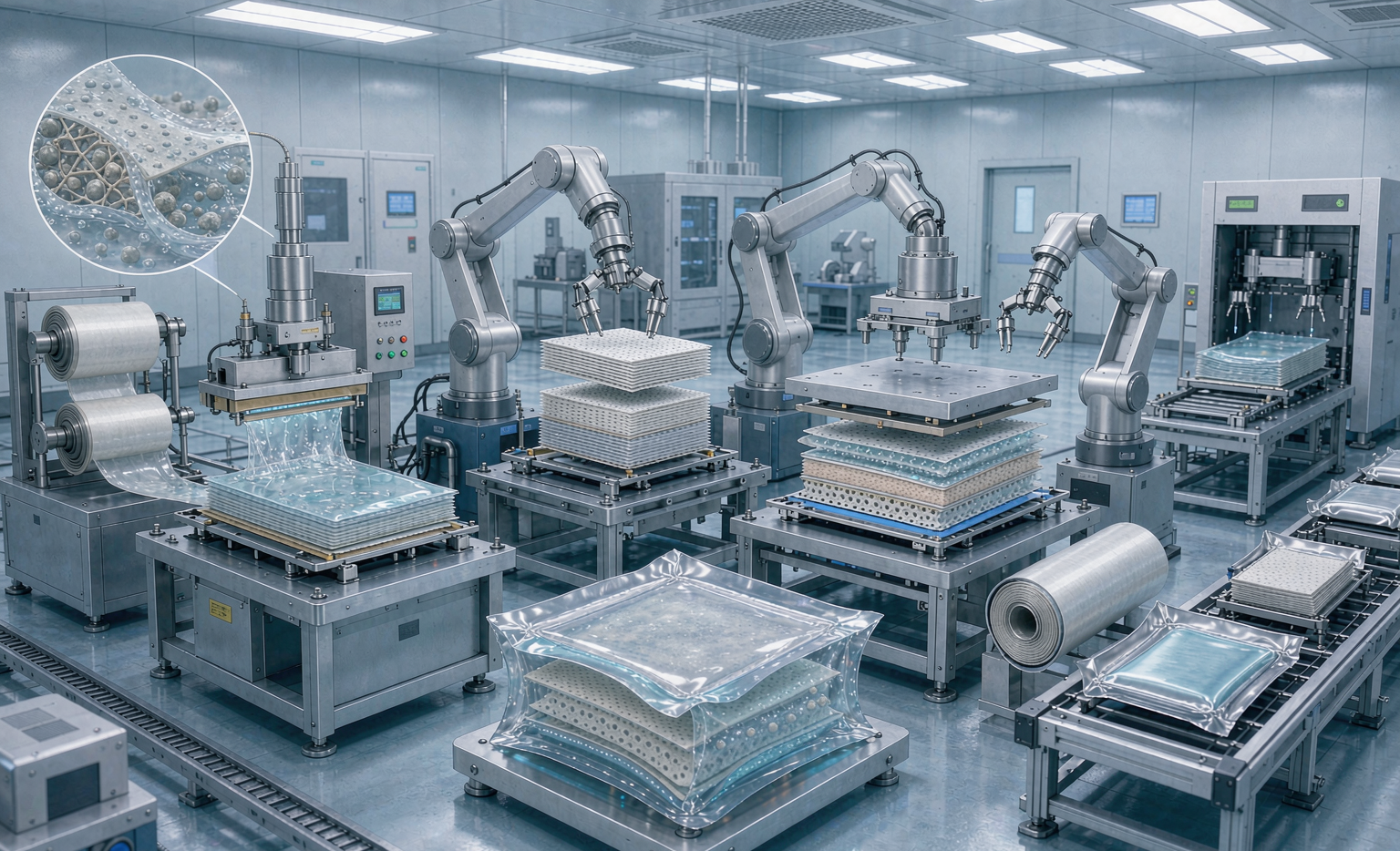
People imagine semi-solid manufacturing as a brand-new factory. In practice, the biggest changes are in the electrode and separator stations, not the building. The cathode and anode still use layered oxides or silicon-blended anodes, but the electrolyte is dispensed as a thixotropic slurry rather than flooded. That single change forces three line modifications I now treat as non-negotiable:
- Controlled-viscosity metering. The semi-solid electrolyte must be dosed within a narrow rheology window (typically 20,000–80,000 cP at the coater). Too thin and you get flooding; too thick and you get voids that become lithium plating sites.
- Soft-stack lamination. Instead of rigid compression, cells are laminated under 0.3–0.7 MPa with elastic buffers so the gel layer stays uniform. We monitor lamination pressure with a Cpk≥1.67 target.
- Low-dewpoint dry rooms. Even with less free liquid, water ingress still generates HF. Our line holds a −50 °C dew point in the stacking zone.
The result is a lithium battery that keeps the manufacturability of a liquid cell while inheriting much of the safety story of solid-state. For robotics OEMs, the practical message is simple: you do not need a science-project supply chain to adopt this chemistry.
Coating and Stacking: The Process Windows I Run By
Coating is where yield is won or lost. On our semi-solid pilot line I hold these windows:
- Cathode coat weight: 180–220 g/m², with a coating CV (coefficient of variation) under 2.5%.
- Electrode drying: 80–110 °C zone ramp, dew point −45 °C, residence time tuned to solvent boil-off without skinning the surface.
- Stack alignment: electrode-to-separator offset kept under 0.3 mm to prevent edge shorts in high-rate robotic discharge.
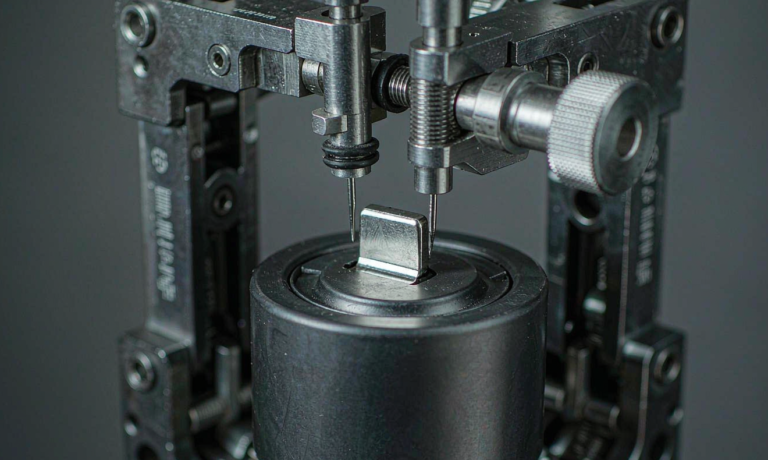
We qualify every 500th cell with 4-wire Kelvin DCIR measurement; the cell-to-cell DCIR coefficient of variation must stay under 10% or the batch goes back for root-cause. In robotics, pack-level imbalance is the silent killer of runtime, and it almost always traces back to coating non-uniformity. A semi-solid state battery is more forgiving on thermal margin than an NMC liquid cell, but it is not forgiving on consistency.
Qualification and Safety Standards Every Robotic Cell Must Clear
A cell that looks good in the lab is worthless to a robotics integrator until it clears the compliance gauntlet. For every semi-solid program we certify against the same core standards I apply across our drone battery and industrial lines:
- UN38.3 — the transport test suite (T.1–T.8): altitude simulation, thermal, vibration, shock, external short, impact, overcharge, and forced discharge. This is the gate for shipping cells and packs by air or sea.
- IEC 62133-2 — safety requirements for portable lithium cells and batteries, covering internal short, thermal abuse, and overcharge protection.
- IEC 62619 — the industrial-cell standard that matters most for stationary and robotic duty, adding thermal propagation and functional safety expectations.
- FAA / EASA alignment — for any robotic platform that ships as air cargo or is mounted on an aerial robot, we pre-clear Section II / PI 965–967 packing and keep SoC at 30% for transport.
I keep a physical test ledger for each batch: 8 samples into UN38.3, 5 into IEC 62133-2, 3 into IEC 62619 propagation. If a single cell vents in the thermal-abuse test, the entire process window is re-validated before we ship a single pack. That discipline is what lets a robotics customer put our packs next to a human operator without a safety review nightmare.
From Pilot Line to Volume — Yield, Throughput, and Cost
The question every procurement manager asks is “when does this scale without breaking the bill of materials?” Based on our ramp from 200 to 4,000 cells per week, three lessons hold:
- Yield is a coating problem, not a chemistry problem. Our first line ran at 71% yield; after reworking the metering valves and adding in-line vision on the coater, we crossed 92%. The semi-solid slurry is stable; the equipment discipline is the variable.
- Throughput scales with drying, not stacking. Stacking is fast; solvent removal is slow. We added a second low-dewpoint drying tunnel rather than more laminators, and weekly output doubled.
- Cost lands between NMC and LFP. At volume, our semi-solid cells run roughly 1.3–1.6× the $/Wh of LFP but deliver 30–40% more energy per kilogram — the math works for any robot where mass or runtime is the constraint.
For a custom battery solution, we usually start a robotics customer on a 200-cell characterization lot, validate the pack BMS against their discharge profile, then commit to volume. That de-risks both sides before anyone bets a product launch on the chemistry.
Designing Custom Battery Solutions for Robotic Platforms
No two robots share a battery envelope. An AMR wants a flat, wide pack; a cobot arm wants a compact, high-discharge module; an inspection UGV wants wide-temperature tolerance. Our engineering flow for a semi-solid robotic pack is:
- Duty-profile capture — we log the actual current signature (peak/Ah, rest periods, regen) for at least one full shift.
- Cell selection — pick the semi-solid format (pouch or prismatic) whose DCIR and thermal window match the profile.
- Pack architecture — series/parallel layout, busbar design (pure-Ni laser weld target <0.15 mΩ·25 N), and IP65–67 sealing with ePTFE breathers for floor environments.
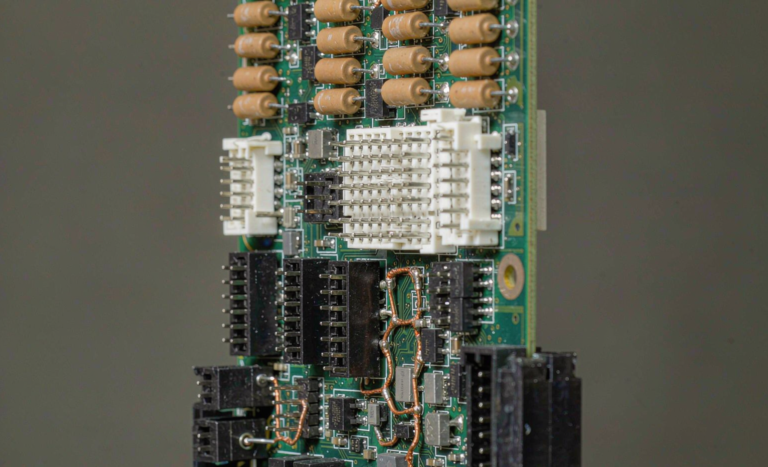
- BMS integration — dual-sense voltage/current, overcurrent protection under 200 ms, contactor weld detection, and sub-0 °C charge lockout to protect the gel electrolyte.
The payoff is a lithium battery system matched to the robot rather than a repurposed consumer pack. In one cobot program, matching the semi-solid cell’s lower self-heat to the arm’s duty cycle let us drop the active-cooling fan entirely — saving 90 g and one failure mode.
Frequently Asked Questions
Are semi-solid state batteries safe for human-collaborative robots?
Yes, and that is the main reason robotics teams adopt them. By immobilizing most of the liquid electrolyte, the cell resists leakage and dramatically slows thermal propagation. We still design with IEC 62619 propagation barriers (aerogel/mica standoffs, directional venting, 150 mm clearance where the envelope allows), but the starting point is fundamentally safer than a flooded NMC cell. For a cobot working arm-in-arm with an operator, that margin is the difference between a safety audit and a safety crisis.
How do semi-solid cells compare to NMC and LFP on cycle life?
In our accelerated testing at 1C charge / 2C discharge with 20% DoD swings typical of robotics, semi-solid cells hold ~80% capacity at 1,200–1,600 cycles, ahead of comparable NMC liquid cells and in the same ballpark as quality LFP on cycle count — but at 30–45% higher specific energy. For a robot where you cannot add more mass, that energy-per-kilo advantage usually wins the comparison.
Can I retrofit a semi-solid pack into an existing robot?
Often, but not blindly. The pack voltage window and BMS communication (SMBus/CAN) must match the robot controller, and the lower self-heat of semi-solid cells can let you simplify thermal management. We run a 200-cell characterization lot and a BMS bench test before recommending a retrofit, because the discharge signature — not just the connector — decides compatibility.
What certifications are needed to ship robotics packs by air?
At minimum, UN38.3 test summary, IEC 62133-2 for the cell, and IEC 62619 for the industrial application. For air transport we pack to PI 965–967 Section II and hold transport SoC at 30%, aligned with FAA and EASA expectations. We supply the full test summary and a signed compliance statement with every shipment so the logistics team is never stuck at the cargo gate.
If you are scoping a robotic platform and want a semi-solid state battery that is qualified, scalable, and matched to your duty cycle, that is exactly the kind of custom battery solution we build at Horizon Power — engineered by people who have stood on the line, not just spec’d the chemistry.