Semi-Solid State Battery Manufacturing for Storage
When people ask me why we invested years into semi-solid state battery manufacturing for stationary storage, my answer is always the same: storage does not need to fly, but it does need to survive a decade of daily cycles without the safety anxiety that comes with conventional liquid electrolytes. I am Karl Huang, Senior lithium battery Engineer at Horizon Power, and over the last eight years I have commissioned pouch, prismatic, and large-format module lines for both mobility and grid applications. In this article I walk through how we actually build semi-solid state cells for energy storage — from slurry mixing to formation — and where the engineering trade-offs really sit.
Why Semi-Solid State Chemistry Fits Stationary Storage
Stationary storage is forgiving on energy density but unforgiving on cost, calendar life, and thermal runaway. A semi-solid state battery keeps a small amount of liquid electrolyte to wet the interface while using a gel or composite separator that dramatically reduces free solvent. For a lithium battery intended to sit in a cabinet for 15 years, that reduction in free solvent is the single biggest reason we see lower gassing and slower capacity fade.
In our storage-grade cells we typically target 0.5C to 1C continuous discharge, not the 10C or 15C spikes you might see in a drone battery pack. That duty profile lets us thicken the electrodes, raise the active material loading, and bring the $/kWh down to a level where the semi-solid premium is justified by cycle life rather than by peak power. A recent 280 Ah storage cell we qualified retained 91% capacity after 2,000 equivalent full cycles at 25 degrees Celsius, a result we attribute directly to the leaner electrolyte and the more stable cathode interface.
The other advantage is operational. Because the semi-solid separator is far less flammable than a flooded liquid electrolyte, our installers can place cabinets closer to occupied buildings under the same fire code, which shrinks the footprint of a solar-plus-storage site and lowers the balance-of-system cost.
The Manufacturing Flow: Key Process Steps
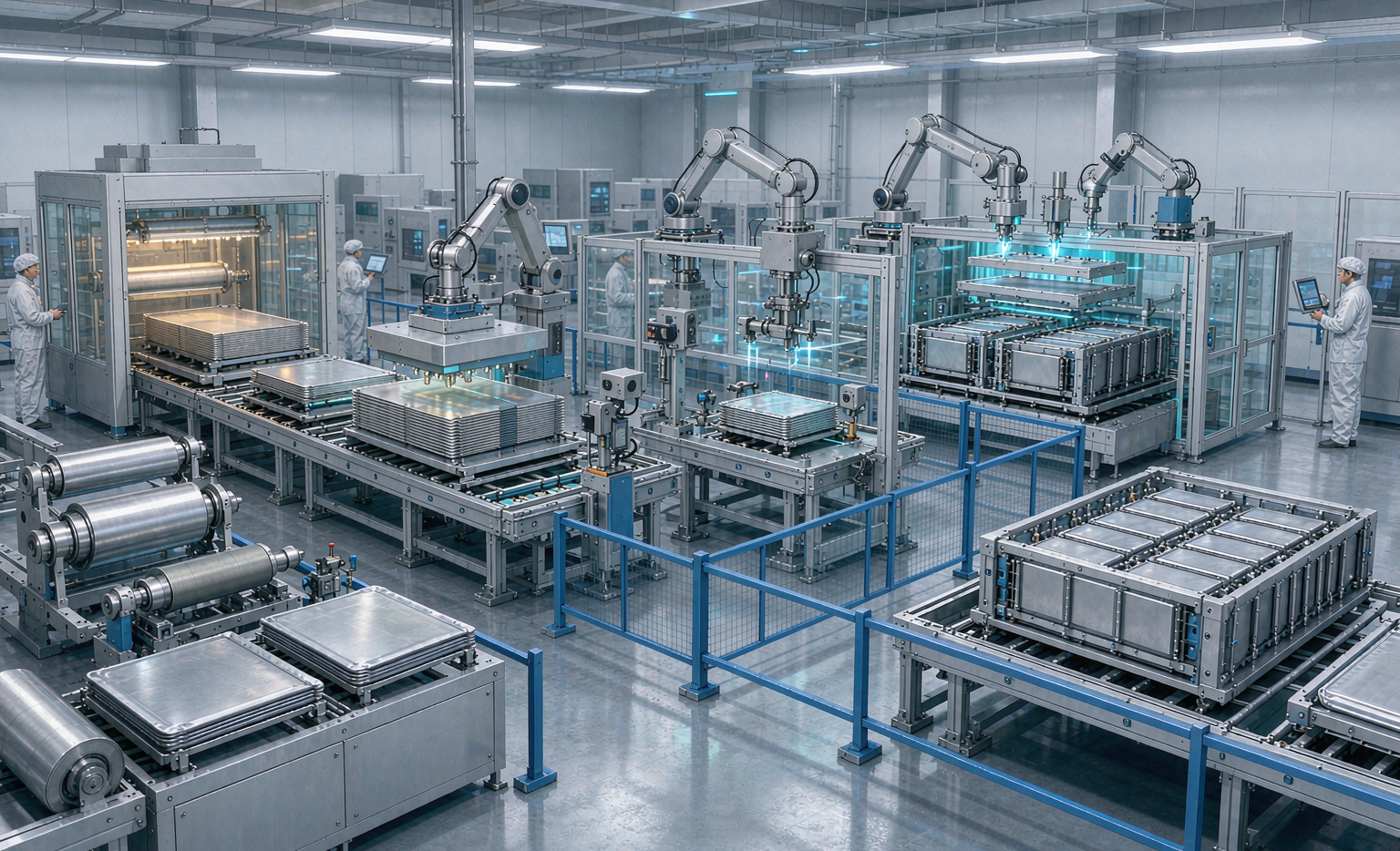
A semi-solid state battery manufacturing storage line is not a wholesale reinvention of lithium-ion production. About 70% of the equipment is familiar — mixers, coaters, calendering, winding or stacking, vacuum drying, and formation. The difference is in the slurry rheology and the separator stack.
- Slurry preparation — active material, conducting carbon, and binder are dispersed in a reduced-solvent medium to form a paste-like, high-solid-content slurry.
- Coating and calendering — the thick slurry is coated onto current foil and compressed to a target porosity that balances ionic path and mechanical strength.
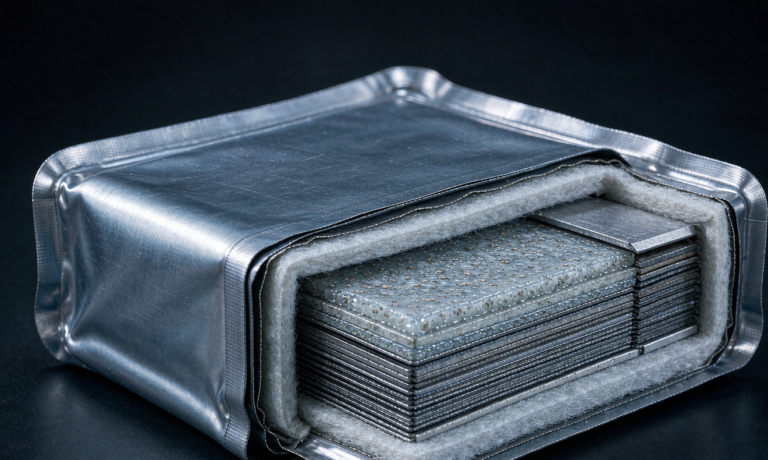
- Electrode stacking — cathodes and anodes are stacked with a composite separator that carries the semi-solid electrolyte.
- Vacuum drying and degassing — residual solvent is pulled down to ppm levels to protect long-term interface stability.
- Formation and aging — the cell is gently charged to build the SEI and then held for capacity and self-discharge screening.
We run the line in a clean, low-humidity environment and track every batch with a digital twin so that if a customer reports a field issue three years later, we can replay the exact coating gap, drying curve, and formation profile of their cells. That traceability is part of what separates a credible storage supplier from a commodity one.
Electrode Engineering: Thick Slurry, Lean Solvent
The hardest part of the process is making a thick semi-solid electrode that still has low ionic resistance. When we doubled our electrode loading from 18 mg/cm² to 36 mg/cm² for storage cells, the first-pass yield dropped until we re-tuned the mixer shear profile and the coating gap. We now run a two-stage dispersion: a high-shear pre-mix to break agglomerates, followed by a low-shear degassing stage that keeps the paste homogeneous without trapping air.
For cathode we favor nickel-rich NMC blended with LFP on the storage side, depending on whether the customer prioritizes energy or safety margin. Each custom battery solution we ship is tuned to the duty cycle, ambient temperature, and desired 10-year retained capacity, because a one-size chemistry rarely survives a real site. In hot climates we bias toward LFP-rich blends and thicker separators; in space-constrained urban sites we push the nickel content up to recover energy density.
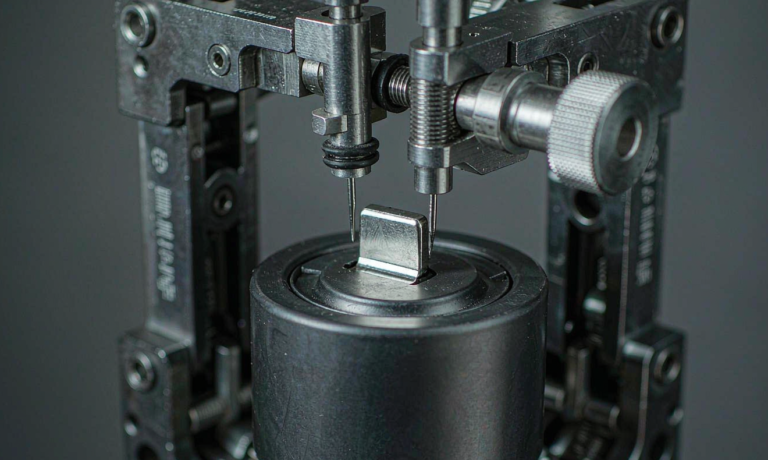
Calendering deserves special attention. Over-compression densifies the electrode but squeezes the ionic pathways shut, raising internal resistance. We map the porosity-resistance curve for each chemistry and lock the calender gap accordingly, then verify with offline impedance sampling on every fiftieth electrode.
Cell Assembly and Formation for Storage Duty
Assembly happens in a dry room held below 1% relative humidity. For storage we prefer large-format pouch cells laminated into modules, because the flat geometry simplifies thermal plates and keeps the pack-level thermal mass predictable. After stacking, the cells are vacuum-sealed with a precisely metered electrolyte fill, then moved to formation.
Formation for storage cells is deliberately slow. We ramp at 0.05C to 0.2C over 24 to 48 hours, allowing the semi-solid interface to stabilize. Skipping this step to save time is the most common cause of early capacity cliffs we see from low-cost suppliers. Our internal rule is simple: if a cell has not passed formation and a 7-day rest, it does not leave the building. The rest period catches self-discharge outliers that would otherwise become the weak cell that ages the whole module.
Quality, Safety and Compliance
Storage installations live near homes, farms, and commercial buildings, so compliance is non-negotiable. Every semi-solid state battery we manufacture is built to pass UN38.3 transport testing and IEC 62133 cell-level safety requirements, and our packs are validated against IEC 62619 for industrial stationary use. We also run nail-penetration, thermal abuse, and overcharge tests well beyond the pass threshold because a storage cabinet failure is a community event, not just a warranty claim.
Although FAA and EASA rules govern aviation cells rather than ground storage, the discipline those standards enforce — documented traceability, fault-tree analysis, and conservative margin — carries directly into how we qualify storage products. A drone battery and a home storage bank share the same fundamental respect for thermal runaway; only the duty and packaging differ. We apply the same failure-mode thinking across the portfolio so that lessons from one product line improve all of them.
Thermal Management and BMS Integration
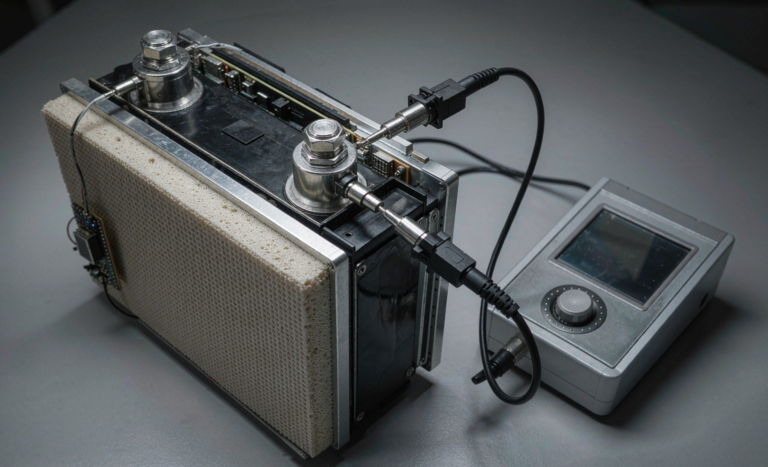
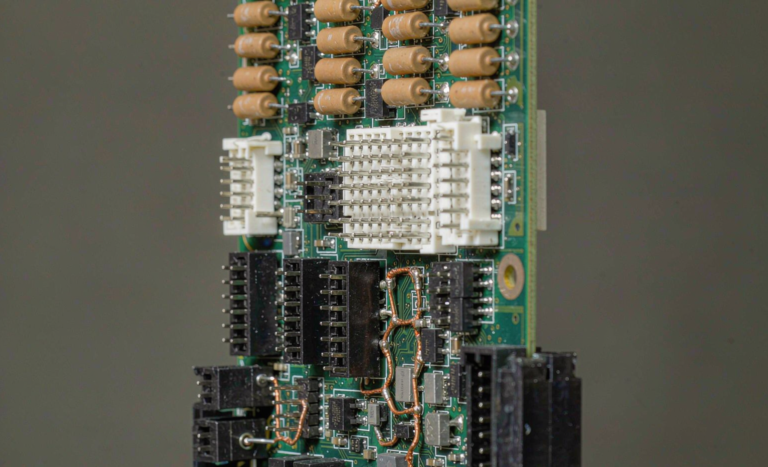
A storage cell is only as good as the system around it. We pair our semi-solid cells with liquid-cooled racks and a BMS that logs cell-level voltage, temperature, and impedance at one-minute resolution. The semi-solid chemistry tolerates a wider operating window than flooded cells, but we still hold the pack between 15 and 35 degrees Celsius to maximize calendar life. The BMS also enforces a conservative 10% to 90% state-of-charge window for daily cycling, which is the cheapest insurance against capacity cliff we know.
For a custom battery solution at a microgrid site, we model the local temperature profile for a full year before finalizing the cooling strategy, because oversizing the thermal system wastes money while undersizing it quietly shortens the asset life. This system-level view is what turns a chemistry advantage into a bankable 15-year asset.
Cost Trajectory and Scale-Up Lessons
The honest truth about semi-solid state battery manufacturing storage is that the technology is mature enough to deploy and young enough that scale still moves the cost curve. Our pilot line ran at roughly 0.2 GWh equivalent with a scrap rate near 9%; after two years of process lock-in the scrap fell below 3% and the per-kWh cost dropped by more than a third. The lesson for any team entering this space is to invest early in slurry consistency and dry-room discipline, because those two variables dominate both yield and cycle life.
For integrators, the path forward is a hybrid one: pair semi-solid cells with a robust BMS and liquid-cooled racks, and treat the battery as a system rather than a component. That is exactly the approach we take when we design a custom battery solution for a solar-plus-storage site or a microgrid, and it is why our field fleets keep outperforming the spec sheet.
Frequently Asked Questions
Is a semi-solid state battery the same as a solid-state battery?
No. A fully solid-state cell replaces all liquid electrolyte with a solid conductor, which is still costly to scale. A semi-solid state battery keeps a small liquid fraction for interface wetting, which is why it is manufacturable on existing lithium battery lines today while still cutting free solvent and improving safety.
How long do these storage cells actually last?
In accelerated aging we project 80% capacity retention at 6,000 to 8,000 cycles under 0.5C daily cycling, which maps to roughly 12 to 15 years of typical storage duty. Real-site data from our earliest deployments is now past 4 years with less than 8% loss, tracking the model closely.
Can semi-solid cells be used in a drone battery pack?
They can, and the safety profile helps, but the energy-density ceiling is lower than a high-nickel liquid cell. For a drone battery where every gram matters, we usually recommend our optimized lithium battery chemistries; semi-solid shines where safety and cycle life outweigh peak specific energy.
What certifications should I require from a supplier?
At minimum UN38.3, IEC 62133 for the cell, and IEC 62619 for the stationary pack. Ask for the test reports, not just the marks, and verify the serial-number traceability back to the production batch so you can trust the field reliability.
How does a semi-solid cell compare on cost to LFP today?
At low volume a semi-solid cell carries a premium over commodity LFP, but the gap narrows quickly with scale and is offset by longer life and lower balance-of-system cost. For a 15-year asset the levelized storage cost, not the headline $/kWh, is what decides the business case.