Semi-Solid State Battery Reliability for Aerospace: What
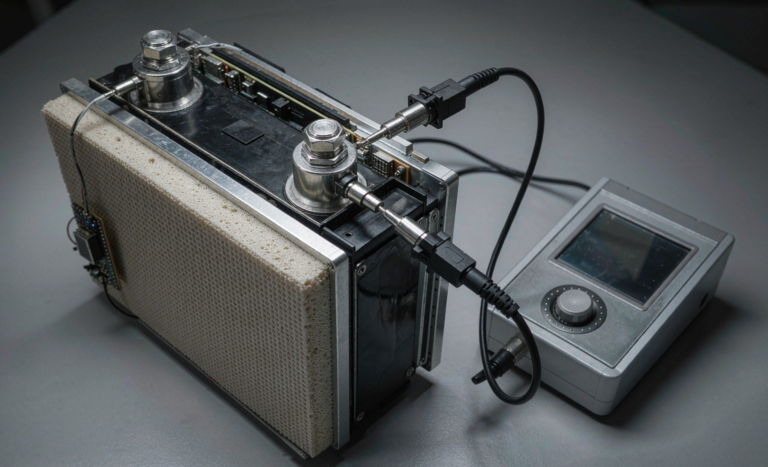
Aerospace is the harshest proving ground a cell will ever face. As a senior lithium battery engineer at Horizon Power, I have spent the last several years moving our semi-solid state battery platform from the laboratory bench into flight-qualified packs for high-altitude pseudo-satellites, eVTOL demonstrators, and small satellite bus applications. The phrase semi-solid state battery reliability aerospace is not a marketing slogan in our workshop; it is a checklist of failure modes we must defeat before a single unit leaves the building. This article walks through what we actually measure, the standards we qualify against, and the engineering trade-offs that separate a flight-worthy pack from a consumer gadget cell.
Why Aerospace Pushes Past Standard Lithium-Ion
Most terrestrial applications tolerate a modest failure rate because a pack can be swapped, vented, or isolated without catastrophe. In flight, there is no service bay. A traditional liquid-electrolyte lithium battery carries flammable solvent that, under a nail penetration or internal short, can vent and propagate. For an aircraft or spacecraft, that single event can end the mission. Semi-solid state chemistry replaces a large fraction of the free liquid electrolyte with a quasi-solid, ion-conducting matrix. The result is a cell that retains the high energy density of lithium metal-adjacent anodes while dramatically reducing the flammable solvent inventory.
In our test programs we treat a drone battery for a heavy-lift UAV and a satellite battery as cousins, not strangers. Both demand high specific energy, wide temperature tolerance, and a predictable end-of-life. The difference is the qualification envelope: orbit adds radiation and vacuum; aviation adds sustained vibration and certification oversight from the FAA and EASA.
Energy Density and Mass Budgets in Flight
Every gram launched costs fuel or lost payload. Our flight-grade semi-solid pouch cells deliver 320 to 360 Wh/kg at the cell level and 240 to 280 Wh/kg at the pack level after you subtract the enclosure, thermal structure, and battery management. Volumetric energy sits around 700 to 760 Wh/L. For a high-altitude pseudo-satellite that must loiter for months, that extra 30 to 40 percent over a conventional NMC pack is the difference between a viable mission and a non-starter.
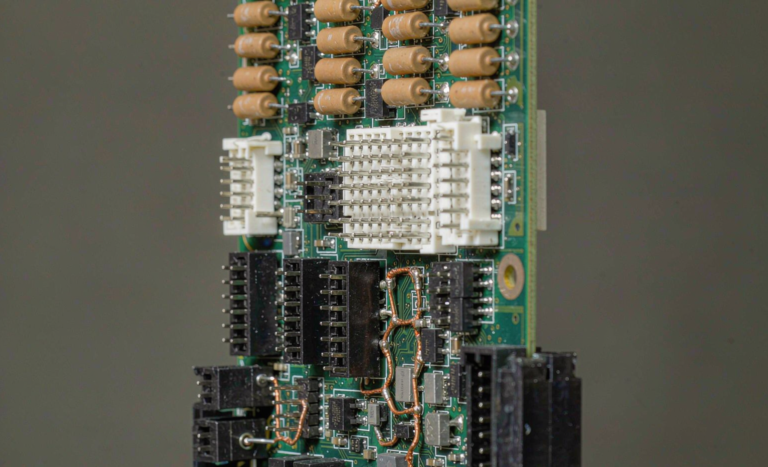
We balance cells to within 5 mV before module assembly and hold pack-level state-of-charge windows conservatively between 20 percent and 90 percent in aerospace duty to extend cycle and calendar life. A custom battery solution for a satellite bus is rarely a single voltage; we typically architect 6S to 14S strings (roughly 22 V to 52 V) with redundant sense lines feeding an isolated BMS.
How We Translate Wh/kg Into a Mission Profile
Rather than quoting peak numbers, we model the worst-case discharge curve at the lowest expected operating temperature, then add a 15 percent margin for connector and harness losses. That margin is what survives a cold-soak on a winter launch pad.
Vibration, Shock, and Random-Vibration Qualification
Aerospace packs live inside continuous broadband vibration. We qualify to RTCA DO-160 Section 8 random-vibration curves, sweeping 5 Hz to 2000 Hz with spectral densities up to 0.04 g²/Hz on each axis, plus DO-160 Section 7 shock at 20 g for 11 ms. Our drone lithium battery variants for rotary-wing platforms see even harsher rotor-induced spectra, so we add a dedicated helicopter-curve profile.
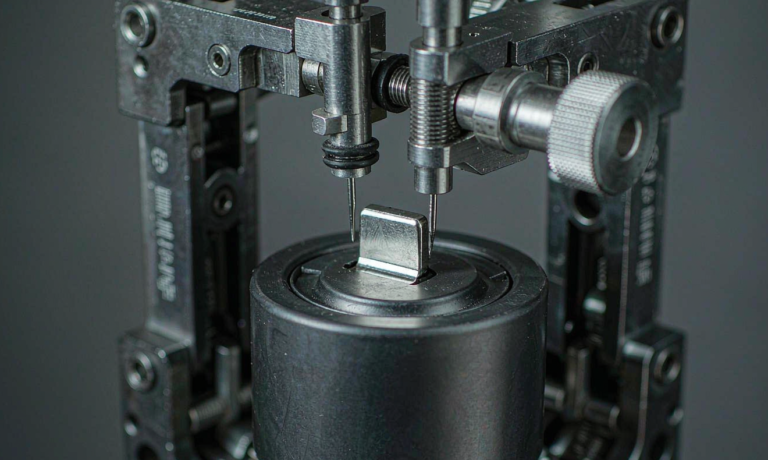
After vibration we re-measure cell DC internal resistance; a drift beyond 10 percent triggers a teardown. Our semi-solid cells hold DCIR in the 16 to 24 mΩ band before and after the profile, which tells us the quasi-solid separator is not fracturing under mechanical stress. Every weld and busbar is also X-rayed for cold joints before the pack is sealed.
Thermal Cycling and Altitude: From Sea Level to Near-Vacuum
Passenger and cargo aircraft cruise near 40,000 to 50,000 ft, where ambient pressure drops to roughly 20 kPa. For low-earth-orbit payloads, the environment is effectively a hard vacuum. Our qualification includes DO-160 Section 4 altitude testing and a separate space-grade thermal-vacuum cycle spanning -40°C to +60°C discharge and 0°C to +45°C charge.
Semi-solid cells tolerate this better than liquid cells because there is far less solvent to boil or cavitate. We still de-rate charge below 0°C and rely on heater films and phase-change material to keep the core in band. For a drone battery operating on alpine surveys, the same cold-start logic prevents lithium plating during dawn takeoffs.
Managing the Vacuum Outgassing Risk
In space, outgassed volatiles condense on optics and solar panels. We screen every non-metallic material to ASTM E595, holding total mass loss below 1.0 percent and collected volatile condensable material below 0.1 percent. The semi-solid electrolyte helps here because it liberates far fewer low-molecular-weight solvents than a flooded cell.
Outgassing and Radiation: The Space-Grade Checklist
Beyond outgassing, orbital packs must survive the radiation environment. We design for a total ionizing dose above 50 krad (Si) on the BMS electronics and verify single-event-upset immunity through component-level testing. The cells themselves are relatively radiation-hard compared with silicon, but the protection circuitry is not, so we shield and redundant-vote critical measurements.
Our satellite-grade lithium battery modules also pass ECSS-E-ST-20-20C battery requirements and the relevant ECSS-Q-ST-70-02 outgassing controls. These European Cooperation for Space Standardization documents are the backbone of any credible aerospace qualification file we submit to customers.
Cycle Life, Calendar Life, and State-of-Health in Orbit
A geostationary or LEO mission expects 10 to 15 years of service. In orbit, a battery may see a few thousand shallow cycles rather than deep daily discharges. Our semi-solid cells deliver 1000 to 1500 cycles at 80 percent depth-of-discharge, with a calendar life that comfortably covers the mission if we operate within the 20 to 90 percent window discussed earlier.
We track state-of-health through coulomb counting cross-checked against electrochemical impedance spectroscopy every few months. When impedance rises past 30 percent of its initial value, the BMS flags end-of-life and the operator de-rates the pack rather than risk a surprise capacity cliff. Round-trip efficiency holds at 92 to 95 percent at the pack level, which matters for solar-charged spacecraft where every watt of array is precious.
Thermal Runaway Propagation and Fault Tolerance
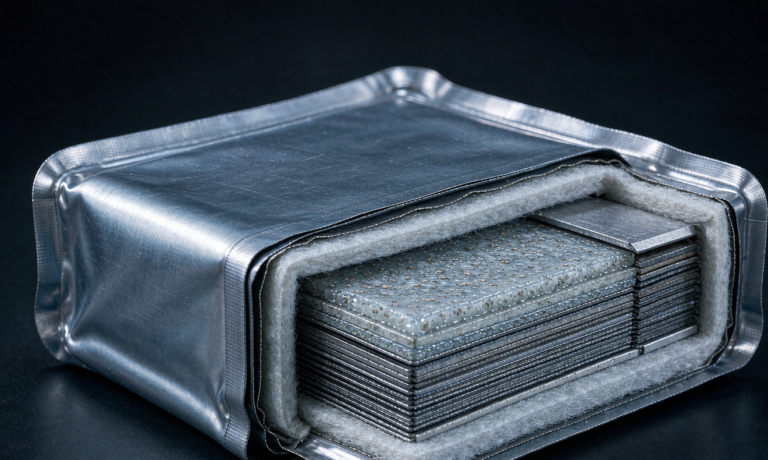
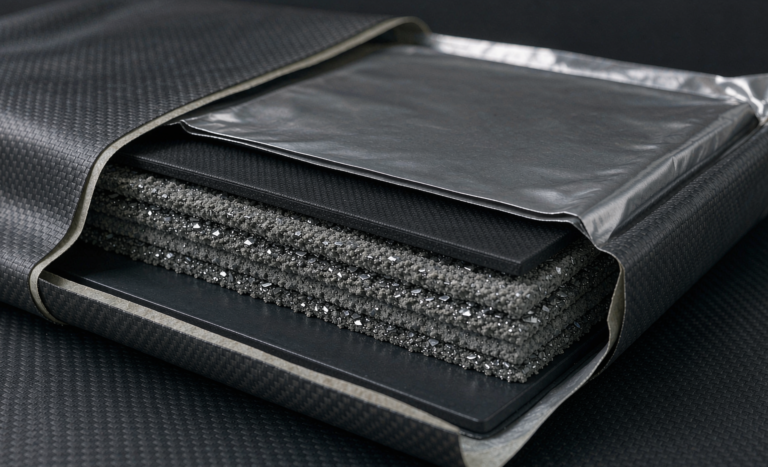
No credible aerospace pack ignores thermal runaway. Our semi-solid chemistry shows an accelerated rate calorimetry onset around 215 to 240°C, noticeably higher than many NMC liquid cells. More important than the onset temperature is propagation: we isolate each cell in a ceramic-aerogel barrier and route vent paths away from neighbors. The qualification target is no propagation across the module within a defined time window after a single-cell trigger, validated by nail-penetration and heater-rod abuse tests.
For aircraft cabins and cargo, we also align with UN38.3 T.1 through T.8 transport testing and IEC 62133-2 safety requirements, then layer aviation-specific oversight on top. A custom battery solution for an eVTOL is only as trustworthy as its weakest propagation path, so we test the assembled pack, not just the cell.
How We Qualify a Semi-Solid Pack at Horizon Power
Our internal flow, which I personally sign off on, runs in five gates. Gate one is cell-level characterization: capacity, DCIR, and ARC. Gate two is DO-160 environmental (vibration, shock, altitude, temperature). Gate three is safety abuse (nail, overcharge, short, thermal). Gate four is the outgassing and radiation screen for space-bound units. Gate five is a 500-cycle endurance run with monthly teardown inspection. Only packs that clear all five ship. This is the practical meaning behind semi-solid state battery reliability aerospace in our engineering culture.
Frequently Asked Questions
How does a semi-solid state battery differ from a traditional lithium-ion cell in aerospace?
The key difference is electrolyte form. A semi-solid cell uses a quasi-solid ion-conducting matrix instead of a flooded organic solvent, which lowers flammable content, raises thermal-runaway onset, and improves behavior in vacuum. It keeps the high energy density aerospace missions need while being safer to qualify under DO-160 and UN38.3.
What certifications apply to aerospace battery packs?
We work to RTCA DO-160 for environmental conditions, UN38.3 for transport, IEC 62133-2 for cell safety, and ECSS standards for space applications. Aircraft installations also follow FAA and EASA oversight, while the BMS firmware is developed against DO-178C-aligned processes for airborne systems.
Can semi-solid cells operate in vacuum and extreme cold?
Yes. We qualify to thermal-vacuum profiles from -40°C to +60°C and screen materials for low outgassing per ASTM E595. Charge is de-rated below 0°C using heater films, and discharge remains usable well below freezing, which is why the same platform works for both satellites and high-altitude drones.
How long do these batteries last on a satellite?
Our semi-solid modules are designed for 10 to 15 years of orbital service with 1000 to 1500 cycles at 80 percent depth-of-discharge. Real lifetime depends on the duty cycle; many LEO missions are storage-limited rather than cycle-limited, so we plan around calendar aging and impedance growth.
Are semi-solid state batteries safe from thermal runaway?
No battery is immune, but the risk is far lower. Higher ARC onset, less flammable solvent, and ceramic-aerogel cell isolation combine to prevent propagation in our abuse tests. We validate no-cross-module propagation by nail penetration and heater-rod triggers on the assembled pack, not just the bare cell.