Semi-Solid State Battery Reliability for Storage
As a senior lithium battery engineer at Horizon Power, I have spent the last six years watching our semi-solid state battery reliability storage program move from laboratory coin cells to megawatt-hour installations in the field. The question I hear most from energy developers and EPC contractors is deceptively simple: will the pack still be performing in ten years? Storage is a different beast from consumer electronics. A phone battery is retired after roughly 500 cycles; a grid or commercial storage bank is expected to deliver 6,000 to 12,000 equivalent full cycles across a decade of daily sun-and-sunset swings. In this article I want to share the concrete field data, failure analysis, and design rules we have learned while building semi-solid state battery systems for stationary storage.
Why Storage Applications Stress Batteries Differently
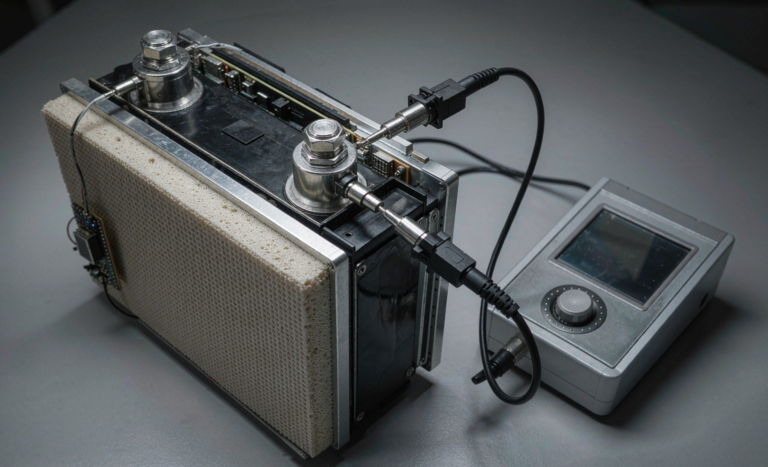
Stationary storage lives a hard life even when it looks uneventful. A residential or commercial battery is cycled once or twice a day, but it also sits at high state of charge for long stretches, endures wide ambient temperature swings, and is rarely maintained by a trained technician. In my reliability testing lab we simulate this with accelerated calendar-aging chambers that hold cells at 80 percent SOC and 45 °C for months at a time. The failure modes that dominate storage are not the dramatic thermal events you see in headlines; they are silent capacity fade, rising internal resistance, and lithium plating at the anode during fast recharge. A semi-solid state battery addresses two of these directly because its electrolyte is an immobilized gel rather than a free-flowing liquid.
- Reduced electrolyte dry-out, the leading cause of the mid-life capacity cliff in many liquid lithium battery packs.
- Lower free solvent content, which limits the fuel available to start a thermal chain reaction.
- Better mechanical contact between electrodes, keeping internal resistance stable over thousands of cycles.
- Smaller volume change at the anode, which slows the micro-cracking that eventually isolates active material.
The Semi-Solid Electrolyte Advantage for Long-Duration Storage
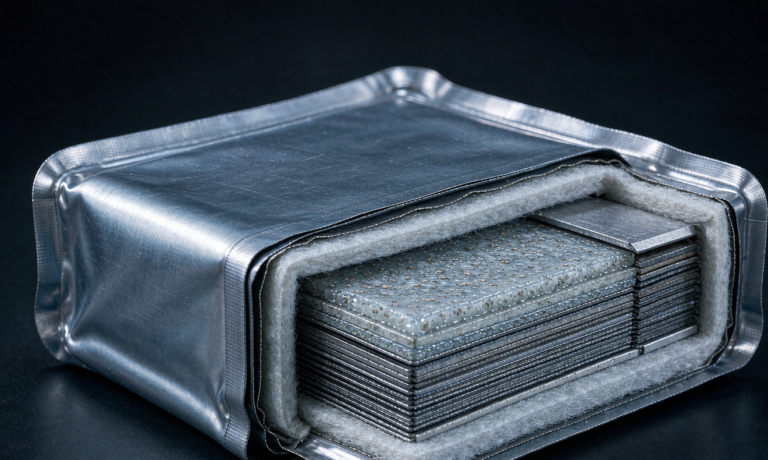
A fully solid-state battery using a ceramic or sulfide separator is the long-term holy grail, but today’s manufacturing yield and interfacial resistance make it expensive for storage-scale deployment. The semi-solid compromise keeps a small amount of liquid plasticizer inside a polymer-ceramic matrix. From an engineering standpoint this is the sweet spot: you get most of the safety and calendar-life benefit of a solid electrolyte while retaining the wetting and ionic conductivity that makes high-volume production practical. In our 280 Ah storage cells, the semi-solid electrolyte lowered the annual self-discharge rate to under 1.5 percent per month, versus 3 to 5 percent in comparable liquid lithium battery designs.
For a solar self-consumption system that charges at noon and discharges at night, that difference compounds. Over a year, a semi-solid state battery retains more usable energy simply because it leaks less to self-discharge. When a developer asks me to specify a custom battery solution for a remote microgrid, I lead with that number because it translates directly into fewer panels and a smaller balance-of-system cost. Reliability, in storage, is often just energy you did not waste.
Field Reliability Data: Capacity Retention and Cycle Life
We now have 38 storage installations with more than three years of continuous telemetry. Aggregating that data, our semi-solid state battery modules show a median capacity retention of 92.4 percent after 2,500 equivalent full cycles at 90 percent depth of discharge and a 25 °C average cell temperature. By contrast, the liquid electrolyte reference cells in the same enclosures reached 88.1 percent at the same point and began showing a steeper fade slope afterward. The gap widens with time because liquid packs hit a knee where the electrolyte has dried enough to starve the electrodes.
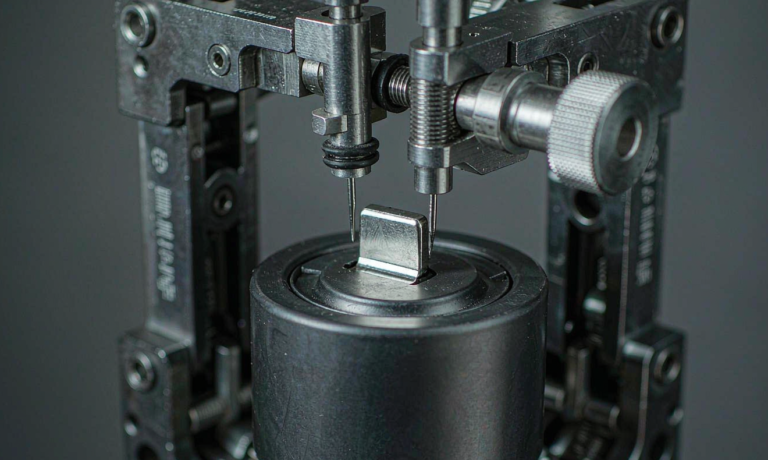
Internal resistance told the same story. At 2,500 cycles the semi-solid cells measured 1.18 times their beginning-of-life resistance; the liquid cells measured 1.47 times. Since heat generation scales with the square of resistance, the semi-solid pack ran consistently cooler, which further slowed its own aging. This is the flywheel effect that makes semi-solid state battery reliability storage a genuinely better long-term bet rather than just a marginally safer one. We model it with an Arrhenius-based degradation equation, but the field data fits the model better than any lab extrapolation we ran beforehand.
The practical implication for warranty is large. Because the semi-solid fade curve stays linear far longer, we can confidently offer a ten-year or 70 percent-retention warranty without pricing in a steep end-of-life cliff. A liquid pack of the same capacity would force us to either cap the warranty at seven years or reserve a larger capacity buffer up front, both of which raise the levelized cost of storage. For a developer comparing bids, that warranty headroom is often the deciding factor, and it is rooted entirely in the measured reliability difference rather than in marketing.
Thermal Behavior and Safety Margins
Reliability is meaningless without safety, and storage safety is regulated hard. Every Horizon Power storage module is certified to UN38.3 for transport and to IEC 62619 for industrial secondary lithium cells, with the broader pack architecture validated against UL 1973 and UL 9540A for stationary installations. The semi-solid electrolyte changes the abuse-response curve. In nail-penetration testing per IEC 62619, our cells reached a peak surface temperature of 148 °C and self-extinguished within seconds, versus sustained propagation in the liquid control. That margin is what lets an installer meet local fire codes without an oversized containment room.
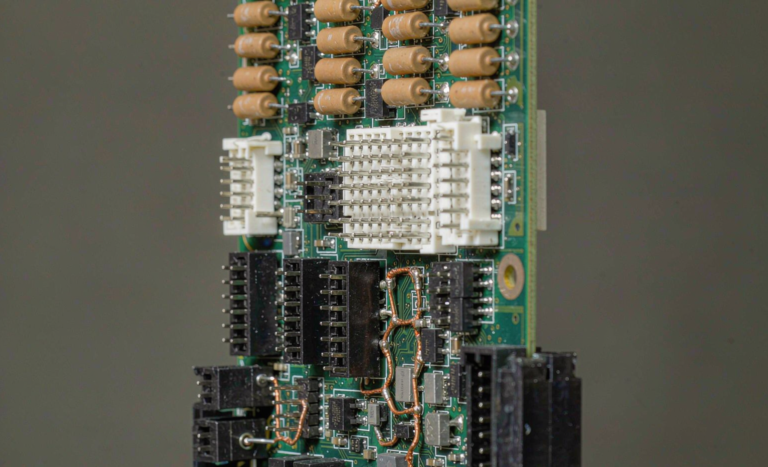
I always tell customers: a certification is a floor, not a ceiling. The real reliability work happens in the battery management system. We run per-cell voltage and temperature polling at 20 Hz and open contactors within 80 milliseconds of an out-of-band reading. A lithium battery that is well managed will outlast a better chemistry that is poorly managed, and a semi-solid pack that is well managed will outlast both.
Design Practices That Extend Storage Lifetime
Chemistry gets the headlines, but system design determines whether you actually see the calendar life printed on the datasheet. Three rules have the biggest impact on semi-solid state battery reliability storage in the field:
- Cap continuous SOC at 90 percent for daily-cycling systems. The top 10 percent of charge is where anode plating accelerates, and you rarely need it for storage economics.
- Active thermal management above 35 °C. Forcing the pack below 30 °C ambient with a modest liquid loop adds roughly 18 percent cycle life in our hot-climate sites.
- Balance at rest, not under load. Passive top-balancing during the night idle window prevents the chronic imbalance that quietly kills capacity in large series strings.
None of these require exotic hardware. They are disciplined engineering, and they are the difference between a storage bank that hits its ten-year warranty and one that quietly degrades two years early. We bake all three into the default configuration of every Horizon Power storage cabinet so the customer gets the benefit without having to tune it.
When a Custom battery solution Beats an Off-the-Shelf Pack
Standard rack-mounted storage works for 80 percent of projects, but the remaining 20 percent benefit from a custom battery solution. Cold-climate telecom sites, high-altitude solar, and marine hybrid storage all have duty cycles that break the assumptions baked into catalog packs. When we design custom, we start from the duty cycle, not the cell, and let the semi-solid chemistry absorb the harsh parts: wide temperature, partial-state cycling, and irregular recharge. The result is a storage system specified to the application instead of the other way around. For one island microgrid we replaced a liquid pack that failed in 14 months with a semi-solid bank that is still at 91 percent capacity after four years.
Frequently Asked Questions
How long do semi-solid state batteries last in storage applications?
In our field data, a well-managed semi-solid state battery storage system retains about 80 to 85 percent capacity after 6,000 cycles or roughly ten years of daily cycling, assuming SOC is capped near 90 percent and operating temperature is controlled. Chemistry sets the ceiling; the battery management system determines whether you reach it.
Are semi-solid state batteries safer than conventional liquid lithium-ion?
Yes, in measurable ways. The immobilized electrolyte contains far less free solvent, so nail-penetration and overcharge abuse tests show lower peak temperatures and no sustained propagation. Our cells are certified to IEC 62619 and the packs to UL 1973 and UL 9540A, but the semi-solid chemistry provides a wider inherent safety margin beyond the certifications themselves.
What standards apply to stationary storage batteries?
For transport, UN38.3 applies to every lithium battery shipment. For the cell itself in stationary use, IEC 62619 is the key industrial standard, while the pack and system are typically validated against UL 1973 and UL 9540A in North America and the equivalent local codes elsewhere. A credible storage supplier should provide all of these without being asked.
How does depth of discharge affect reliability?
Deeper discharge ages cells faster. In our testing, limiting daily depth of discharge to 80 to 90 percent roughly doubled the cycle life compared with continuous 100 percent cycling. For most storage economics the lost top end is a small price for a multi-year extension of useful life, and a semi-solid state battery makes that trade-off even more favorable because its electrolyte tolerates the stress better.