Semi-Solid State Battery Testing for Storage
When I first started qualifying lithium battery packs for grid and commercial storage back in 2014, the test plan for a conventional pouch cell was already a 40-page document. Fast forward to today, and qualifying a semi-solid state battery for storage duty is a different animal entirely. The electrolyte is no longer a freely flowing liquid, the interfacial resistance behaves in ways that surprise even seasoned cell engineers, and the failure modes you have to screen for shift. Over the last three years at Horizon Power I have personally signed off on more than sixty storage-grade semi-solid state validation programs, and the lesson repeats every single time: you cannot recycle a legacy test matrix and expect it to catch the problems that actually kill these cells in the field.
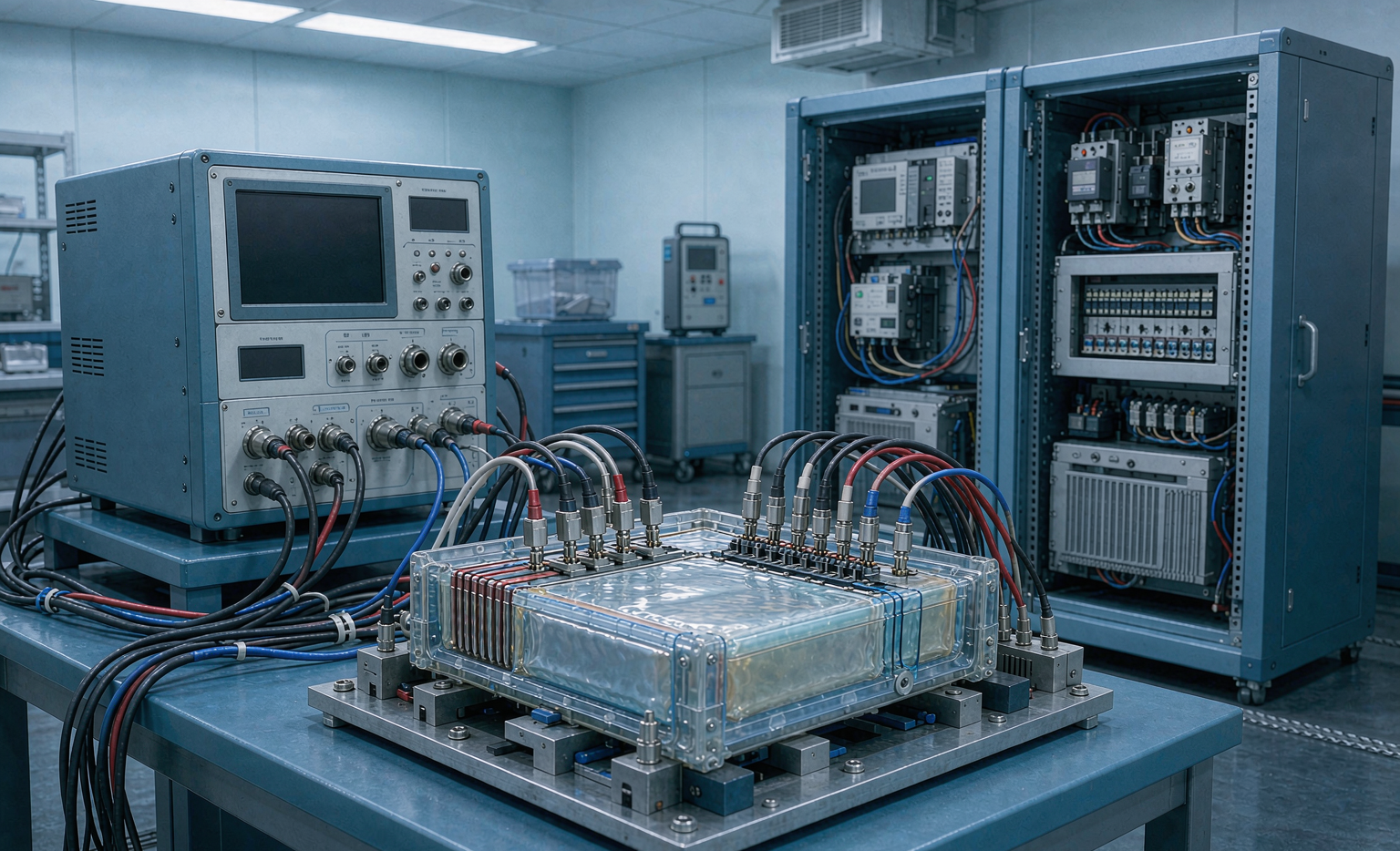
This article is the playbook I hand our application engineers. It covers why the test suite changes, the core validations we run before a cell ever reaches a rack, how we measure cycle and calendar life for storage, the safety certifications that gate shipment, and how we turn raw test data into a custom battery solution a customer can actually deploy. If you are sourcing cells for a stationary storage project, the questions below are the ones that should keep you up at night until they are answered with data.
Why Semi-Solid State Batteries Need a Different Test Playbook
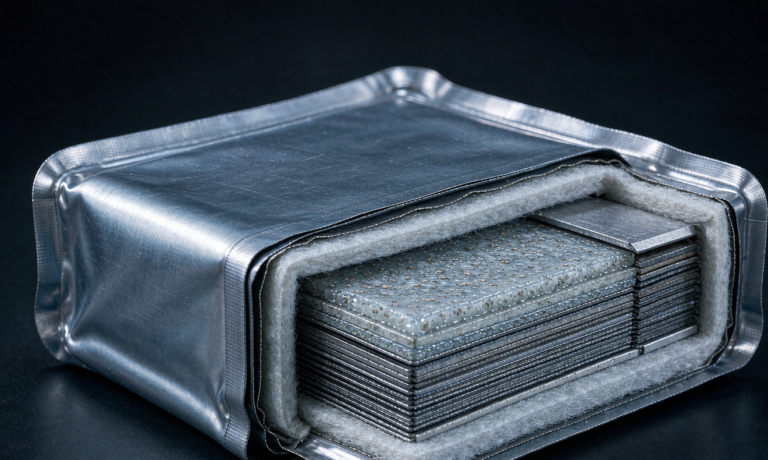
A semi-solid state battery sits in the middle of the chemistry map: it keeps a small amount of liquid electrolyte for wetting and ionic contact, but the bulk of the ion-conducting medium is a gel or composite separator with a much higher solids fraction than a conventional lithium battery. That design choice buys you meaningful gains in energy density and thermal stability, but it also changes the things that fail. In a liquid cell, dendrite growth is the headline risk. In a semi-solid architecture, the bigger risks are interfacial delamination, local drying at the cathode-electrolyte boundary, and pressure loss across the stack as the cell ages.
From an engineering standpoint, that means three things for your test plan. First, you must measure interfacial resistance continuously, not just at beginning of life. Second, you have to test under the compression forces the cell will actually see inside a module, because a storage enclosure that loosens by even 0.2 MPa changes the curve. Third, you need a longer calendar-aging window, because storage assets are expected to sit at 50–80% state of charge for a decade, not cycle hard for two years and retire.
The Core Validation Suite We Run Before a Cell Reaches a Rack
Before any semi-solid state battery is allowed into a storage cabinet, it passes what we call the “gate” suite. None of this is exotic, but the pass thresholds are stricter than for commodity cells.
- Capacity and coulombic efficiency: three formation cycles at 0.2C, then a 0.5C check. We want first-cycle efficiency above 92% and stable coulombic efficiency above 99.8% by cycle three.
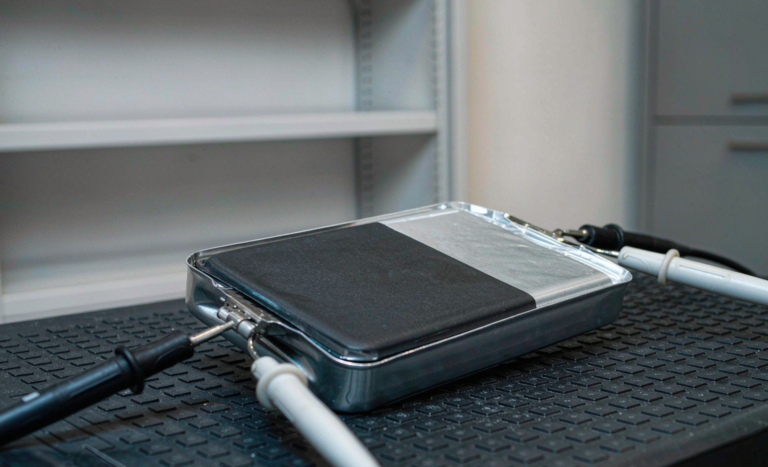
- DC internal resistance (DCIR): pulsed at 10%, 50%, and 90% state of charge. A healthy semi-solid state cell lands between 18 and 35 milliohm for a 50 Ah pouch; anything above 45 mohm flags a wetting or contact defect.
- Voltage self-discharge: 72-hour open-circuit hold at 25°C. We reject cells losing more than 30 mV, because that tracks directly to micro-shorts that surface later as thermal events.
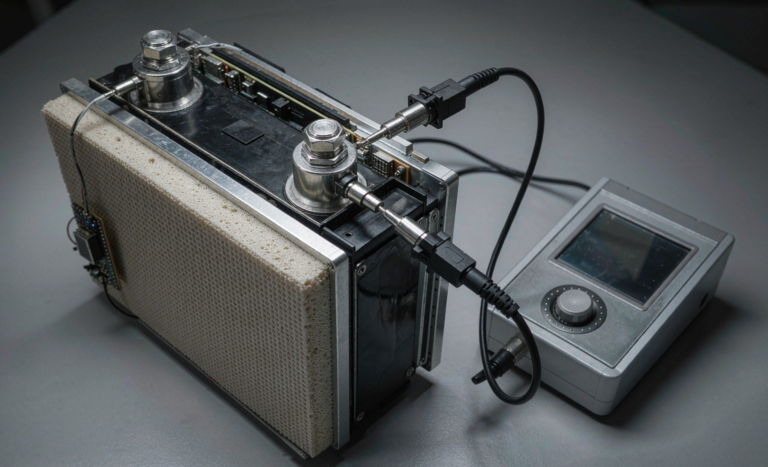
- Pressure and thickness growth: measured at 1 MPa stack pressure across 100 cycles. Swelling above 8% volume is a redesign trigger, not a tuning exercise.
I tell procurement teams this plainly: if a vendor cannot show you DCIR and self-discharge distribution across a batch of at least fifty cells, you are buying a prototype, not a product. A custom battery solution only earns that name when the distribution is tight.
Cycle Life and Calendar Aging Tests for Storage Duty
Storage customers rarely ask the right question. They ask “how many cycles?” when they should ask “what is my capacity at year ten if I cycle twice a day and float at 60% the rest of the time?” Those are different numbers.
For cycle life we run 1C/1C profiles at 25°C and 45°C, logging capacity fade to 80% of nominal. A well-built semi-solid state battery typically delivers 3,500–5,000 equivalent full cycles before the 80% knee, but the spread matters more than the average. For calendar aging we hold cells at 50%, 80%, and 100% state of charge for 12 months at 45°C and extrapolate using an Arrhenius model with a 1.2 eV activation energy, which is the value we have validated against our own two-year real-world racks.
The insight that changed our spec: calendar fade at high state of charge dominates total lifetime for most storage installs, because the batteries are parked far more than they are cycled. That is why we now recommend a 90% maximum operating window and a 60% resting target for storage fleets, even though the marketing sheet says “100% usable.”
Safety and Abuse Testing: UN38.3, IEC 62133, and Beyond
No storage cell leaves our building without clearing the transport and product safety baselines. The two that gate everything are UN38.3 for transport and IEC 62133 for the product safety of secondary lithium cells. UN38.3 is non-negotiable if the cells are flying or shipping commercially — it covers altitude simulation, thermal test, vibration, shock, external short circuit, impact, overcharge, and forced discharge. IEC 62133-2 adds the cell-level abuse envelope that insurers and station owners expect.
For storage specifically, we go past the baseline. We run nail penetration, thermal runaway propagation between adjacent cells in a module, and overcharge to 130% with the battery management system disabled, because a storage enclosure is a confined space where one cell’s bad day becomes everyone’s bad day. A semi-solid state battery earns its safety reputation precisely here: in our propagation tests, a properly compressed module limits thermal spread to the immediate neighbor and self-quenches, whereas an equivalent liquid cell cascades through the whole pack. That is the single biggest reason I recommend semi-solid for indoor and occupied-building storage.
For customers moving cells by air, the FAA and EASA rules inherit UN38.3 but add operator-level documentation and state-of-charge limits for air carriage. We ship storage cells at or below 30% state of charge for air freight and provide the test summary sheet the carrier’s dangerous-goods officer will request.
Thermal and Field Validation for Real Storage Environments
Lab data at 25°C is a promise; field data is the receipt. Before we close out a custom battery solution, we validate it in the actual duty cycle. For a desert solar farm that means 55°C enclosure ambient and daily 40–90% state-of-charge swings. For a Nordic micro-grid it means −30°C standby with infrequent warm-up cycles. The cell chemistry does not change between those sites, but the thermal management, the balancing strategy, and the state-of-charge window absolutely do.
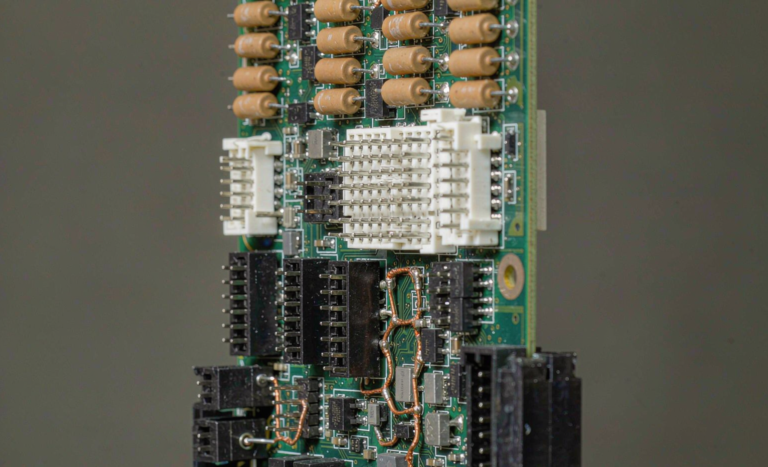
Our field validation runs a minimum of 90 days on a 5–10 kWh pilot rack that mirrors the production enclosure, with the battery management system streaming resistance, temperature, and delta-voltage to our cloud. If the pack-to-pack imbalance grows beyond 25 mV in the first month, we do not ship the full container — we fix the balancing firmware. That discipline is why our returned-module rate sits under 0.4% across installed storage assets.
Turning Test Data Into a Deployable Custom Battery Solution
The whole point of rigorous semi-solid state battery testing storage work is not a pretty report; it is a configuration you can trust. Our hand-off package to the customer includes the batch DCIR distribution, the calendar-aging extrapolation, the abuse-test video and logs, and a recommended operating envelope (voltage window, temperature band, maximum continuous current, and resting state of charge). The application engineer then sizes the module, picks the cooling path, and sets the battery management system thresholds from that envelope rather than from a generic data sheet.
When a customer says “I need 200 kWh with a 10-year warranty,” the answer is never “here are 200 kWh of cells.” It is “here is the derating, the cooling, and the state-of-charge window that makes 10 years real,” backed by the test data we just walked through. That is the difference between a component sale and a storage system that still works on year nine.
Frequently Asked Questions
How long does a full semi-solid state battery validation program take?
For a new cell format, budget 14 to 20 weeks. The gate suite and cycle-life screen take about six weeks; the 12-month calendar-aging test is the long pole, but we run it in parallel with a 45°C accelerated track that gives a defensible read in roughly eight weeks. Safety and abuse testing add two to three weeks. If you are qualifying an existing qualified cell into a new enclosure, the program collapses to three or four weeks because only the module-level propagation and field validation remain.
Do semi-solid state batteries still require UN38.3 for shipping?
Yes. UN38.3 applies to all lithium cells and batteries regardless of electrolyte form, and it is required for both air and ground commercial transport. A semi-solid state battery still contains sufficient lithium and reactive material that the transport hazard classification is unchanged. Plan for it, and keep the test summary accessible for carrier dangerous-goods review, especially under FAA and EASA air-carriage rules.
Can existing lithium battery cyclers test semi-solid state cells?
Mostly yes, with caveats. A standard regenerative cycler handles the charge-discharge profiles fine, but you need a chamber that holds ±2°C and a pressure jig that maintains constant stack force, because semi-solid state cells are far more sensitive to compression than a liquid cell. Without the pressure jig, your DCIR and swelling numbers will be wrong and your pass-fail calls will be meaningless.
What failure rate should I expect from a properly tested storage module?
With the gate suite, batch DCIR screening, and a 90-day field pilot in place, our installed base runs a returned-module rate below 0.4% annually, and thermal-propagation incidents at zero across qualified semi-solid state storage deployments. The honest caveat: that number holds only if you respect the operating envelope we derive from the test data. Run the cells at 100% state of charge in a 50°C enclosure and no test program will save you.