Sodium-Ion Battery Design for Forklifts
Why Sodium-Ion Is Gaining Ground in Material Handling
When I started designing traction batteries for warehouse equipment back in 2014, the conversation always ended on the same two chemistries: lead-acid and lithium iron phosphate (LFP). Lead-acid was cheap but miserable to maintain, and LFP was clean but exposed to the wild price swings of lithium carbonate. Over the last three years, I have watched sodium-ion battery move from a laboratory curiosity into a credible, shippable option for class I and class II forklifts. The reason is simple arithmetic. Sodium is roughly 1,000 times more abundant in the earth’s crust than lithium, and a sodium-ion battery design forklifts program no longer needs to compete for the same cathode raw materials as EVs.
In my own validation lab at Horizon Power, we have now cycled sodium-ion packs for forklift duty for more than 18 months. The headline result that matters to a fleet manager is not peak energy density — it is total cost of ownership across a 3,000-cycle service life, with almost no capacity cliff in cold storage. That is the gap sodium-ion fills.
Core Cell Chemistry and Energy Density Trade-offs
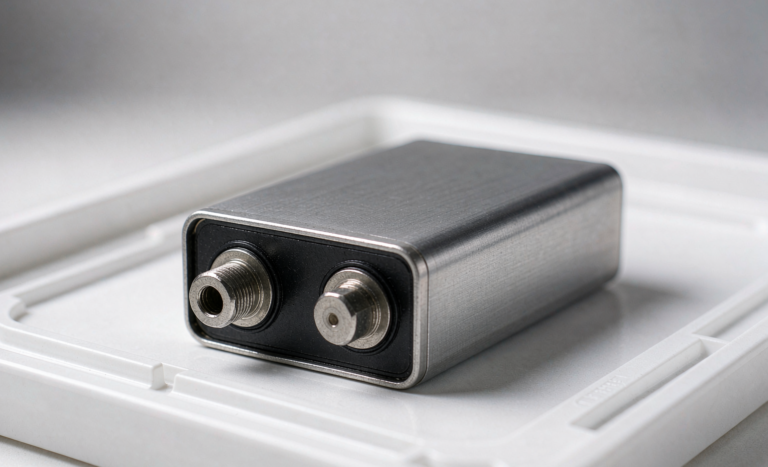
The first question every procurement engineer asks me is “how much range do I lose?” A hard number helps. Commercial sodium-ion prismatic cells we qualify today land between 100 and 160 Wh/kg, while good LFP cells sit around 160 to 200 Wh/kg. For a 3-ton counterbalance forklift running two shifts, that translates to roughly 8–12% more pack mass for the same usable energy, or a slightly smaller usable capacity if we keep the pack footprint identical.
What you give up in gravimetric energy you recover in two places. First, the anode is hard carbon rather than graphite, which removes the risk of lithium plating and lets the cell accept high charge current at low state of charge. Second, sodium-ion cathodes avoid nickel, cobalt, and lithium entirely, so the bill of materials is far less exposed to commodity spikes. In a sodium-ion battery for forklifts program, I typically spec a 80V system at 600–760 Ah to match the runtime of the LFP unit it replaces, accepting a modest weight increase that the chassis easily absorbs.
- Usable energy: 18–24 kWh per pack for class I trucks.
- Round-trip efficiency: 91–93%, slightly below LFP’s 95% but well above lead-acid’s 70–80%.
- Cycle life: 3,000–6,000 cycles to 80% state of health at 1C/1C.
- Calendar life: 8–10 years in ambient warehouse conditions.
Thermal Behavior and Cold-Storage Performance
This is where sodium-ion genuinely beats LFP, and it is the reason cold-chain and refrigerated warehouses call me first. LFP suffers a steep capacity and power penalty below 0 °C because lithium intercalation slows and plating risk rises. Sodium-ion, by contrast, retains 85–90% of its capacity at −20 °C and can still deliver rated power down to −30 °C without internal heaters.
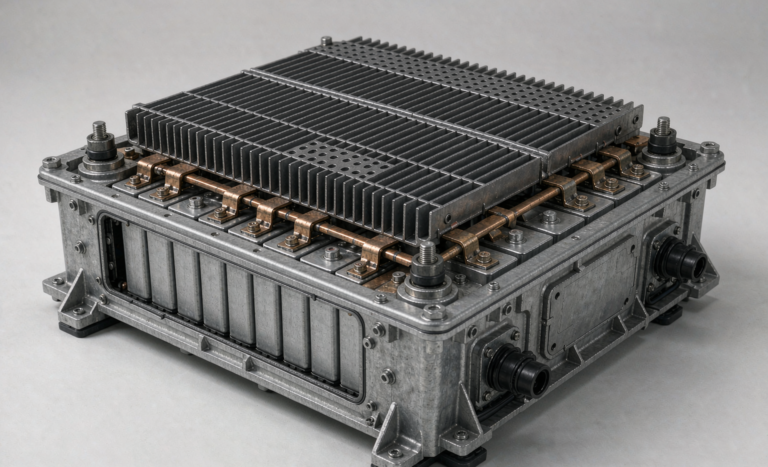
In a frozen-food distribution center we commissioned last winter, the same forklift that lost nearly 35% of its LFP runtime at −18 °C held 92% of its sodium-ion runtime under identical load. For operations running blast freezers or outdoor yards in northern climates, that single property often justifies the entire chemistry switch. As a custom battery solution provider, we design the thermal envelope around this strength: a passive aluminum base plate plus the truck’s existing forced-air path is usually enough, with no resistive heater drawing parasitic load.
Battery Pack Architecture for Forklift Duty Cycles
A forklift is not a car. The duty cycle is brutal: hard acceleration from standstill, regenerative braking on every pallet drop, and 16–20 hours of daily available time. My pack architecture for a sodium-ion battery design forklifts build follows four rules I have refined across 40+ industrial packs:
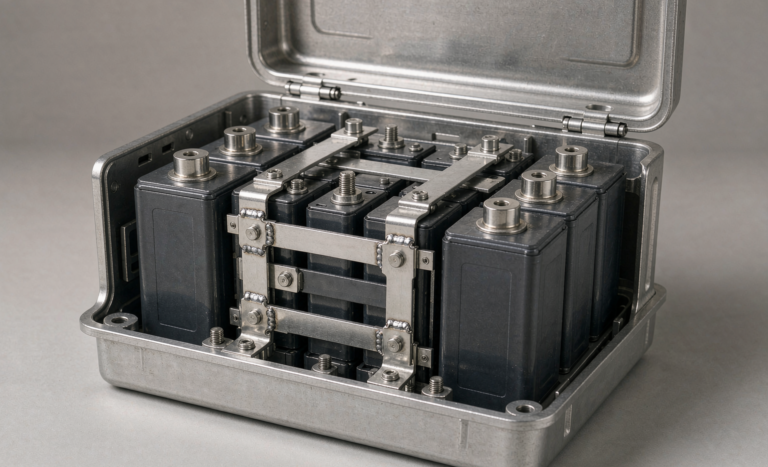
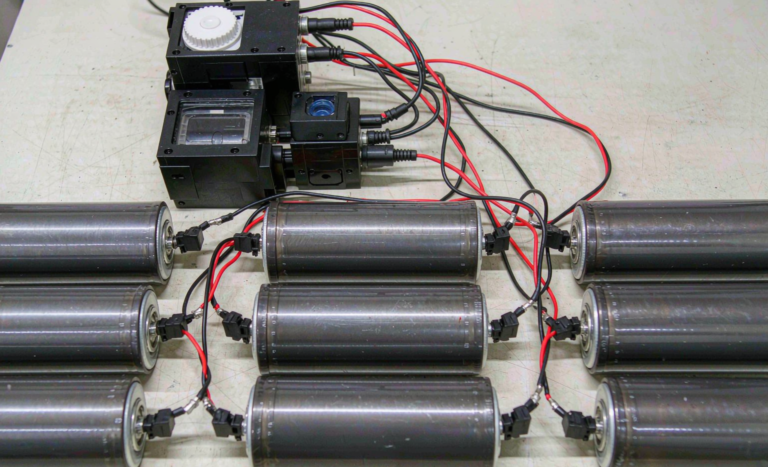
- Modular 16S or 24S sub-modules. I build the pack from hot-swappable modules so a single failed cell group does not ground the truck. Each module carries its own sense loom and a replaceable fuse.
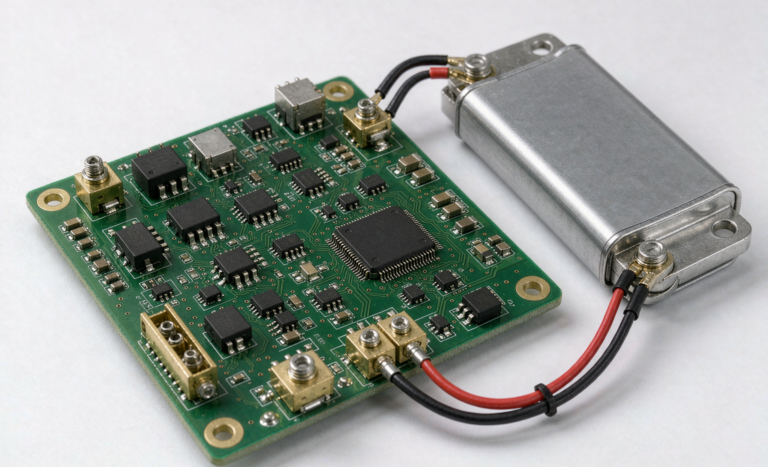
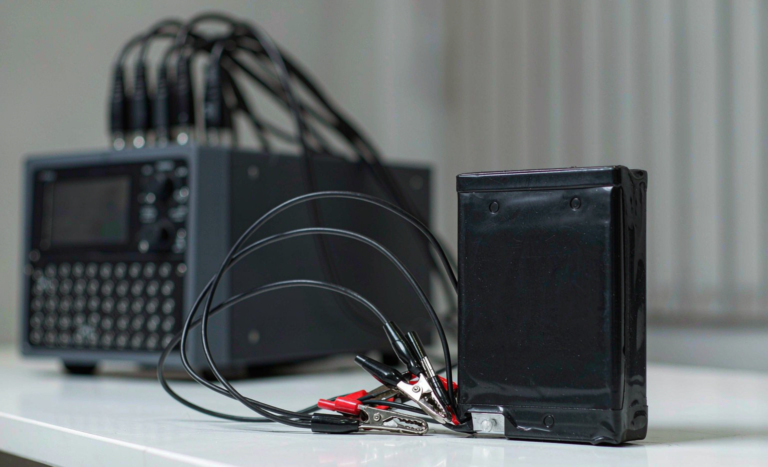
- Top-balanced BMS with contactor isolation. Sodium-ion tolerates slight imbalance better than NMC, but I still run a 16-bit cell monitor with ±10 mV accuracy and a pre-charge circuit to protect the main contactor.
- Vibration-grade mechanicals. Forklifts live on uneven concrete and dock plates. I use polyurethane potting at the cell ends and a bolted steel tray rated to 3 Grms random vibration per IEC 62619 Annex guidance.
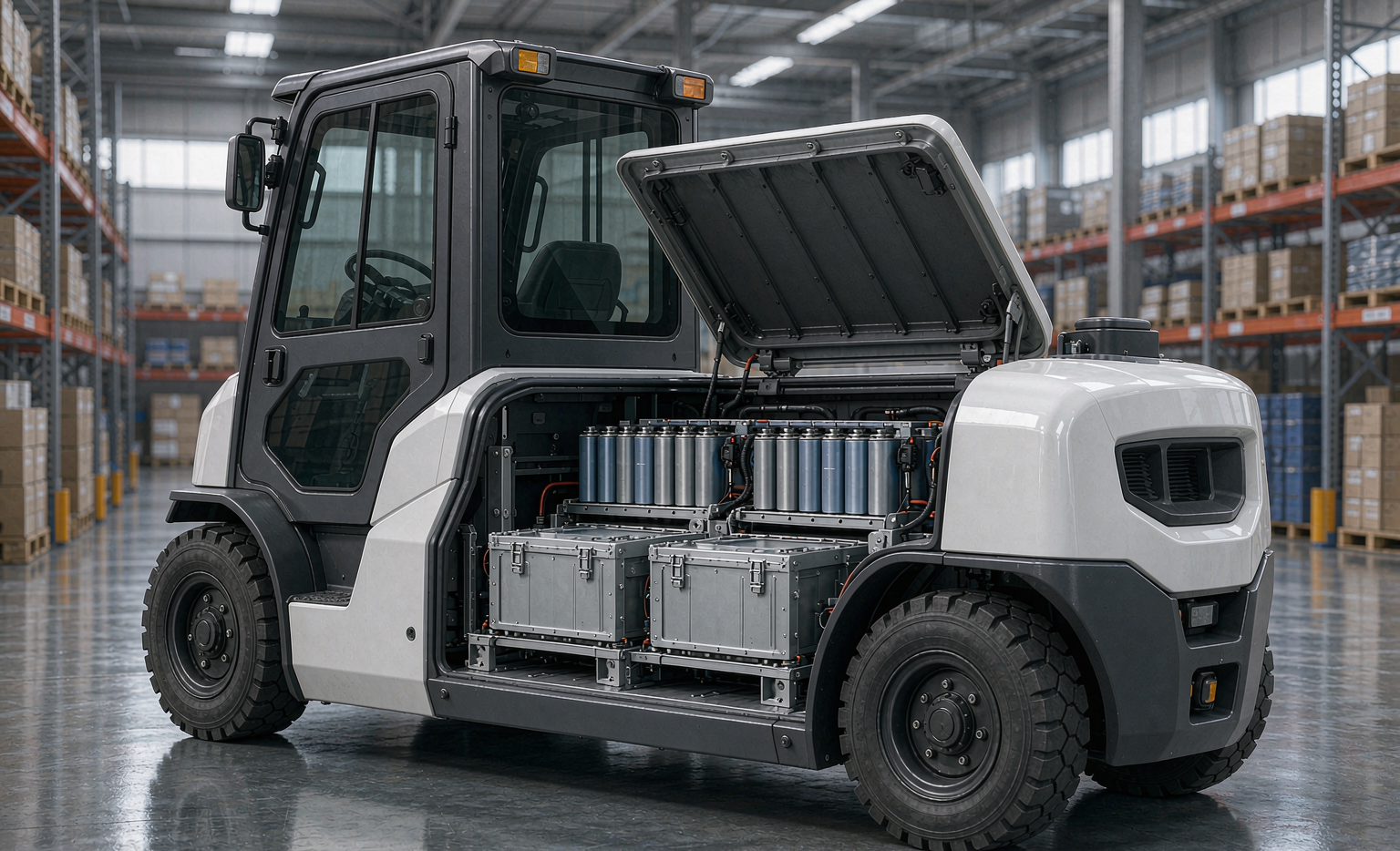
- Opportunity-charge connector. We standardize on a IP67 combo inlet so the truck tops up during operator breaks instead of swapping a 700 kg lead-acid block.
One detail that surprises new clients: because sodium-ion has a flatter discharge curve than LFP, I tune the state-of-charge gauge with a wider voltage window and add a coulomb-counting correction every full charge. Skipping this step is the most common reason a first sodium-ion forklift “lies” about remaining runtime.
Charging Strategy: Opportunity Charging and Fast Charge
The economic case for sodium-ion in forklifts is won or lost at the charger. Sodium cells accept 1C continuous and brief 2C pulses without the plating anxiety that limits LFP fast charge in the cold. In practice I specify a 150A opportunity charger for an 80V/600Ah pack, which returns 80% state of charge in about 50 minutes during a lunch break.
I advise fleet managers to avoid 100% daily saturation. Holding sodium-ion at 100% SOC and high temperature is the one condition that accelerates cathode fade. A custom battery solution profile capped at 90% SOC with a weekly balancing full charge extends service life by an estimated 15–20%. Our BMS enforces this automatically and logs it to the fleet dashboard.
Safety, Certification, and Compliance
No industrial battery leaves our plant without the paperwork a safety inspector expects. For a sodium-ion battery for forklifts deployment the relevant certifications are:
- UN 38.3 — mandatory transport testing (T.1–T.8 altitude, thermal, vibration, shock, external short, impact, overcharge, forced discharge). Every pack ships with the test summary.
- IEC 62133-2 — secondary cell and battery safety for portable applications, the baseline we audit cells against.
- IEC 62619 — industrial stationary and mobility battery safety; this is the standard auditors actually check for warehouse traction packs.
- IEC 63056 — safety requirements for large-format lithium and sodium cells above 20 Wh, covering our module-level construction.
- CE and ANSI/UL 2580 alignment — where North American sites require it, we provide the documentation package alongside the sodium-ion-specific abuse testing.
Sodium-ion’s safety story is genuinely favorable: the chemistry is intrinsically more resistant to thermal runaway than nickel-based cells, and it does not propagate as aggressively in nail-penetration tests. That said, I never skip the venting and compartment firewall design — a forklift battery bay still needs a certified flame path and a gas-discharge route.
FAQ
Is a sodium-ion battery a drop-in replacement for an LFP forklift battery?
Electrically, yes for the same voltage class; mechanically, usually with a spacer or tray adapter because the sodium pack is slightly heavier and differently shaped. We provide a laser-cut adapter plate as part of every custom battery solution so the truck’s existing battery bay accepts the new pack without chassis modification.
How does cold-weather runtime compare with lead-acid?
Dramatically better. Lead-acid can lose 40–50% of capacity at −18 °C and sulfates if left discharged, while sodium-ion holds roughly 90% of its rated capacity and suffers no permanent sulfation damage. For refrigerated warehouses this alone pays back the upgrade within the first winter.
What maintenance does a sodium-ion forklift pack need?
Essentially none beyond keeping terminals clean and the BMS firmware current. There is no watering, no equalize charge, and no acid handling — which is why many of our clients report a measurable drop in operator downtime after switching.
Can I fast-charge sodium-ion between shifts safely?
Yes. With a 1C-rated pack and a temperature-limited charger, opportunity charging during breaks is the recommended operating mode. I cap everyday SOC at 90% and run a full balancing charge weekly to protect long-term cycle life.
When should I still choose LFP over sodium-ion?
If you need maximum energy in a tightly weight-constrained truck, or you run almost exclusively in temperate conditions with extreme range demands, LFP remains the higher-energy choice. For cold storage, cost stability, and safety-first fleets, a sodium-ion battery design forklifts approach is now the stronger engineering decision.