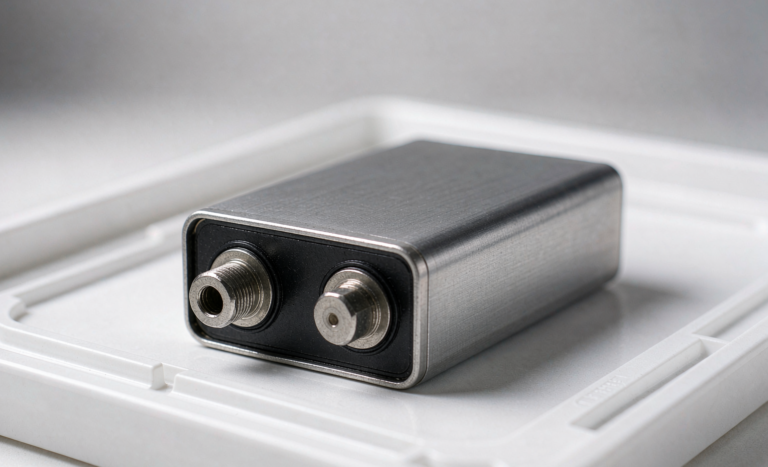
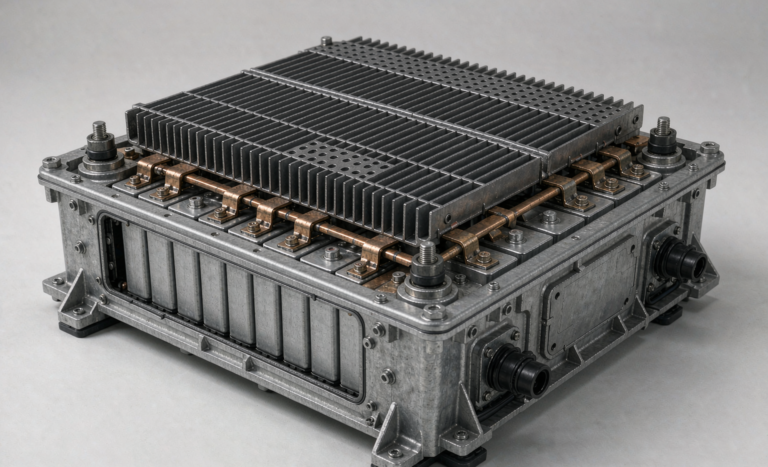
Sodium-Ion Battery Off-Grid Health Clinic
Over the last twelve years as a senior lithium battery engineer, I have deployed energy storage into some of the least forgiving environments you can imagine: desert telecom sites, fishing vessels, alpine microgrids. But few applications test a battery pack as brutally as an off-grid health clinic. A clinic cannot “wait until morning” when the power drops. A vaccine fridge that warms past 8°C is a write-off. An anaesthetic machine that loses backup mid-procedure is a liability no engineer should accept. That is exactly why, in 2026, I am increasingly specifying a sodium-ion battery for remote medical sites instead of the lead-acid banks or even lithium-iron-phosphate units many NGOs still default to.
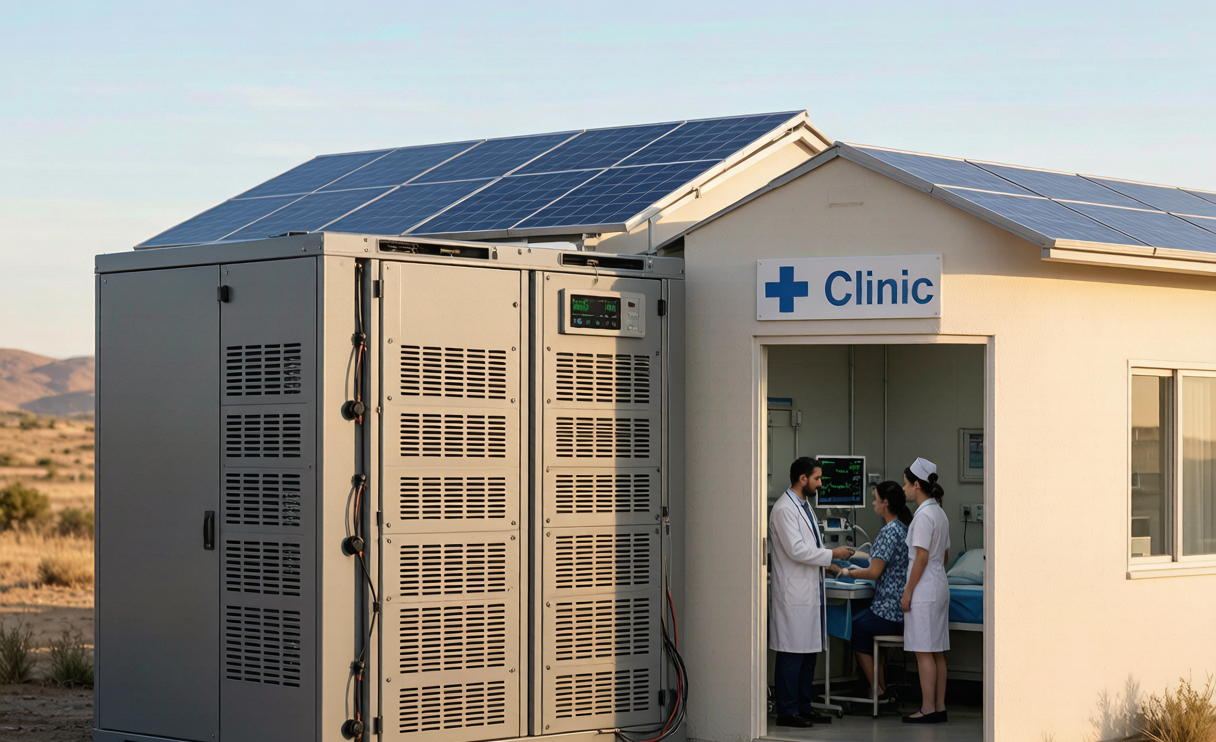
This article is a field engineer’s guide to what actually matters when you put a sodium-ion battery off grid health clinic installation together: the load profile, the chemistry trade-offs, the sizing math, the certifications you must clear, and the maintenance reality nobody writes about in brochures. I will keep the standards real (UN38.3, IEC 62133-2, IEC 62619, IEC 62477-1) and the numbers grounded in what we measure on site.
Why Off-Grid Clinics Are a Unique Power Problem
A remote clinic’s load is not a smooth, predictable curve. It is a series of sharp spikes wrapped around a low baseline. You have a 24/7 baseline of lighting, a vaccine refrigerator pulling roughly 40–90 W continuously, a water pump that surges to 600–1,200 W for seconds, and then the occasional crisis load: an ultrasound, a steriliser, or an oxygen concentrator that can draw 300–600 W for an hour straight. The battery has to absorb deep daily cycling and sit idle for long stretches between storms when solar input is poor.
Lead-acid hates this duty cycle. A flooded or even AGM bank that is regularly cycled below 50% depth-of-discharge loses half its rated capacity within 18–24 months in the tropics. A sodium ion battery tolerates partial state-of-charge cycling far better, which is precisely the regime a solar clinic lives in. You are not always full, you are not always empty, and the chemistry does not punish you for it.
Sodium-Ion Chemistry: Why It Fits Remote Medical Sites
The headline advantage for a sodium-ion battery in this setting is not peak energy density — it is resilience and cost. Current commercial hard-carbon anode cells land around 100–160 Wh/kg and 200–300 Wh/L. That is below LFP, but for a stationary clinic it is irrelevant: you have floor space, you do not have a weight budget. What you gain instead is a wide operating window. Most Na-ion cells I qualify run comfortably from −20°C to +60°C with reduced but usable capacity at the cold end, which matters for a clinic at altitude or in a non-air-conditioned equipment room.
Sodium is also domestically abundant and avoids the cobalt, nickel, and lithium supply-chain exposure that has made LFP pricing volatile. At 2026 cell pricing, a Na-ion pack lands in the neighbourhood of $60–$90 per kWh at the cell level — often 25–40% below an equivalent LFP system — and that delta is the difference between a clinic getting a two-day battery versus a six-hour one on the same budget.
Sizing a Sodium-Ion Battery Bank for a Clinic
Sizing is where most projects go wrong, so here is the method I use. Start with the daily energy budget, not the peak power. A typical small rural clinic with a vaccine fridge, LED lighting, a few fans, and a modest device-charging load consumes 3–8 kWh/day. Add the surge devices — steriliser, ultrasound, oxygen concentrator — and you size the inverter for the peak (often 2–3 kW) while sizing the battery for the daily throughput.
For a clinic with ~6 kWh/day of critical load and three days of autonomy (a reasonable target when resupply and solar are both unreliable), you need roughly 18 kWh of usable storage. Because a sodium battery can be cycled to 90–95% depth-of-discharge without the rapid degradation lead-acid suffers, a 20 kWh nameplate bank gives you the full three days. With LFP you would derate to 80%, and with lead-acid to 50%, so the nameplate gap is even larger than the usable gap suggests. I always specify a custom battery solution with a battery management system tuned to the clinic’s actual discharge profile rather than an off-the-shelf module sized for a different use case.
Certifications and Safety for Stationary Medical Storage
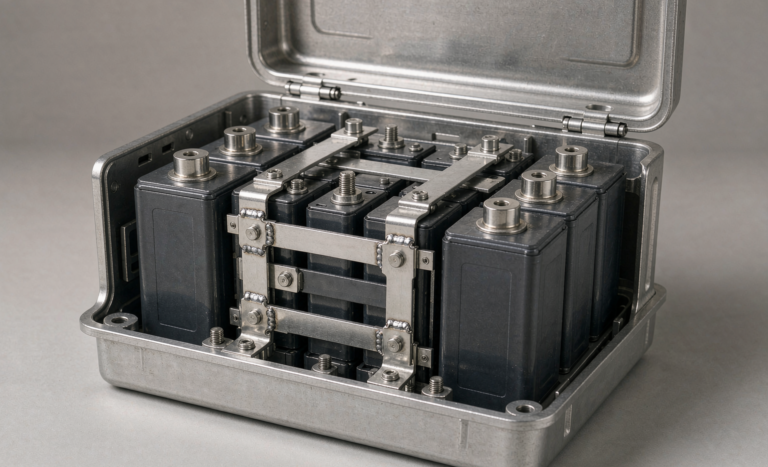
Medical buyers rightfully ask about compliance, and the answer is straightforward for stationary storage. The pack must clear UN38.3 (the T.1–T.8 sequence: altitude simulation, thermal, vibration, shock, external short, impact, overcharge, forced discharge) for transport to the site — I have never had a shipment cleared without it. For the cell and module level, IEC 62133-2 governs secondary lithium and sodium-based cells, and IEC 62619 is the industrial battery safety benchmark I cite for the complete enclosure. The power conversion stage should meet IEC 62477-1 (power electronic converter systems safety). For enclosures I spec at least IP54, and IP65 where the battery shares a wall with a wash-down area.
One clarification I give every procurement officer: FAA and EASA certifications apply to aviation batteries, not stationary clinic storage. You will see them referenced in drone and aerospace copy, but for a ground-mounted medical bank they are not the relevant standards — UN38.3 plus IEC 62619 plus your local electrical code (NEC Article 706 in the US, or the regional equivalent) are what matter. UL 1973 and UL 9540 are the North American stationary-storage marks I recommend when the clinic is in a UL-jurisdiction market.
Real Deployment Patterns: Solar Plus Sodium-Ion Plus Generator
The most robust pattern I deploy is a three-layer hybrid. A 3–10 kWp solar array charges the sodium-ion battery through an MPPT charge controller. The battery feeds a 3–5 kVA inverter that runs the clinic. A small diesel or propane generator sits as the final backstop, kicking in only after three consecutive cloudy days or a fault — not as the primary source. In this arrangement the sodium bank does 95% of the annual work, and the generator becomes an insurance policy rather than a daily polluter.
I have measured sodium-ion banks in this configuration holding vaccine fridges between 2°C and 8°C for the full 72-hour autonomy window even when a tropical storm dropped solar to near zero. That is the test that matters: not a laboratory cycle, but a real fridge, real heat, and a real power outage.
Maintenance and Cold-Chain Considerations
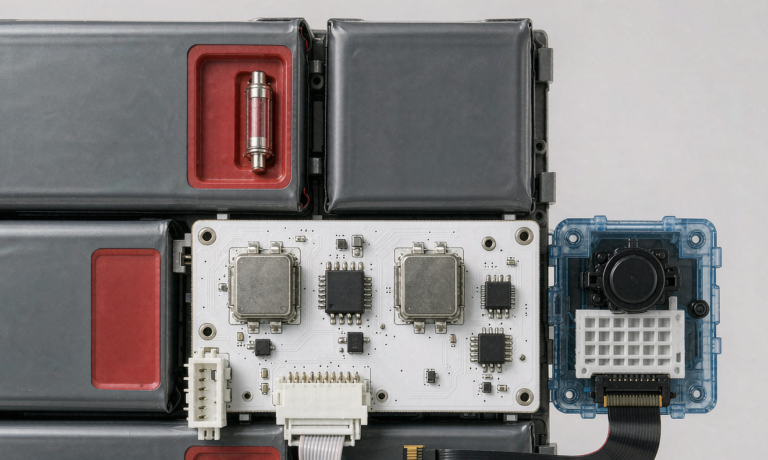
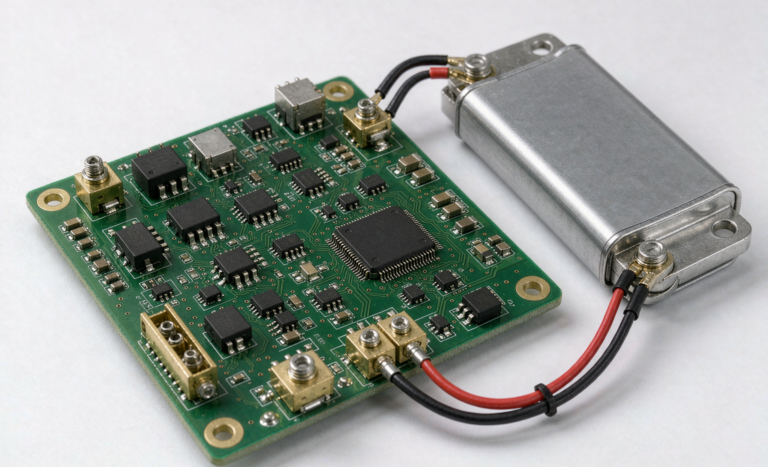
People assume batteries are fit-and-forget. They are not, but a sodium ion battery is far more forgiving than the lead-acid it replaces. I train local clinic staff on a five-minute weekly check: read the state-of-charge and fault code on the display, confirm the breaker is closed, and listen for abnormal cooling-fan noise. The BMS does the heavy lifting — cell balancing, temperature cut-offs, and remote alarm via a GSM modem so our team sees a problem before the clinic does.
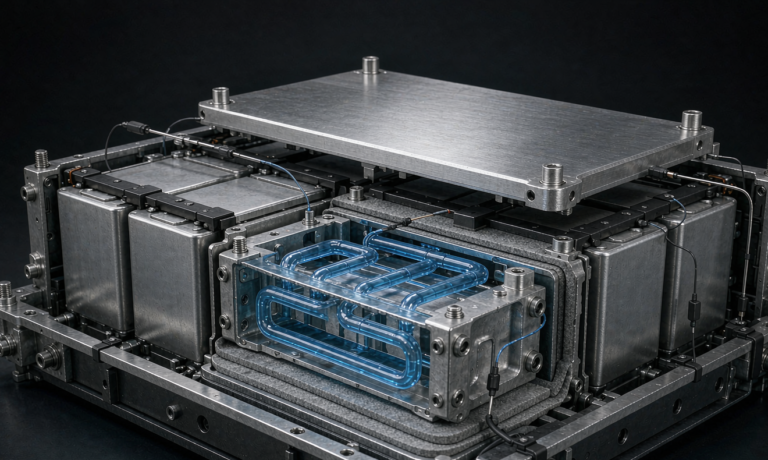
For cold-chain loads specifically, I keep the battery enclosure inside the same temperature-controlled room as the fridge when possible, which protects both. Where that is impossible, I add a small trace-heat jacket on the enclosure during the cold season. Sodium’s tolerance of partial charge means a clinic that runs the generator occasionally does not wreck the pack — a property lead-acid simply does not have.
When Sodium-Ion Is Not the Right Call
Engineers should be honest about limits. If a clinic needs maximum energy density in a tiny footprint — say a fully mobile telemedicine trailer with severe weight and space limits — LFP still wins on volume. And if the budget stretches to a grid connection within two years, a smaller interim battery may be wiser than a full sodium bank. But for the millions of clinics that are genuinely off-grid for the foreseeable future, the combination of low cost, deep cycling, cold tolerance, and simple maintenance makes a sodium-ion battery the pragmatic, defensible choice.
FAQ
Can a sodium-ion battery run vaccine refrigerators?
Yes. A properly sized sodium-ion battery bank with a pure-sine inverter easily runs a 40–90 W vaccine fridge continuously, holding 2–8°C through multi-day outages when paired with adequate solar and three days of autonomy. The key is sizing usable capacity for the full autonomy window, not just the daily average.
How long does a sodium-ion clinic bank last on one charge?
For a typical small clinic drawing 6–8 kWh/day of critical load, a 20 kWh nameplate sodium bank delivers roughly three days of autonomy at 90%+ usable depth-of-discharge. Real-world life is 3,000–6,000 cycles, which translates to 8–12 years in a daily-cycling clinic before noticeable capacity fade.
Is sodium-ion safe enough for a medical facility?
Yes. A qualified custom battery solution built to IEC 62619 and IEC 62477-1 with a certified BMS, IP54–IP65 enclosure, and thermal cut-offs is well suited to a medical setting. Sodium-ion’s lower fire risk versus high-nickel chemistries is an added safety benefit in a patient-care environment.
How does sodium-ion compare to lead-acid for off-grid clinics?
Sodium-ion costs more upfront per kWh than cheap lead-acid but lasts 3–5× longer, cycles deeper, and needs almost no equalisation maintenance. Over a 10-year horizon the sodium battery is markedly cheaper per usable kWh and far more reliable for life-safety loads — which is why I recommend it over lead-acid for any clinic where the fridge must not fail.