Sodium-Ion Battery for Two-Wheeler Fleets
In the last eighteen months, fleet operators from Jakarta to Nairobi have asked me the same question in almost the same words: can a sodium-ion battery survive a delivery scooter duty cycle, and will it be cheaper per kilometre? The honest answer is “sometimes, and not yet for everyone.” This is the version I give them on a technical call, with the numbers I actually use.
If you run a two-wheeler fleet — last-mile delivery, food courier, ride-hail, rental or municipal — the decision hinges on four things: the voltage window your powertrain can tolerate, the mass penalty you can carry, the ambient temperature band, and whether your model is swap-based or depot-charge-based. Get those four right and a sodium-ion battery pack is a genuinely viable custom battery solution. Get one wrong and it costs more per kilometre than the LFP pack you already have.
Why Two-Wheeler Fleets Are Looking at Sodium-Ion at All
Two-wheeler electrification is the largest battery market by unit count on the planet: a single Asian delivery operator can deploy 50,000 scooters, each needing one or two packs. At that volume a five-cent-per-watt-hour move in cell pricing is a fleet-wide capital decision.
The first reason fleets look at sodium is supply risk, not price. Lithium carbonate swung from roughly 7,000 USD per tonne to over 70,000 USD and back inside two years, and procurement teams who got burned do not want a second exposure. Sodium carbonate is produced at commodity scale for glass and detergents, trades in the hundreds of dollars per tonne, and is far less geographically concentrated. It also removes nickel and cobalt from the bill of materials entirely for the polyanion chemistries I specify for fleet work.
The second reason is cold. A fleet running night deliveries in a temperate winter loses real range to chemistry that will not safely accept charge below 5 °C. Sodium-ion cells hold a much larger fraction of room-temperature capacity at -20 °C and, more importantly, accept charge at low temperature without the lithium-plating mechanism that forces LFP into a preheat cycle. That difference shows up as available vehicle-hours, which is the metric fleet managers are paid on.
What the Cell Chemistry Actually Changes: Voltage, Mass, and the Wide Window Problem
This is the part most buyer-side comparisons get wrong, and the first thing I check on any two-wheeler project.
A typical layered-oxide or polyanion sodium-ion cell has a nominal voltage near 3.0 V and a working window of roughly 1.5 V to 4.0 V. An LFP cell sits at 3.2 V nominal across roughly 2.5 V to 3.65 V. To hit a 48 V class pack you need 16 sodium-ion cells in series (16 × 3.0 = 48.0 V) against 15 LFP cells (48.0 V). The consequences are not trivial:
- Full-charge voltage. 16 cells at 4.0 V is 64.0 V, against 54.75 V for a 15S LFP pack. Your controller, DC-link capacitors and MOSFETs were almost certainly rated for lithium, so a 64 V bus means moving from 60–75 V silicon to 80–100 V parts and re-rating PCB creepage and clearance.
- Voltage swing ratio. From 24 V at cut-off to 64 V full is a 2.7:1 swing, against roughly 1.46:1 for LFP. Torque mapping, field weakening and low-speed current draw all shift across that band, so controller calibration is not a drop-in.
- Low-SOC behaviour. The hard-carbon anode has a low-potential plateau, so voltage falls off quickly near empty — good for detecting end-of-discharge, but a BMS with lithium-style under-voltage thresholds will cut the vehicle out early.
On energy density, be conservative. Cells I would put in production today land around 110–140 Wh/kg at cell level for layered oxide and 90–115 Wh/kg for polyanion variants. At pack level that is 80–105 Wh/kg against 105–130 Wh/kg for LFP — roughly a 15–25% mass and volume penalty for the same nameplate kWh.
On a two-wheeler that penalty matters more than on a bus, because the pack is carried payload — but a 2.6 kWh pack going from about 25 kg to 30 kg is not disqualifying. Riders notice; range per charge does not change.
Sizing the Pack: Wh, C-Rate and the Real Drive Cycle
Fleet sizing starts from measured consumption, not the brochure. A light scooter at 25–35 km/h with an 80 kg rider consumes 25–35 Wh/km; add a 25 kg insulated delivery box and city stop-and-go and 38–50 Wh/km is realistic. I tell customers to instrument five vehicles for two weeks before we quote.
Worked example, using the fleet average I see most often:
- Duty: 70 km/day at a measured 38 Wh/km.
- One overnight charge plus one midday top-up, so each pack delivers about 1.8 kWh per discharge.
- Usable fraction: 85% depth of discharge, 80% capacity retained at end of life.
- Required nameplate: 1.8 / (0.85 × 0.80) = 2.65 kWh. Specify 2.6–2.8 kWh.
At 48 V nominal that is roughly 55 Ah. Peak current is the next gate: a 1,500 W nominal / 3,000 W peak hub motor draws about 62 A at peak, or 80 A with a loaded hill start. On 55 Ah that is about 1.5C, comfortable for most sodium-ion cells at 25 °C. It gets tight in the 72 V performance segment with 5–8 kW peaks — 3–4C bursts that need cell-level DCIR data, not a datasheet C-rating.
My rule: request the cell maker’s DCIR-versus-SOC-versus-temperature table (10-second pulse at -10 °C, 25 °C and 45 °C), calculate worst-case sag at the corner of lowest SOC and lowest temperature, and confirm the controller’s under-voltage lockout sits below it. I have killed more prototype packs with lockout chatter than with abuse tests.
Cold Weather and Fast Turnaround: The Genuine Sodium Advantage
This is where sodium earns its place. At -20 °C, LFP cells typically deliver 70–80% of room-temperature discharge capacity and will not safely accept normal charge current — you either preheat or charge at a fraction of normal rate. Sodium-ion cells I have bench-tested retain roughly 88–93% at -20 °C, with far less degradation in charge acceptance. A depot in a temperate winter can skip preheat at moderate rates, and riders see a smaller winter range cliff.
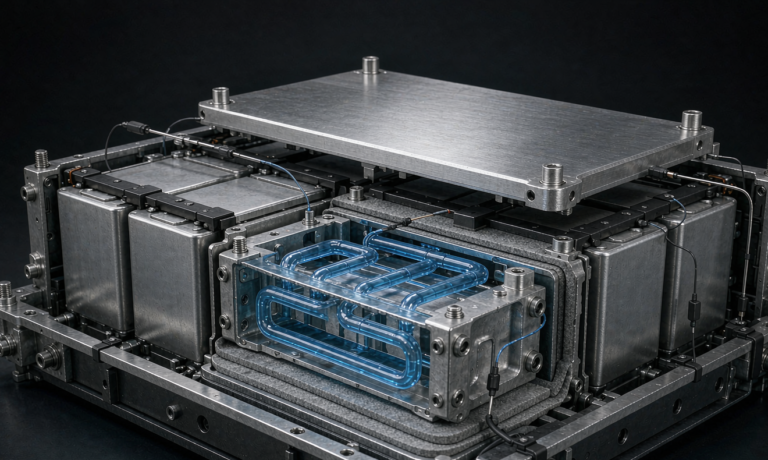
That does not mean “no thermal management” — it means a smaller thermal budget. I still specify a heater mat and a BMS charge gate below 0 °C, because cold-charge abuse is cumulative rather than immediately visible. The heater runs for minutes, not an hour, and that is measurable uptime.
The flip side is heat. A swap cabinet outdoors in a Middle Eastern or South Asian summer sees 45–50 °C ambient, with internals climbing higher during a 1C charge. At 45 °C cell temperature, cycle life collapses for every chemistry I know of, sodium included. Those deployments need a shaded, ventilated cabinet and a derate curve driven by cell temperature rather than ambient.
Battery Swap Versus Depot Charging: Mechanical and BMS Consequences
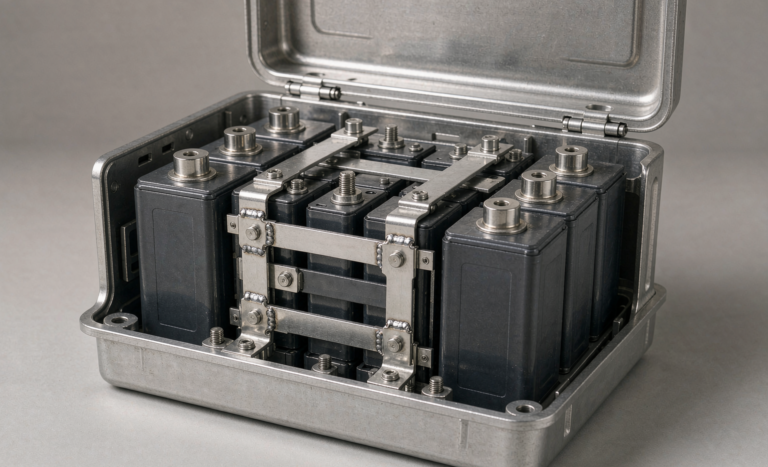
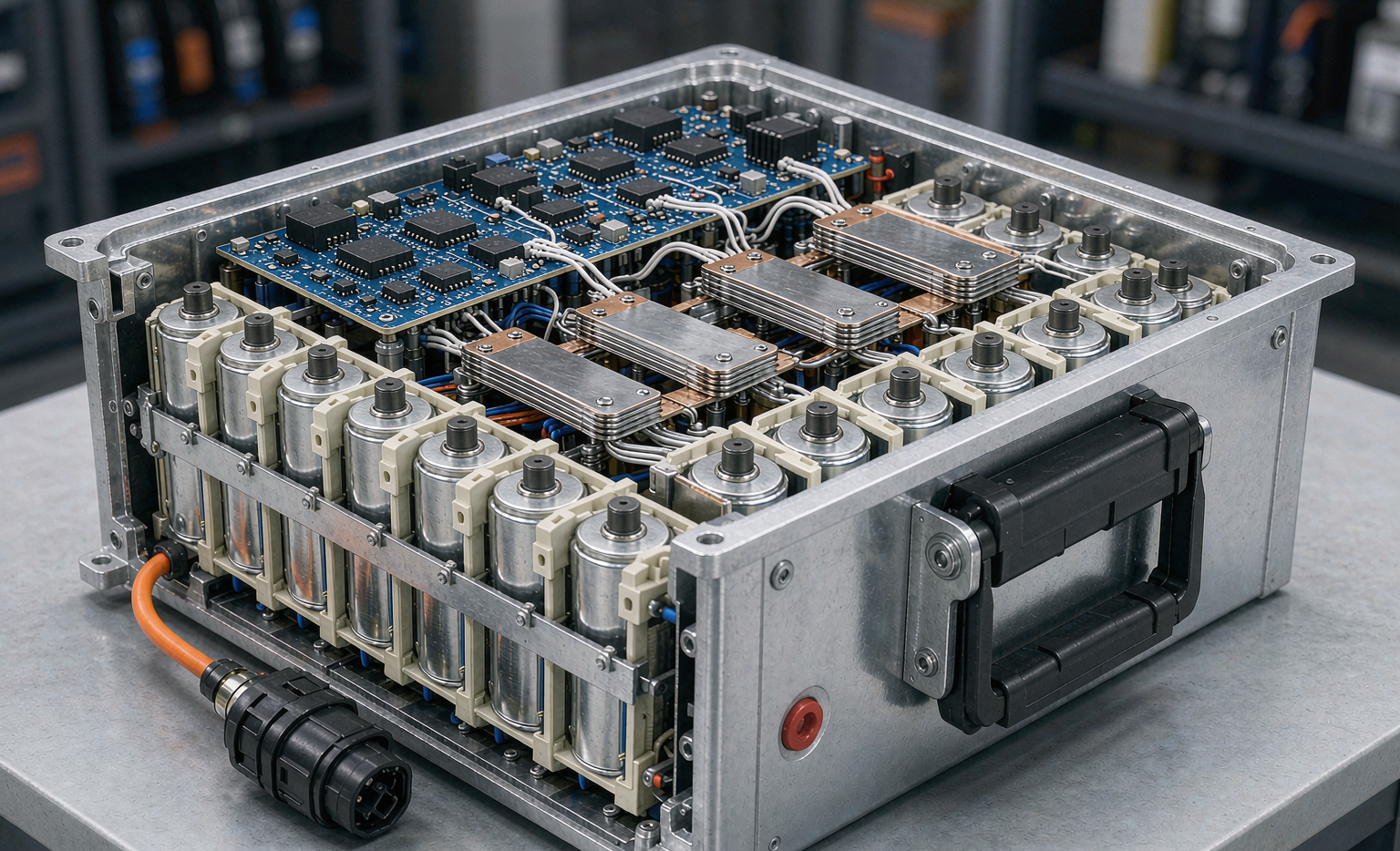
Your charging model changes the pack more than the chemistry does. For a swap fleet the pack becomes handled equipment: a blind-mate connector rated for at least 10,000 mating cycles with guide pins tolerating a few millimetres of misalignment; a latching handle tested to twice the pack mass; IP67 sealing with an ePTFE breather, because a sealed enclosure breathing through a 30 K daily cycle condenses water inside; a 1 m drop test on all six faces; and random vibration to IEC 60068-2-64 on a scooter-derived profile, not a generic truck one.
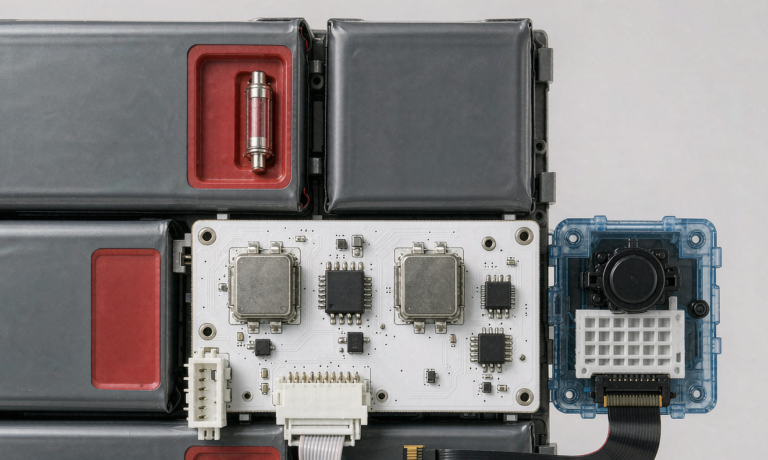
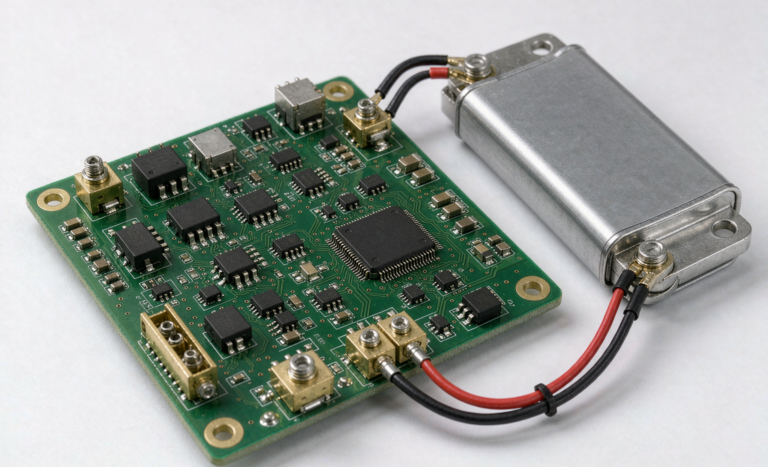
The BMS requirement for swap is traceability: every pack needs its own identity, cycle count, accumulated ampere-hours, maximum cell temperature and resistance trend, so the depot knows in seconds whether a weak pack has 400 cycles or 2,400. Log DCIR at fixed SOC and temperature every 50 cycles — resistance growth of 25–30% typically appears 300–500 cycles before the capacity curve visibly bends, making trend-based retirement the cheapest reliability improvement a swap operator can buy.
For depot charging the constraint is turnaround: 2.6 kWh in 90 minutes is about 1.7C at pack level. Sodium-ion generally takes that mid-SOC, but the constant-voltage taper near top of charge is chemistry-specific and slower than LFP in some cells. Cabinet-level power sharing — bays that sequence instead of all pulling full power — usually saves more capital than faster cells cost.
Cycle Life, Warranty and the Cost-per-Kilometre Arithmetic
Cycle life at 25 °C and 1C: iron-based polyanion cells are broadly delivering 3,000–6,000 cycles to 80% capacity. Layered-oxide variants sit nearer 2,000–4,000 but carry more energy per kilogram. Mature LFP is 3,000–6,000. The gap is narrower than people assume and it is closing.
Cost per kilometre for the 2.65 kWh pack above:
- Usable energy per cycle: 1.8 kWh.
- Sodium-ion: 3,000 cycles × 1.8 kWh = 5,400 kWh delivered, about 142,000 km of service at 38 Wh/km.
- Pack cost at 0.35 USD/Wh (realistic early-volume pricing today): about 930 USD, or 0.65 US cents per km.
- LFP: 4,000 cycles × 1.8 kWh = 7,200 kWh, about 189,000 km. Pack cost at 0.28 USD/Wh: 740 USD, or 0.39 US cents per km.
- Electricity at 0.15 USD/kWh and 92% charge efficiency adds about 0.62 US cents per km to either option.
So on cost per kilometre LFP still wins by roughly a quarter of a cent. Sodium-ion wins instead on lithium price hedging, low-temperature availability and transport handling, with a projected crossover in two to three years as volumes scale and the roadmap to 160–175 Wh/kg is delivered. If winter range is your binding constraint, the uptime you recover is worth far more.
One warranty point: a “3,000 cycle” claim is only meaningful with temperature, depth of discharge and charge rate stated alongside it. Every degradation clause I have seen that omits the temperature band is a clause you will lose.
Safety, Transport and Certification
Sodium-ion is not a safety free lunch, but it has one genuine advantage. Because sodium does not alloy with aluminium at low potential, the anode current collector can be aluminium foil instead of copper, saving cost and mass. More usefully, the cell tolerates discharge to 0 V without the copper dissolution damage that destroys an over-discharged lithium cell, which makes 0 V storage and transport legitimate and removes a whole class of “dead pack” failures.
Everything else is familiar. The electrolyte is still flammable and I have watched sodium-ion cells vent energetically under nail penetration. Design protection as if it were lithium: cell-level fusing, a BMS with independent hardware over-voltage and over-current protection, a pack-level fuse or pyro-switch, and a vent path directing gas away from the rider and other swap-cabinet bays.
On certification the standards are still catching up. IEC 62133-2 and IEC 62619 were written for lithium, with no mature sodium-ion equivalent every notified body accepts. My practice is to certify to the lithium standards as the functional-safety floor, then add chemistry-specific abuse tests: over-discharge to 0 V, 30 days of storage at 0 V, capacity recovery after recharge, and charge acceptance at -10 °C and -20 °C — failure modes a lithium pack never sees, so no lithium standard tests them.
For transport, cells still go through the UN 38.3 regime, and dedicated sodium-ion entries are being phased into the UN Model Regulations and IATA Dangerous Goods Regulations. Because the rules are changing, I require a fresh dangerous-goods declaration on every shipment. Budget too for market documentation: a UN 38.3 test summary, an IEC 62619 report, and for European operators the pack behind the EU Battery Regulation passport requirements.
What I Require Before Signing Off a Fleet Pack
After the analysis, my sign-off checklist for any two-wheeler sodium-ion battery pack is this:
- Cell-level DCIR across SOC and -10 °C / 25 °C / 45 °C, with a 10-second pulse sag calculation validated against the controller’s under-voltage lockout.
- Full-cell OCV versus SOC curve, a BMS SOC model recalibrated to it, and a weekly full-charge recalibration point — sodium-ion coulombic efficiency runs slightly below LFP, so drift accumulates faster under partial cycling.
- Controller and DC-link hardware re-rated for the 64 V bus, with documented creepage and clearance.
- A validated 0 V charge gate and a heater strategy for any market that sees sub-zero operation.
- IP67 enclosure with a breathable vent, plus drop and vibration reports on a scooter-derived profile.
- Swap connector mating-cycle and misalignment validation, or a depot charge profile with derate curves.
- Per-pack identity, cycle logging and DCIR trending every 50 cycles, with a defined retirement threshold.
- A warranty that states temperature, depth of discharge and charge rate next to the cycle number.
Frequently Asked Questions
Is a sodium-ion battery actually cheaper than LFP for a scooter fleet today?
Not yet on cost per kilometre. At roughly 0.35 USD/Wh for a sodium-ion pack against 0.28 USD/Wh for mature LFP, and 3,000 versus 4,000 cycles, sodium works out about 0.26 US cents per km more expensive in amortisation. Choose it now for lithium price hedging, cold-weather availability and simpler transport handling — not for today’s sticker price.
What voltage should I expect from a 48 V sodium-ion scooter pack?
Plan for 16 cells in series: 48.0 V nominal, 64.0 V at full charge, about 24 V at the 1.5 V per-cell cut-off. That 2.7:1 swing is far wider than a 15S LFP pack’s 1.46:1, so the controller, capacitors and MOSFETs must be rated for 64 V and the torque map recalibrated.
Does a sodium-ion battery work better in winter than LFP?
Yes — it is the strongest technical argument for it. At -20 °C, LFP delivers 70–80% of room-temperature capacity and must be preheated before normal-rate charging. Sodium-ion cells I have bench-tested retain 88–93% and accept charge without the lithium-plating mechanism. Keep a heater mat and charge gate below 0 °C, but it runs for minutes, not an hour.
What cycle life should a fleet expect from sodium-ion cells?
It depends on the cathode. Iron-based polyanion cells deliver 3,000–6,000 cycles to 80% capacity at 25 °C and 1C; layered-oxide cells carry more energy per kilogram but land at 2,000–4,000. Insist the warranty states temperature band, depth of discharge and charge rate next to the cycle count.
Are sodium-ion batteries safer to transport than lithium batteries?
They have one real advantage: with an aluminium anode current collector, the cell tolerates 0 V discharge without copper dissolution damage, making 0 V storage and transport legitimate. They are not inherently non-hazardous — the electrolyte is still flammable — and shipments go through the UN 38.3 regime, with dedicated sodium-ion entries being phased into the UN Model Regulations and IATA DGR.
Which certification standards apply to a sodium-ion battery pack?
There is no mature sodium-ion equivalent of IEC 62133-2 or IEC 62619, so certify to the lithium standards as the functional-safety baseline, then add chemistry-specific tests: 0 V over-discharge, 30 days at 0 V, capacity recovery, and charge acceptance at -10 °C and -20 °C. For the EU, budget for the battery passport documentation.
When should a fleet choose LFP instead of sodium-ion?
Choose LFP if you operate above 5 °C year-round and your model is purely cost per kilometre. Choose sodium-ion if winter range and cold-charge uptime are the binding constraints, if you want the simpler 0 V transport story, or if procurement is diversifying away from lithium carbonate price volatility.
Further Reading
References