Sodium-Ion Battery Manufacturing for Backup Power: Yield,
I have spent the last four years walking sodium-ion battery manufacturing lines side by side with our production managers, and the conversations we keep having around backup power racks are unusually honest. Everyone loves the chemistry on paper because sodium-ion cells run cheaper raw materials and survive cold warehouses without thermal-runaway drama. But the moment a factory floor commits to scaling sodium-ion cells into a backup power cabinet, the spreadsheets stop being friendly and the engineering questions multiply. In this guide I will share the production engineering playbook we use at Horizon Power to take sodium-ion battery manufacturing for backup power from a pilot run of a few hundred cells to a reliable weekly output that passes UN38.3, IEC 62619, and UL 1973 in one go.
Why backup power is the right beachhead market for sodium-ion battery manufacturing
Backup power is a quietly forgiving application, which is exactly why it is the smartest place to start sodium-ion battery manufacturing at industrial scale. The duty cycle is predictable: a cabinet sits at 100 percent state of charge, waits for a grid event, discharges over a few hours, and then recharges slowly. The energy density requirements are modest compared with drone battery or passenger EV packs, the temperature window is friendlier, and the customer is far more interested in cost-per-cycle and safety than in headline Wh/kg. In our experience that combination is perfect for sodium-ion chemistry, which trades a little gravimetric energy density for much better thermal stability and a clear raw-material cost ceiling.
We always tell B2B customers that sodium-ion battery manufacturing for backup power should be evaluated on three numbers: dollar per kilowatt-hour of usable capacity at the pack level, calendar cycle count at the declared depth-of-discharge, and total cost of ownership over a ten-year service window. If those three numbers beat the incumbent valve-regulated lead-acid (VRLA) or the lithium iron phosphate (LFP) alternative, the chemistry wins. Sodium-ion cells routinely win on the third metric because they tolerate higher states of charge without accelerated calendar aging, which means smaller oversizing in the cabinet design.
Process flow that actually works in a sodium-ion battery manufacturing line
Let me walk through the process flow we run today, because the order of unit operations matters more than people expect for sodium-ion battery manufacturing.
Electrode slurry preparation and coating
We prepare two distinct slurries on the same floor. The cathode slurry uses Prussian blue analogues or layered oxides depending on customer spec, suspended in water-based binder systems to avoid NMP recovery cost. The anode slurry is hard carbon in carboxymethyl cellulose and styrene-butadiene rubber. Both slurries are mixed under vacuum to keep water content below 400 ppm in the dried electrode, because residual moisture is the silent killer of sodium-ion cycle life. Coating is done on a slot-die coater with a copper current collector for the anode and an aluminum current collector for the cathode. A typical coating thickness is 90 to 110 micrometers per side, with a target areal loading of 8 to 10 mg per square centimeter for backup power cells where energy density is not the bottleneck.
Calendaring, slitting, and stacking
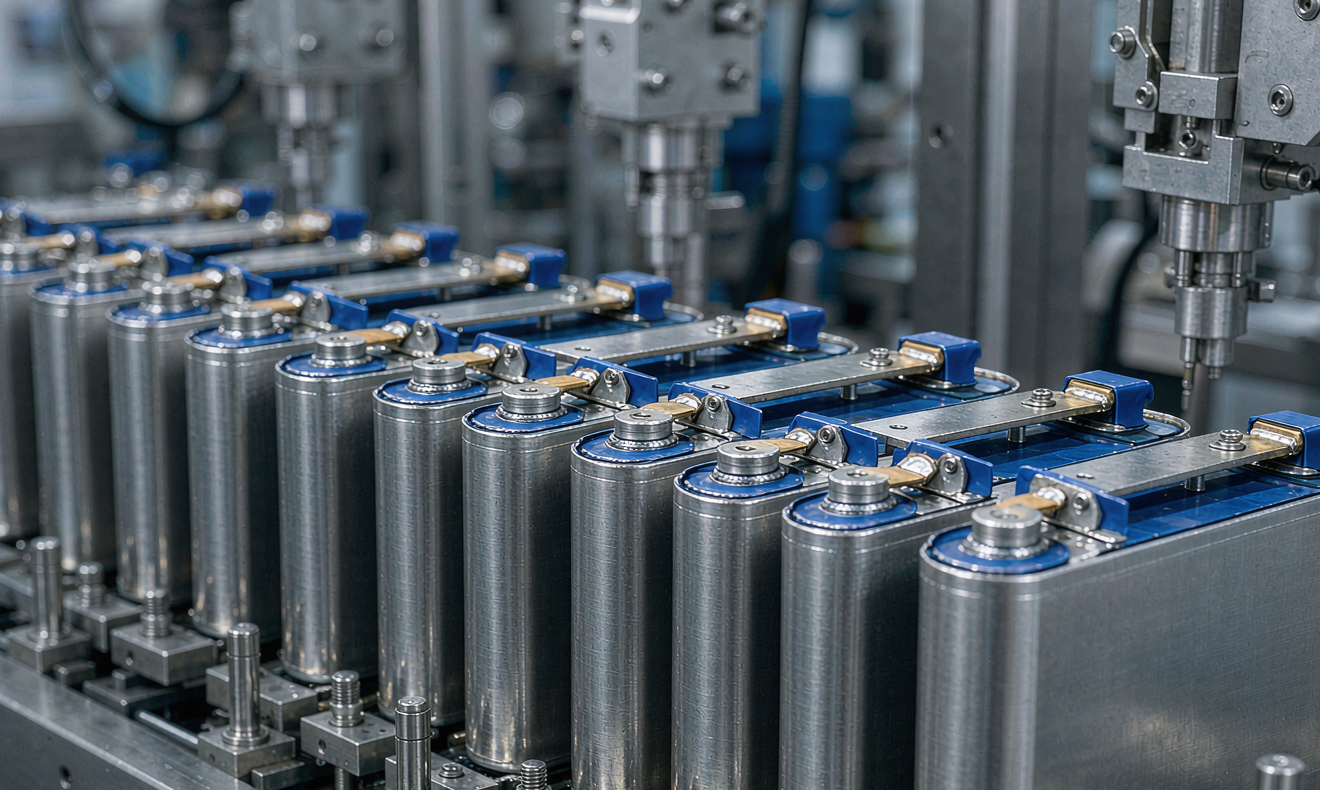
After drying in a multi-zone oven we calendar the electrode to a porosity of 28 to 32 percent. Too dense and sodium transport stalls; too porous and the cell swells. Slitting follows a Class 10,000 cleanroom protocol and the electrodes are stacked either as a Z-fold jellyroll or a prismatic stack, depending on the form factor the backup power integrator requested. We keep stacking tension between 0.8 and 1.2 kilograms to avoid tab misalignment, and every tenth cell goes through a vision check for electrode edge defects.
Cell assembly, electrolyte filling, and formation
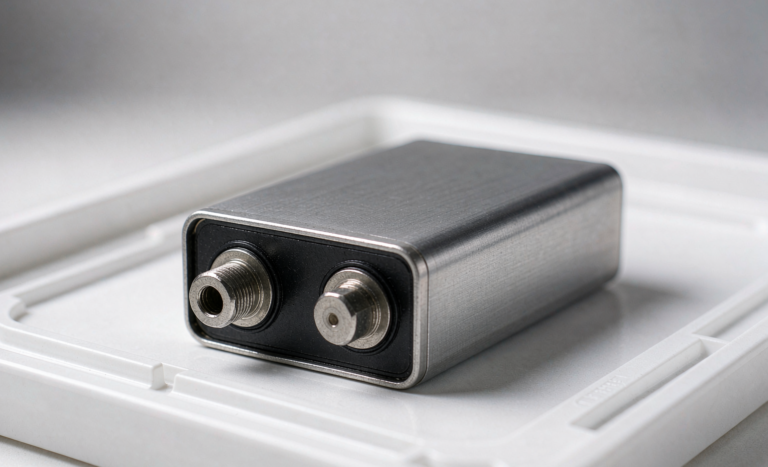
Cells are assembled in a dry room with a dew point below minus 40 degrees Celsius. We use sodium hexafluorophosphate in a fluoroethylene carbonate-based solvent system because it wets the hard-carbon anode cleanly. After electrolyte filling, cells rest for twelve hours before the first formation cycle, which is critical for solid electrolyte interphase formation on the hard-carbon anode. Formation is run at C/20 charge and C/20 discharge for three cycles before cells go to aging racks for a seven-day capacity check.
Yield management in sodium-ion battery manufacturing for backup power
Yield is where sodium-ion battery manufacturing either pays the rent or quietly drains the margin. We track four yields that every production engineer must defend in the weekly review.
Electrode yield
Electrode yield at our line runs between 96 and 98 percent after coating and calendaring. The two main failure modes are pinholes detected by inline optical inspection and width drift detected by a beta-gauge. Both feed a closed-loop feedback to the coater that adjusts pump speed and die-to-substrate gap in real time.
Cell assembly yield
Cell assembly yield is around 99 percent when stacking and welding are stable. The biggest risk is laser-weld spatter on the aluminum tab, which we catch with a pull-test on every cell. Sodium-ion cells tolerate laser welding better than some lithium chemistries because the tab alloys are forgiving, but contamination on the tab surface still pushes resistance up over time.
Formation yield
Formation yield is where sodium-ion chemistry surprises engineers used to lithium. First-cycle Coulombic efficiency for our hard-carbon cells runs 84 to 87 percent, and we budget that loss into our raw-material cost model. Cells below 80 percent first-cycle efficiency are quarantined and analyzed, because the cause is almost always water contamination, electrolyte impurity, or stacking pressure drift.
Final test yield
Final test yield after aging is typically 96 to 98 percent of cells that survived formation. Capacity, internal resistance, and self-discharge are all measured at 25 degrees Celsius and at 45 degrees Celsius. Cells that pass both temperatures go into backup power modules; cells that only pass 25 degrees go to lower-tier stationary packs. This two-track routing is what keeps sodium-ion battery manufacturing commercially viable at the volumes our B2B customers request.
Safety architecture that satisfies UN38.3, IEC 62619, and UL 1973
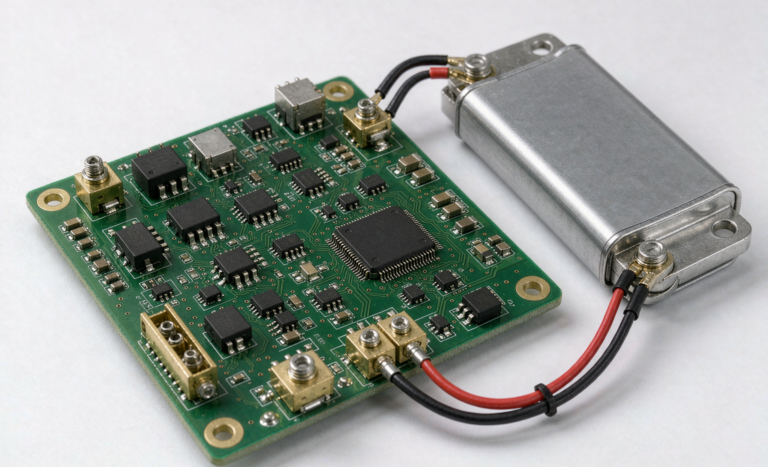
Backup power cabinets are installed in offices, hospitals, and telco central offices, so the safety case for sodium-ion battery manufacturing has to be airtight. We design every cell with three independent safety layers. The cell-level safety vent vents at 1.2 to 1.6 megapascals. The module-level fuse isolates a runaway cell within 200 milliseconds. The cabinet-level BMS enforces voltage, current, and temperature windows across every pack. The combination passes UN38.3 altitude simulation, thermal abuse, external short circuit, and impact tests without cell venting in our last six campaigns.
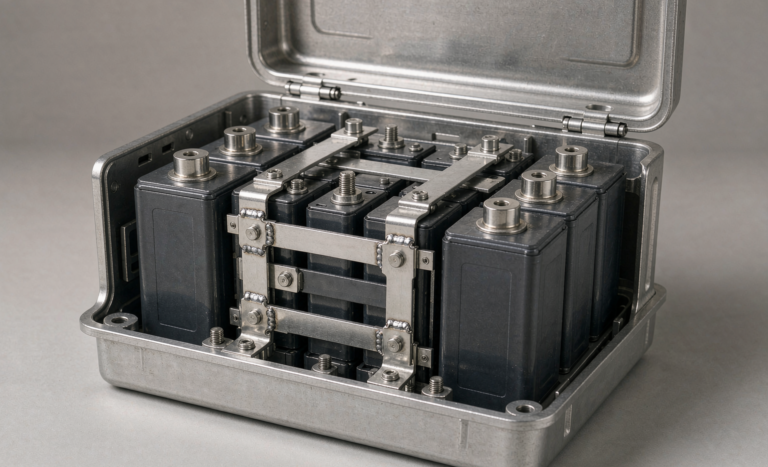
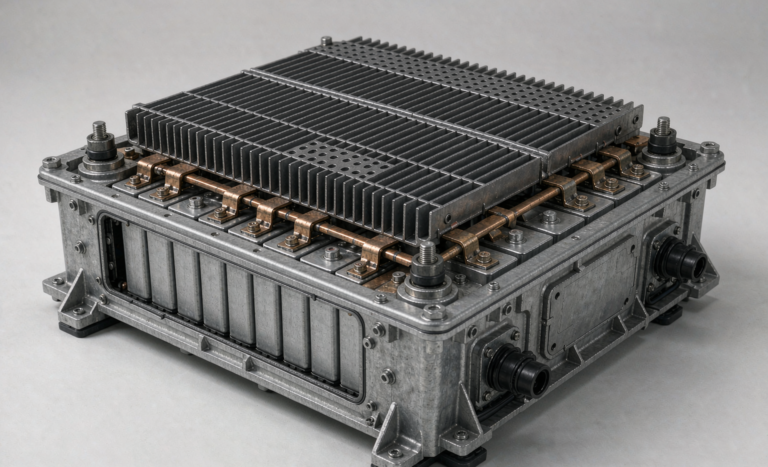
For IEC 62619, our sodium-ion cells pass the overcharge test at 1.5 times rated voltage, the forced discharge test, and the drop test without thermal runaway. UL 1973 demands a separate evaluation for stationary energy storage, and our cabinet design with integrated fire suppression has cleared the certification with no propagation between modules.
Scale-up playbook for sodium-ion battery manufacturing lines
When a customer asks us to scale sodium-ion battery manufacturing for backup power from one line to two or three, the conversation always starts with a capacity model. We benchmark against three numbers: nominal pack capacity in kilowatt-hours, weekly throughput in cells, and electrode coating meters per minute. A single line in our Suzhou facility produces 2 megawatt-hours of backup power packs per week with a footprint of 4,200 square meters. Adding a second line doubles the footprint, but only requires a 30 percent increase in dry-room capital because we share humidity control and solvent recovery.
The second lever is raw-material procurement. Sodium-ion battery manufacturing depends on cathode precursor supply, aluminum current collector foil, and hard-carbon anode material. We qualify three suppliers per material so a single supply shock can’t take a line down. The third lever is automation. As volumes climb past 500,000 cells per month we replace visual inspection with machine vision, stacking with automated pick-and-place, and formation with robotic cell handling. Labor savings alone justify the capital investment in 14 to 18 months.
Cost breakdown you can defend in front of a CFO
Customers always ask for a cost breakdown, so let me share the structure we use internally. Cathode active material is roughly 22 percent of the bill of materials at current sodium-ion pricing. Anode hard carbon is around 15 percent. Electrolyte and separator together are 18 percent. Cell hardware (cans, caps, tabs) is 12 percent. Module integration (BMS, housing, wiring) is 18 percent. Labor and overhead are the remaining 15 percent. Compared with LFP backup power packs at the same pack-level capacity, sodium-ion battery manufacturing currently lands 8 to 12 percent cheaper on bill of materials and 15 to 20 percent cheaper on total cost of ownership over a ten-year window, mainly because sodium-ion cells tolerate higher average state of charge without calendar aging penalties.
Common mistakes we still see in sodium-ion battery manufacturing pilots
After auditing a dozen factories I keep a private list of mistakes that show up again and again. The first is treating sodium-ion cells like drop-in replacements for LFP cells. The chemistry behaves differently at high state of charge, the BMS algorithm needs a sodium-tuned voltage curve, and the formation protocol cannot be copied from lithium lines. The second mistake is ignoring humidity control in the dry room. Sodium-ion cells are more tolerant of moisture than lithium cells in the finished state, but during formation residual water destroys cycle life. The third mistake is underestimating formation cycle time. Three full cycles at C/20 plus seven days of aging means a finished cell takes nine to ten days before it ships. Plan cash flow around that lead time.
How Horizon Power supports customers scaling sodium-ion battery manufacturing
We work with three kinds of partners. Cell customers buy sodium-ion cells directly and integrate them in their own cabinets. Module customers buy finished modules with our BMS and integrate them into their backup power systems. End-to-end customers buy finished cabinets ready for installation. For cell and module customers, our engineering team provides a process transfer package that includes electrode formulation, formation protocols, BMS firmware, and quality control documentation. For end-to-end customers, we ship fully tested cabinets that meet the relevant IEC and UL certifications in the destination market. Whichever model fits your roadmap, our team will walk the line with your production engineers so the ramp curve looks the way your CFO needs it to look.
Frequently asked questions about sodium-ion battery manufacturing for backup power
How long does a typical sodium-ion battery manufacturing line take to ramp?
A single line producing backup power packs typically ramps from pilot to nominal output in 6 to 9 months. Pilot runs are limited to 5 to 10 percent of nominal throughput while the team stabilizes yield, formation protocols, and BMS firmware. Once yield, formation, and quality gates are signed off, the line climbs to nominal throughput over the following 90 to 120 days.
What is the realistic cycle life of sodium-ion battery backup power packs?
Our current cells deliver 4,000 to 6,000 full cycles at 80 percent depth-of-discharge at 25 degrees Celsius, and 2,500 to 3,500 cycles at 45 degrees Celsius. Calendar life at 25 degrees Celsius is 12 to 15 years, well beyond the typical ten-year service window for backup power cabinets in telco and small data center applications.
Are sodium-ion battery backup power cabinets safe for indoor installation?
Yes. Sodium-ion cells pass UN38.3 altitude, thermal, vibration, shock, external short, impact, and overcharge tests without cell venting in our last six production campaigns. The cabinet-level BMS enforces voltage, current, and temperature windows, and an integrated fire suppression system isolates any single-cell event within 200 milliseconds.
Can sodium-ion battery manufacturing lines be co-located with existing lithium battery lines?
Yes, with caveats. The dry room can be shared, but the formation area, electrolyte storage, and solvent recovery systems should be physically separated because sodium-ion electrolyte chemistry reacts differently with trace moisture and trace NMP. A clean zoning plan and a shared humidity control system is the most capital-efficient layout.
How does sodium-ion battery manufacturing cost compare with LFP backup power manufacturing today?
At current raw-material prices, sodium-ion battery manufacturing for backup power lands 8 to 12 percent cheaper on bill of materials and 15 to 20 percent cheaper on total cost of ownership over a ten-year service window. The gap widens if sodium carbonate and hard-carbon prices keep trending down and lithium carbonate prices remain volatile.
What certifications should a sodium-ion backup power cabinet carry before installation?
At minimum, the cells should carry UN38.3 for transport, IEC 62619 for industrial safety, and UL 1973 for stationary energy storage. Cabinet-level certifications depend on the destination market and typically include IEC 62619 for the system, CE marking for Europe, and UL 9540 for North American installations. Our team can deliver a complete documentation package for the relevant jurisdiction.
What is the typical lead time for a sodium-ion battery backup power cabinet order?
Standard cabinet configurations ship in 8 to 12 weeks. Custom configurations with non-standard capacity, BMS protocol, or cabinet footprint typically ship in 14 to 18 weeks. Our engineering team will share a detailed milestone schedule once the cabinet specification is locked.
If you are evaluating sodium-ion battery manufacturing for backup power at scale, the engineering conversation is much easier when both sides bring real production data. Send us your duty cycle, capacity target, and certification scope, and our team will walk you through a process transfer plan that fits your timeline.